McGee Richard G, Cowell Chris T, Arnolda Gaston, Ting Hsuen P, Hibbert Peter, Dowton S Bruce, Braithwaite Jeffrey
Central Coast Clinical School, The University of Newcastle Faculty of Health and Medicine, Callaghan, New South Wales, Australia
The University of Sydney Children's Hospital Westmead Clinical School, Sydney, New South Wales, Australia.
BMJ Open Diabetes Res Care. 2020 Jul;8(1). doi: 10.1136/bmjdrc-2019-001141.
To estimate adherence to clinical practice guidelines in selected settings at a population level for Australian children with type 1 diabetes mellitus.
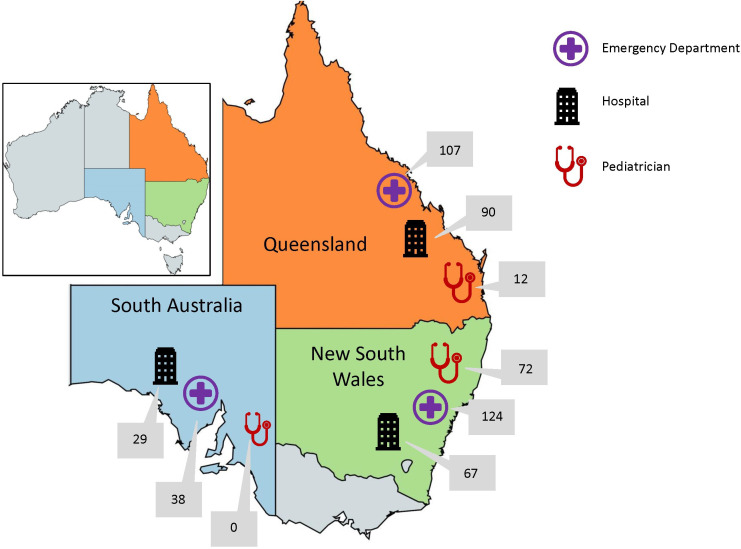
Medical records of children with type 1 diabetes mellitus aged 0-15 years in 2012-2013 were targeted for sampling across inpatient, emergency department and community visits with specialist pediatricians in regional and metropolitan areas and tertiary pediatric hospitals in three states where approximately 60% of Australian children reside. Clinical recommendations extracted from two clinical practice guidelines were used to audit adherence. Results were aggregated across types of care (diagnosis, routine care, emergency care).
Surveyors conducted 6346 indicator assessments from an audit of 539 healthcare visits by 251 children. Average adherence across all indicators was estimated at 79.9% (95% CI 69.5 to 88.0). Children with type 1 diabetes mellitus have higher rates of behavioral and psychological disorders, but only a third of children (37.9%; 95% CI 11.7 to 70.7) with suboptimal glycemic control (eg, hemoglobin A1c >10% or 86 mmol/mol) were screened for psychological disorders using a validated tool; this was the only indicator with <50% estimated adherence. Adherence by care type was: 86.1% for diagnosis (95% CI 76.7 to 92.7); 78.8% for routine care (95% CI 65.4 to 88.9) and 83.9% for emergency care (95% CI 78.4 to 88.5).
Most indicators for care of children with type 1 diabetes mellitus were adhered to. However, there remains room to improve adherence to guidelines for optimization of practice consistency and minimization of future disease burden.
在澳大利亚1型糖尿病儿童的人群层面,评估选定环境中对临床实践指南的依从性。
针对2012 - 2013年0至15岁1型糖尿病儿童的病历进行抽样,涵盖住院、急诊科就诊以及在澳大利亚约60%儿童居住的三个州的地区和大都市地区的专科儿科医生及三级儿科医院的社区就诊情况。从两项临床实践指南中提取的临床建议用于审核依从性。结果按护理类型(诊断、常规护理、急诊护理)进行汇总。
调查人员对251名儿童的539次医疗就诊进行审核,共进行了6346项指标评估。所有指标的平均依从性估计为79.9%(95%置信区间69.5至88.0)。1型糖尿病儿童存在行为和心理障碍的比例较高,但血糖控制不佳(例如糖化血红蛋白>10%或86 mmol/mol)的儿童中,只有三分之一(37.9%;95%置信区间11.7至70.7)使用经过验证的工具进行了心理障碍筛查;这是唯一一项估计依从性低于50%的指标。按护理类型划分的依从性为:诊断86.1%(95%置信区间76.7至92.7);常规护理78.8%(95%置信区间65.4至88.9);急诊护理83.9%(95%置信区间78.4至88.5)。
1型糖尿病儿童护理的大多数指标得到了遵循。然而,在提高指南依从性以优化实践一致性并将未来疾病负担降至最低方面仍有改进空间。