Harikrishnan Keerthi, Joshi Omkar, Madangirikar Saili, Balasubramanian Nagaraj
Indian Institute of Science Education and Research, Pune, India.
Front Cell Dev Biol. 2020 Jul 3;8:522. doi: 10.3389/fcell.2020.00522. eCollection 2020.
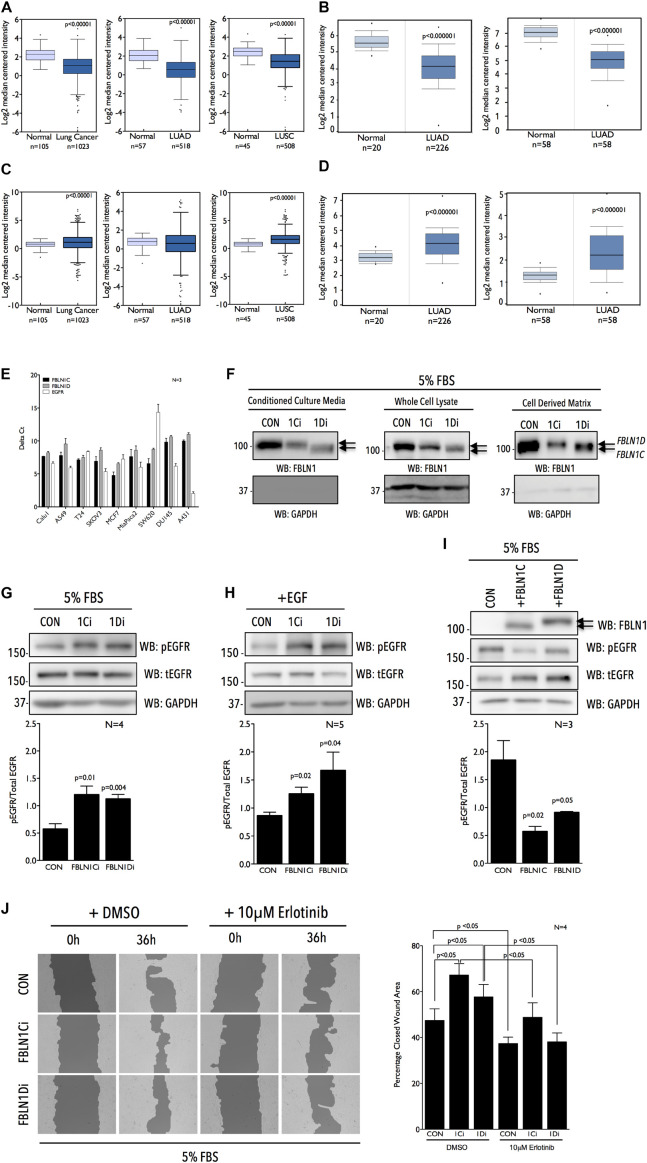
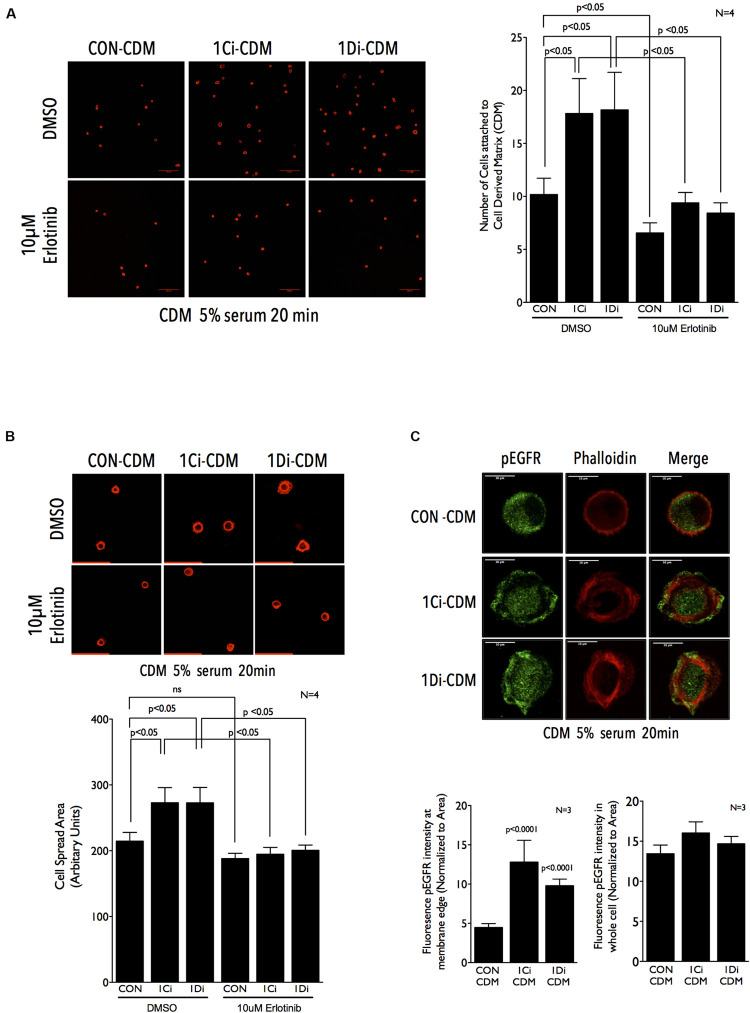
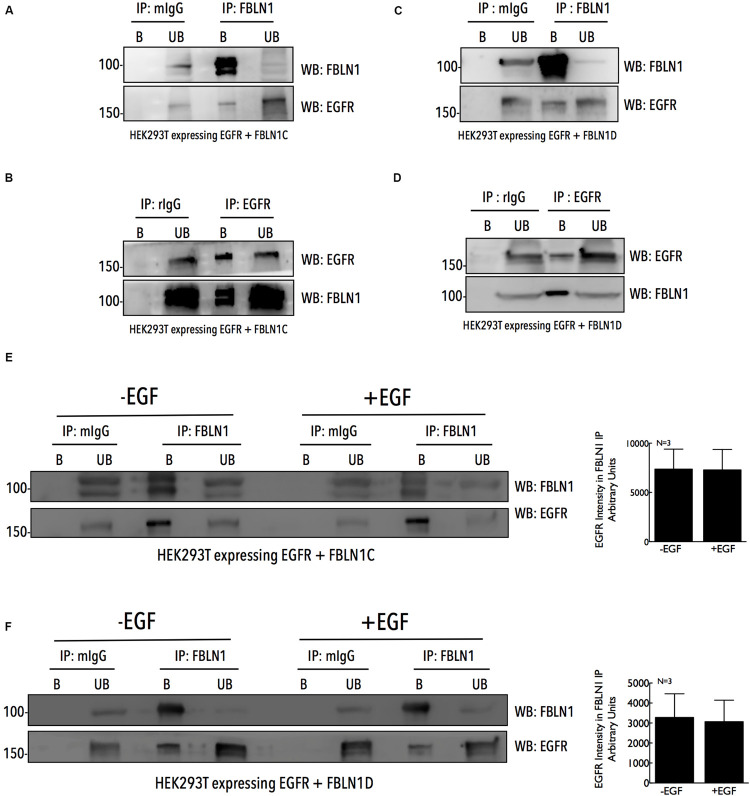
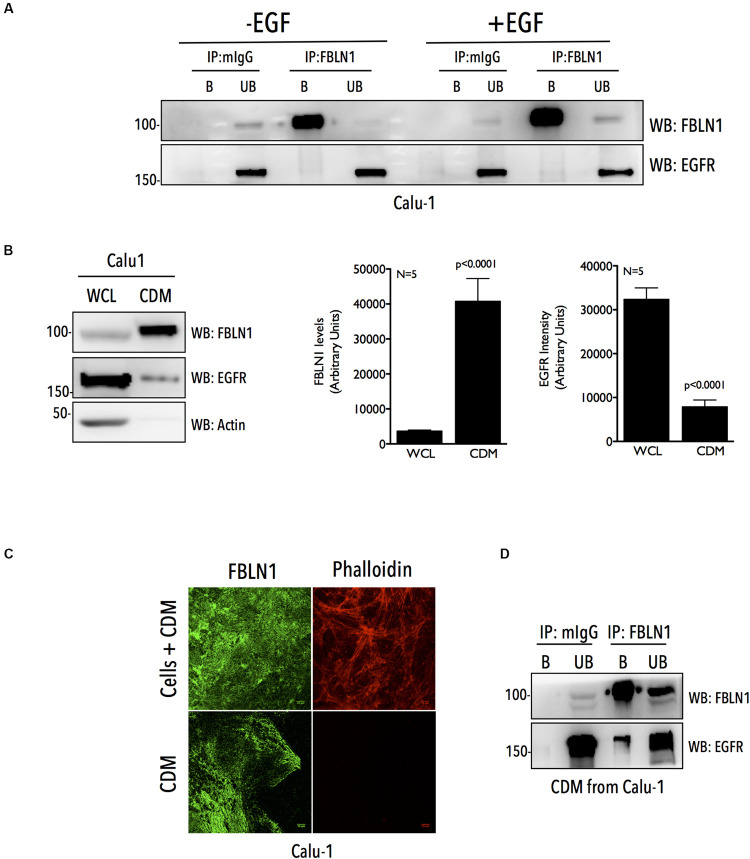
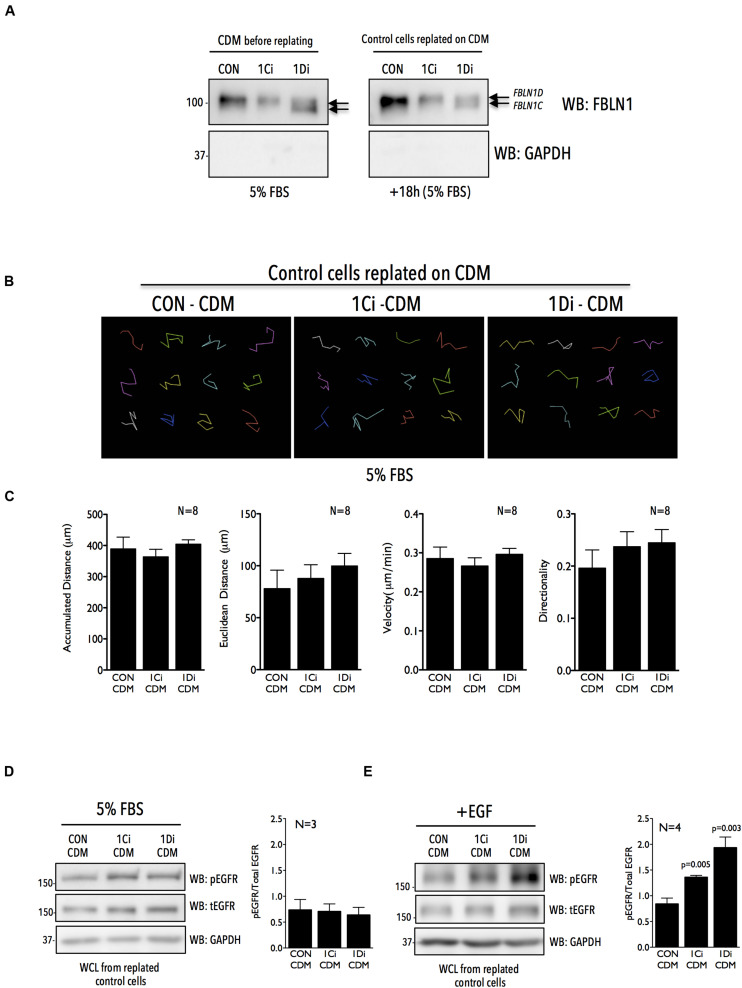
Epidermal Growth Factor Receptor (EGFR) is a known promoter of tumor progression and is overexpressed in lung cancers. Growth factor receptors (including EGFR) are known to interact with extracellular matrix (ECM) proteins, which regulate their activation and function. Fibulin-1 (FBLN1) is a major component of the ECM in lung tissue, and its levels are known to be downregulated in non-small cell lung cancers (NSCLC). To test the possible role FBLN1 isoforms could have in regulating EGFR signaling and function in lung cancer, we performed siRNA mediated knockdown of FBLN1C and FBLN1D in NSCLC Calu-1 cells. Their loss significantly increased basal (with serum) and EGF (Epidermal Growth Factor) mediated EGFR activation without affecting net EGFR levels. Overexpression of FBLN1C and FBLN1D also inhibits EGFR activation confirming their regulatory crosstalk. Loss of FBLN1C and FBLN1D promotes EGFR-dependent cell migration, inhibited upon Erlotinib treatment. Mechanistically, both FBLN1 isoforms interact with EGFR, their association not dependent on its activation. Notably, cell-derived matrix (CDM) enriched FBLN1 binds EGFR. Calu-1 cells plated on CDM derived from FBLN1C and FBLN1D knockdown cells show a significant increase in EGF mediated EGFR activation. This promotes cell adhesion and spreading with active EGFR enriched at membrane ruffles. Both adhesion and spreading on CDMs is significantly reduced by Erlotinib treatment. Together, these findings show FBLN1C/1D, as part of the ECM, can bind and regulate EGFR activation and function in NSCLC Calu-1 cells. They further highlight the role tumor ECM composition could have in influencing EGFR dependent lung cancers.
表皮生长因子受体(EGFR)是已知的肿瘤进展促进因子,在肺癌中过表达。已知生长因子受体(包括EGFR)与细胞外基质(ECM)蛋白相互作用,后者调节其激活和功能。纤连蛋白-1(FBLN1)是肺组织中ECM的主要成分,已知其水平在非小细胞肺癌(NSCLC)中下调。为了测试FBLN1亚型在调节肺癌中EGFR信号传导和功能方面可能发挥的作用,我们在NSCLC Calu-1细胞中进行了siRNA介导的FBLN1C和FBLN1D敲低。它们的缺失显著增加了基础(有血清)和表皮生长因子(EGF)介导的EGFR激活,而不影响EGFR的净水平。FBLN1C和FBLN1D的过表达也抑制了EGFR激活,证实了它们之间的调节性相互作用。FBLN1C和FBLN1D的缺失促进了EGFR依赖性细胞迁移,厄洛替尼治疗可抑制这种迁移。从机制上讲,两种FBLN1亚型都与EGFR相互作用,它们的结合不依赖于EGFR的激活。值得注意的是,细胞衍生基质(CDM)中富集的FBLN1与EGFR结合。接种在源自FBLN1C和FBLN1D敲低细胞的CDM上的Calu-1细胞显示,EGF介导的EGFR激活显著增加。这促进了细胞黏附和铺展,活性EGFR富集在膜皱襞处。厄洛替尼治疗显著降低了在CDM上的黏附和铺展。总之,这些发现表明,作为ECM的一部分,FBLN1C/1D可以结合并调节NSCLC Calu-1细胞中EGFR的激活和功能。它们进一步强调了肿瘤ECM组成在影响EGFR依赖性肺癌方面可能发挥的作用。