Caffino Lucia, Verheij Michel M M, Roversi Karine, Targa Giorgia, Mottarlini Francesca, Popik Piotr, Nikiforuk Agnieska, Golebiowska Joanna, Fumagalli Fabio, Homberg Judith R
Department of Pharmacological and Biomolecular Sciences, Università degli Studi di Milano, Milan, Italy.
Department of Cognitive Neuroscience, Donders Institute for Brain, Cognition and Behaviour, Radboud University Nijmegen Medical Centre, Nijmegen, The Netherlands.
Br J Pharmacol. 2020 Oct;177(19):4532-4547. doi: 10.1111/bph.15211. Epub 2020 Aug 30.
Amphetamine (AMPH) use disorder is a serious health concern, but, surprisingly, little is known about the vulnerability to the moderate and compulsive use of this psychostimulant and its underlying mechanisms. Previous research showed that inherited serotonin transporter (SERT) down-regulation increases the motor response to cocaine, as well as moderate (as measured during daily 1-h self-administration sessions) and compulsive (as measured during daily 6-h self-administration sessions) intake of this psychostimulant. Here, we sought to investigate whether these findings generalize to AMPH and the underlying mechanisms in the nucleus accumbens.
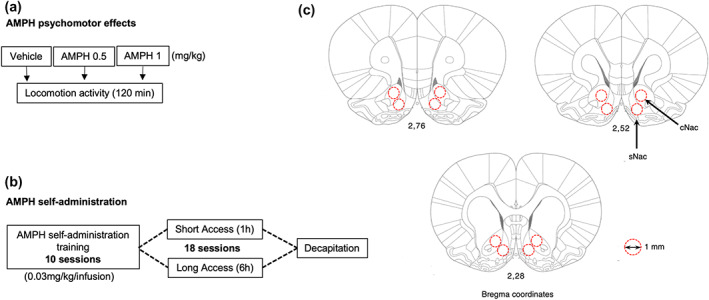
In serotonin transporter knockout (SERT ) and wild-type control (SERT ) rats, we assessed the locomotor response to acute AMPH and i.v. AMPH self-administration under short access (ShA: 1-h daily sessions) and long access (LgA: 6-h daily sessions) conditions. Twenty-four hours after AMPH self-administration, we analysed the expression of glutamate system components in the nucleus accumbens shell and core.
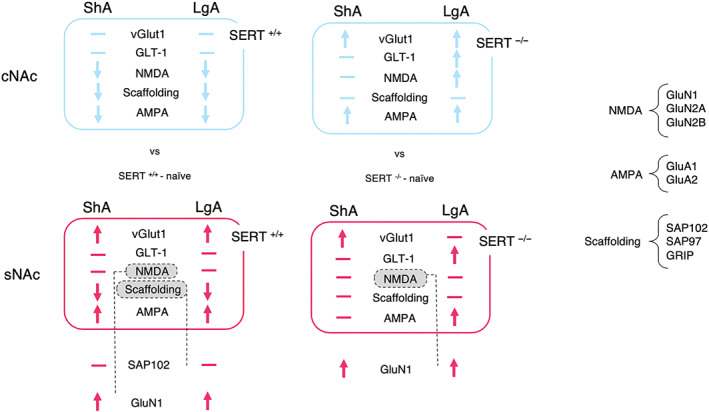
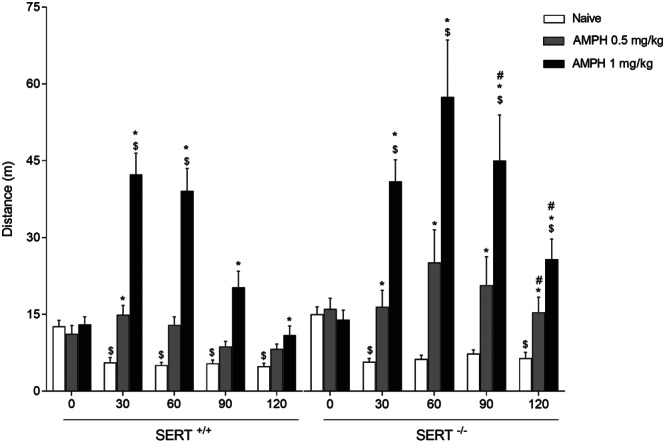
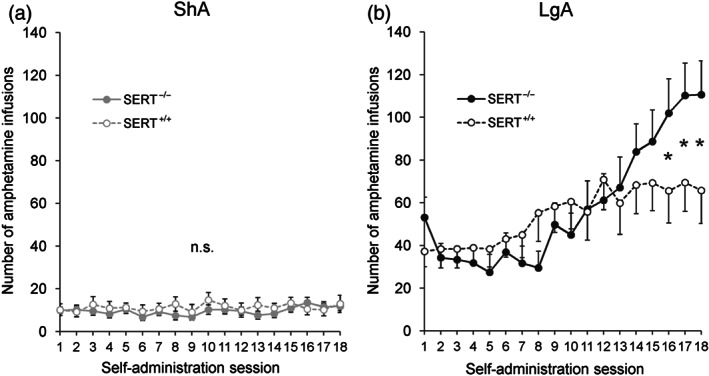
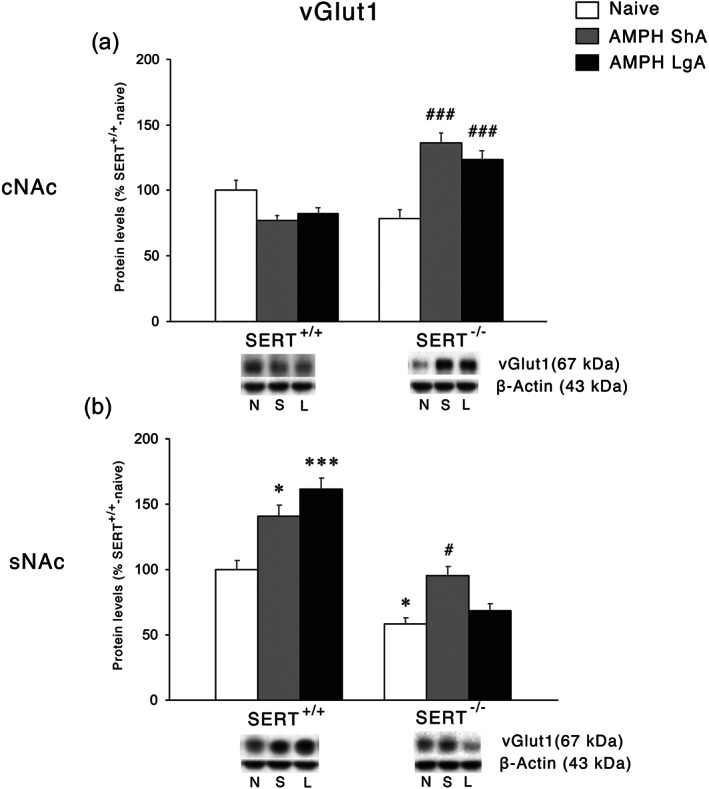
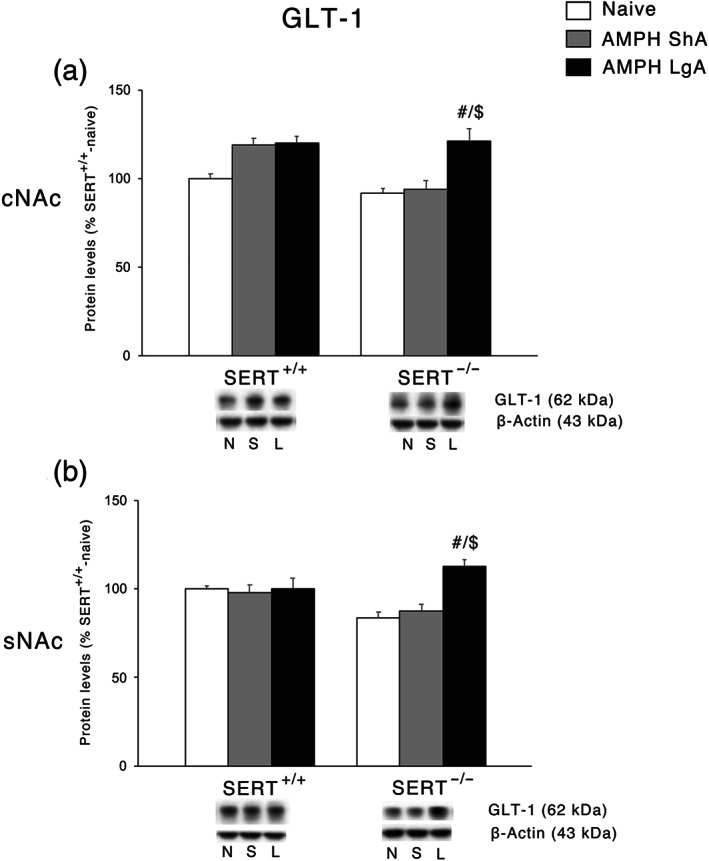
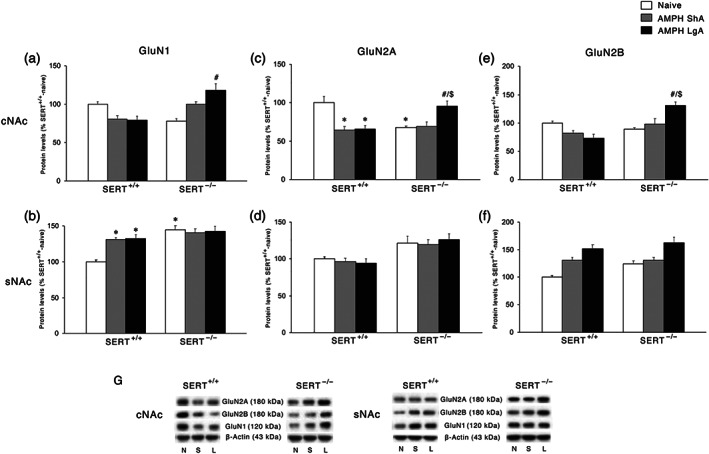
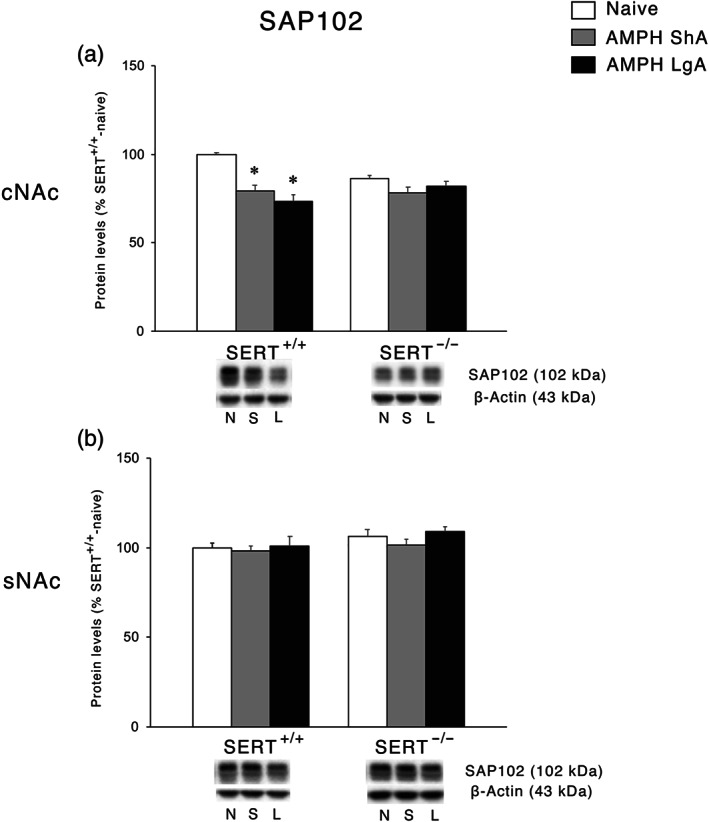
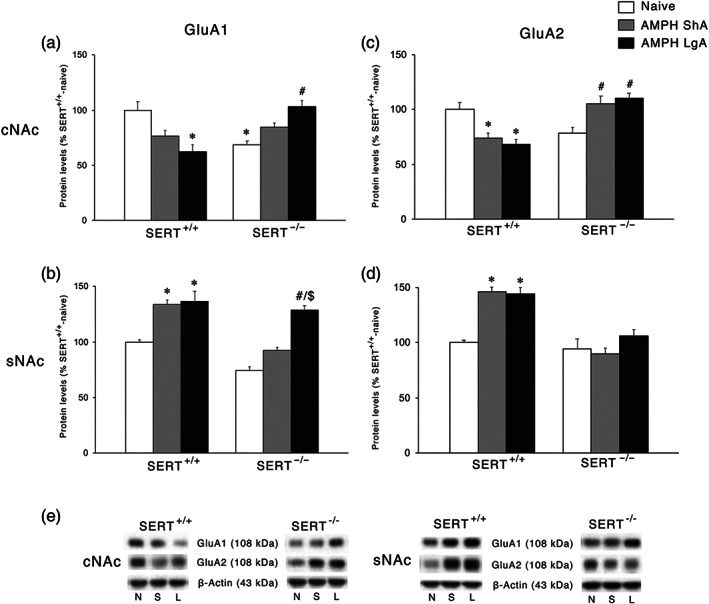
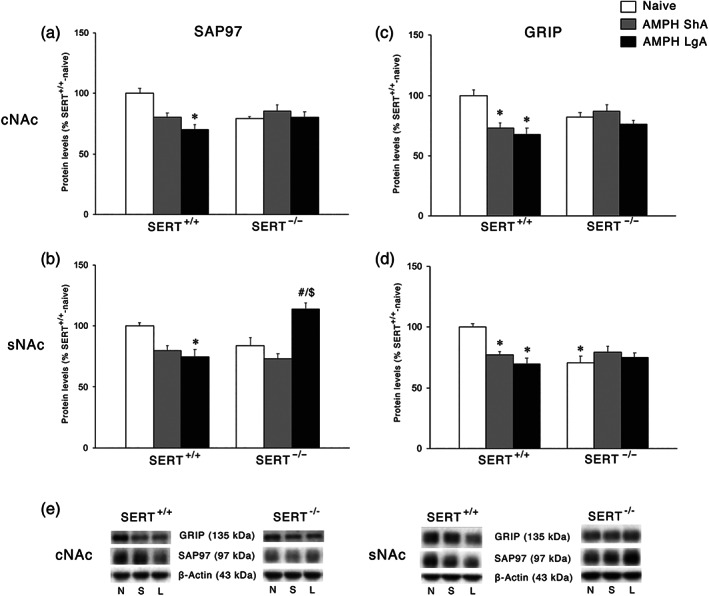
We found that SERT animals displayed an increased AMPH-induced locomotor response and increased AMPH self-administration under LgA but not ShA conditions. Further, we observed changes in the vesicular and glial glutamate transporters, NMDA and AMPA receptor subunits, and their respective postsynaptic scaffolding proteins as function of SERT genotype and AMPH exposure (baseline, ShA, and LgA), specifically in the nucleus accumbens shell.
We demonstrate that SERT gene deletion increases the psychomotor and reinforcing effects of AMPH and that the latter is potentially mediated, at least in part, by homeostatic changes in the glutamatergic synapse of the nucleus accumbens shell and/or core.
苯丙胺(AMPH)使用障碍是一个严重的健康问题,但令人惊讶的是,对于这种精神兴奋剂的适度和强迫性使用的易感性及其潜在机制知之甚少。先前的研究表明,遗传性5-羟色胺转运体(SERT)下调会增加对可卡因的运动反应,以及这种精神兴奋剂的适度(在每日1小时自我给药期间测量)和强迫性(在每日6小时自我给药期间测量)摄入。在此,我们试图研究这些发现是否适用于AMPH以及伏隔核中的潜在机制。
在5-羟色胺转运体基因敲除(SERT-/-)和野生型对照(SERT+/+)大鼠中,我们评估了在短时间给药(ShA:每日1小时给药)和长时间给药(LgA:每日6小时给药)条件下对急性AMPH的运动反应和静脉注射AMPH的自我给药情况。在AMPH自我给药24小时后,我们分析了伏隔核壳和核心中谷氨酸系统成分的表达。
我们发现,SERT-/-动物在LgA条件下而非ShA条件下表现出AMPH诱导的运动反应增加和AMPH自我给药增加。此外,我们观察到囊泡和胶质谷氨酸转运体、NMDA和AMPA受体亚基及其各自的突触后支架蛋白的变化,这些变化是SERT基因型和AMPH暴露(基线、ShA和LgA)的函数,特别是在伏隔核壳中。
我们证明SERT基因缺失会增加AMPH的精神运动和强化作用,并且后者可能至少部分地由伏隔核壳和/或核心的谷氨酸能突触的稳态变化介导。