Fernandes Mónica T, Calado Sofia M, Mendes-Silva Leonardo, Bragança José
School of Health, Universidade do Algarve, Campus of Gambelas, Faro 8005-139, Portugal.
Centre for Biomedical Research, Universidade do Algarve, Campus of Gambelas, Faro 8005-139, Portugal.
World J Clin Oncol. 2020 May 24;11(5):260-274. doi: 10.5306/wjco.v11.i5.260.
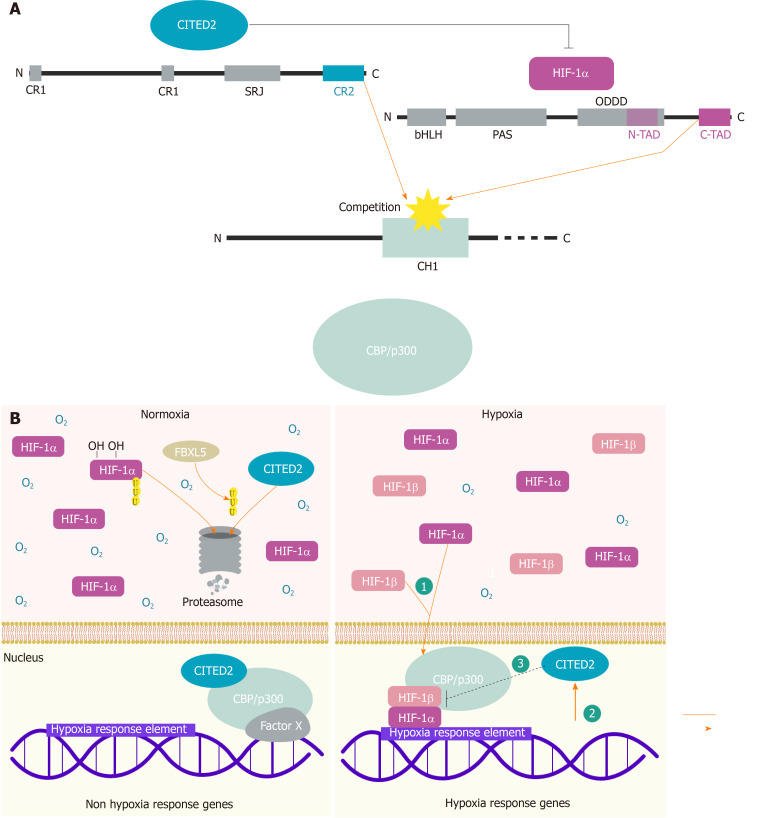
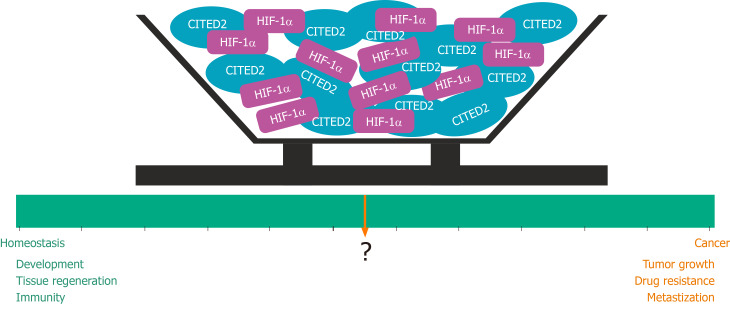
CITED2 (CBP/p300-interacting transactivator with Glu/Asp-rich C-terminal domain, 2) is a ubiquitously expressed protein exhibiting a high affinity for the CH1 domain of the transcriptional co-activators CBP/p300, for which it competes with hypoxia-inducible factors (HIFs). CITED2 is particularly efficient in the inhibition of HIF-1α-dependent transcription in different contexts, ranging from organ development and metabolic homeostasis to tissue regeneration and immunity, being also potentially involved in various other physiological processes. In addition, CITED2 plays an important role in inhibiting HIF in some diseases, including kidney and heart diseases and type 2-diabetes. In the particular case of cancer, CITED2 either functions by promoting or suppressing cancer development depending on the context and type of tumors. For instance, CITED2 overexpression promotes breast and prostate cancers, as well as acute myeloid leukemia, while its expression is downregulated to sustain colorectal cancer and hepatocellular carcinoma. In addition, the role of CITED2 in the maintenance of cancer stem cells reveals its potential as a target in non-small cell lung carcinoma and acute myeloid leukemia, for example. But besides the wide body of evidence linking both CITED2 and HIF signaling to carcinogenesis, little data is available regarding CITED2 role as a negative regulator of HIF-1α specifically in cancer. Therefore, comprehensive studies exploring further the interactions of these two important mediators in cancer-specific models are sorely needed and this can potentially lead to the development of novel targeted therapies.
CITED2(含富含谷氨酸/天冬氨酸的C末端结构域的CBP/p300相互作用反式激活因子2)是一种广泛表达的蛋白质,对转录共激活因子CBP/p300的CH1结构域具有高亲和力,并与缺氧诱导因子(HIFs)竞争结合该结构域。在从器官发育、代谢稳态到组织再生和免疫等不同情况下,CITED2在抑制HIF-1α依赖性转录方面特别有效,还可能参与各种其他生理过程。此外,CITED2在一些疾病(包括肾脏疾病、心脏病和2型糖尿病)中抑制HIF方面发挥重要作用。在癌症的特定情况下,CITED2根据肿瘤的背景和类型,通过促进或抑制癌症发展发挥作用。例如,CITED2过表达促进乳腺癌、前列腺癌以及急性髓系白血病,而其表达在结直肠癌和肝细胞癌中下调以维持肿瘤发展。此外,CITED2在维持癌症干细胞方面的作用揭示了其作为非小细胞肺癌和急性髓系白血病等疾病靶点的潜力。但是,除了大量将CITED2和HIF信号传导与致癌作用联系起来的证据外,关于CITED2作为HIF-1α在癌症中特异性负调节因子的作用的数据很少。因此,迫切需要进行全面研究,在癌症特异性模型中进一步探索这两种重要介质之间的相互作用,这可能会导致新型靶向治疗方法的开发。