Department of Infrastructure Engineering, University of Melbourne, Melbourne, Australia.
Department of Water Science and Engineering, IHE-Delft, P.O. Box 3015, 2610 DA, Delft, The Netherlands.
Sci Rep. 2020 Jul 30;10(1):11629. doi: 10.1038/s41598-020-67736-6.
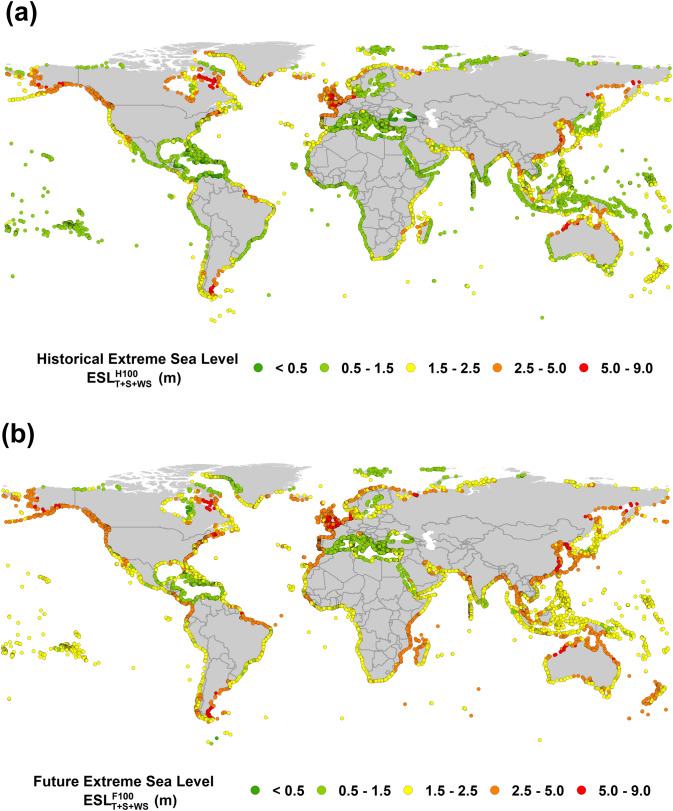
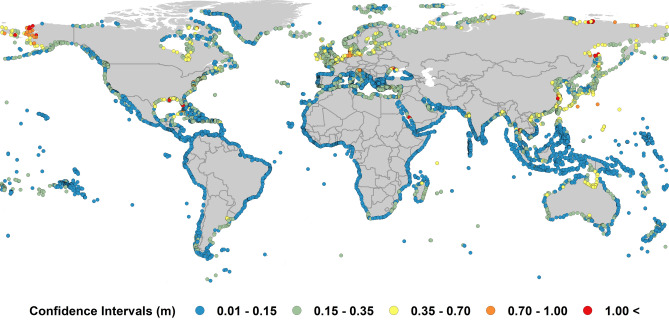
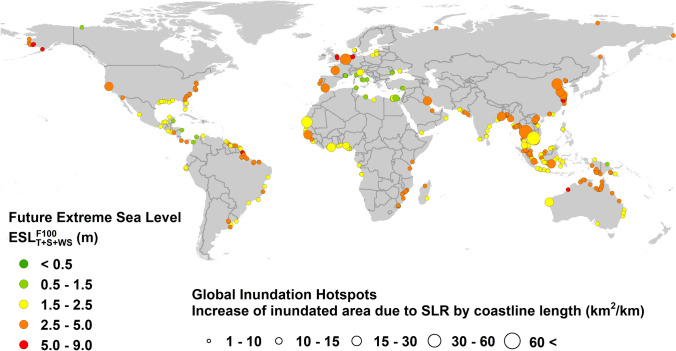
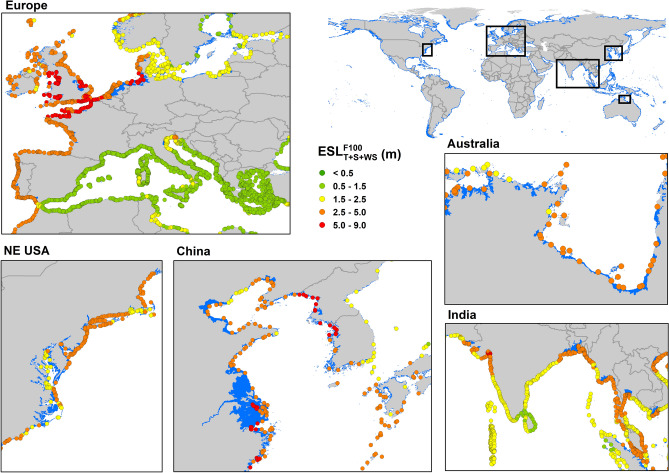
Global models of tide, storm surge, and wave setup are used to obtain projections of episodic coastal flooding over the coming century. The models are extensively validated against tide gauge data and the impact of uncertainties and assumptions on projections estimated in detail. Global "hotspots" where there is projected to be a significant change in episodic flooding by the end of the century are identified and found to be mostly concentrated in north western Europe and Asia. Results show that for the case of, no coastal protection or adaptation, and a mean RCP8.5 scenario, there will be an increase of 48% of the world's land area, 52% of the global population and 46% of global assets at risk of flooding by 2100. A total of 68% of the global coastal area flooded will be caused by tide and storm events with 32% due to projected regional sea level rise.
全球潮汐、风暴潮和波浪附加模型用于获取未来一个世纪偶发性沿海洪水的预测。这些模型经过广泛的潮汐计数据验证,并详细估计了不确定性和假设对预测的影响。确定了预计本世纪末全球“热点”地区偶发性洪水将发生重大变化的地点,发现主要集中在西北欧和亚洲。结果表明,在没有沿海保护或适应措施的情况下,如果采用 RCP8.5 情景,到 2100 年,世界上将有 48%的陆地面积、52%的全球人口和 46%的全球资产面临洪水风险。全球受洪水影响的沿海地区中,有 68%是由潮汐和风暴事件引起的,32%是由于预计的区域性海平面上升引起的。