Max-Planck Institute for Heart and Lung Research, Bad Nauheim, Germany.
German Center for Lung Research (DZL), Giessen, Germany.
Sci Rep. 2020 Jul 30;10(1):12864. doi: 10.1038/s41598-020-69737-x.
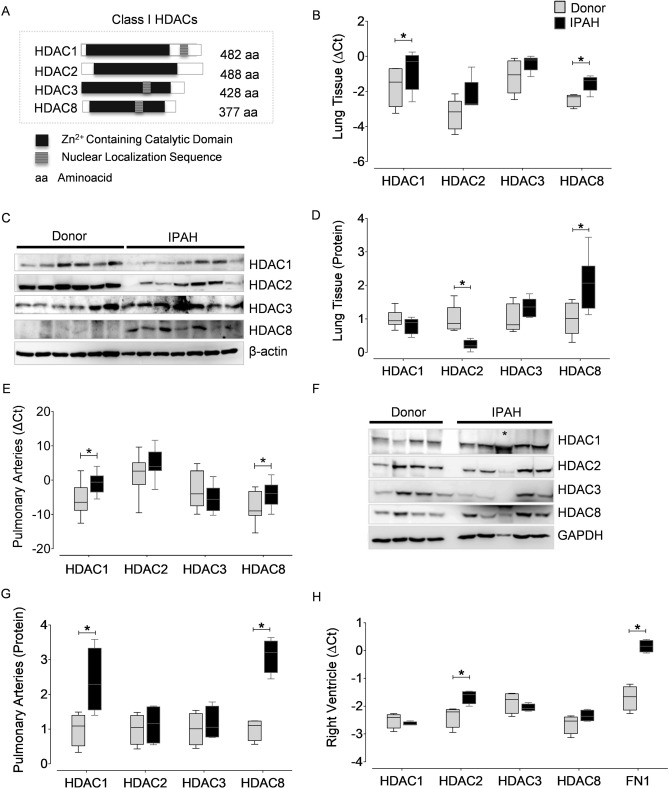
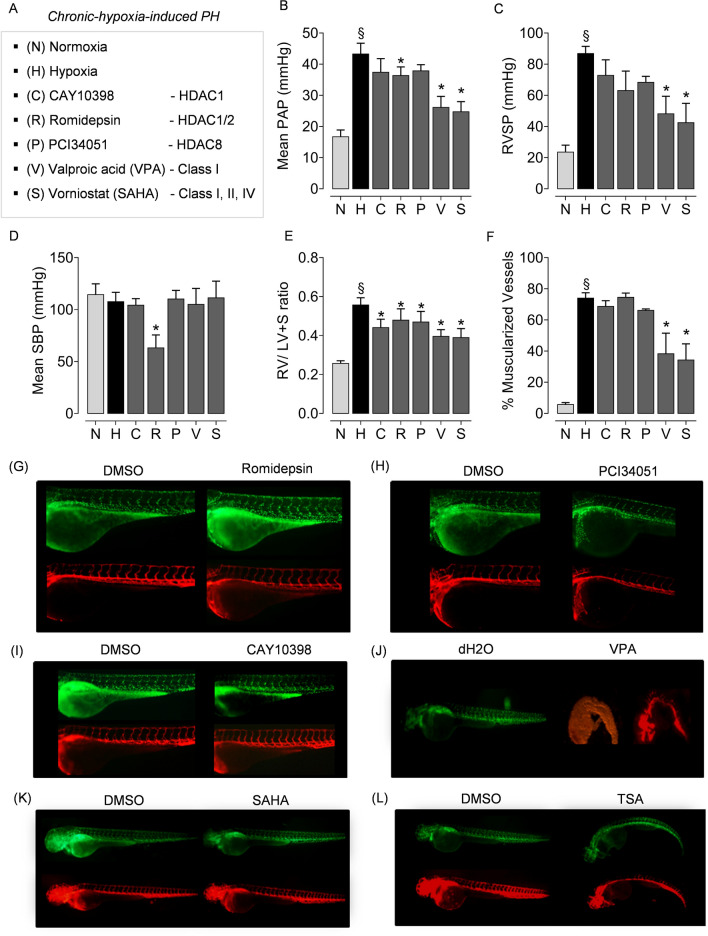
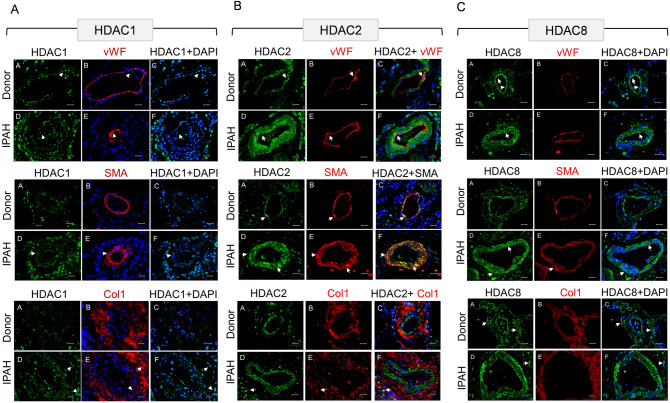
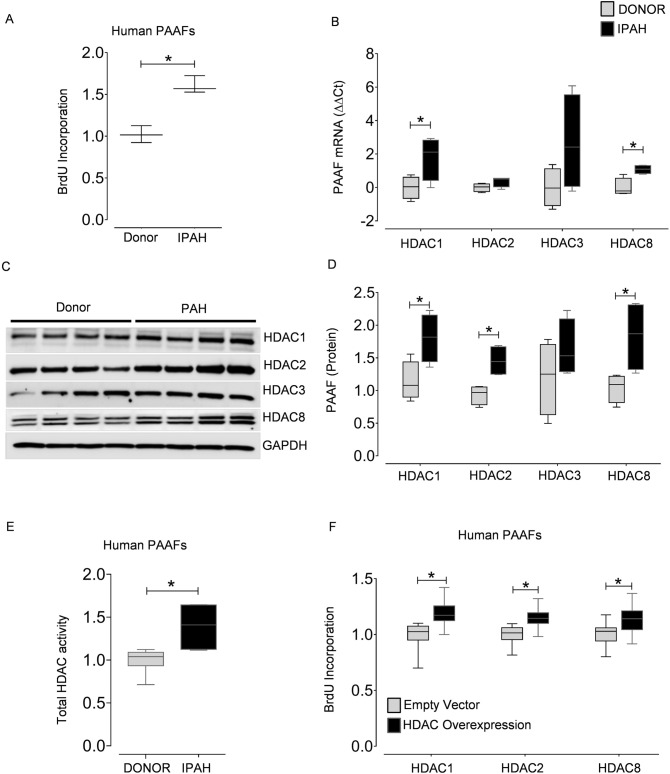
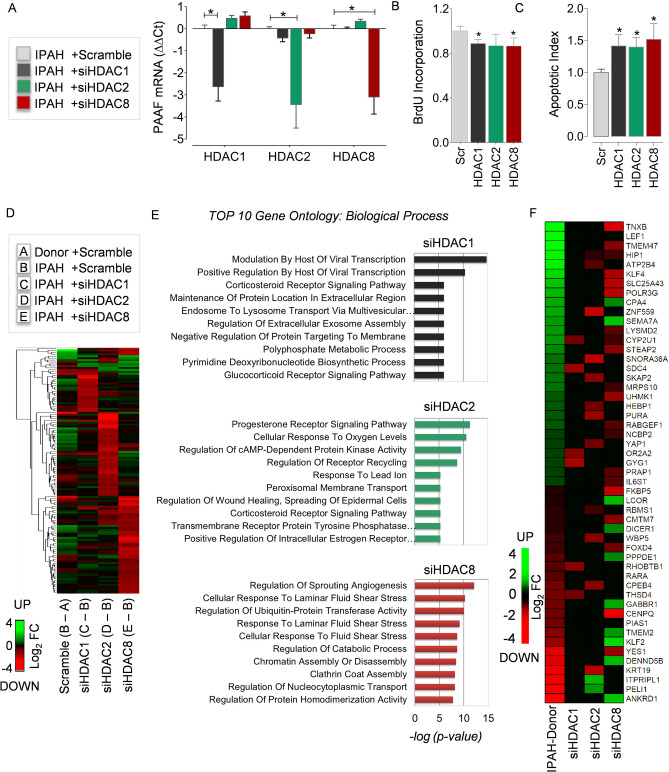
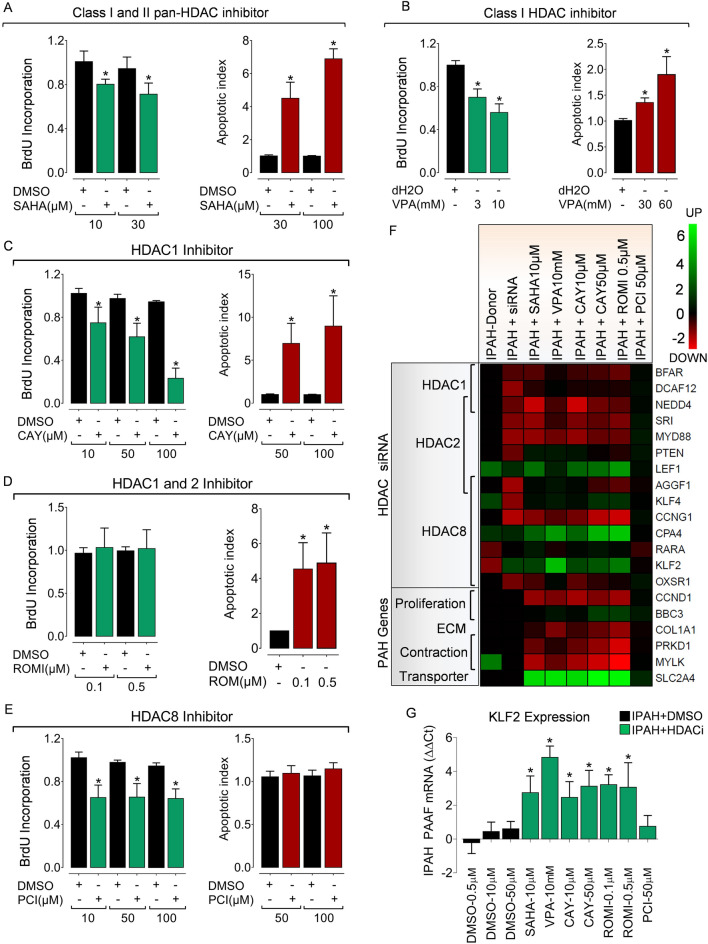
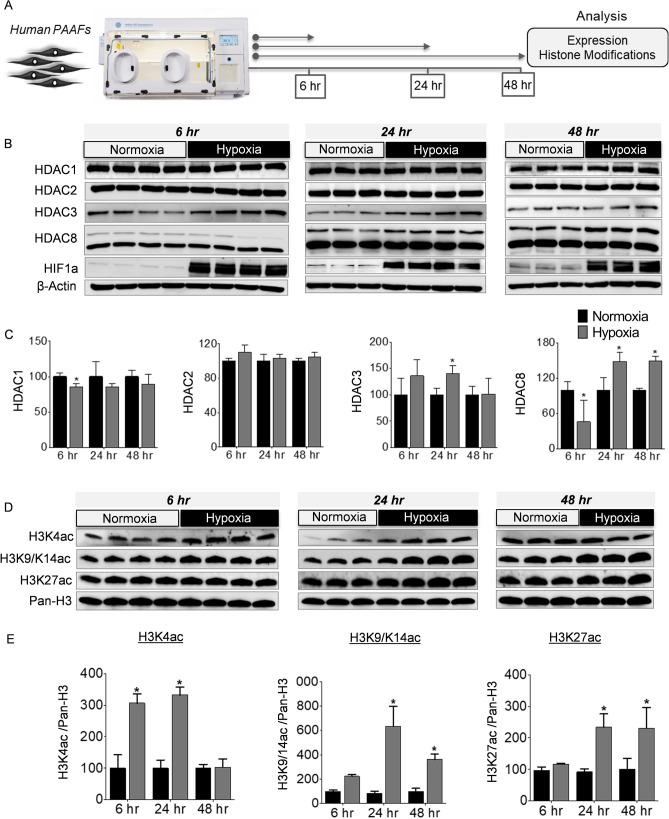
Pharmacological modulation of class I histone deacetylases (HDAC) has been evaluated as a therapeutic strategy for pulmonary hypertension (PH) in experimental models of PH. However, information of their expression, regulation and transcriptional targets in human PH and the therapeutic potential of isoform-selective enzyme modulation are lacking. Comprehensive analysis of expression and regulation of class I HDACs (HDAC1, HDAC2, HDAC3 and HDAC8) was performed in cardiopulmonary tissues and adventitial fibroblasts isolated from pulmonary arteries (PAAF) of idiopathic pulmonary arterial hypertension (IPAH) patients and healthy donors. Cellular functions and transcriptional targets of HDAC enzymes were investigated. Therapeutic effects of pan-HDAC (Vorinostat), class-selective (VPA) and isoform-selective (CAY10398, Romidepsin, PCI34051) HDAC inhibitors were evaluated ex vivo (IPAH-PAAF, IPAH-PASMC) and in vivo (rat chronic hypoxia-induced PH and zebrafish angiogenesis). Our screening identifies dysregulation of class I HDAC isoforms in IPAH. Particularly, HDAC1 and HDAC8 were consistently increased in IPAH-PAs and IPAH-PAAFs, whereas HDAC2 and HDAC8 showed predominant localization with ACTA2-expressing cells in extensively remodeled IPAH-PAs. Hypoxia not only significantly modulated protein levels of deacetylase (HDAC8), but also significantly caused dynamic changes in the global histone lysine acetylation levels (H3K4ac, H3K9/K14ac and H3K27ac). Importantly, isoform-specific RNA-interference revealed that HDAC isoforms regulate distinct subset of transcriptome in IPAH-PAAFs. Reduced transcript levels of KLF2 in IPAH-PAAFs was augmented by HDAC8 siRNA and HDAC inhibitors, which also attenuated IPAH-associated hyperproliferation and apoptosis-resistance ex vivo, and mitigated chronic hypoxia-induced established PH in vivo, at variable degree. Class I HDAC isoforms are significantly dysregulated in human PAH. Isoform-selective HDAC inhibition is a viable approach to circumvent off-target effects.
I 类组蛋白去乙酰化酶(HDAC)的药理学调节已被评估为肺动脉高压(PH)的治疗策略,在 PH 的实验模型中。然而,在人类 PH 中,它们的表达、调节和转录靶标以及同工型选择性酶调节的治疗潜力的信息仍然缺乏。对特发性肺动脉高压(IPAH)患者和健康供体的心肺组织和肺动脉外膜成纤维细胞(PAAF)中 I 类 HDAC(HDAC1、HDAC2、HDAC3 和 HDAC8)的表达和调节进行了全面分析。研究了 HDAC 酶的细胞功能和转录靶标。体外(IPAH-PAAF、IPAH-PASMC)和体内(大鼠慢性低氧诱导 PH 和斑马鱼血管生成)评价了 pan-HDAC(Vorinostat)、类选择性(VPA)和同工型选择性(CAY10398、Romidepsin、PCI34051)HDAC 抑制剂的治疗效果。我们的筛选确定了 IPAH 中 I 类 HDAC 同工型的失调。特别是,HDAC1 和 HDAC8 在 IPAH-PAs 和 IPAH-PAAFs 中持续增加,而 HDAC2 和 HDAC8 在广泛重塑的 IPAH-PAs 中与表达 ACTA2 的细胞具有主要定位。低氧不仅显著调节去乙酰化酶(HDAC8)的蛋白水平,而且还显著引起组蛋白赖氨酸乙酰化水平(H3K4ac、H3K9/K14ac 和 H3K27ac)的整体动态变化。重要的是,同工型特异性 RNA 干扰表明,HDAC 同工型在 IPAH-PAAFs 中调节不同的转录组子集。IPAH-PAAFs 中的 KLF2 转录水平降低,被 HDAC8 siRNA 和 HDAC 抑制剂增强,这也在体外减轻了 IPAH 相关的过度增殖和抗凋亡性,在体内减轻了慢性低氧诱导的已建立的 PH,程度不同。I 类 HDAC 同工型在人类 PAH 中显著失调。同工型选择性 HDAC 抑制是一种可行的方法,可以避免脱靶效应。