Lemos Ari S O, Florêncio Jônatas R, Pinto Nícolas C C, Campos Lara M, Silva Thiago P, Grazul Richard M, Pinto Priscila F, Tavares Guilherme D, Scio Elita, Apolônio Ana Carolina M, Melo Rossana C N, Fabri Rodrigo L
Bioactive Natural Products Laboratory, Department of Biochemistry, Institute of Biological Sciences, Federal University of Juiz de Fora, Juiz de Fora, Brazil.
Laboratory of Cellular Biology, Department of Biology, Institute of Biological Sciences, Federal University of Juiz de Fora, Juiz de Fora, Brazil.
Front Microbiol. 2020 Jul 7;11:1525. doi: 10.3389/fmicb.2020.01525. eCollection 2020.
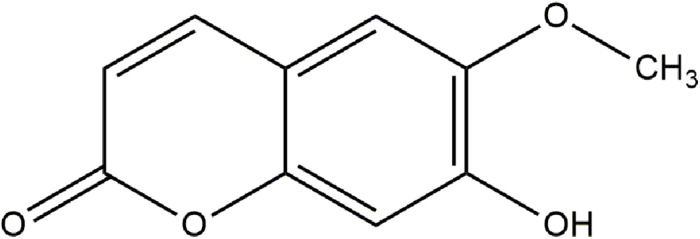
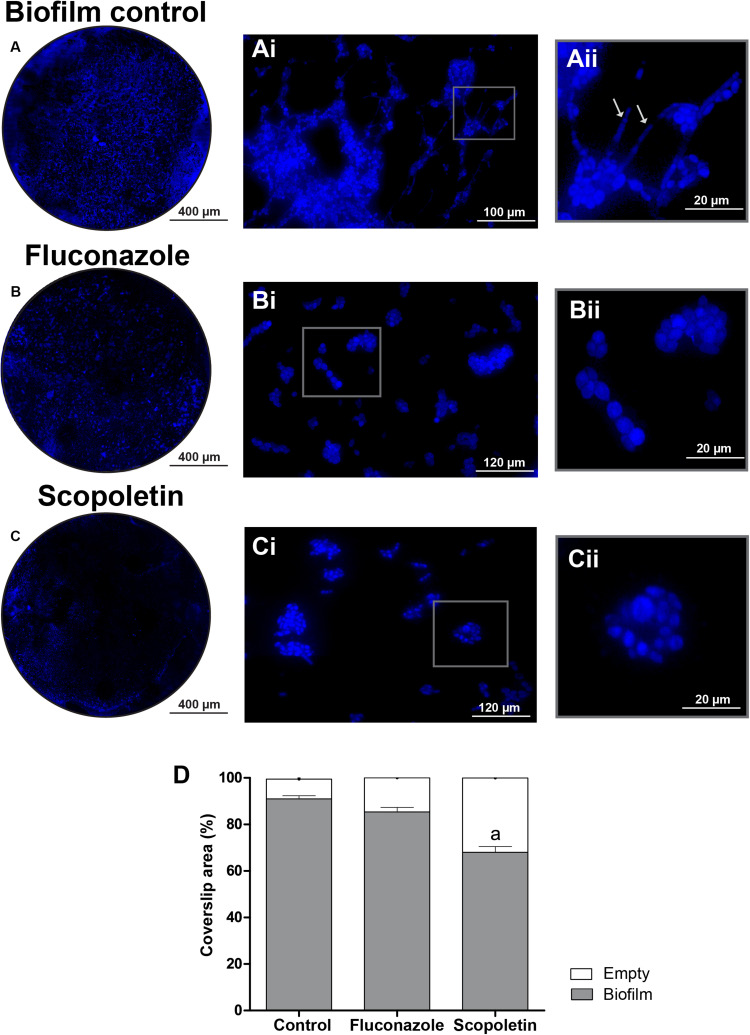
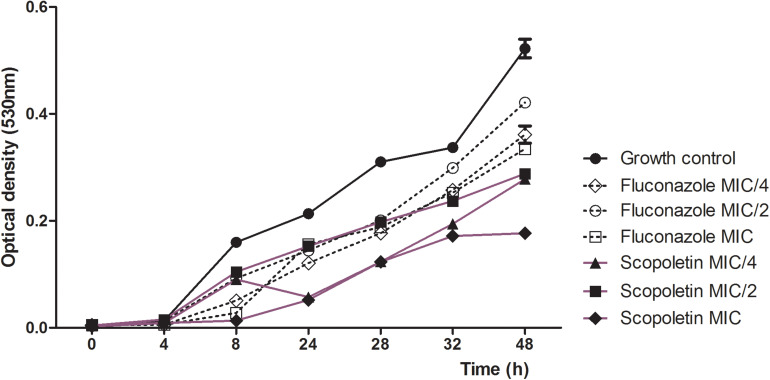
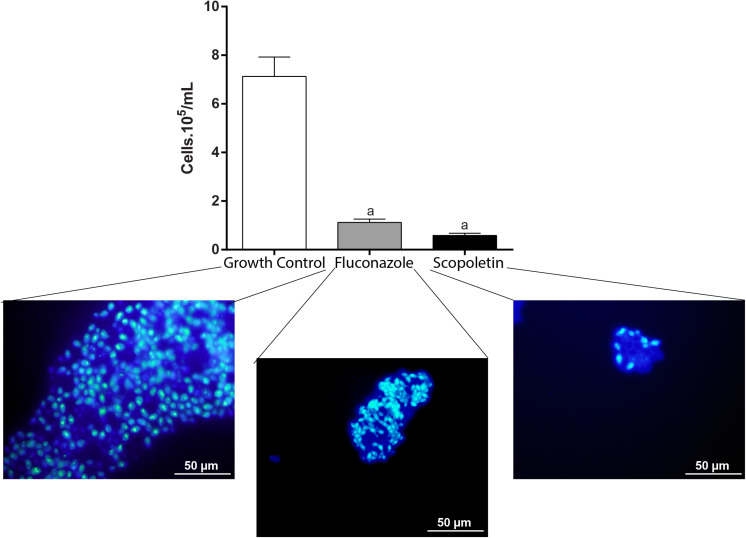
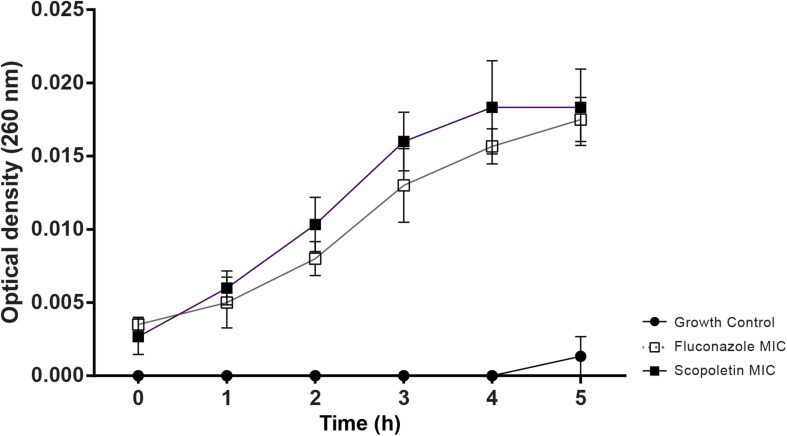
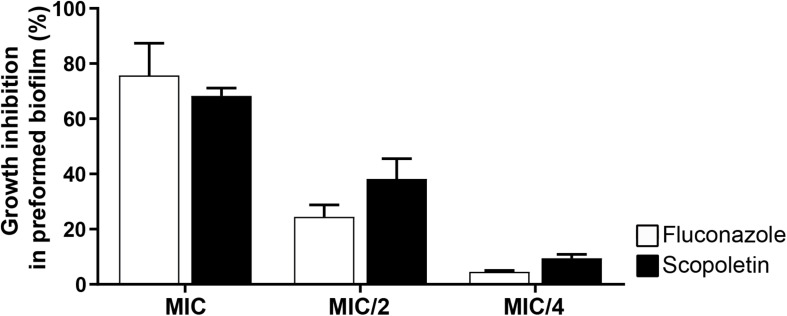
is one the most relevant biofilm-forming fungal species increasingly associated with invasive mucosal candidiasis worldwide. The amplified antifungal resistance supports the necessity for more effective and less toxic treatment, including the use of plant-derived natural products. Scopoletin, a natural coumarin, has shown antifungal properties against plant yeast pathogens. However, the antifungal activity of this coumarin against clinically relevant fungal species such as remains to be established. Here, we investigated the potential antifungal properties and mechanisms of action of scopoletin against a multidrug-resistant strain (ATCC 28707). First, scopoletin was isolated by high-performance liquid chromatography from , a plant species (family ) distributed throughout South America. Next, scopoletin was tested on cultivated for 48h in both planktonic and biofilm forms. Fungal planktonic growth inhibition was analyzed by evaluating minimal inhibitory concentration (MIC), time-kill kinetics and cell density whereas the mechanisms of action were investigated with nucleotide leakage, efflux pumps and sorbitol and ergosterol bioassays. Finally, the scopoletin ability to affect biofilms was evaluated through spectrophotometric and whole slide imaging approaches. In all procedures, fluconazole was used as a positive control. MIC values for scopoletin and fluconazole were 50 and 250 μg/L respectively, thus demonstrating a fungistatic activity for scopoletin. Scopoletin induced a significant decrease of growth curves and cell density (91.7% reduction) compared to the growth control. Its action was related to the fungal cell wall, affecting plasma membrane sterols. When associated with fluconazole, scopoletin led to inhibition of efflux pumps at the plasma membrane. Moreover, scopoletin not only inhibited the growth rate of preformed biofilms (68.2% inhibition at MIC value) but also significantly decreased the extent of biofilms growing on the surface of coverslips, preventing the formation of elongated fungal forms. Our data demonstrate, for the first time, that scopoletin act as an effective antifungal phytocompound against a multidrug-resistant strain of with properties that affect both planktonic and biofilm forms of this pathogen. Thus, the present findings support additional studies for antifungal drug development based on plant isolated-scopoletin to treat candidiasis caused by
是全球范围内与侵袭性黏膜念珠菌病相关性日益增加的最相关生物膜形成真菌物种之一。不断增强的抗真菌耐药性凸显了采用更有效且毒性更低的治疗方法的必要性,包括使用植物来源的天然产物。东莨菪素是一种天然香豆素,已显示出对植物酵母病原体的抗真菌特性。然而,这种香豆素对临床相关真菌物种(如 )的抗真菌活性仍有待确定。在此,我们研究了东莨菪素对多重耐药 菌株(ATCC 28707)的潜在抗真菌特性及作用机制。首先,通过高效液相色谱法从一种分布于南美洲的植物物种( 科)中分离出东莨菪素。接下来,对以浮游和生物膜形式培养48小时的 进行东莨菪素测试。通过评估最低抑菌浓度(MIC)、时间杀菌动力学和细胞密度来分析真菌浮游生长抑制情况,而通过核苷酸泄漏、外排泵以及山梨醇和麦角甾醇生物测定来研究作用机制。最后,通过分光光度法和全玻片成像方法评估东莨菪素影响 生物膜的能力。在所有实验过程中,氟康唑用作阳性对照。东莨菪素和氟康唑的MIC值分别为50和250 μg/L,从而证明东莨菪素具有抑菌活性。与生长对照相比,东莨菪素使 生长曲线和细胞密度显著降低(降低91.7%)。其作用与真菌细胞壁有关,影响质膜甾醇。当与氟康唑联合使用时,东莨菪素导致质膜外排泵受到抑制。此外,东莨菪素不仅抑制预先形成的生物膜的生长速率(在MIC值时抑制率为68.2%),而且显著降低盖玻片表面生长的生物膜程度,防止形成细长的真菌形态。我们的数据首次证明,东莨菪素作为一种有效的抗真菌植物化合物,对多重耐药 菌株具有活性,其特性可影响该病原体的浮游和生物膜形式。因此,本研究结果支持基于从植物中分离出的东莨菪素进行抗真菌药物开发的进一步研究,以治疗由 引起的念珠菌病