Department of Neurobiology, Care Sciences and Society, Karolinska Institutet, Alfred Nobels allé 23, SE-141 83, Huddinge, Sweden.
Division of Paediatrics, Department of Clinical Science, Intervention and Technology, Karolinska Institutet, SE-141 52, Huddinge, Sweden.
Obes Surg. 2020 Dec;30(12):4911-4918. doi: 10.1007/s11695-020-04880-y. Epub 2020 Jul 31.
Adherence to vitamin supplementation recommendations after bariatric surgery is generally poor, which is associated with nutritional deficiencies. Patients' own perspectives and reasons for poor adherence to vitamin supplementation recommendations have not yet been studied in depth. The purpose of this study was first to measure the accuracy of self-reported adherence to supplementation recommendations by using objective measures of vitamin D levels in blood and thereafter to explore perceptions of barriers and facilitators to participants' adherence to supplementation recommendations.
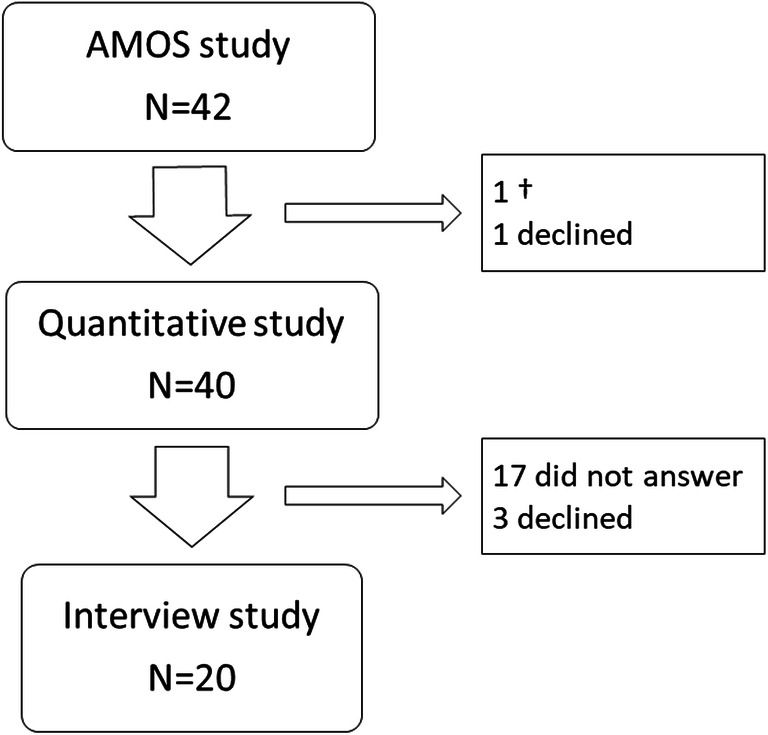
Participants were recruited from a prospective study investigating the outcome of bariatric surgery in adolescents with severe obesity. Mixed methods were used, including a quantitative part where vitamin D levels were analysed through 25(OH)D levels in blood and/or a questionnaire on adherence to supplementation programmes 5 years after surgery (n = 40) plus a qualitative part with semi-structured interviews (n = 20).
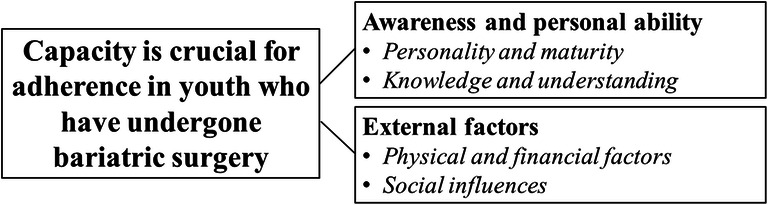
We found a convergence between self-reported adherence to vitamin supplementation and vitamin D 25(OH)D levels in blood indicating honestly in self-reported responses. The qualitative evaluations resulted in the categories awareness and personal capability and external factors. In the analysis, an overall theme emerged; capacity is crucial for adherence in youth who have undergone bariatric surgery.
Bariatric surgery is a comprehensive procedure that requires lifelong treatment afterwards. There is coherence between what adolescents actually do and what they say they do. Capacity is crucial for adherence and social support has been shown to be important.
减重手术后,患者对维生素补充建议的依从性通常较差,这与营养缺乏有关。患者自身对维生素补充建议依从性差的看法和原因尚未得到深入研究。本研究的目的首先是通过测量血液中维生素 D 水平的客观指标来衡量自我报告的补充建议依从性的准确性,然后探讨参与者对补充建议依从性的障碍和促进因素的看法。
参与者是从一项前瞻性研究中招募的,该研究调查了严重肥胖青少年接受减重手术后的结果。采用混合方法,包括定量部分,通过血液中的 25(OH)D 水平分析维生素 D 水平,以及手术后 5 年对补充计划依从性的问卷调查(n=40),加上半结构化访谈的定性部分(n=20)。
我们发现自我报告的维生素补充依从性与血液中的维生素 D 25(OH)D 水平之间存在一致性,这表明自我报告的反应是诚实的。定性评估产生了意识和个人能力以及外部因素这两个类别。在分析中,出现了一个总体主题;能力对于接受过减重手术的青少年的依从性至关重要。
减重手术是一个全面的程序,需要终身治疗。青少年实际所做的和他们所说的是一致的。能力对于依从性至关重要,社会支持已被证明很重要。