Department of Physiological Sciences, University of Florida, Gainesville, FL, USA.
Mallinckrodt Institute of Radiology, Washington University School of Medicine, St Louis, MO, USA.
Exp Physiol. 2020 Oct;105(10):1673-1683. doi: 10.1113/EP088900. Epub 2020 Aug 12.
What is the central question of this study? What is the impact of airway cholinergic history on the properties of airway mucus secretion in a cystic fibrosis-like environment? What is the main finding and its importance? Prior cholinergic challenge slightly modifies the characteristics of mucus secretion in response to a second cholinergic challenge in a diminished bicarbonate and chloride transport environment. Such modifications might lead to retention of mucus on the airway surface, thereby potentiating exacerbations of airway disease.
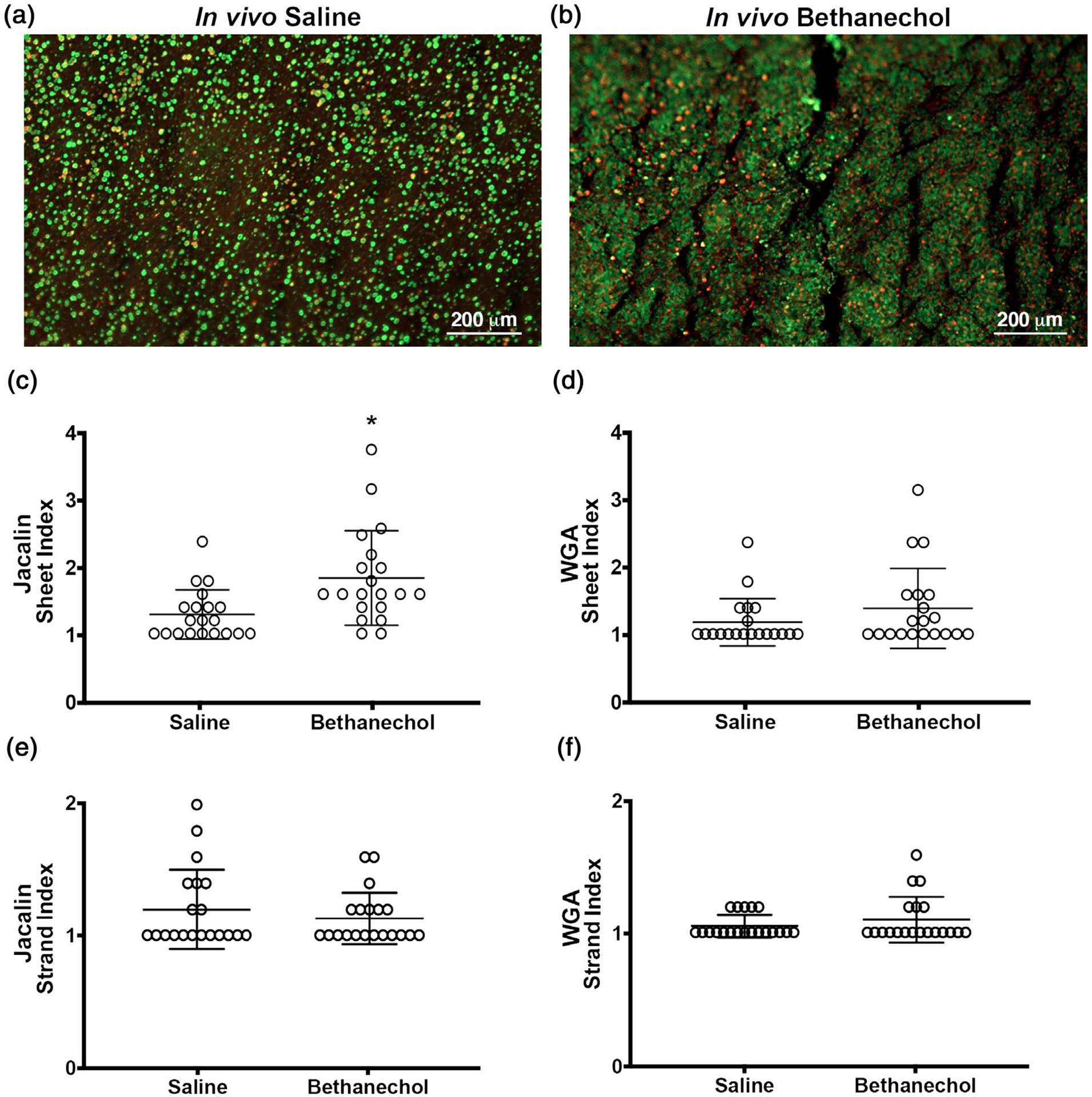
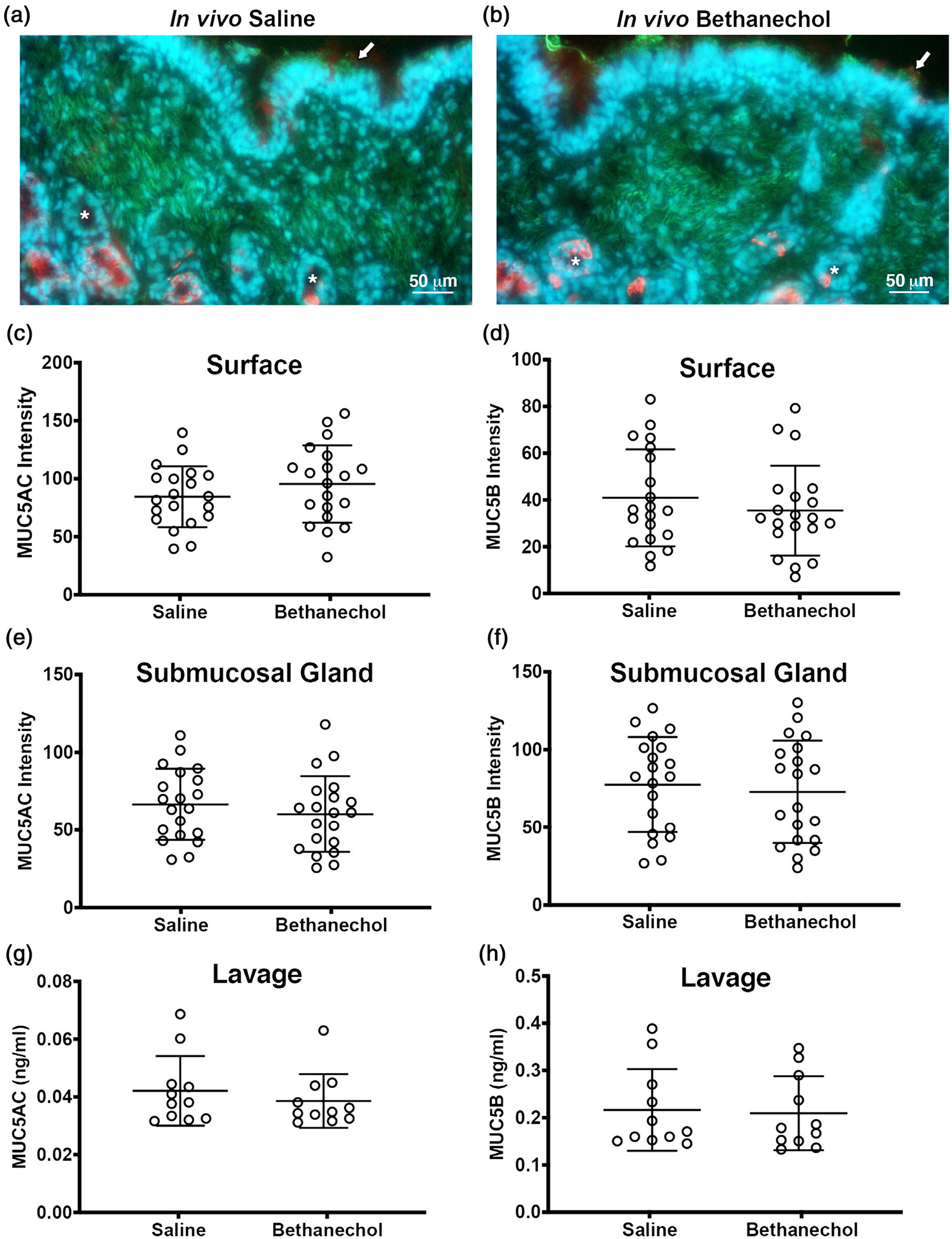
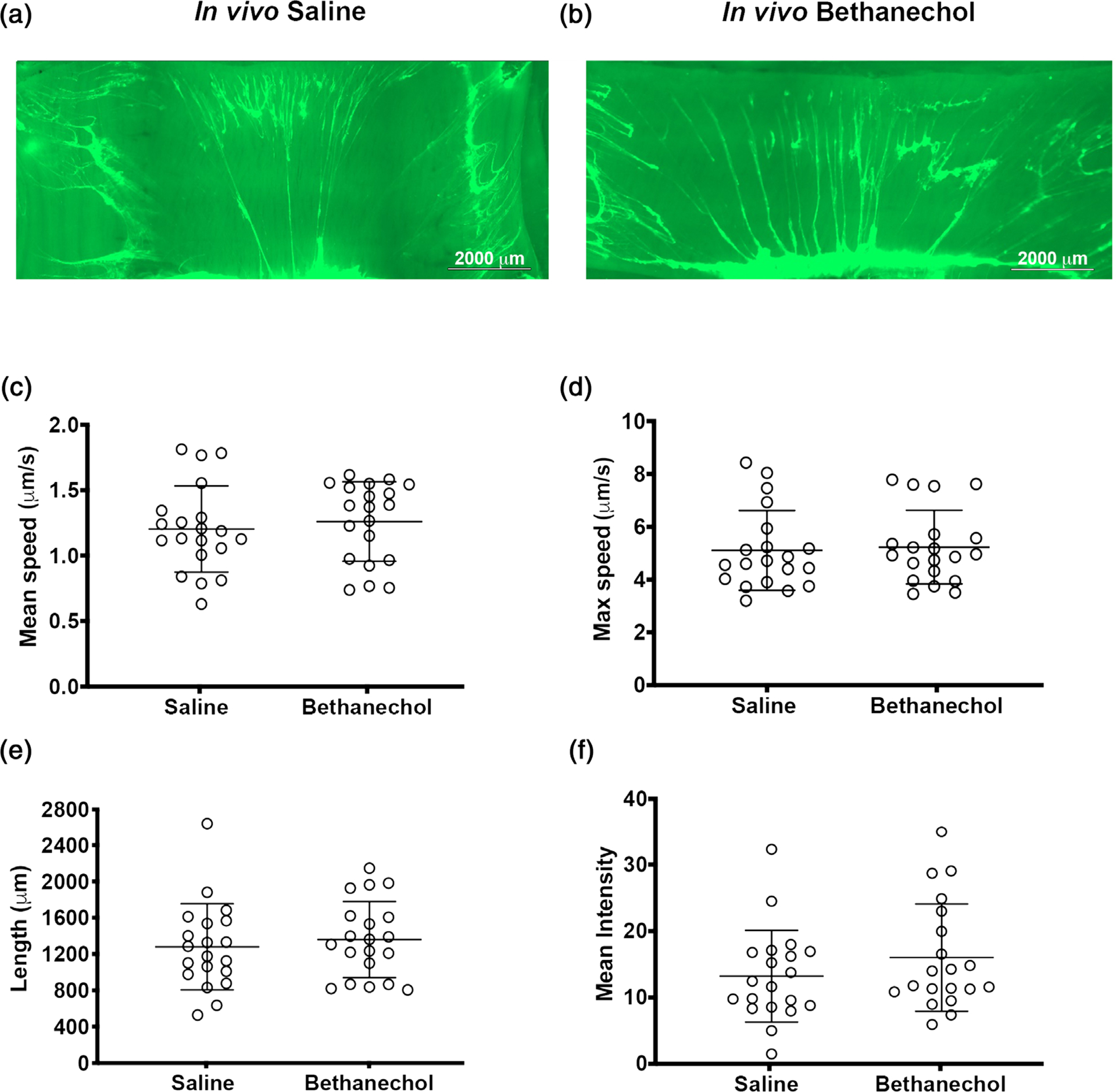
Viral infections precipitate exacerbations in many airway diseases, including asthma and cystic fibrosis. Although viral infections increase cholinergic transmission, few studies have examined how cholinergic history modifies subsequent cholinergic responses in the airway. In our previous work, we found that airway resistance in response to a second cholinergic challenge was increased in young pigs with a history of airway cholinergic stimulation. Given that mucus secretion is regulated by the cholinergic nervous system and that abnormal airway mucus contributes to exacerbations of airway disease, we hypothesized that prior cholinergic challenge would also modify subsequent mucus responses to a secondary cholinergic challenge. Using our established cholinergic challenge-rechallenge model in pigs, we atomized the cholinergic agonist bethanechol or saline control to pig airways. Forty-eight hours later, we removed tracheas and measured mucus secretion properties in response to a second cholinergic stimulation. The second cholinergic stimulation was conducted in conditions of diminished chloride and bicarbonate transport to mimic a cystic fibrosis-like environment. In pigs previously challenged with bethanechol, a second cholinergic stimulation produced a mild increase in sheet-like mucus films; these films were scarcely observed in animals originally challenged with saline control. The subtle increase in mucus films was not associated with changes in mucociliary transport. These data suggest that prior cholinergic history might modify mucus secretion characteristics with subsequent stimulation in certain environmental conditions or disease states. Such modifications and/or more repetitive stimulation might lead to retention of mucus on the airway surface, thereby potentiating exacerbations of airway disease.
本研究的核心问题是什么?气道胆碱能史对囊性纤维化样环境中气道黏液分泌特性有何影响?主要发现及其重要性是什么?先前的胆碱能刺激略微改变了在碳酸氢盐和氯离子转运减少的环境中对第二次胆碱能刺激的黏液分泌特征。这种改变可能导致黏液在气道表面的滞留,从而增强气道疾病的恶化。
病毒感染可引发多种气道疾病(包括哮喘和囊性纤维化)的恶化。尽管病毒感染增加了胆碱能传递,但很少有研究检查胆碱能史如何改变气道中的后续胆碱能反应。在我们之前的工作中,我们发现先前有气道胆碱能刺激史的年轻猪对第二次胆碱能挑战的气道阻力增加。鉴于黏液分泌受胆碱能神经系统调节,异常的气道黏液会加剧气道疾病恶化,我们假设先前的胆碱能刺激也会改变对二次胆碱能刺激的后续黏液反应。我们使用已建立的猪胆碱能挑战-再挑战模型,将胆碱能激动剂氨甲酰胆碱或盐水对照雾化到猪气道中。48 小时后,我们取出气管并测量对第二次胆碱能刺激的黏液分泌特性。第二次胆碱能刺激在氯离子和碳酸氢盐转运减少的条件下进行,以模拟囊性纤维化样环境。在先前用氨甲酰胆碱挑战的猪中,第二次胆碱能刺激会导致片状黏液膜轻度增加;在最初用盐水对照挑战的动物中几乎观察不到这些膜。黏液膜的轻微增加与黏液纤毛转运没有变化相关。这些数据表明,在某些环境条件或疾病状态下,先前的胆碱能史可能会改变随后刺激的黏液分泌特征。这种改变和/或更频繁的刺激可能导致黏液在气道表面的滞留,从而增强气道疾病的恶化。