Department of Biological Sciences, University of Pittsburgh, Pittsburgh, Pennsylvania, United States of America.
Department of Surgery and Immunology, Thomas E. Starzl Transplantation Institute, and Center for Evolutionary Biology and Medicine, University of Pittsburgh School of Medicine, Pittsburgh Pennsylvania, United States of America.
PLoS Biol. 2020 Jul 31;18(7):e3000811. doi: 10.1371/journal.pbio.3000811. eCollection 2020 Jul.
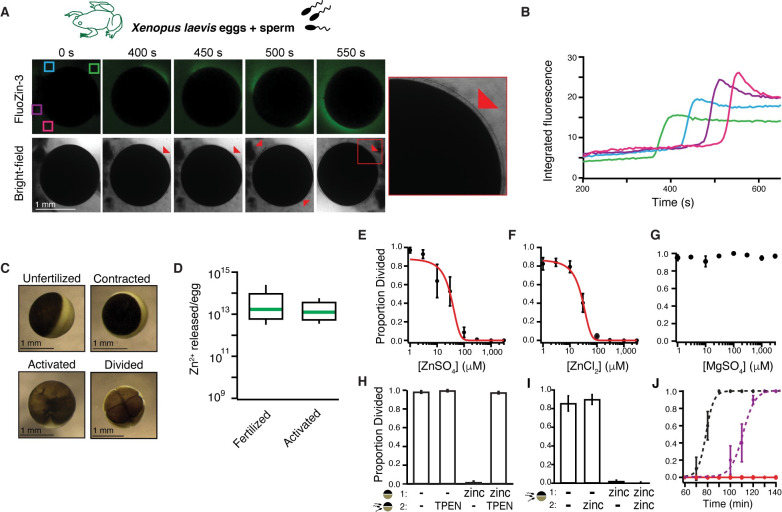
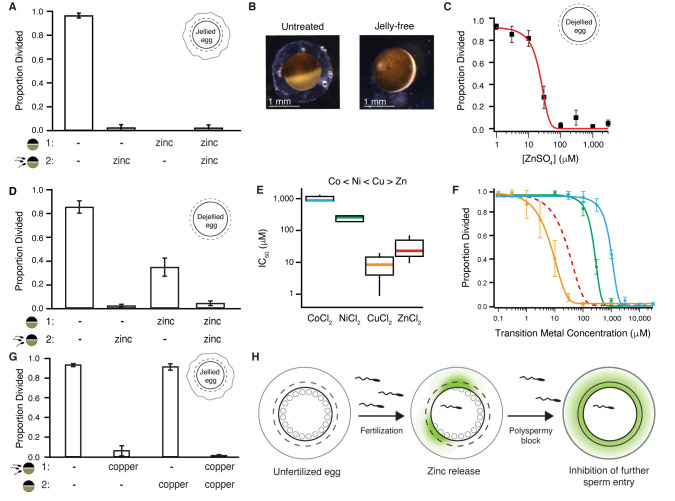
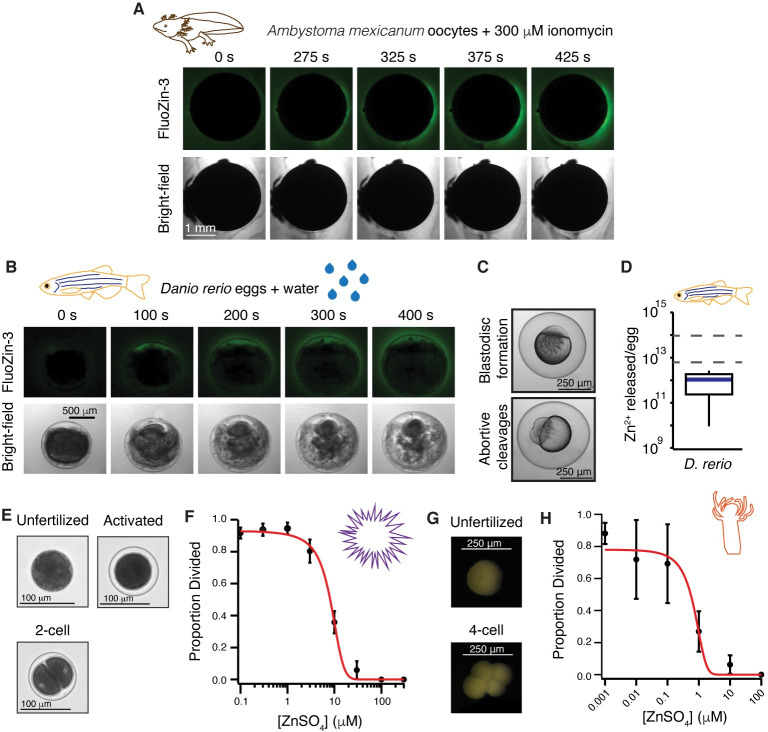
One of the earliest and most prevalent barriers to successful reproduction is polyspermy, or fertilization of an egg by multiple sperm. To prevent these supernumerary fertilizations, eggs have evolved multiple mechanisms. It has recently been proposed that zinc released by mammalian eggs at fertilization may block additional sperm from entering. Here, we demonstrate that eggs from amphibia and teleost fish also release zinc. Using Xenopus laevis as a model, we document that zinc reversibly blocks fertilization. Finally, we demonstrate that extracellular zinc similarly disrupts early embryonic development in eggs from diverse phyla, including Cnidaria, Echinodermata, and Chordata. Our study reveals that a fundamental strategy protecting human eggs from fertilization by multiple sperm may have evolved more than 650 million years ago.
早期和最普遍的生殖障碍之一是多精入卵,即一个卵子被多个精子受精。为了防止这些多余的受精,卵子进化出了多种机制。最近有人提出,哺乳动物卵子在受精时释放的锌可能会阻止其他精子进入。在这里,我们证明了两栖动物和硬骨鱼的卵子也会释放锌。我们以非洲爪蟾(Xenopus laevis)为模型,记录到锌可可逆地阻止受精。最后,我们证明了细胞外锌也会破坏来自不同门的卵子的早期胚胎发育,包括刺胞动物门、棘皮动物门和脊索动物门。我们的研究表明,一种保护人类卵子免受多个精子受精的基本策略可能在 6.5 亿年前就已经进化出来了。