Department of Anaesthesiology & Intensive Care, Centre for Clinical Research, Sörmland, Uppsala University, Mälarsjukhuset, SE-631 88 Eskilstuna, Uppsala, Sweden.
Department of Medical Sciences, Uppsala University, Uppsala, Sweden.
BMC Pulm Med. 2020 Jul 31;20(1):206. doi: 10.1186/s12890-020-01239-y.
Plasma levels of cell-free DNA (cf-DNA) are known to be elevated in sepsis and high levels are associated with a poor prognosis. Mechanical ventilation affects systemic inflammation in which lung-protective ventilation attenuates the inflammatory response. The aim was to study the effect of a lung protective ventilator regime on arterial and organ-specific venous blood as well as on trans-organ differences in cf-DNA levels in a porcine post-operative sepsis model.
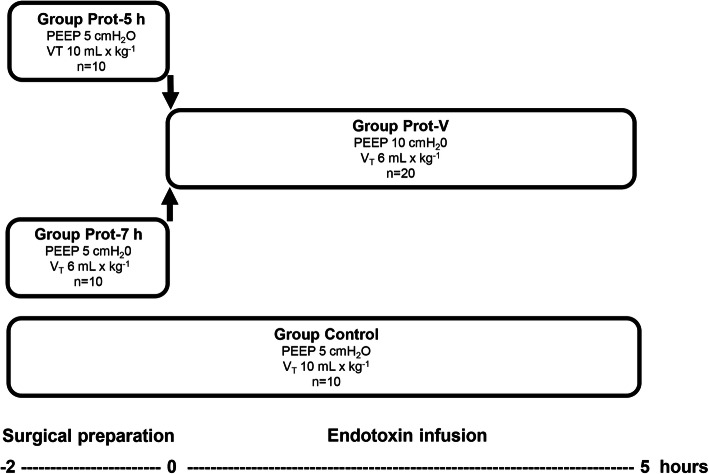
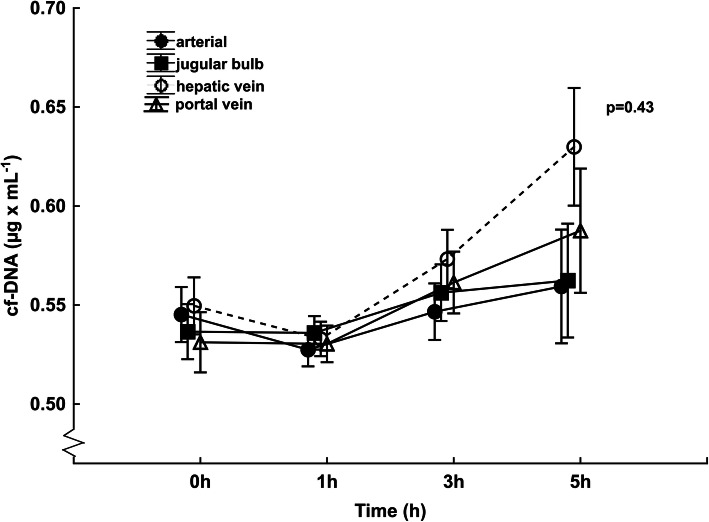
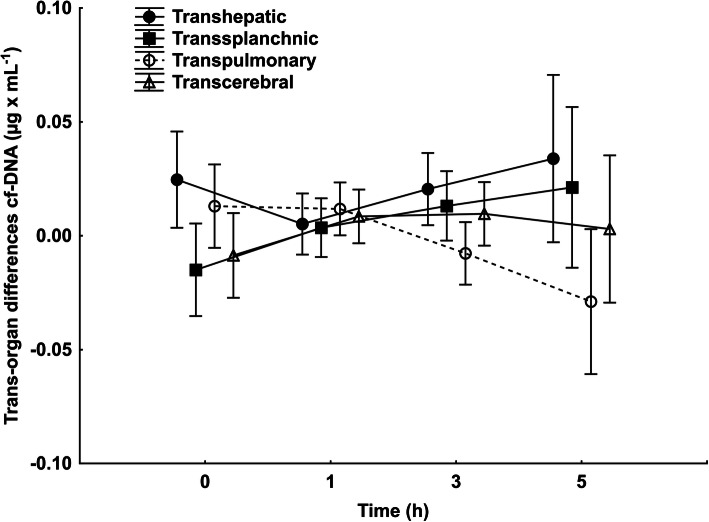
One group of anaesthetised, domestic-breed, 9-12 weeks old, pigs were ventilated with protective ventilation (V 6 mL x kg, PEEP 10 cmHO) n = 20. Another group, ventilated with a medium high tidal volume and lower PEEP, served as a control group (V 10 mL x kg, PEEP 5 cm HO) n = 10. Blood samples were taken from four sources: artery, hepatic vein, portal vein and, jugular bulb. A continuous endotoxin infusion at 0.25 μg x kg x h for 5 h was started following 2 h of laparotomy, which simulated a surgical procedure. Inflammatory cytokines and cf-DNA in plasma were analysed and trans-organ differences calculated.
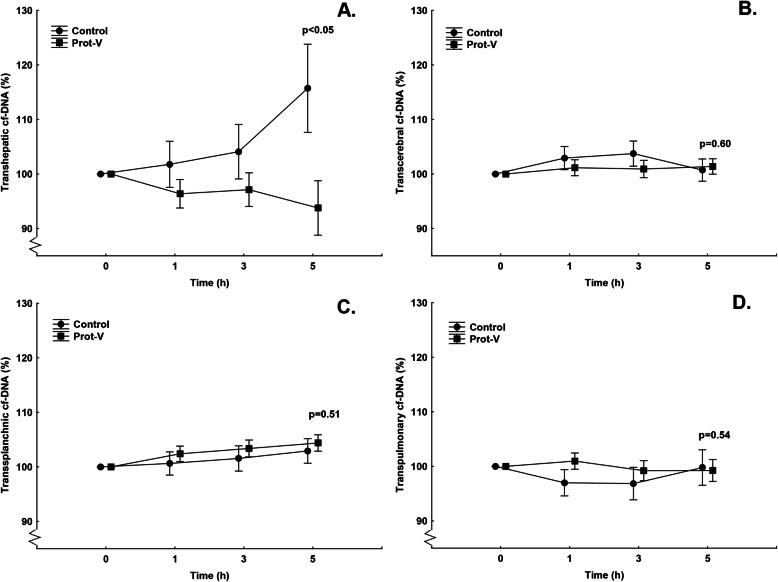
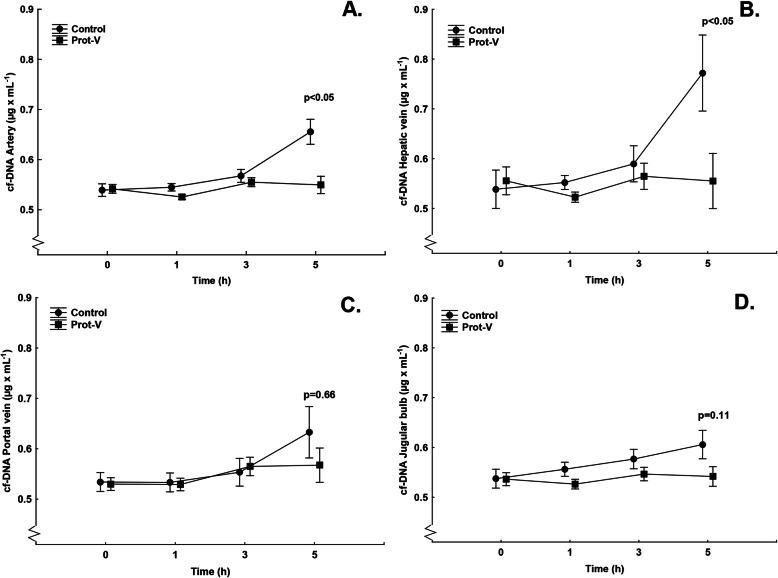
The protective ventilation group had lower levels of cf-DNA in arterial (p = 0.02) and hepatic venous blood (p = 0.03) compared with the controls. Transhepatic differences in cf-DNA were lower in the protective group, compared with the controls (p = 0.03). No differences between the groups were noted as regards the transcerebral, transsplanchnic or the transpulmonary cf-DNA differences.
Protective ventilation suppresses arterial levels of cf-DNA. The liver seems to be a net contributor to the systemic cf-DNA levels, but this effect is attenuated by protective ventilation.
游离 DNA(cf-DNA)的血浆水平在脓毒症中升高,高水平与预后不良相关。机械通气会影响全身炎症,而肺保护性通气会减轻炎症反应。本研究旨在研究肺保护性通气策略对猪术后脓毒症模型的动脉和器官特异性静脉血以及 cf-DNA 跨器官差异的影响。
一组麻醉的、国内品种的、9-12 周龄的猪采用保护性通气(V 6 mL x kg,PEEP 10 cmHO),n=20。另一组采用中高潮气量和低 PEEP 的通气作为对照组(V 10 mL x kg,PEEP 5 cm HO),n=10。从四个来源采集血样:动脉、肝静脉、门静脉和颈静脉球。在剖腹手术后 2 小时开始,持续输注 0.25 μg x kg x h 的内毒素 5 小时,模拟手术过程。分析血浆中的炎症细胞因子和 cf-DNA,并计算跨器官差异。
与对照组相比,保护性通气组的动脉(p=0.02)和肝静脉(p=0.03)cf-DNA 水平较低。与对照组相比,保护性通气组的跨肝 cf-DNA 差异较低(p=0.03)。两组之间在跨脑、跨内脏或跨肺 cf-DNA 差异方面没有差异。
保护性通气可降低动脉 cf-DNA 水平。肝脏似乎是全身 cf-DNA 水平的净贡献者,但这种效应被保护性通气所减弱。