Haduch Anna, Bromek Ewa, Rysz Marta, Pukło Renata, Papp Mariusz, Gruca Piotr, Łasoń Magdalena, Niemczyk Monika, Daniel Władysława A
Department of Pharmacokinetics and Drug Metabolism, Maj Institute of Pharmacology, Polish Academy of Sciences, Smętna 12, 31-343, Kraków, Poland.
Department of Pharmacology, Maj Institute of Pharmacology, Polish Academy of Sciences, Smętna 12, 31-343, Kraków, Poland.
Pharmacol Rep. 2020 Oct;72(5):1271-1287. doi: 10.1007/s43440-020-00151-w. Epub 2020 Aug 3.
The aim of our research was to determine the effects of chronic treatment with the atypical antidepressant agomelatine on the expression and activity of liver cytochrome P450 (CYP) in the chronic mild stress (CMS) model of depression, and to compare the results with those obtained for the first-generation antidepressant imipramine.
Male Wistar rats were subjected to CMS for 7 weeks. Imipramine (10 mg/kg ip/day) or agomelatine (40 mg/kg ip/day) was administered to nonstressed or stressed animals for 5 weeks (weeks 3-7 of CMS). The levels of cytochrome P450 mRNA, protein and activity were measured in the liver.
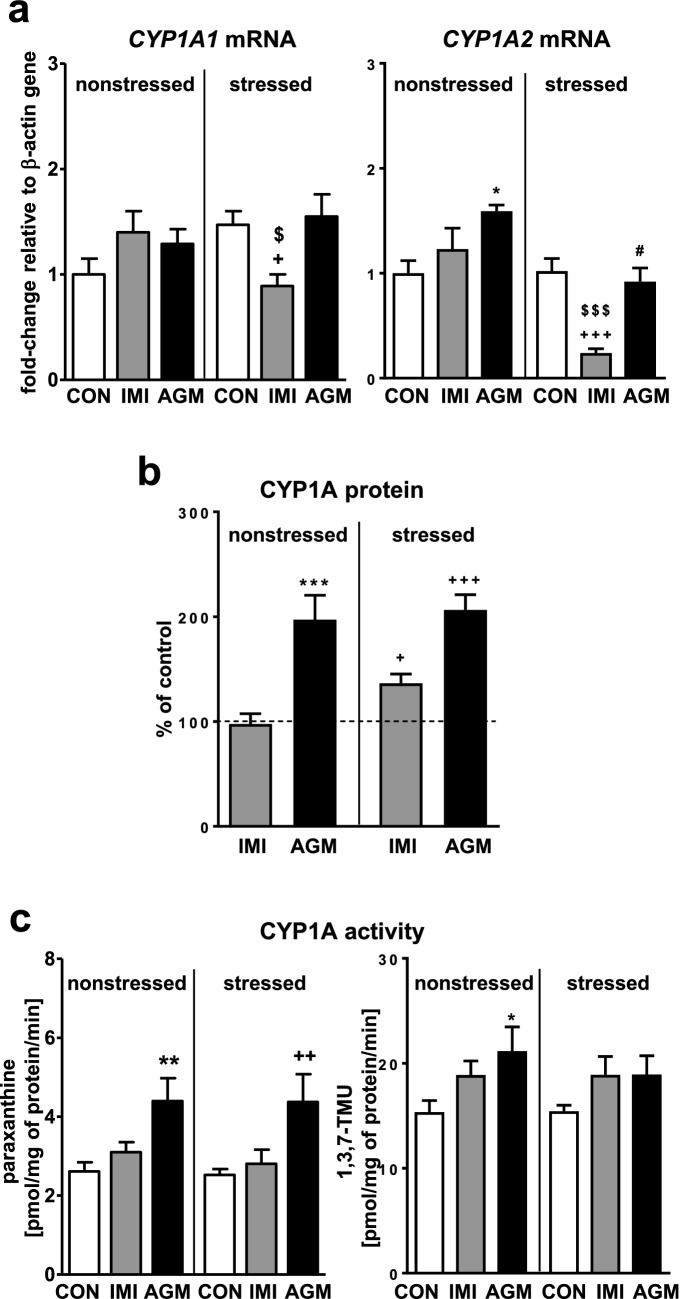
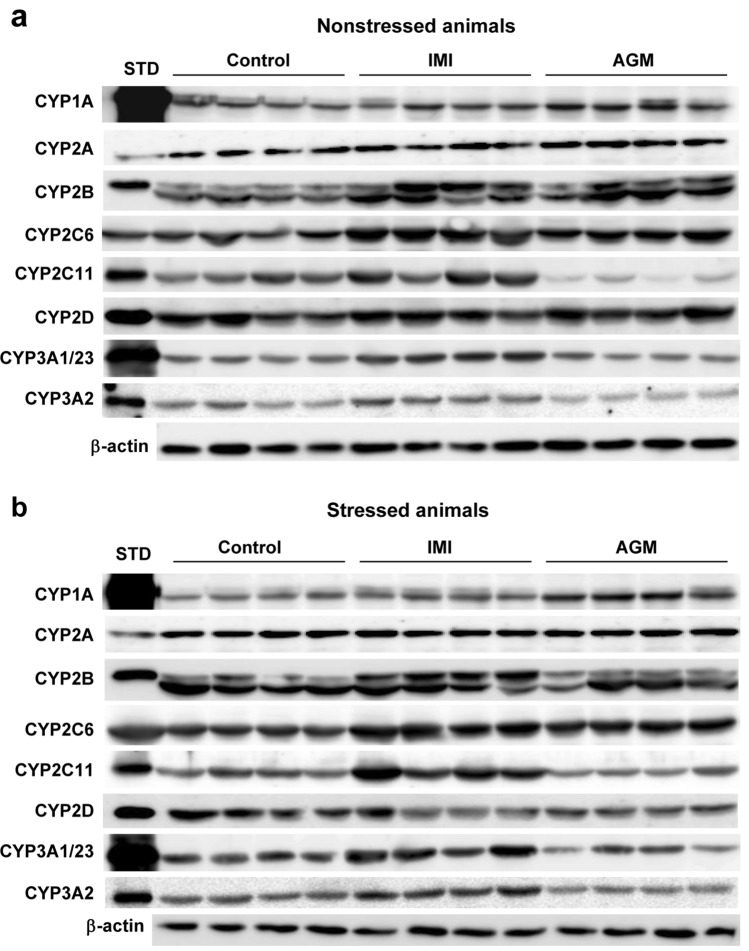
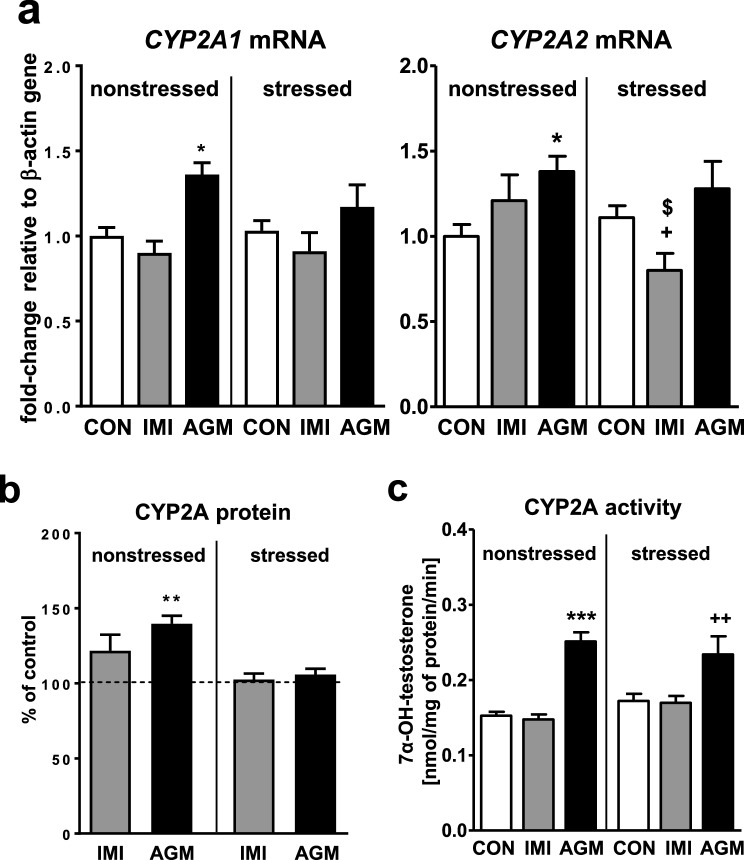
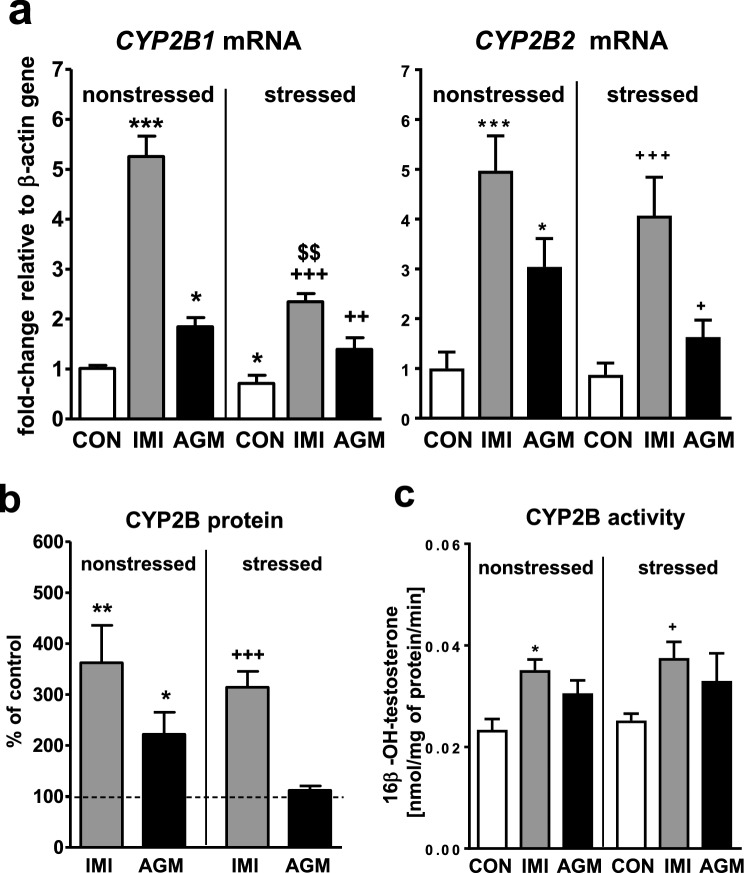
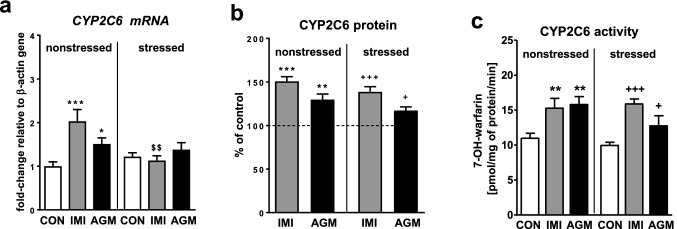
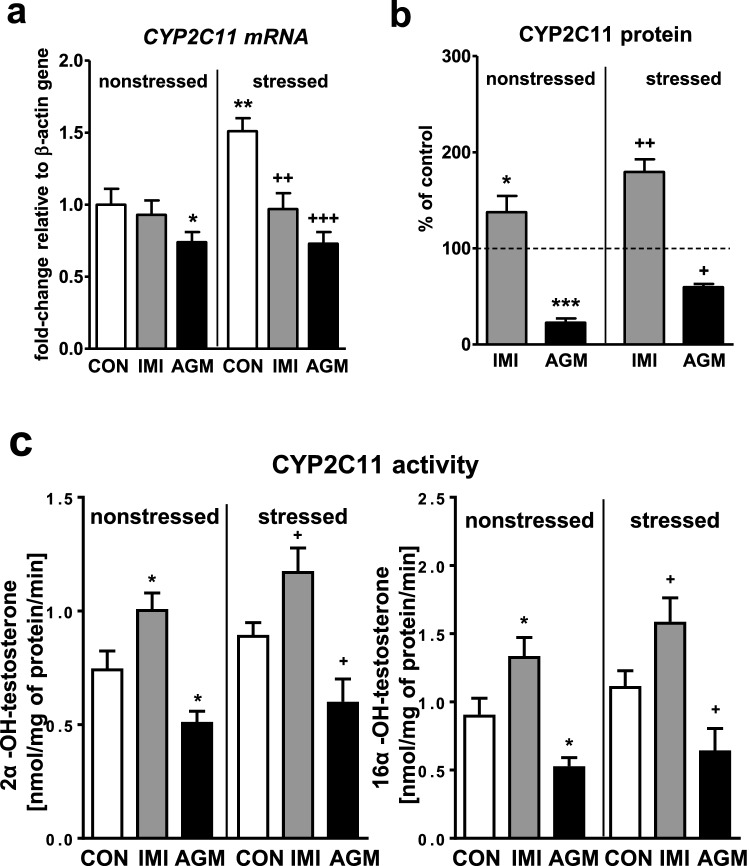
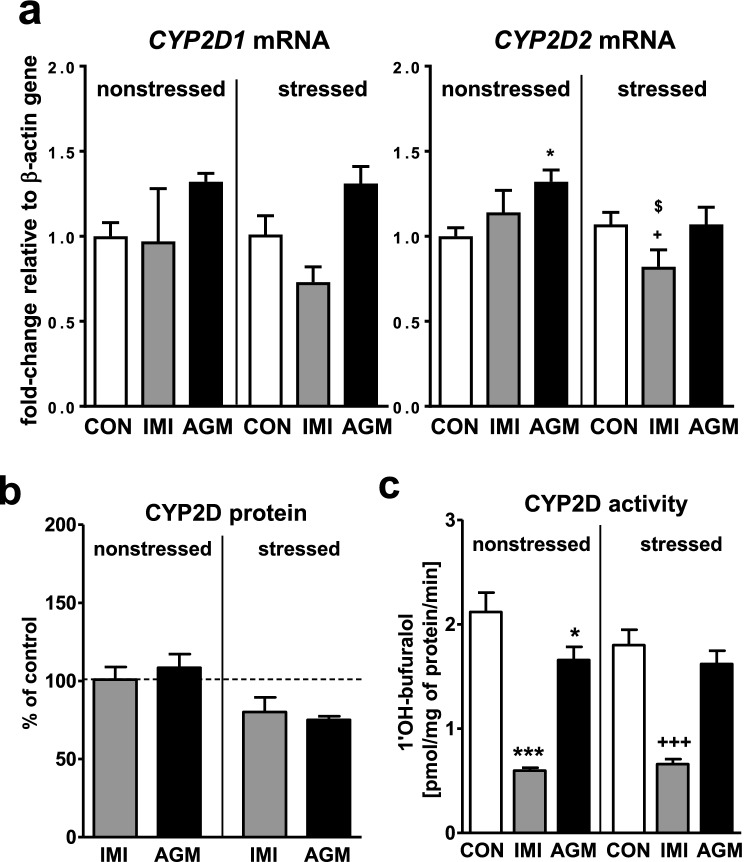
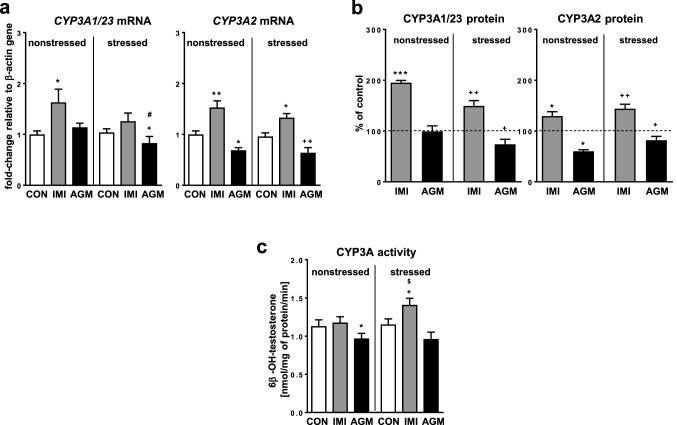
Agomelatine and imipramine produced different broad-spectrum effects on cytochrome P450. Like imipramine, agomelatine increased the expression/activity of CYP2B and CYP2C6, and decreased the CYP2D activity. Unlike imipramine, agomelatine raised the expression/activity of CYP1A, CYP2A and reduced that of CYP2C11 and CYP3A. CMS modified the effects of antidepressants at transcriptional/posttranscriptional level; however, the enzyme activity in stressed rats remained similar to that in nonstressed animals. CMS alone decreased the CYP2B1 mRNA level and increased that of CYP2C11.
We conclude the following: (1) the effects of agomelatine and imipramine on cytochrome P450 are different and involve both central and peripheral regulatory mechanisms, which implicates the possibility of drug-drug interactions; (2) CMS influences the effects of antidepressants on cytochrome P450 expression, but does not change appreciably their effects on the enzyme activity. This suggests that the rate of antidepressant drug metabolism under CMS is similar to that under normal conditions.
我们研究的目的是确定在慢性轻度应激(CMS)抑郁模型中,非典型抗抑郁药阿戈美拉汀长期治疗对肝脏细胞色素P450(CYP)表达和活性的影响,并将结果与第一代抗抑郁药丙咪嗪的结果进行比较。
雄性Wistar大鼠接受7周的CMS。对未应激或应激的动物给予丙咪嗪(10mg/kg腹腔注射/天)或阿戈美拉汀(40mg/kg腹腔注射/天),持续5周(CMS的第3 - 7周)。测量肝脏中细胞色素P450 mRNA、蛋白质水平和活性。
阿戈美拉汀和丙咪嗪对细胞色素P450产生了不同的广谱效应。与丙咪嗪一样,阿戈美拉汀增加了CYP2B和CYP2C6的表达/活性,并降低了CYP2D活性。与丙咪嗪不同的是,阿戈美拉汀提高了CYP1A、CYP2A的表达/活性,并降低了CYP2C11和CYP3A的表达/活性。CMS在转录/转录后水平改变了抗抑郁药的作用;然而,应激大鼠中的酶活性与未应激动物中的酶活性相似。单独的CMS降低了CYP2B1 mRNA水平,并增加了CYP2C11的mRNA水平。
我们得出以下结论:(1)阿戈美拉汀和丙咪嗪对细胞色素P450的作用不同,涉及中枢和外周调节机制,这意味着存在药物相互作用的可能性;(2)CMS影响抗抑郁药对细胞色素P450表达的作用,但对其对酶活性的作用没有明显改变。这表明CMS下抗抑郁药的代谢速率与正常条件下相似。