From the Department of Neurology (M.K.S., G.S., M.B., P.K., L.P.), University Hospital Würzburg, Germany.
Department I, Institute of Experimental Biomedicine (T.V., S.H., V.K., B.N., D.S.), University Hospital Würzburg, Germany.
Circ Res. 2020 Sep 25;127(8):1023-1035. doi: 10.1161/CIRCRESAHA.120.316655. Epub 2020 Jul 30.
Ischemic stroke is a leading cause of morbidity and mortality worldwide. Recanalization of the occluded vessel is essential but not sufficient to guarantee brain salvage. Experimental and clinical data suggest that infarcts often develop further due to a thromboinflammatory process critically involving platelets and T cells, but the underlying mechanisms are unknown.
We aimed to determine the role of CD (cluster of differentiation)-84 in acute ischemic stroke after recanalization and to dissect the underlying molecular thromboinflammatory mechanisms.
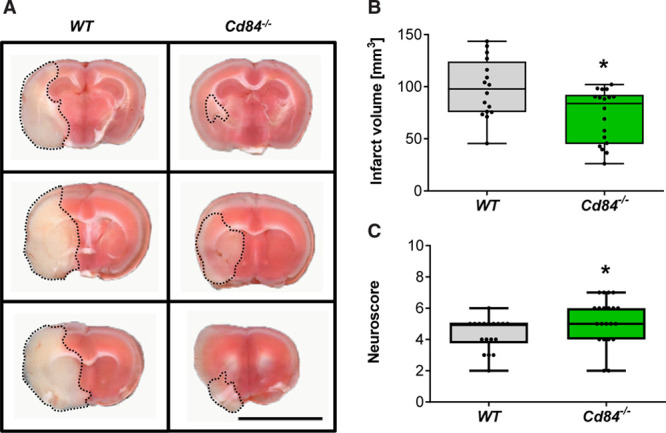
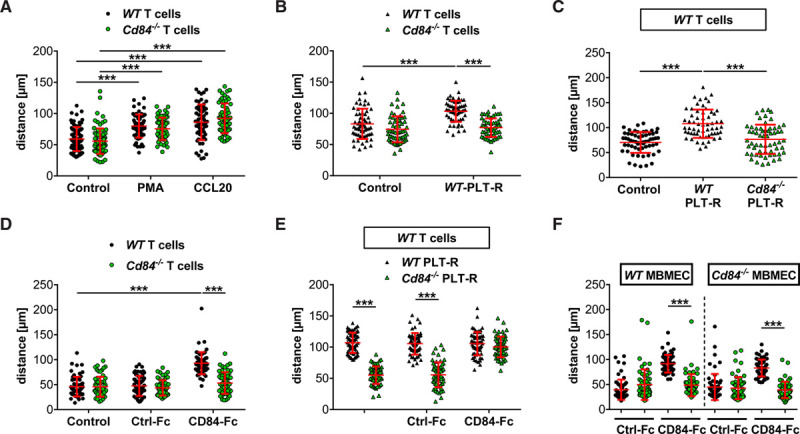
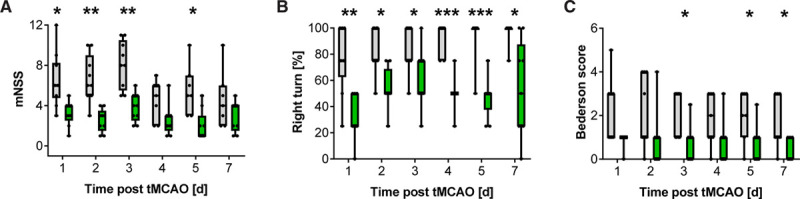
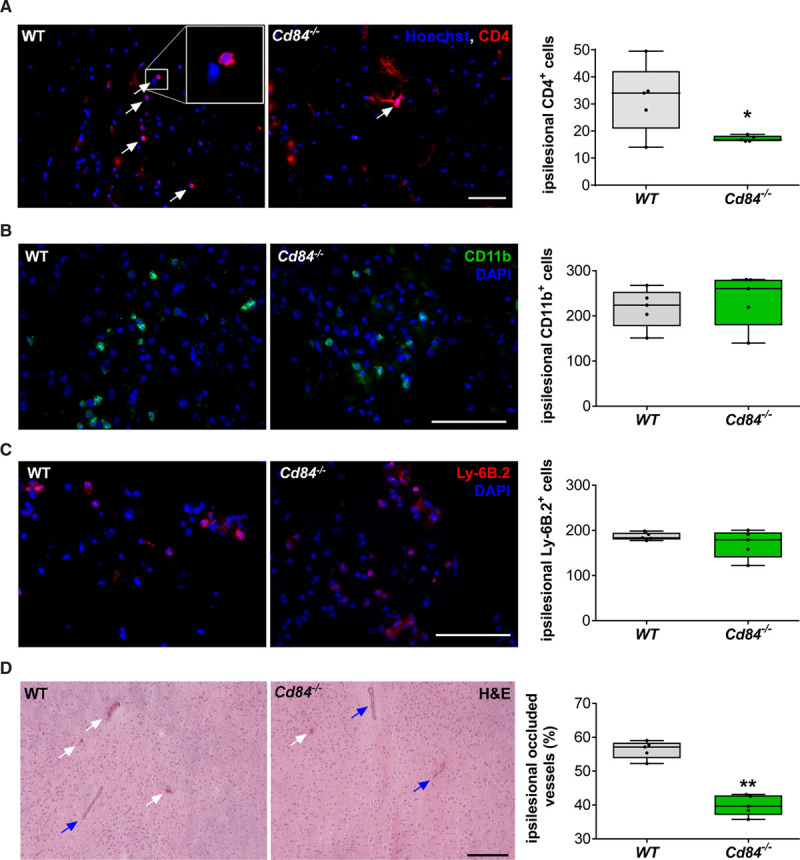
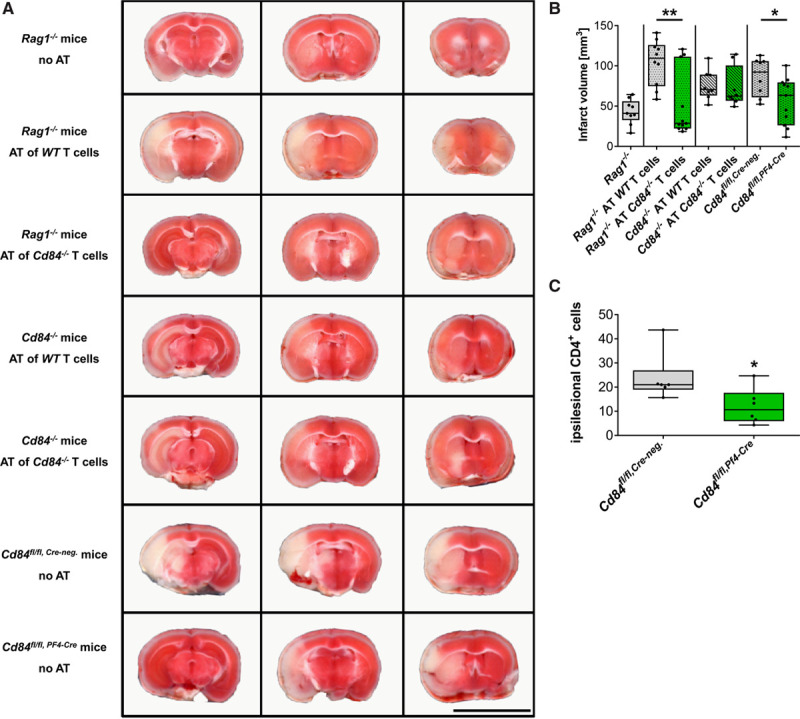
Here, we show that mice lacking CD84-a homophilic immunoreceptor of the SLAM (signaling lymphocyte activation molecule) family-on either platelets or T cells displayed reduced cerebral CD4 T-cell infiltration and thrombotic activity following experimental stroke resulting in reduced neurological damage. In vitro, platelet-derived soluble CD84 enhanced motility of wild-type but not of CD4 T cells suggesting homophilic CD84 interactions to drive this process. Clinically, human arterial blood directly sampled from the ischemic cerebral circulation indicated local shedding of platelet CD84. Moreover, high platelet CD84 expression levels were associated with poor outcome in patients with stroke.
These results establish CD84 as a critical pathogenic effector and thus a potential pharmacological target in ischemic stroke.
缺血性脑卒中是全球范围内发病率和死亡率的主要原因。闭塞血管再通对于保证脑保护至关重要,但这并不足以确保脑保护。实验和临床数据表明,由于涉及血小板和 T 细胞的血栓炎症过程,梗死通常会进一步发展,但潜在机制尚不清楚。
我们旨在确定 CD(分化簇)-84 在再通后急性缺血性脑卒中中的作用,并剖析潜在的分子血栓炎症机制。
在这里,我们表明,在血小板或 T 细胞中缺乏 CD84(SLAM(信号淋巴细胞激活分子)家族的同种型免疫受体)的小鼠,在实验性脑卒中后表现出较少的大脑 CD4 T 细胞浸润和血栓形成活性,从而导致神经损伤减少。在体外,血小板衍生的可溶性 CD84 增强了野生型 T 细胞的运动性,但不能增强 CD4 T 细胞的运动性,这表明同种型 CD84 相互作用推动了这一过程。临床上,从缺血性大脑循环中直接采集的人类动脉血液表明血小板 CD84 的局部脱落。此外,血小板 CD84 高表达水平与脑卒中患者的不良预后相关。
这些结果确立了 CD84 作为一种关键的致病性效应因子,因此可能成为缺血性脑卒中的潜在药物靶点。