Department of Biochemistry and Molecular Biology A, School of Biology, University of Murcia, Instituto Murciano de Investigación Biosanitaria (IMIB), Murcia, Spain.
Department of Surgery, University Hospital Virgen de la Arrixaca, IMIB, Murcia, Spain.
Sci Rep. 2020 Aug 6;10(1):13275. doi: 10.1038/s41598-020-70289-3.
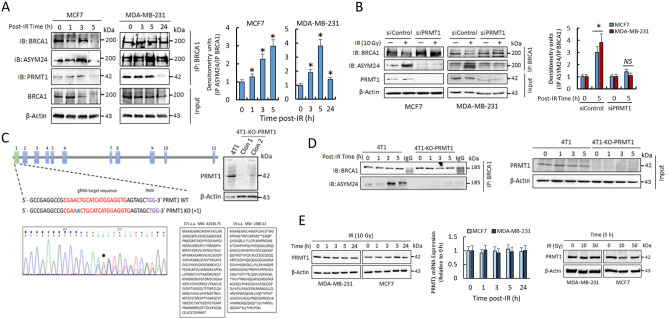
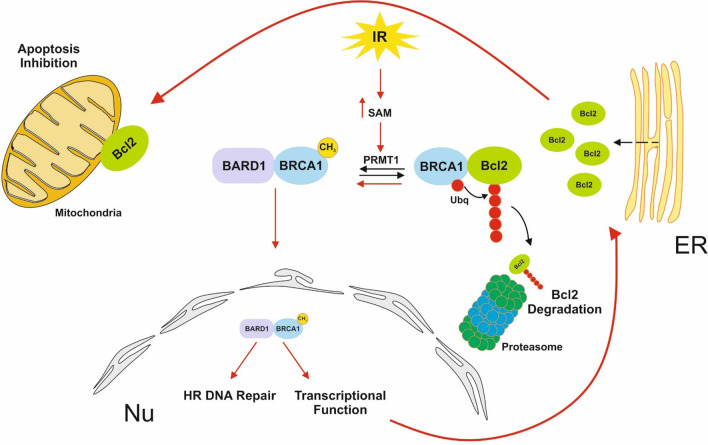
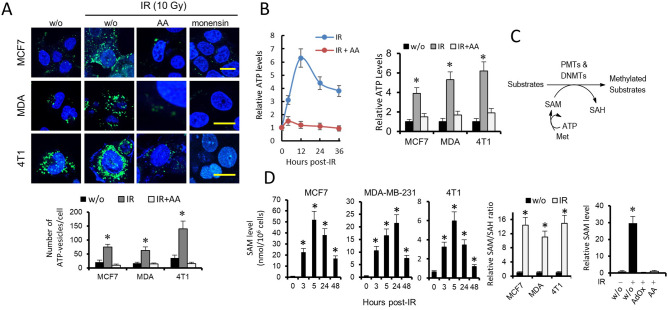
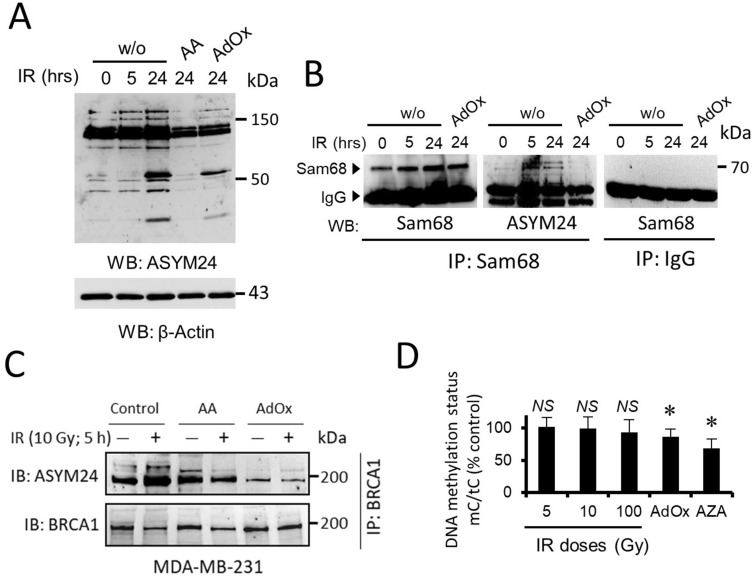
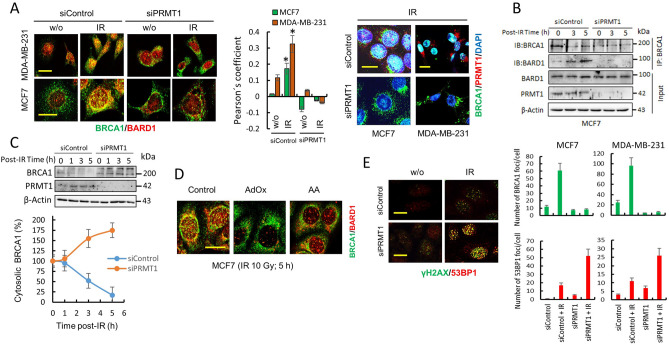
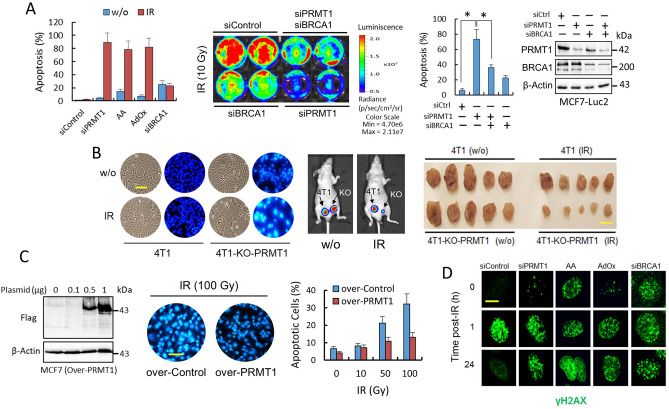
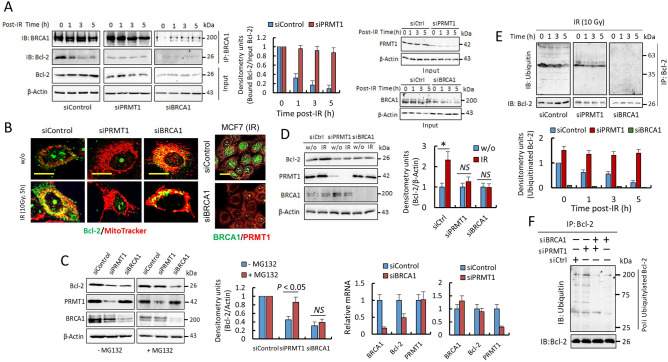
The therapeutic effect of irradiation is thought to come from DNA damage that affects rapidly proliferating cancer cells; however, resistant cells rapidly initiate mechanisms to repair such damage. While DNA repair mechanisms responsible for cancer cell survival following DNA damage are understood, less is known about the epigenetic mechanisms resulting in resistance to radiotherapy. Although changes in DNA methylation are related to mechanisms of long-term resistance, it is more likely that the methylation state of a series of proteins could be responsible for the first-line of defense of cancer cells against irradiation. In this study, we observed that irradiation of breast cancer cells was accompanied by an overproduction in S-adenosylmethionine, which increases the activity of cellular methylases. We found that by activating PRMT1, irradiation triggers a BRCA1-dependent program that results in efficient DNA repair and inhibition of apoptosis. Depletion of PRMT1 in irradiated cells resulted in a switch of BRCA1 functions from repair and survival in the nucleus to activation of cell death signals in the cytoplasm. We conclude that by modulating the cellular localization of BRCA1, PRMT1 is an important regulator of the oncogenic functions of BRCA1, contributing to the epigenetic defense of breast cancer cells against ionizing radiation.
辐照的治疗效果被认为来自于影响快速增殖的癌细胞的 DNA 损伤;然而,耐药细胞会迅速启动修复这种损伤的机制。虽然人们已经了解了导致癌细胞在 DNA 损伤后存活的 DNA 修复机制,但对于导致放疗耐药的表观遗传机制知之甚少。虽然 DNA 甲基化的变化与长期耐药机制有关,但更有可能的是一系列蛋白质的甲基化状态可能是癌细胞抵御辐射的第一道防线。在这项研究中,我们观察到乳腺癌细胞受到辐照后,S-腺苷甲硫氨酸的产量过度增加,从而增加了细胞甲基转移酶的活性。我们发现,通过激活 PRMT1,辐照引发了一个依赖 BRCA1 的程序,导致有效的 DNA 修复和细胞凋亡的抑制。在辐照细胞中耗尽 PRMT1 会导致 BRCA1 功能从核内的修复和存活转变为细胞质中细胞死亡信号的激活。我们的结论是,通过调节 BRCA1 的细胞定位,PRMT1 是 BRCA1 致癌功能的重要调节剂,有助于乳腺癌细胞对电离辐射的表观遗传防御。