Department of Pharmaceutics, Faculty of Pharmacy, Bahauddin Zakariya University, Multan, Pakistan.
Department of Pharmacy Practice, Faculty of Pharmaceutical Sciences, Government College University, Faisalabad, Pakistan.
Int J Nanomedicine. 2020 Jul 8;15:4847-4858. doi: 10.2147/IJN.S255278. eCollection 2020.
Bisphosphonates have very low bioavailability and cause irritation of the esophagus and stomach. This study was planned to improve the oral bioavailability of ibandronate through the formation of a raft in the stomach. Bisphosphonate-induced irritation of the esophagus and stomach is prevented by the formation of a raft.
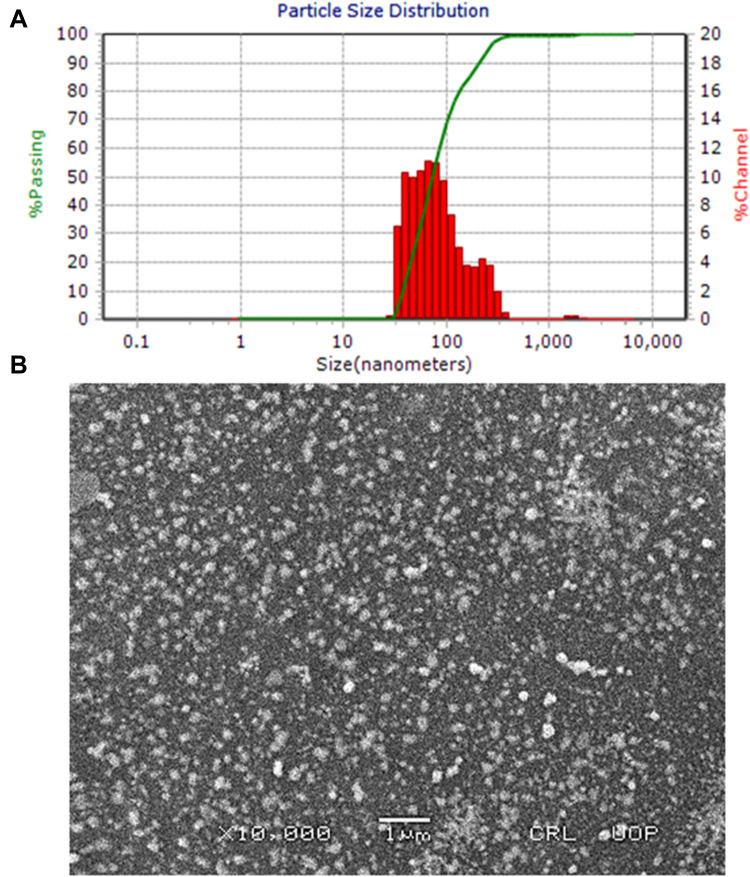
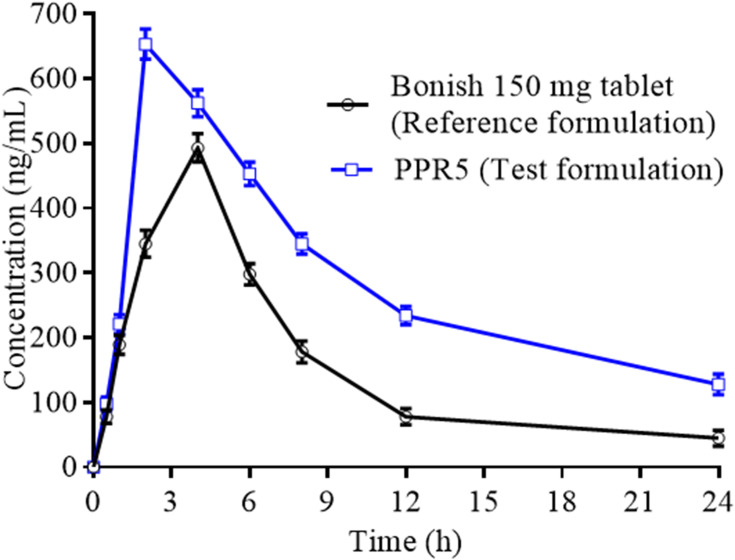
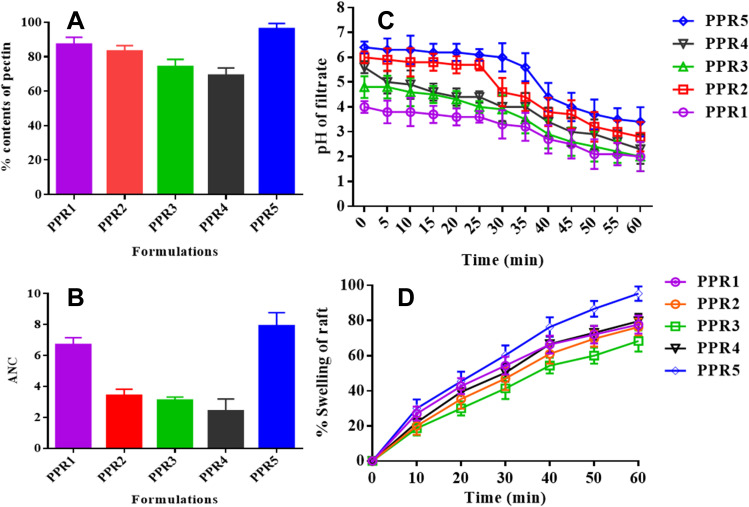
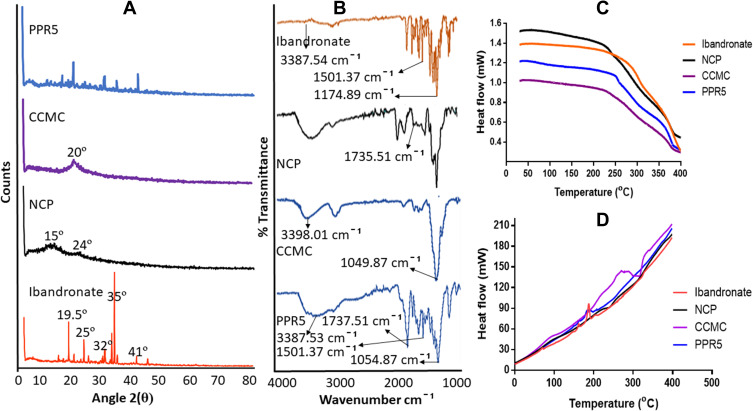
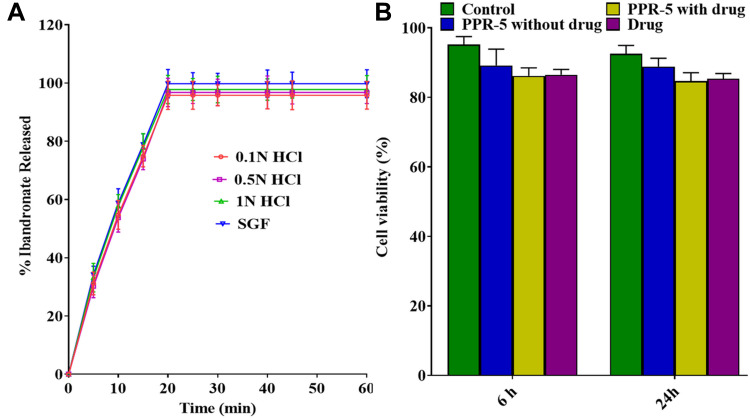
The nanostructured raft was developed through the use of nanosized citrus pectin (NCP). The particle size of NCP was measured by zeta sizer and SEM. The percentage of NCP and the neutralization profile of raft was studied. The ibandronate, polymers, and the developed formulation were characterized by FTIR, XRD, TGA, and DSC. The release of ibandronate was studied in 0.1 N HCl, 0.5 N HCl, 1 N HCl, and simulated gastric fluid (SGF) and a cell viability study was performed using Caco-2 cells. The PPR5 formulation and Bonish 150 mg tablets were selected as test and reference formulations, respectively, for pharmacokinetic study. Twelve healthy albino rats were taken and divided into two groups using a Latin square crossover design, and the blood samples were collected for 24 hours.
The SEM image showed that the particle size of NCP was 159 nm. The raft of PPR5 showed 94% NCP and 45 minutes duration of neutralization. The FTIR and XRD showed chemical stability and a uniform distribution of ibandronate in the raft. The TGA and DSC indicated the thermal stability of formulation. The release of 99.87% ibandronate at 20 minutes was observed in the SGF. The values of for the reference and test formulations were 493±0.237 ng/mL and 653±0.097 ng/mL, respectively. The AUC of the reference and test formulations was 3708.25±3.418 ng/mL.h and 6899.25±3.467 ng/mL.h, respectively.
The NCP has been successfully prepared from citrus pectin and has shown effective porous raft formation. The bioavailability of the ibandronate from newly developed PPR5 was higher than the already marketed formulation.
双膦酸盐的生物利用度非常低,会刺激食管和胃。本研究旨在通过在胃中形成筏来提高伊班膦酸盐的口服生物利用度。筏的形成可防止双膦酸盐对食管和胃的刺激。
通过使用纳米级柑橘果胶(NCP)来开发纳米结构的筏。通过zeta 粒径仪和 SEM 测量 NCP 的粒径。研究了 NCP 的百分比和筏的中和曲线。通过傅里叶变换红外光谱(FTIR)、X 射线衍射(XRD)、热重分析(TGA)和差示扫描量热法(DSC)对伊班膦酸盐、聚合物和开发的制剂进行了表征。在 0.1 N HCl、0.5 N HCl、1 N HCl 和模拟胃液(SGF)中研究了伊班膦酸盐的释放,并使用 Caco-2 细胞进行了细胞活力研究。选择 PPR5 制剂和 Bonish 150 mg 片剂作为测试和参考制剂,分别用于药代动力学研究。采用拉丁方交叉设计将 12 只健康白化大鼠分为两组,并采集 24 小时的血样。
SEM 图像显示 NCP 的粒径为 159nm。PPR5 的筏显示 94%的 NCP 和 45 分钟的中和时间。FTIR 和 XRD 表明伊班膦酸盐在筏中的化学稳定性和均匀分布。TGA 和 DSC 表明制剂的热稳定性。在 SGF 中观察到 99.87%的伊班膦酸盐在 20 分钟内释放。参考制剂和测试制剂的 值分别为 493±0.237ng/mL 和 653±0.097ng/mL。参考制剂和测试制剂的 AUC 分别为 3708.25±3.418ng/mL.h 和 6899.25±3.467ng/mL.h。
已成功从柑橘果胶中制备出 NCP,并显示出有效的多孔筏形成。新开发的 PPR5 中伊班膦酸盐的生物利用度高于已上市的制剂。