Ajina Sara, Pollard Miriam, Bridge Holly
Department of Neurorehabilitation and Therapy Services, The National Hospital for Neurology and Neurosurgery, Queen Square, London, United Kingdom.
Wellcome Centre for Integrative Neuroimaging, FMRIB, Nuffield Department of Clinical Neurosciences, University of Oxford, Oxford, United Kingdom.
Front Neurol. 2020 Jul 17;11:769. doi: 10.3389/fneur.2020.00769. eCollection 2020.
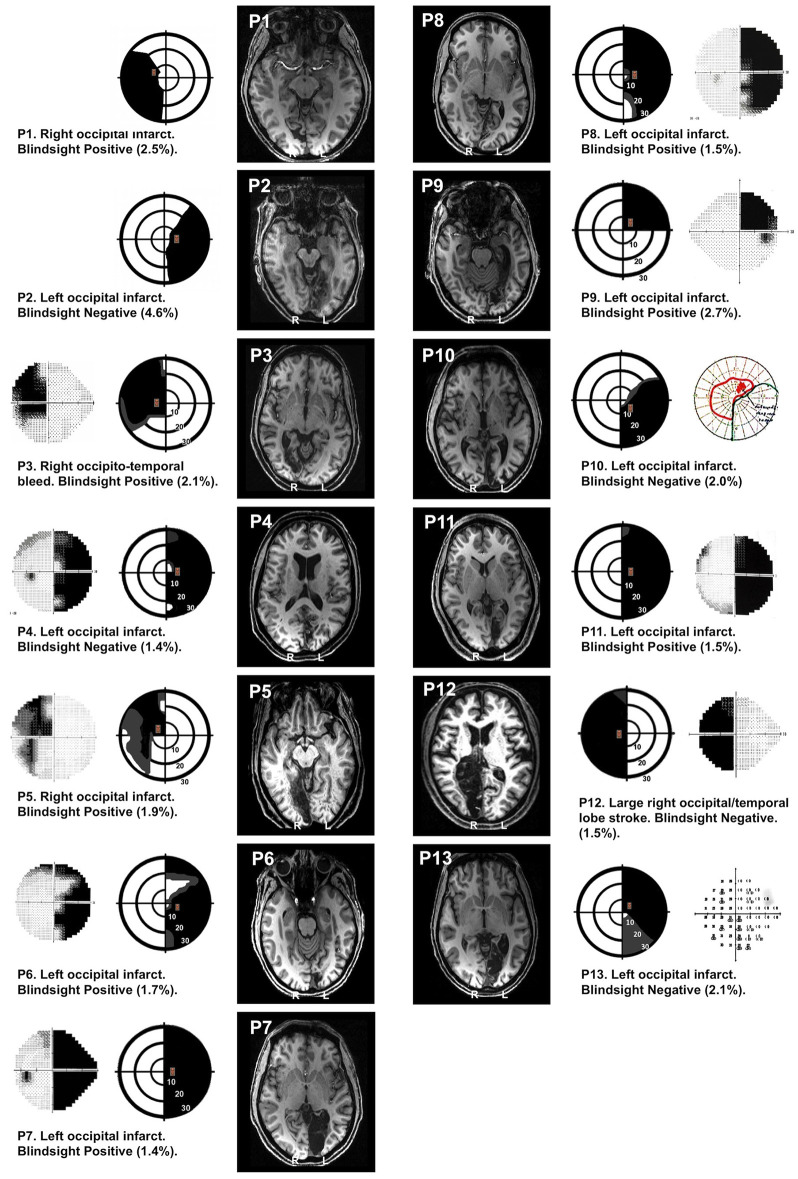
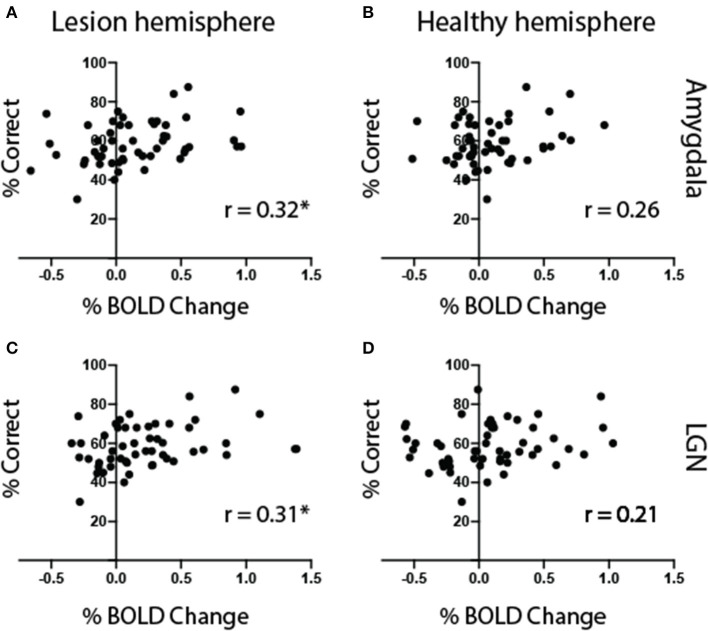
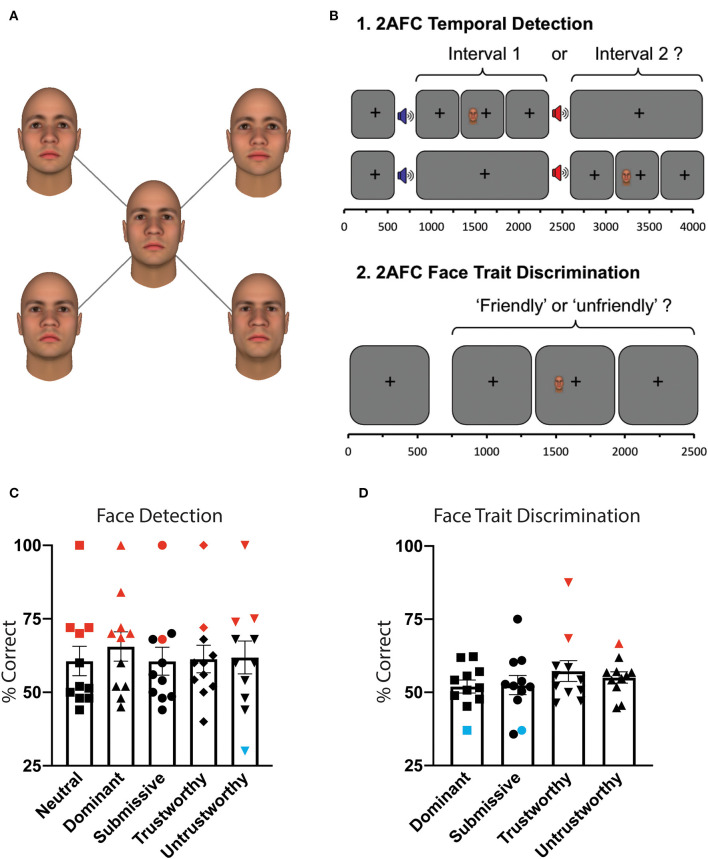
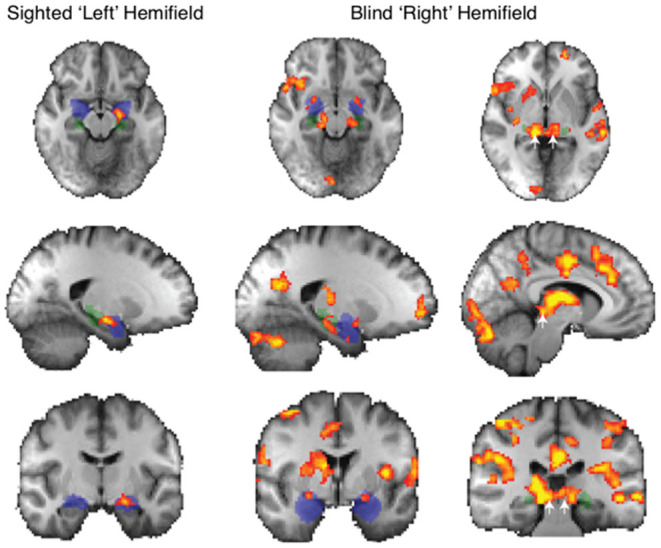
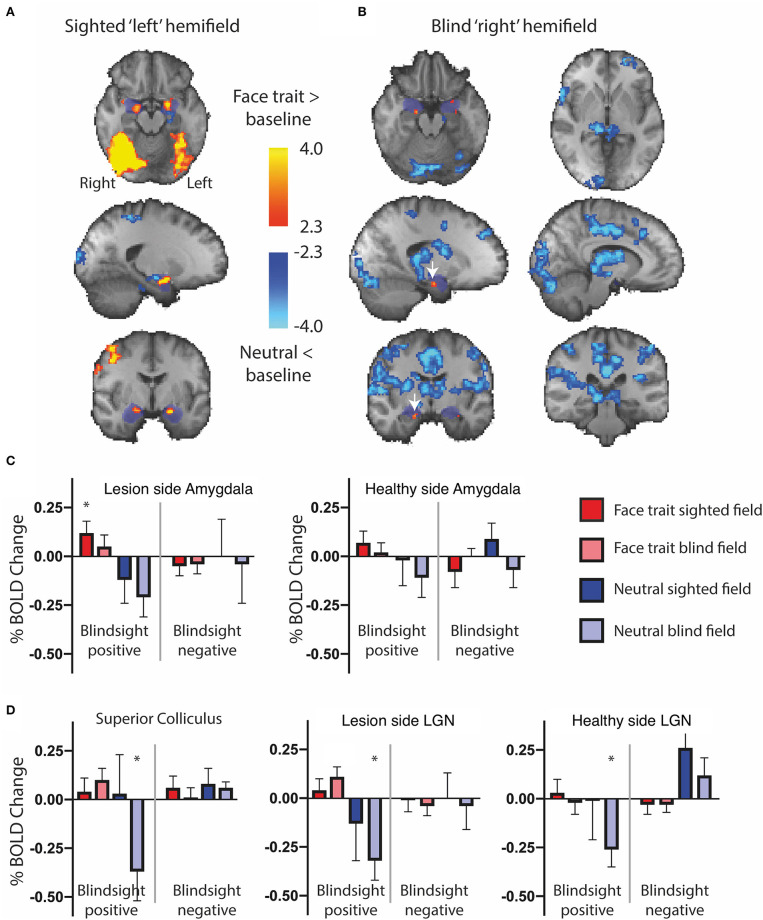
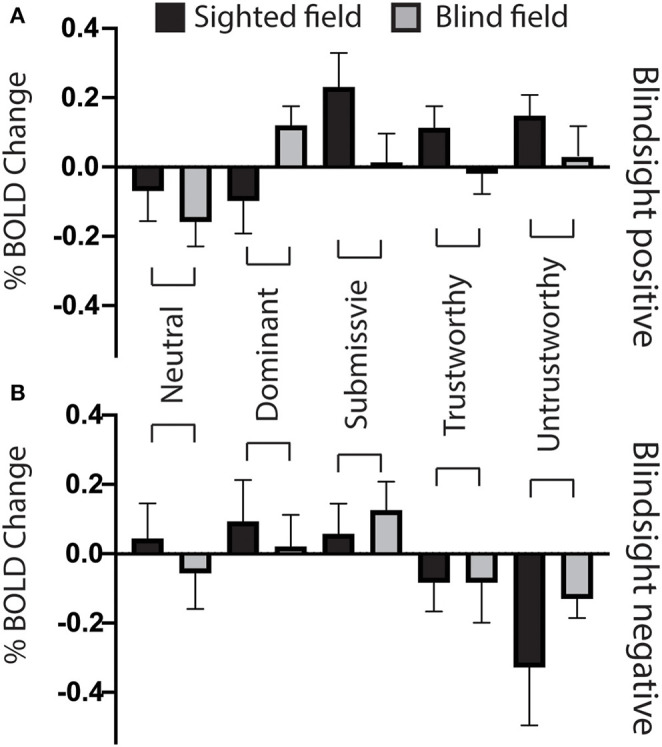
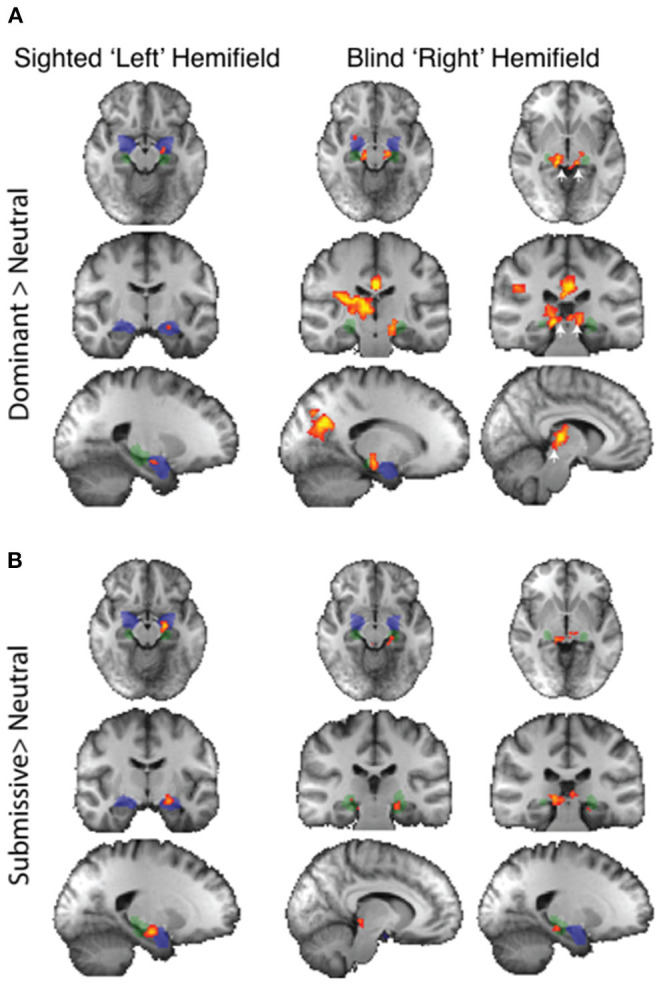
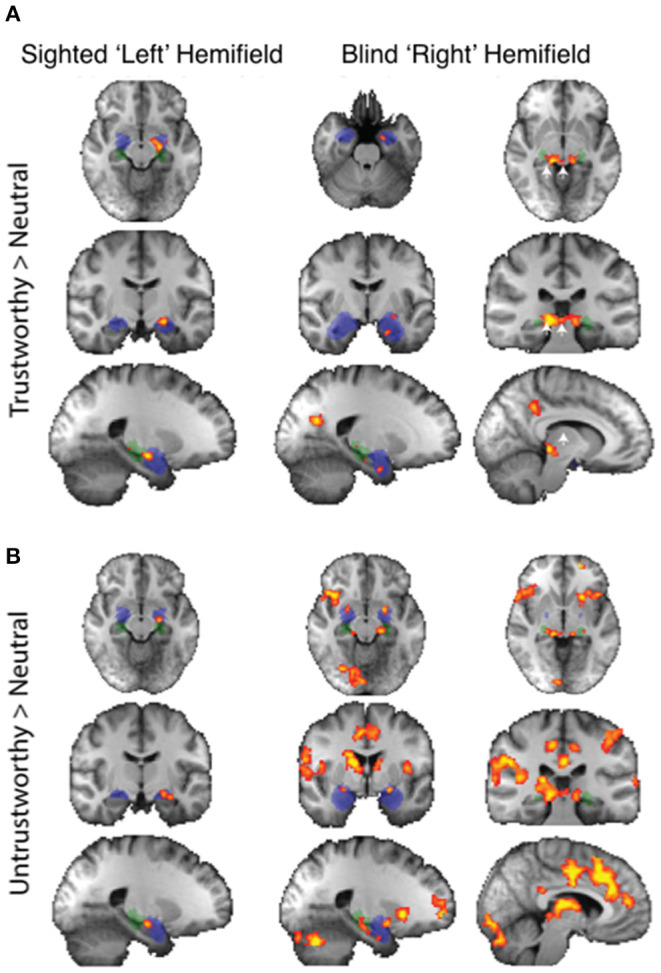
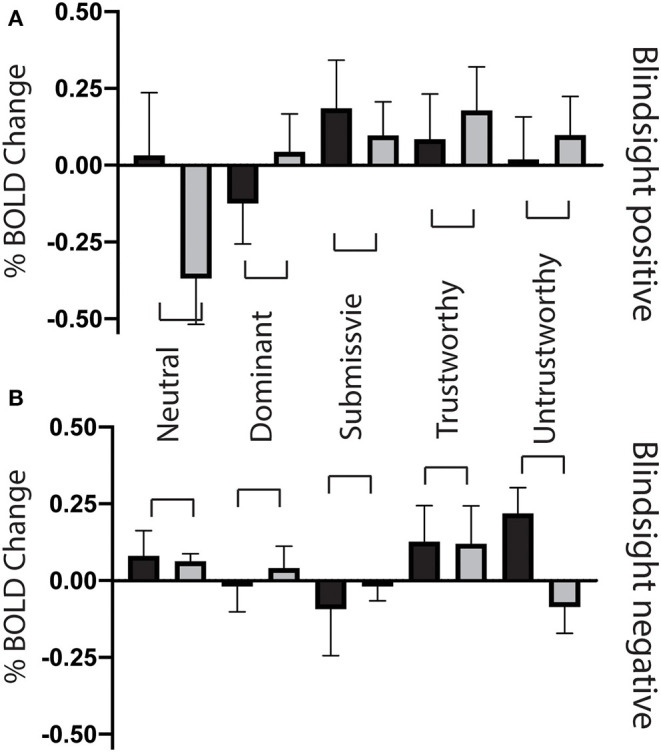
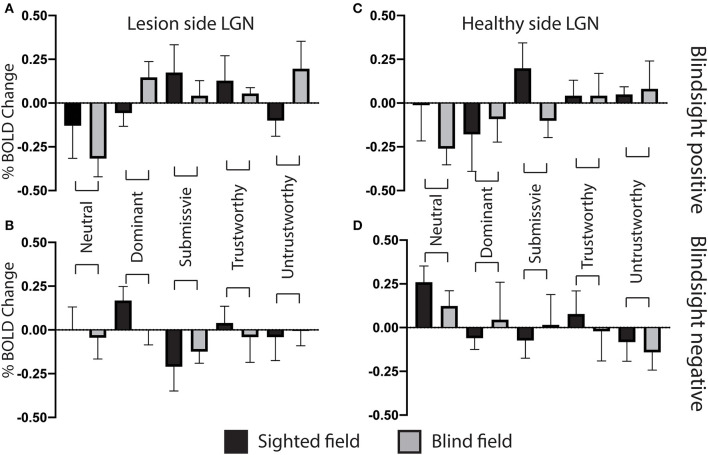
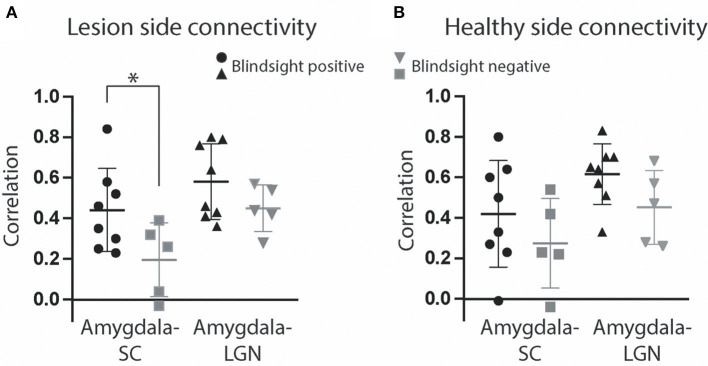
Humans can respond rapidly to viewed expressions of fear, even in the absence of conscious awareness. This is demonstrated using visual masking paradigms in healthy individuals and in patients with cortical blindness due to damage to the primary visual cortex (V1) - so called affective blindsight. Humans have also been shown to implicitly process facial expressions representing important social dimensions. Two major axes, dominance and trustworthiness, are proposed to characterize the social dimensions of face evaluation. The processing of both types of implicit stimuli is believed to occur via similar subcortical pathways involving the amygdala. However, we do not know whether unconscious processing of more subtle expressions of facial traits can occur in blindsight, and if so, how. To test this, we studied 13 patients with unilateral V1 damage and visual field loss. We assessed their ability to detect and discriminate faces that had been manipulated along two orthogonal axes of trustworthiness and dominance to generate five trait levels inside the blind visual field: dominant, submissive, trustworthy, untrustworthy, and neutral. We compared neural activity and functional connectivity in patients classified as blindsight positive or negative for these stimuli. We found that dominant faces were most likely to be detected above chance, with individuals demonstrating unique interactions between performance and face trait. Only patients with blindsight ( = 8) showed significant preference in the superior colliculus and amygdala for face traits in the blind visual field, and a critical functional connection between the amygdala and superior colliculus in the damaged hemisphere. We also found a significant correlation between behavioral performance and fMRI activity in the amygdala and lateral geniculate nucleus across all participants. Our findings confirm that affective blindsight involving the superior colliculus and amygdala extends to the processing of socially salient but emotionally neutral facial expressions when V1 is damaged. This pathway is distinct from that which supports motion blindsight, as both types of blindsight can exist in the absence of the other with corresponding patterns of residual connectivity.
人类能够对所看到的恐惧表情迅速做出反应,即使是在没有意识觉察的情况下。这一点在健康个体以及因初级视觉皮层(V1)受损而患有皮质盲的患者中通过视觉掩蔽范式得到了证明——即所谓的情感盲视。研究还表明,人类能够对代表重要社会维度的面部表情进行隐性加工。人们提出了两个主要维度,即支配性和可信度,来描述面部评估的社会维度。这两种类型的隐性刺激的加工过程被认为是通过涉及杏仁核的类似皮层下通路进行的。然而,我们尚不清楚在盲视情况下,对面部特征更细微表情的无意识加工是否能够发生,如果可以,又是如何发生的。为了验证这一点,我们对13名单侧V1损伤且视野缺损的患者进行了研究。我们评估了他们在盲视野中检测和区分沿着可信度和支配性这两个正交维度进行处理以产生五个特征水平(支配性、顺从性、可信度、不可信度和中性)的面孔的能力。我们比较了对这些刺激被分类为盲视阳性或阴性的患者的神经活动和功能连接。我们发现,支配性面孔最有可能被高于随机水平地检测到,个体在表现与面部特征之间表现出独特的相互作用。只有盲视患者(n = 8)在盲视野中对面部特征在中脑上丘和杏仁核中表现出显著偏好,并且在受损半球的杏仁核和中脑上丘之间存在关键的功能连接。我们还发现所有参与者的杏仁核和外侧膝状体中的功能磁共振成像活动与行为表现之间存在显著相关性。我们的研究结果证实,当V1受损时,涉及中脑上丘和杏仁核的情感盲视扩展到了对具有社会显著性但情感中性的面部表情的加工。这条通路与支持运动盲视的通路不同,因为这两种类型的盲视可以在彼此不存在的情况下存在,并具有相应的残余连接模式。