Mcquown Colleen, Ahmed Rami A, Hughes Patrick G, Ortiz-Figueroa Fabiana, Drost Jennifer C, Brown Diane K, Fosnight Sue, Hazelett Susan
Louis Stokes Cleveland Veterans Affairs Medical Center, Cleveland, OH, USA.
Department of Emergency Medicine, Indiana University School of Medicine, Indianapolis, IN, USA.
Curr Gerontol Geriatr Res. 2020 Jul 25;2020:3175403. doi: 10.1155/2020/3175403. eCollection 2020.
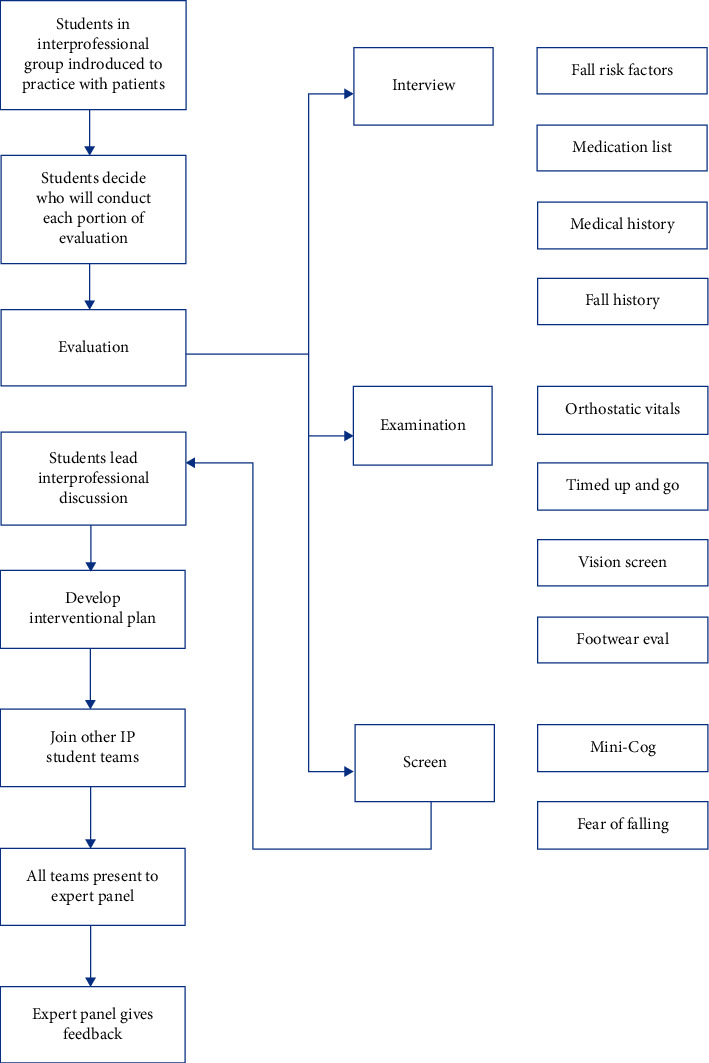
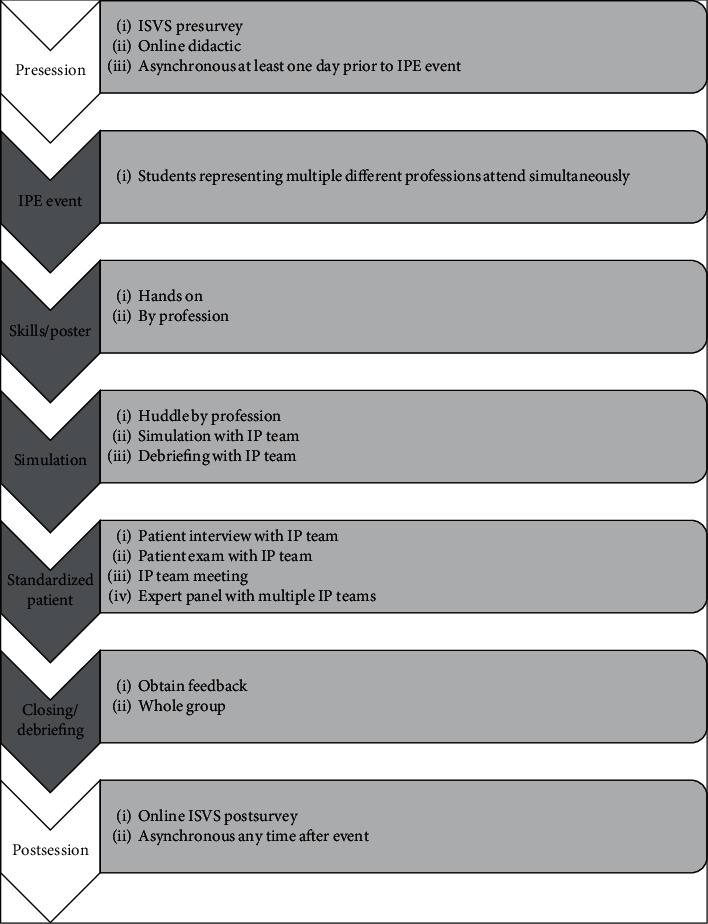
The care of the older adult requires an interprofessional approach to solve complex medical and social problems, but this approach is difficult to teach in our educational silos. We developed an interprofessional educational session in response to national requests for innovative practice models that use collaborative interprofessional teams. We chose geriatric fall prevention as our area of focus as our development of the educational session coincided with the development of an interprofessional Fall Risk Reduction Clinic. Our aim of this study was to evaluate the number and type of students who attended a pilot and 10 subsequent educational sessions. We also documented the changes that occurred due to a Plan-Do-Study-Act (PDSA) rapid-cycle improvement model to modify our educational session. The educational session evolved into an online presession self-study didactic and in-person educational session with a poster/skill section, an interprofessional team simulation, and simulated patient experience. The simulated patient experience included an interprofessional fall evaluation, team meeting, and presentation to an expert panel. The pilot session had 83 students from the three sponsoring institutions (hospital system, university, and medical university). Students were from undergraduate nursing, nurse practitioner graduate program, pharmacy, medicine, social work, physical therapy, nutrition, and pastoral care. Since the pilot, 719 students have participated in various manifestations of the online didactic plus in-person training sessions. Ten separate educational sessions have been given at three different institutions. Survey data with demographic information were available on 524 participants. Students came from ten different schools and represented thirteen different health care disciplines. A large-scale interprofessional educational session is possible with rapid-cycle improvement, inclusion of educators from a variety of learning institutions, and flexibility with curriculum to accommodate learners in various stages of training.
照顾老年人需要采用跨专业方法来解决复杂的医疗和社会问题,但这种方法在我们各自为政的教育体系中很难传授。应国家对使用跨专业协作团队的创新实践模式的要求,我们开展了一次跨专业教育活动。由于我们开展教育活动的同时也在发展一个跨专业的跌倒风险降低诊所,所以我们选择老年跌倒预防作为重点领域。本研究的目的是评估参加试点教育活动以及随后10次教育活动的学生数量和类型。我们还记录了因采用计划-执行-研究-改进(PDSA)快速循环改进模型对教育活动进行修改而发生的变化。教育活动演变成了一个在线课前自学教学环节以及一个包含海报/技能部分、跨专业团队模拟和模拟患者体验的面对面教育环节。模拟患者体验包括跨专业跌倒评估、团队会议以及向专家小组进行汇报。试点教育活动有来自三个主办机构(医院系统、大学和医科大学)的83名学生参加。学生来自本科护理、执业护士研究生项目、药学、医学、社会工作、物理治疗、营养和牧师关怀等专业。自试点以来,719名学生参加了在线教学加面对面培训课程的各种形式。在三个不同机构举办了10次单独的教育活动。有524名参与者提供了包含人口统计学信息的调查数据。学生来自十所不同学校,代表了十三个不同的医疗保健学科。通过快速循环改进、纳入来自各种学习机构的教育工作者以及灵活调整课程以适应不同培训阶段的学习者,开展大规模的跨专业教育活动是可行的。