Negri Renata, Aguilar Ignacio, Feltes Giovani Luis, Machado Juliana Dementshuk, Braccini Neto José, Costa-Maia Fabiana Martins, Cobuci Jaime Araújo
Department of Animal Science, Federal University of Rio Grande of Sul, Porto Alegre, RS, 91540-000, Brazil.
Instituto Nacional de Investigación Agropecuaria (INIA), Rincón del Colorado, CA, 90200, Uruguay.
Anim Biosci. 2021 Feb;34(2):163-171. doi: 10.5713/ajas.19.0960. Epub 2020 May 12.
Considering the importance of dairy farming and the negative effects of heat stress, more tolerant genotypes need to be identified. The objective of this study was to investigate the effect of heat stress via temperature-humidity index (THI) and diurnal temperature variation (DTV) in the genetic evaluations for daily milk yield of Holstein dairy cattle, using random regression models.
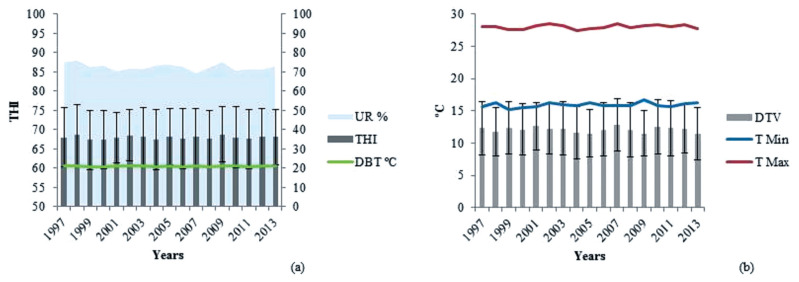
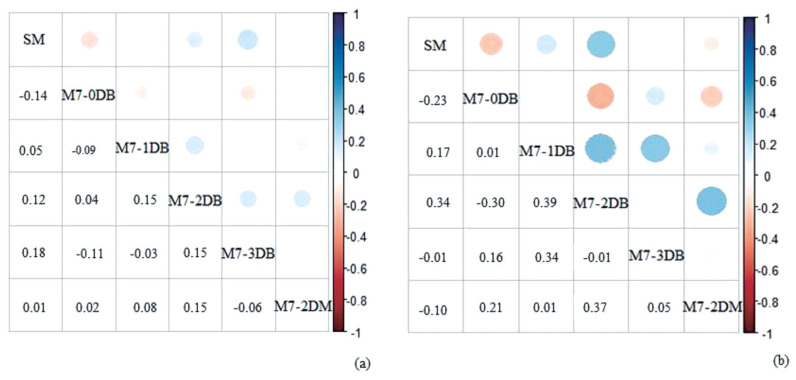
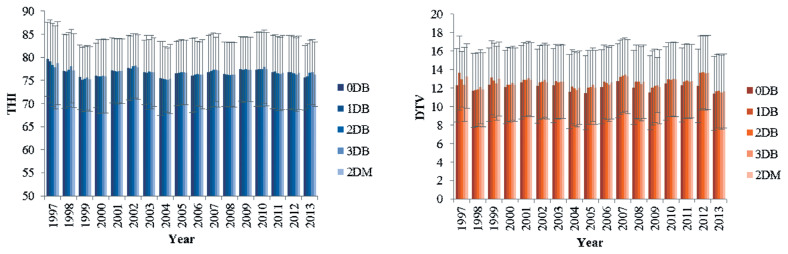
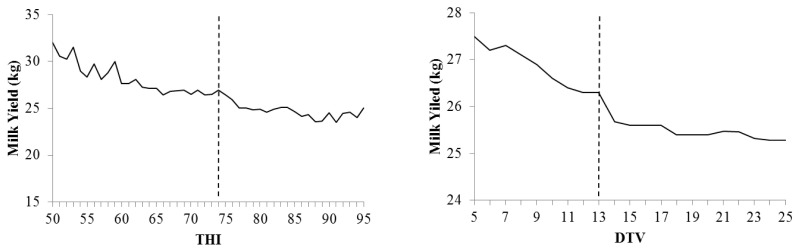
The data comprised 94,549 test-day records of 11,294 first parity Holstein cows from Brazil, collected from 1997 to 2013, and bioclimatic data (THI and DTV) from 18 weather stations. Least square linear regression models were used to determine the THI and DTV thresholds for milk yield losses caused by heat stress. In addition to the standard model (SM, without bioclimatic variables), THI and DTV were combined in various ways and tested for different days, totaling 41 models.
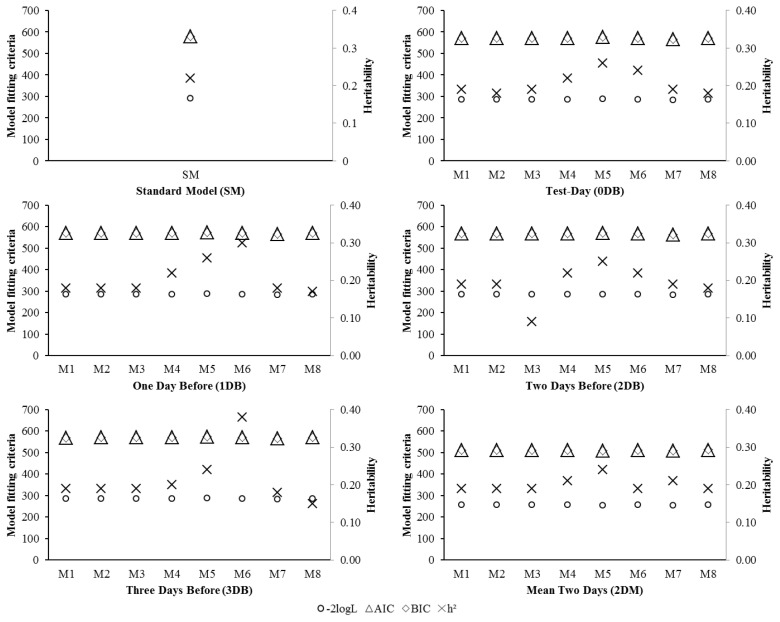
The THI and DTV thresholds for milk yield losses was THI = 74 (-0.106 kg/d/THI) and DTV = 13 (-0.045 kg/d/DTV). The model that included THI and DTV as fixed effects, considering the two-day average, presented better fit (-2logL, Akaike information criterion, and Bayesian information criterion). The estimated breeding values (EBVs) and the reliabilities of the EBVs improved when using this model.
Sires are re-ranking when heat stress indicators are included in the model. Genetic evaluation using the mean of two days of THI and DTV as fixed effect, improved EBVs and EBVs reliability.
鉴于奶牛养殖的重要性以及热应激的负面影响,需要鉴定出更具耐受性的基因型。本研究的目的是利用随机回归模型,通过温湿度指数(THI)和昼夜温度变化(DTV)来研究热应激对荷斯坦奶牛日产奶量遗传评估的影响。
数据包括1997年至2013年从巴西收集的11294头头胎荷斯坦奶牛的94549条测定日记录,以及来自18个气象站的生物气候数据(THI和DTV)。使用最小二乘线性回归模型来确定热应激导致产奶量损失的THI和DTV阈值。除了标准模型(SM,不包含生物气候变量)外,THI和DTV以各种方式组合,并针对不同天数进行测试,共有41个模型。
产奶量损失的THI和DTV阈值分别为THI = 74(-0.106 kg/d/THI)和DTV = 13(-0.045 kg/d/DTV)。将THI和DTV作为固定效应纳入、考虑两天平均值的模型拟合效果更好(-2logL、赤池信息准则和贝叶斯信息准则)。使用该模型时,估计育种值(EBV)及其可靠性得到了提高。
当模型中纳入热应激指标时,种公牛的排名会重新调整。使用THI和DTV两天的平均值作为固定效应进行遗传评估,提高了EBV及其可靠性。