Department of Psychiatry, University of California San Diego, 9500 Gilman Drive MC 0804, La Jolla, CA, 92093-0804, USA.
University of Pittsburgh Aging Institute, Pittsburgh, PA, USA.
Cogn Affect Behav Neurosci. 2020 Dec;20(6):1173-1183. doi: 10.3758/s13415-020-00824-2.
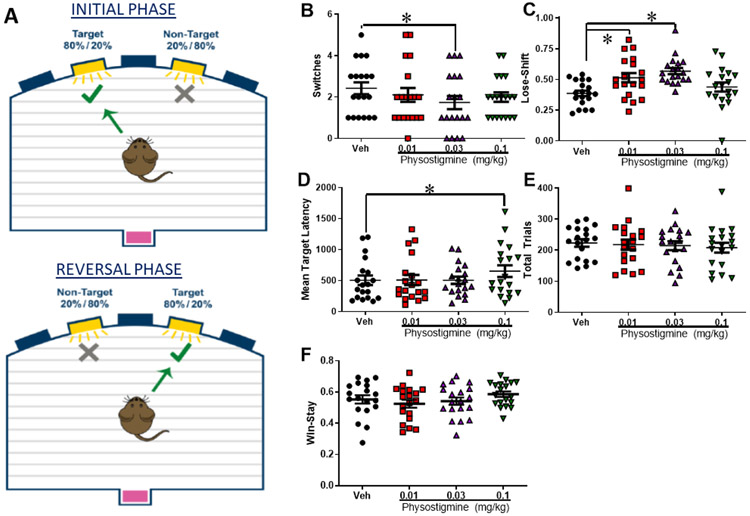
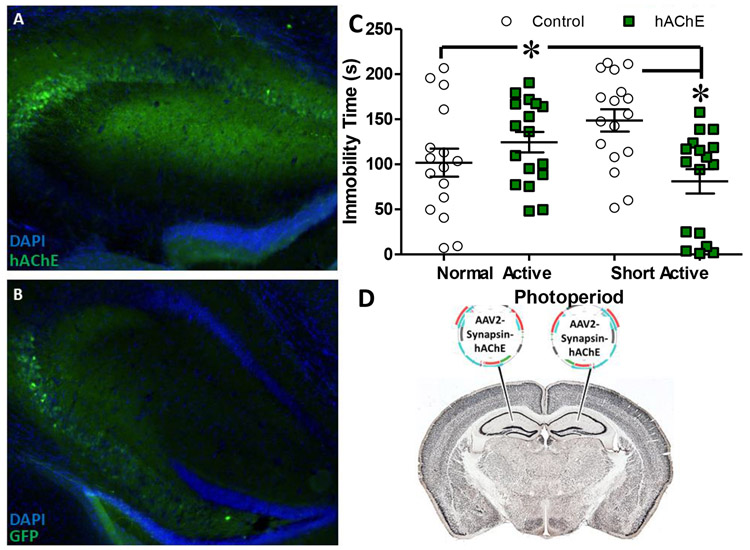
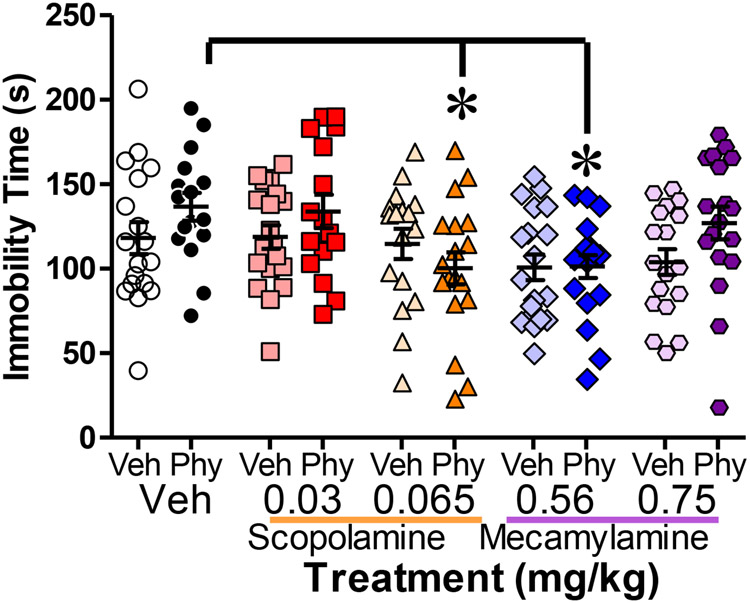
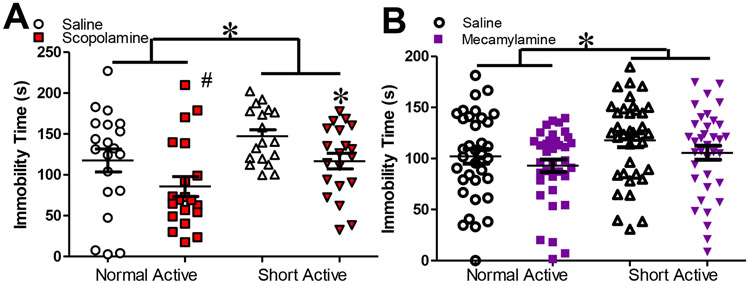
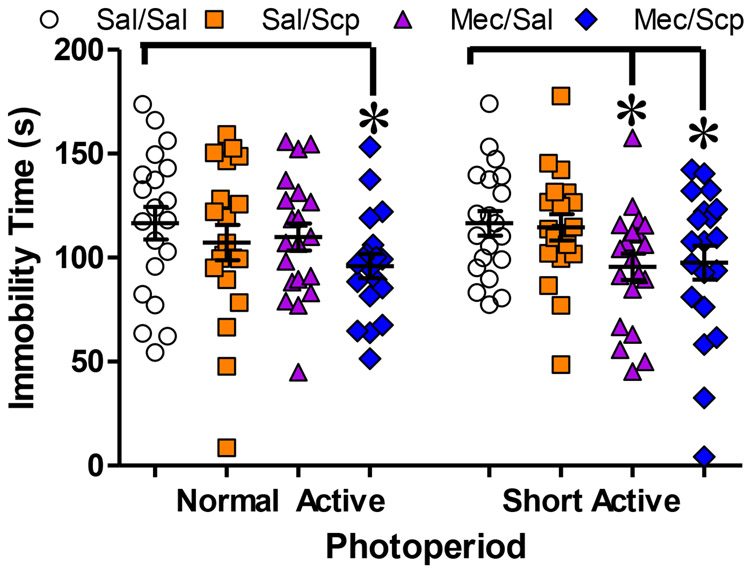
Seasonal variations in environmental light influence switches between moods in seasonal affective disorder (SAD) and bipolar disorder (BD), with depression arising during short active (SA) winter periods. Light-induced changes in behavior are also seen in healthy animals and are intensified in mice with reduced dopamine transporter expression. Specifically, decreasing the nocturnal active period (SA) of mice increases punishment perseveration and forced swim test (FST) immobility. Elevating acetylcholine with the acetylcholinesterase inhibitor physostigmine induces depression symptoms in people and increases FST immobility in mice. We used SA photoperiods and physostigmine to elevate acetylcholine prior to testing in a probabilistic learning task and the FST, including reversing subsequent deficits with nicotinic and scopolamine antagonists and targeted hippocampal adeno-associated viral administration. We confirmed that physostigmine also increases punishment sensitivity in a probabilistic learning paradigm. In addition, muscarinic and nicotinic receptor blockade attenuated both physostigmine-induced and SA-induced phenotypes. Finally, viral-mediated hippocampal expression of human AChE used to lower ACh levels blocked SA-induced elevation of FST immobility. These results indicate that increased hippocampal acetylcholine neurotransmission is necessary for the expression of SA exposure-induced behaviors. Furthermore, these studies support the potential for cholinergic treatments in depression. Taken together, these results provide evidence for hippocampal cholinergic mechanisms in contributing to seasonally depressed affective states induced by short day lengths.
季节性环境光照变化影响季节性情感障碍(SAD)和双相情感障碍(BD)的情绪转换,抑郁在短光照(SA)冬季期间出现。光照诱导的行为变化也见于健康动物,并且在多巴胺转运蛋白表达减少的小鼠中更为明显。具体来说,减少小鼠的夜间活跃期(SA)会增加惩罚坚持和强迫游泳测试(FST)的不动时间。乙酰胆碱酯酶抑制剂毒扁豆碱升高乙酰胆碱会引起人类出现抑郁症状,并增加小鼠的 FST 不动时间。我们在概率学习任务和 FST 之前使用 SA 光周期和毒扁豆碱升高乙酰胆碱,包括用烟碱和东莨菪碱拮抗剂和靶向海马腺相关病毒给药来逆转随后的缺陷。我们证实毒扁豆碱也会增加概率学习范式中的惩罚敏感性。此外,毒扁豆碱诱导和 SA 诱导的表型均被毒蕈碱和烟碱受体阻断所减弱。最后,用于降低乙酰胆碱水平的海马腺相关病毒介导的人乙酰胆碱酯酶表达阻断了 SA 诱导的 FST 不动时间升高。这些结果表明,增加海马乙酰胆碱神经传递对于表达 SA 暴露诱导的行为是必要的。此外,这些研究支持胆碱能治疗在抑郁症中的潜力。总之,这些结果为短日照诱导的季节性抑郁情绪状态中与海马胆碱能机制有关提供了证据。