Lin Dong D, Meghal Trishala, Murthy Pooja, Mo Lan, D'Silva Ashley, Huang Yiwu, Xu Yiqing
Department of Volunteers and Student Services, Maimonides Medical Center, Brooklyn, NY.
Division of Hematology/Oncology, Department of Medicine, Maimonides Medical Center, Brooklyn, NY.
JCO Glob Oncol. 2020 Aug;6:1298-1305. doi: 10.1200/GO.20.00309.
As a result of their immunocompromised status associated with disease and treatment, patients with cancer face a profound threat for higher rates of complications and mortality if they contract the coronavirus disease 2019 infection. Medical oncology communities have developed treatment modifications to balance the risk of contracting the virus with the benefit of improving cancer-related outcomes.
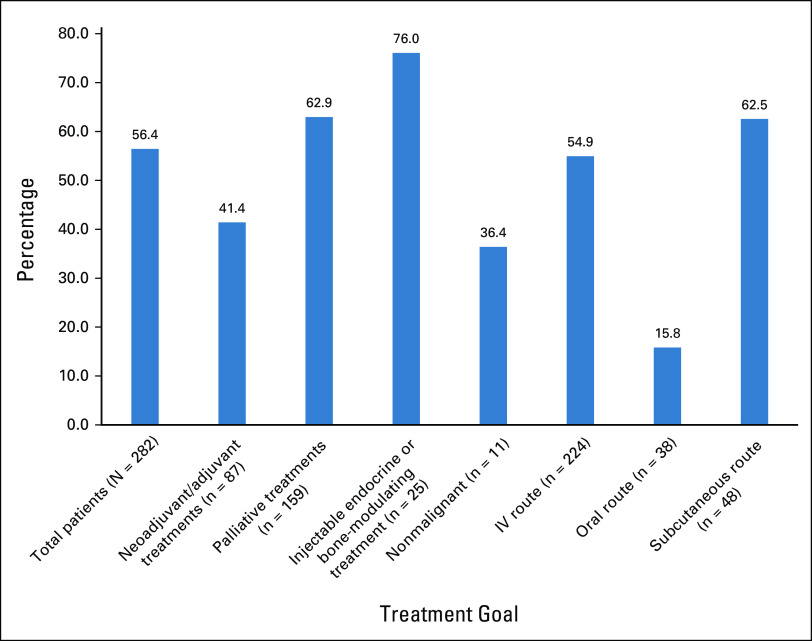
We systemically examined our community cancer center database to display patterns of change and to unveil factors that have been considered with each decision. We studied a cohort of 282 patients receiving treatment and found that 159 patients (56.4%) had treatment modifications.
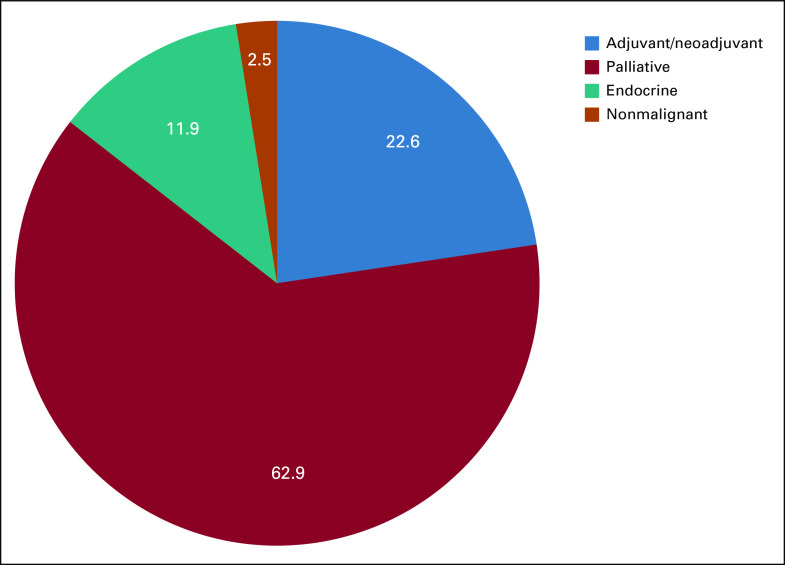
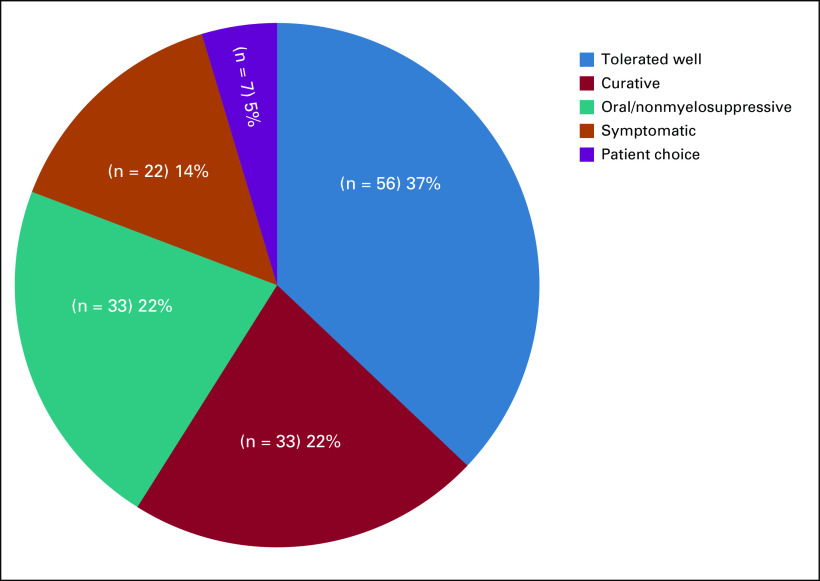
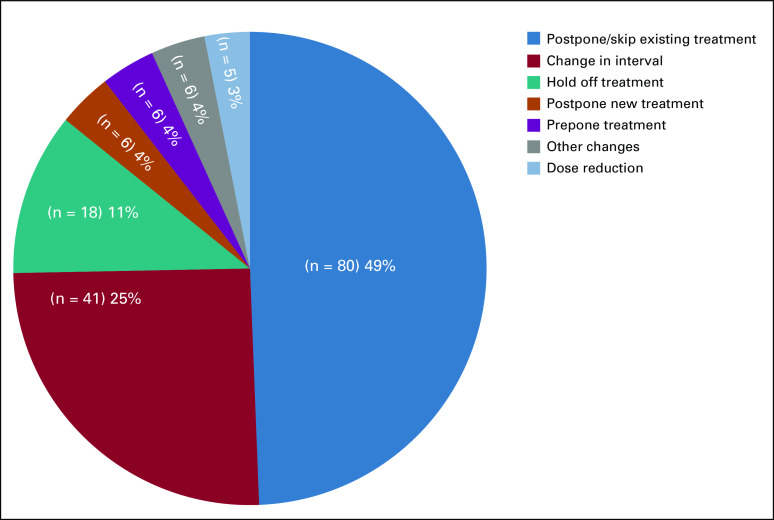
The incidence of treatment modification was observed in patients undergoing adjuvant and neoadjuvant (41.4%), palliative (62.9%), or injectable endocrine or bone-modulating only (76.0%) treatments. Modifications were applied to regimens with myelosuppressive (56.5%), immunosuppressive (69.2%), and immunomodulating (61.5%) potentials. These modifications also affected intravenous (54.9%) and subcutaneous injectable treatments (62.5%) more than oral treatments (15.8%). Treatment modifications in 112 patients (70.4%) were recommended by providers, and 47 (29.6%) were initiated by patients. The most common strategy of modification was to skip or postpone a scheduled treatment (49%). Among treatment with no modifications, treatment regimens were maintained in patients who tolerated treatment well (37.0%), in treatments with curative intent (22%), and in symptomatic patients who required treatment (14%).
Our observation and analysis suggested that the primary goal of treatment modification was to decrease potential exposure. The pattern also reflected the negative impact of the pandemic on health care providers who initiated these changes. Providers have to consider individualized recommendations incorporating multiple factors, such as tolerance, potential toxicity, treatment nature and route, and disease severity.
由于癌症患者因疾病和治疗而处于免疫功能低下状态,若感染2019冠状病毒病,他们面临更高的并发症发生率和死亡率的严重威胁。医学肿瘤学界已制定治疗调整方案,以平衡感染病毒的风险与改善癌症相关结局的益处。
我们系统地检查了我们社区癌症中心的数据库,以展示变化模式并揭示每个决策所考虑的因素。我们研究了一组282名接受治疗的患者,发现159名患者(56.4%)有治疗调整。
在接受辅助和新辅助治疗(41.4%)、姑息治疗(62.9%)或仅接受注射用内分泌或骨调节治疗(76.0%)的患者中观察到治疗调整的发生率。调整应用于具有骨髓抑制(56.5%)、免疫抑制(69.2%)和免疫调节(61.5%)潜力的方案。这些调整对静脉注射(54.9%)和皮下注射治疗(62.5%)的影响也大于口服治疗(15.8%)。112名患者(70.4%)的治疗调整由医疗服务提供者推荐,47名患者(29.6%)由患者发起。最常见的调整策略是跳过或推迟预定治疗(49%)。在未进行调整的治疗中,耐受性良好的患者(37.0%)、有治愈意图的治疗(22%)以及需要治疗的有症状患者(14%)维持治疗方案。
我们的观察和分析表明,治疗调整的主要目标是减少潜在暴露。这种模式也反映了疫情对发起这些改变的医疗服务提供者的负面影响。医疗服务提供者必须考虑纳入多种因素的个性化建议,如耐受性、潜在毒性、治疗性质和途径以及疾病严重程度。