Salmoiraghi Silvia, Cavagna Roberta, Zanghì Pamela, Pavoni Chiara, Michelato Anna, Buklijas Ksenija, Elidi Lara, Intermesoli Tamara, Lussana Federico, Oldani Elena, Caprioli Chiara, Stefanoni Paola, Gianfaldoni Giacomo, Audisio Ernesta, Terruzzi Elisabetta, De Paoli Lorella, Borlenghi Erika, Cavattoni Irene, Mattei Daniele, Scattolin Annamaria, Tajana Monica, Ciceri Fabio, Todisco Elisabetta, Campiotti Leonardo, Corradini Paolo, Fracchiolla Nicola, Bassan Renato, Rambaldi Alessandro, Spinelli Orietta
Hematology Unit, Azienda Socio Sanitaria Territoriale (ASST), Ospedale Papa Giovanni XXIII, 24127 Bergamo, Italy.
FROM Research Foundation, Papa Giovanni XXIII Hospital, 24127 Bergamo, Italy.
Cancers (Basel). 2020 Aug 11;12(8):2242. doi: 10.3390/cancers12082242.
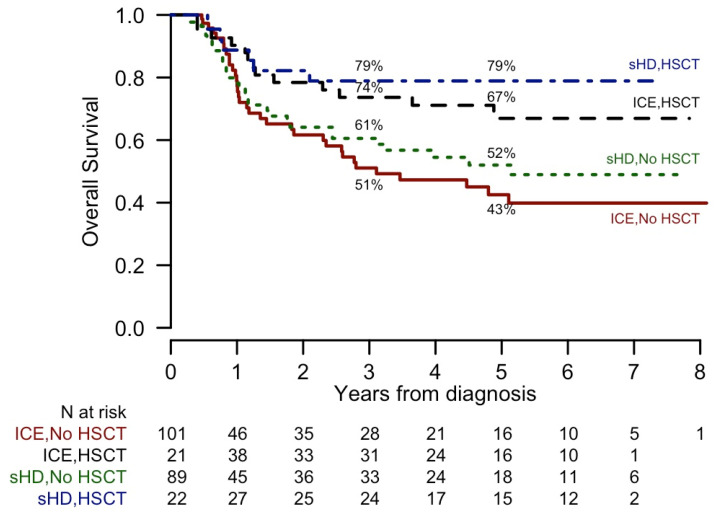
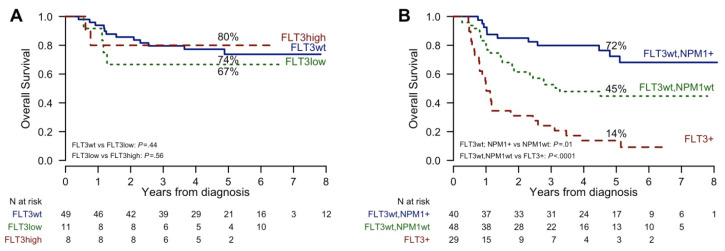
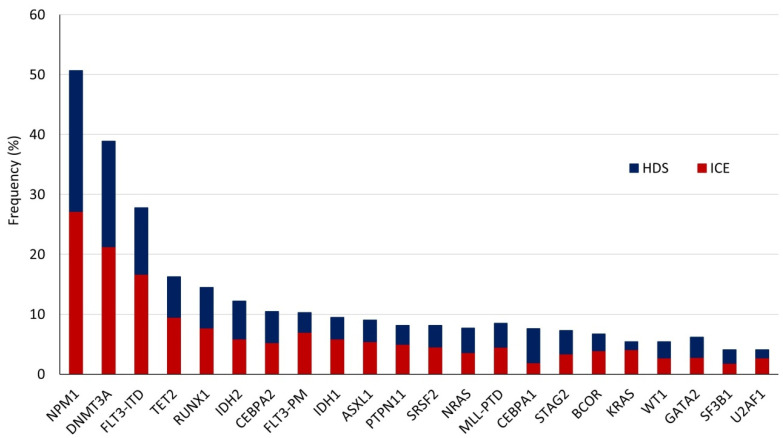
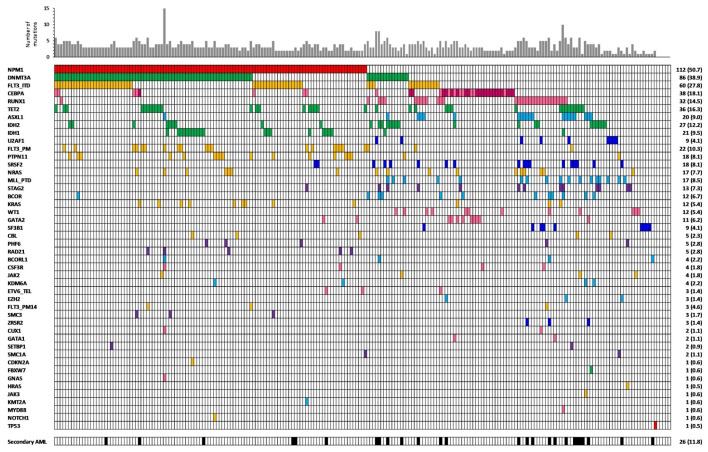
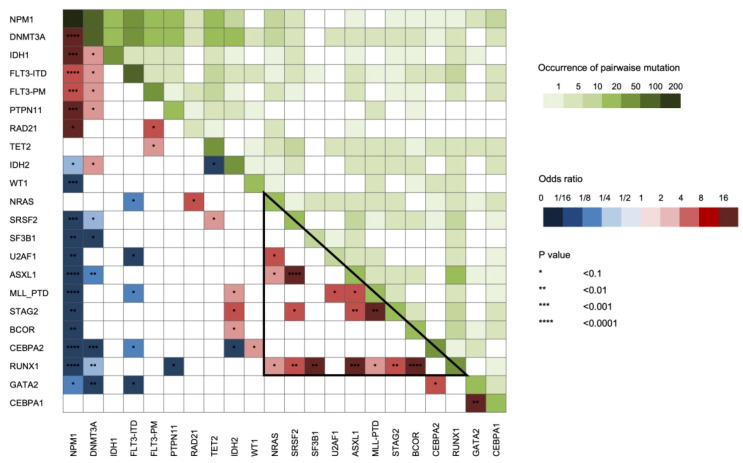
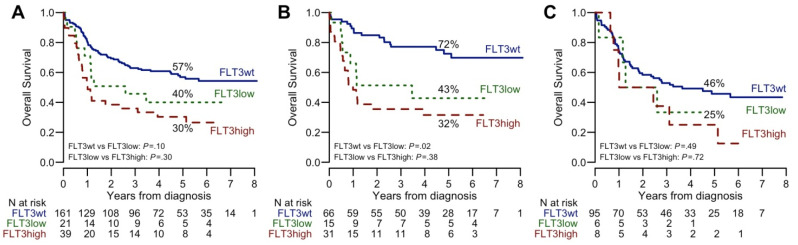
By way of a Next-Generation Sequencing NGS high throughput approach, we defined the mutational profile in a cohort of 221 normal karyotype acute myeloid leukemia (NK-AML) enrolled into a prospective randomized clinical trial, designed to evaluate an intensified chemotherapy program for remission induction. , and -ITD were the most frequently mutated genes while , , , , and mutations were more common in the mutated patients ( < 0.05). R132H mutation was strictly associated with mutation and mutually exclusive with and . In the whole cohort of NK-AML, no matter the induction chemotherapy used, by multivariate analysis, the achievement of complete remission was negatively affected by the mutation. Alterations of (ITD) and were associated with a worse overall and disease-free survival ( < 0.05). ITD positive patients who proceeded to alloHSCT had a survival probability similar to ITD negative patients and the transplant outcome was no different when comparing high and low-AR--ITD subgroups in terms of both OS and DFS. In conclusion, a comprehensive molecular profile for NK-AML allows for the identification of genetic lesions associated to different clinical outcomes and the selection of the most appropriate and effective treatment strategies, including stem cell transplantation and targeted therapies.
通过下一代测序(NGS)高通量方法,我们在纳入一项前瞻性随机临床试验的221例正常核型急性髓系白血病(NK-AML)队列中定义了突变谱,该试验旨在评估强化化疗方案用于诱导缓解。FLT3-ITD是最常发生突变的基因,而NPM1、DNMT3A、IDH1、IDH2和NRAS突变在FLT3突变患者中更为常见(P<0.05)。R132H突变与IDH2突变密切相关,与FLT3和NPM1互斥。在整个NK-AML队列中,无论使用何种诱导化疗,多因素分析显示,NPM1突变对完全缓解的实现有负面影响。FLT3(ITD)和NPM1的改变与较差的总生存期和无病生存期相关(P<0.05)。接受异基因造血干细胞移植(alloHSCT)的FLT3-ITD阳性患者的生存概率与FLT3-ITD阴性患者相似,在总生存期(OS)和无病生存期(DFS)方面比较高AR-FLT3-ITD和低AR-FLT3-ITD亚组时,移植结果没有差异。总之,NK-AML的综合分子谱有助于识别与不同临床结局相关的遗传损伤,并选择最合适和有效的治疗策略,包括干细胞移植和靶向治疗。