Meyer Karen A, Mackay Duncan H, Talpeanu Dana-Camelia, Upton Lisa A, West Matthew J
Mathematics, School of Science & Engineering, University of Dundee, Nethergate, Dundee, DD1 4HN UK.
Division of Computing and Mathematics, Abertay University, Kydd Building, Bell Street, Dundee, DD1 1HG Scotland UK.
Sol Phys. 2020;295(7):101. doi: 10.1007/s11207-020-01668-2. Epub 2020 Jul 27.
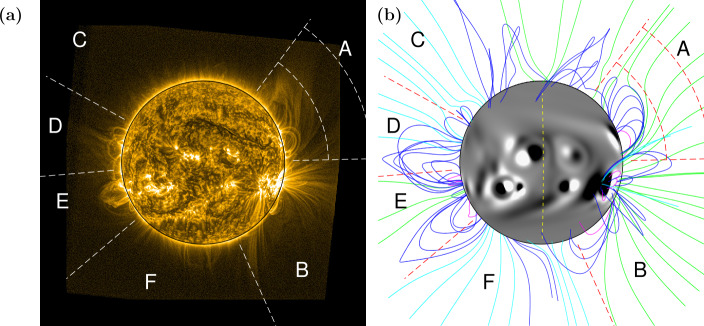
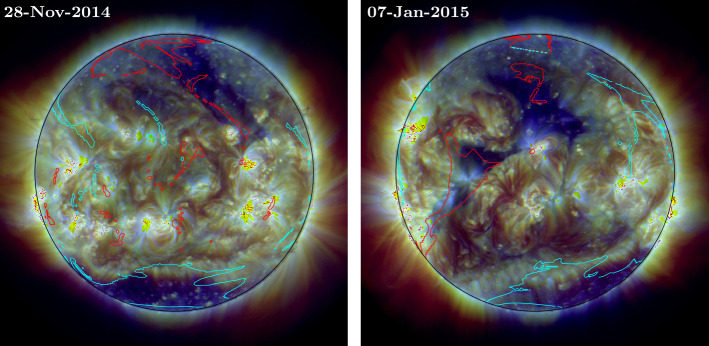
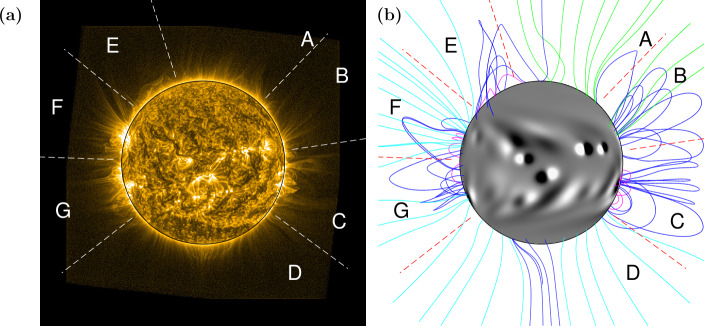
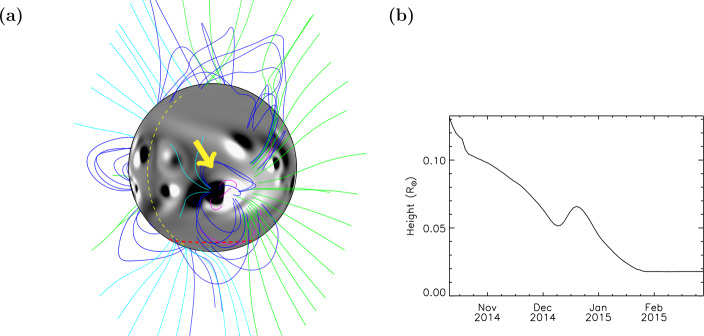
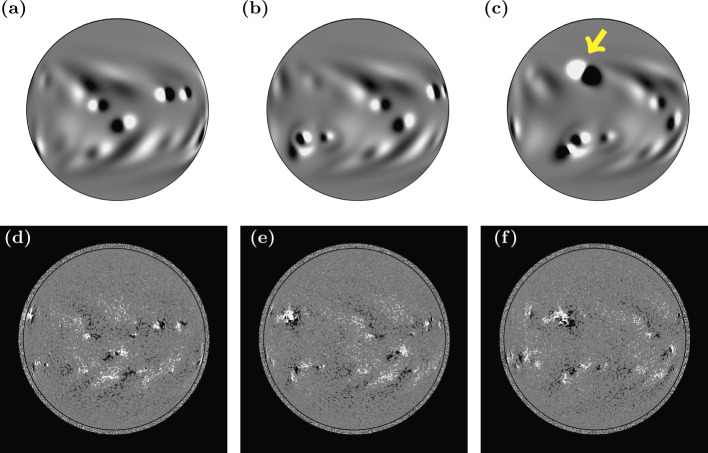
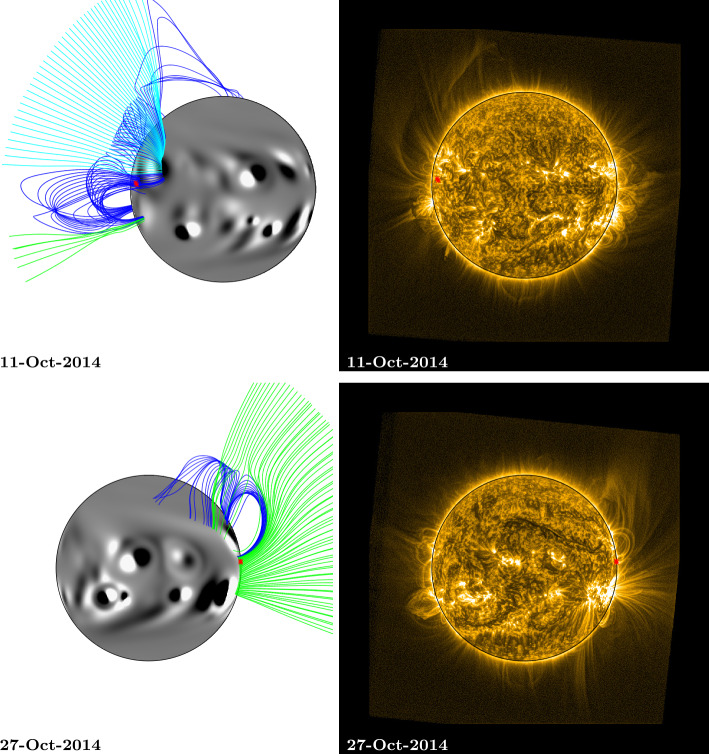
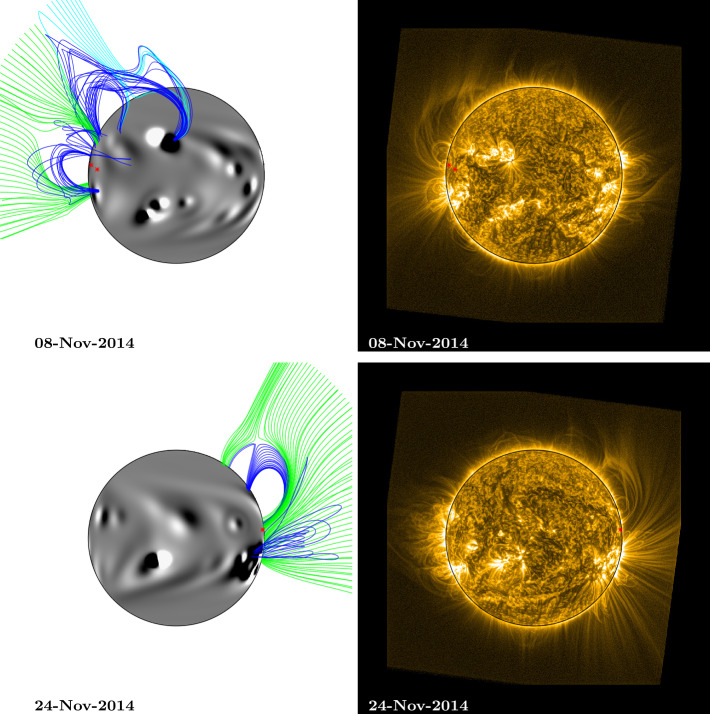
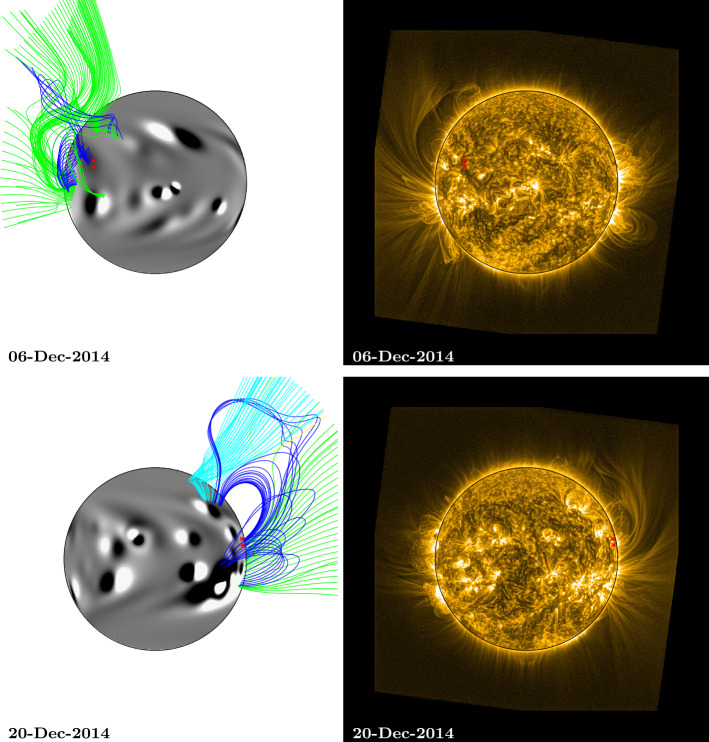
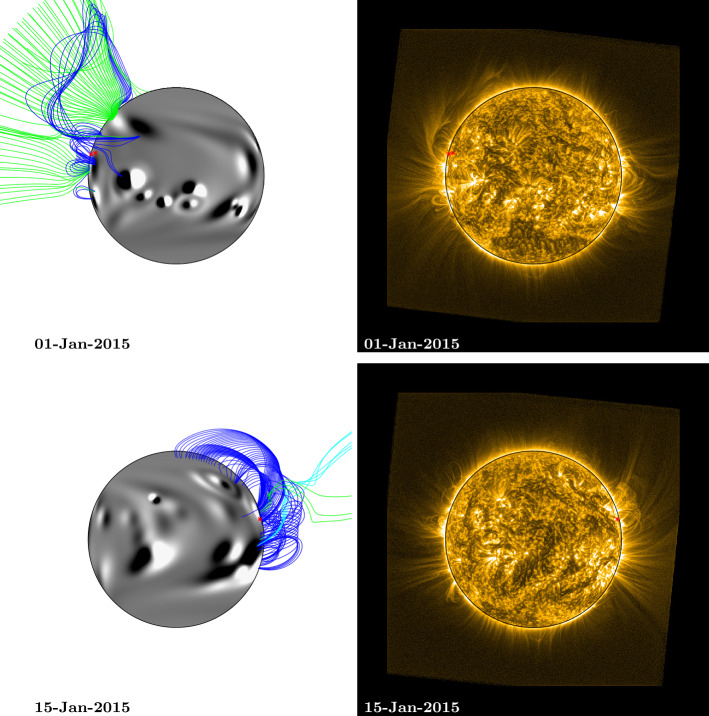
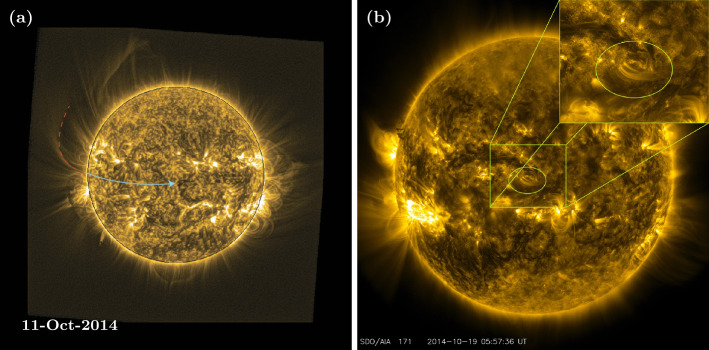
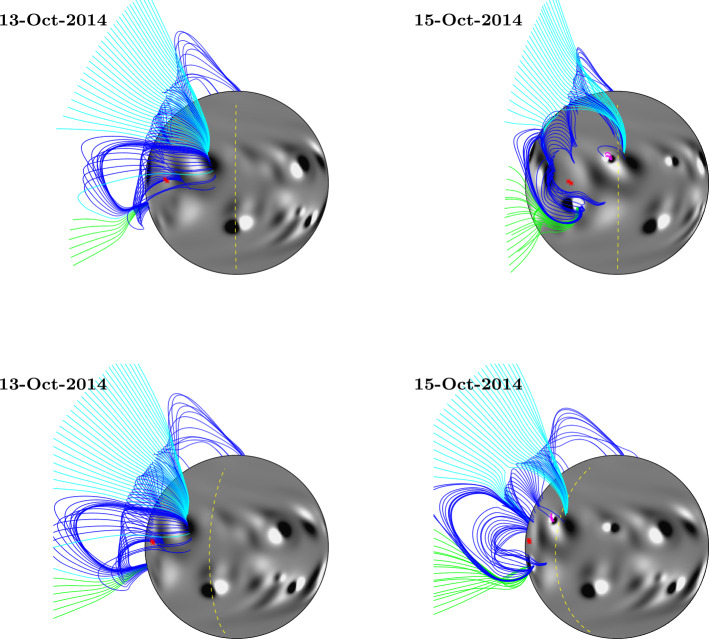
The large field-of-view of the (SWAP) instrument onboard the (PROBA2) spacecraft provides a unique opportunity to study extended coronal structures observed in the EUV in conjunction with global coronal magnetic field simulations. A global non-potential magnetic field model is used to simulate the evolution of the global corona from 1 September 2014 to 31 March 2015, driven by newly emerging bipolar active regions determined from (HMI) magnetograms. We compare the large-scale structure of the simulated magnetic field with structures seen off-limb in SWAP EUV observations. In particular, we investigate how successful the model is in reproducing regions of closed and open structures, the scale of structures, and compare the evolution of a coronal fan observed over several rotations. The model is found to accurately reproduce observed large-scale, off-limb structures. When discrepancies do arise they mainly occur off the east solar limb due to active regions emerging on the far side of the Sun, which cannot be incorporated into the model until they are observed on the Earth-facing side. When such "late" active region emergences are incorporated into the model, we find that the simulated corona self-corrects within a few days, so that simulated structures off the west limb more closely match what is observed. Where the model is less successful, we consider how this may be addressed, through model developments or additional observational products.
The online version of this article (10.1007/s11207-020-01668-2) contains supplementary material, which is available to authorized users.
搭载于(PROBA2)航天器上的(SWAP)仪器具有大视场,这为研究在极紫外波段观测到的延伸日冕结构以及全球日冕磁场模拟提供了独特机会。利用一个全球非势磁场模型来模拟2014年9月1日至2015年3月31日期间全球日冕的演化,该模型由从(HMI)磁图确定的新出现的双极活动区驱动。我们将模拟磁场的大规模结构与SWAP极紫外观测中看到的日边外结构进行比较。特别是,我们研究该模型在再现封闭和开放结构区域、结构尺度方面的成功程度,并比较在几次太阳自转过程中观测到的日冕扇的演化。结果发现该模型能准确再现观测到的大规模日边外结构。当出现差异时,主要发生在太阳东侧日边外,原因是活动区出现在太阳的远侧,在它们出现在面向地球一侧之前无法纳入模型。当将这种“延迟”的活动区出现纳入模型时,我们发现模拟的日冕在几天内会自我修正,从而使西侧日边外的模拟结构更接近观测结果。在模型不太成功的地方,我们考虑如何通过模型改进或额外的观测产品来解决这个问题。
本文的在线版本(10.1007/s11207-020-01668-2)包含补充材料,授权用户可获取。