Hull Rodney, Mbele Mzwandile, Makhafola Tshepiso, Hicks Chindo, Wang Shao Ming, Reis Rui Manuel, Mehrotra Ravi, Mkhize-Kwitshana Zilungile, Hussain Showket, Kibiki Gibson, Bates David O, Dlamini Zodwa
South African-Medical Research Council/University of Pretoria Precision, Prevention and Novel Drug Targets for HIV-Associated Cancers Extramural Unit, Cancer Research Institute, University of Pretoria, Faculty of Health Sciences, Pretoria, Gauteng 0028, South Africa.
Louisiana State University, School of Medicine, Department of Genetics, Bioinformatics and Genomics Centre, LA 70112, USA.
Oncol Lett. 2020 Oct;20(4):42. doi: 10.3892/ol.2020.11902. Epub 2020 Jul 24.
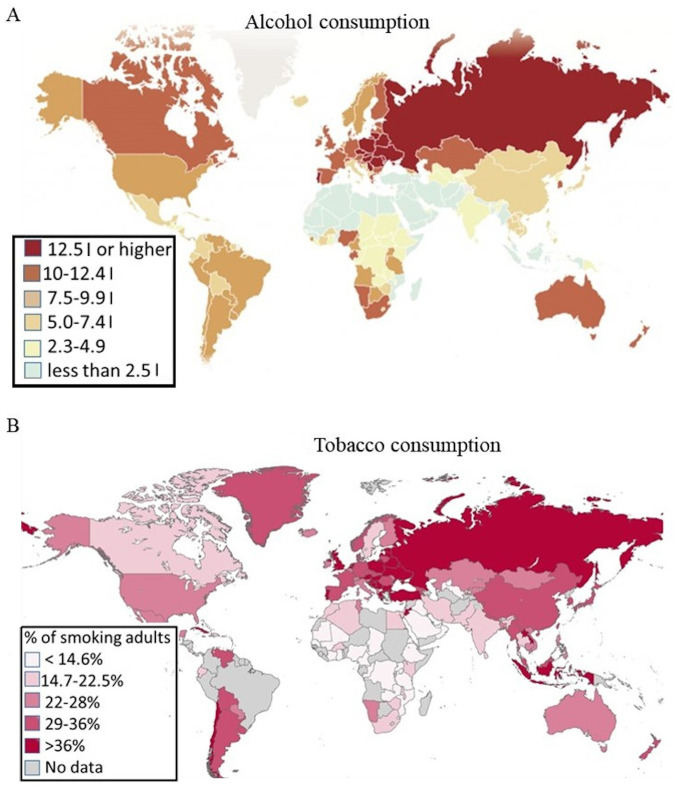
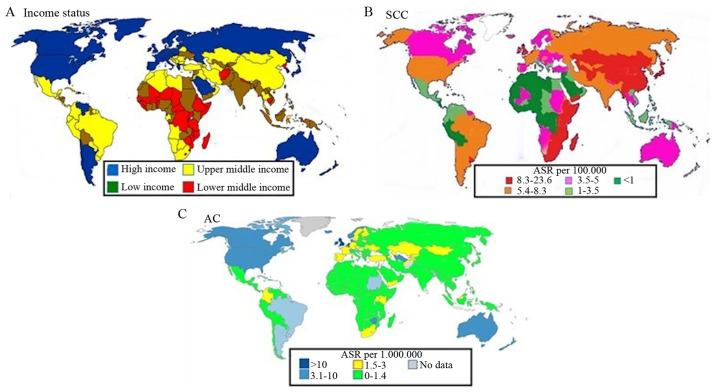
Oesophageal cancer (OC) is an aggressive neoplasm that manifests in the gastrointestinal tract and is the result of numerous factors that can contribute to the development of the disease. These may include old age, nutritional deficiencies, oesophageal obstruction and food ingestion difficulties. Environmental factors serve a large role in increasing the risk of developing OC. Two factors that serve an increasing risk of developing OC are the use of tobacco and the consumption of alcohol. Genetic factors also exhibit a large effect on the risk of developing OC, for example, the causative genes in Black Africans differ from other races. OC is 3-4 times more common among men than women. OC has been previously reported in >450 000 individuals worldwide, and its incidence is increasing. The current review compares OC in low to middle-income countries with developed countries. The incidence of OC, particularly squamous cell carcinoma (SCC) is high in low and middle-income countries. In developed countries, the incidence of SCC is low compared with adenocarcinoma. The majority of OC cases are diagnosed in the late stages of the disease, leading to high mortality rates. The current review aimed to discuss factors that contribute to the development of this disease in different geographical areas and genetic mechanisms governing these findings. The current review also aims to discuss the preventative treatment options for the disease, and also discusses the diagnosis and surveillance in five LMICs, including South Africa, China, Tanzania, India and Brazil.
食管癌(OC)是一种侵袭性肿瘤,发生于胃肠道,是多种因素导致该疾病发生的结果。这些因素可能包括老年、营养缺乏、食管梗阻和食物摄入困难。环境因素在增加患OC风险方面起很大作用。增加患OC风险的两个因素是吸烟和饮酒。遗传因素对患OC的风险也有很大影响,例如,非洲黑人中的致病基因与其他种族不同。OC在男性中的发病率比女性高3至4倍。此前全球已有超过45万人被报告患有OC,且其发病率正在上升。本综述比较了低收入和中等收入国家与发达国家的OC情况。在低收入和中等收入国家,OC的发病率,尤其是鳞状细胞癌(SCC)的发病率较高。在发达国家,与腺癌相比,SCC的发病率较低。大多数OC病例在疾病晚期被诊断出来,导致死亡率很高。本综述旨在讨论不同地理区域导致该疾病发生的因素以及控制这些结果的遗传机制。本综述还旨在讨论该疾病的预防性治疗选择,并讨论包括南非、中国、坦桑尼亚、印度和巴西在内的五个低收入和中等收入国家的诊断和监测情况。