Shandong Provincial Key Laboratory of Radiation Oncology, Cancer Research Center, Shandong Cancer Hospital and Institute, Shandong First Medical University and Shandong Academy of Medical Sciences, Jinan, Shandong Province, 250117, China.
Department of Radiation Oncology, Shandong Cancer Hospital and Institute, Shandong First Medical University and Shandong Academy of Medical Sciences, Jinan, Shandong Province, 250117, China.
Theranostics. 2020 Jul 23;10(20):9378-9394. doi: 10.7150/thno.48247. eCollection 2020.
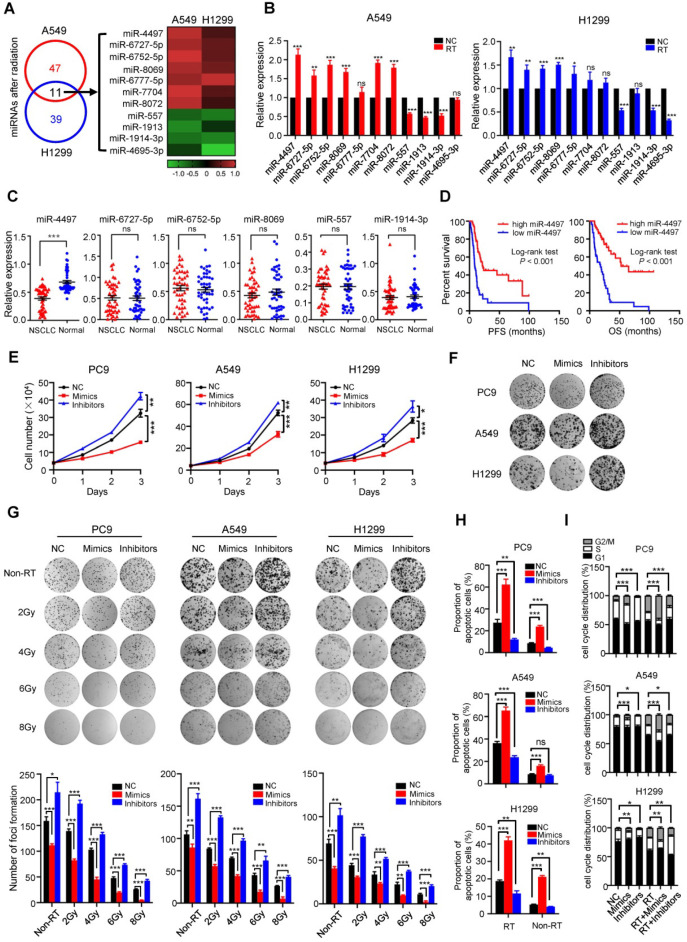
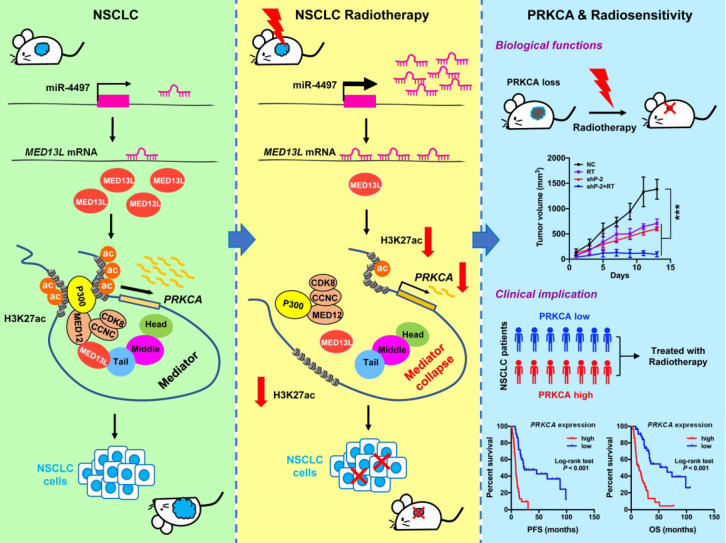
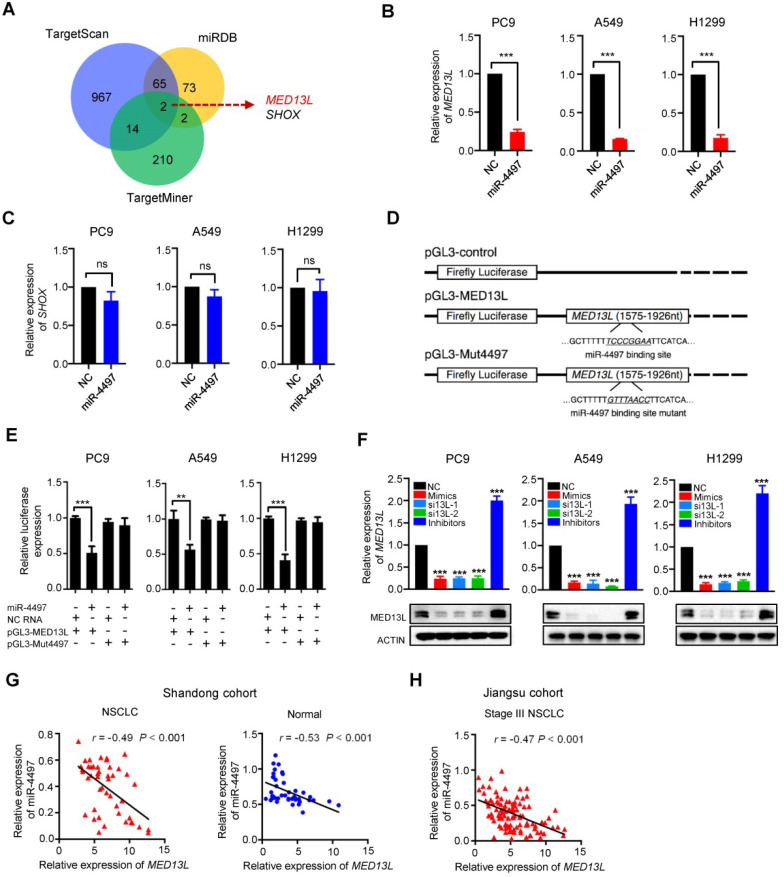
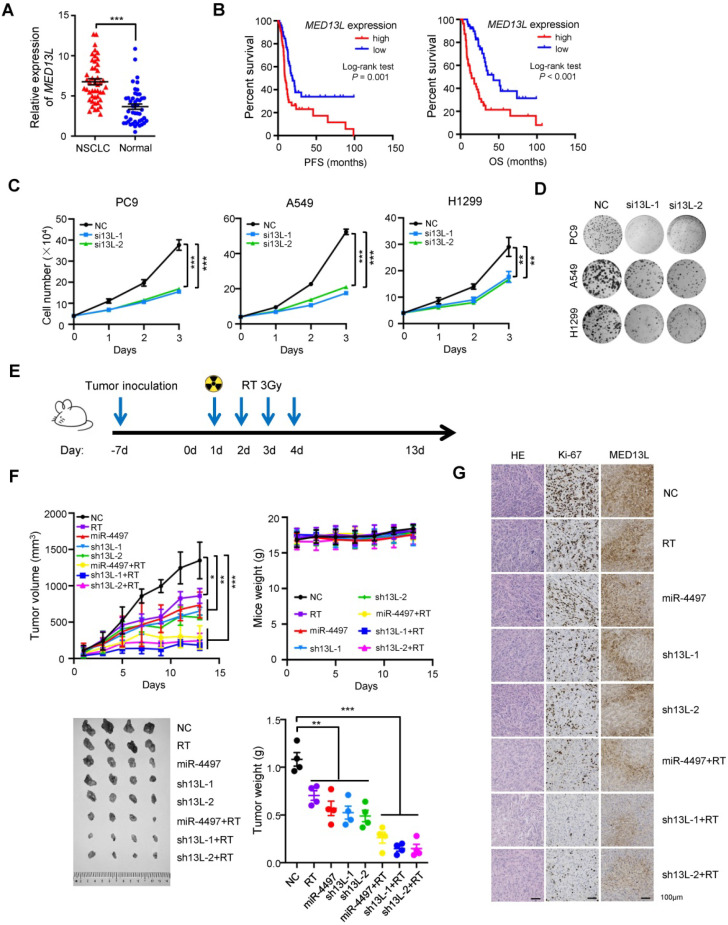
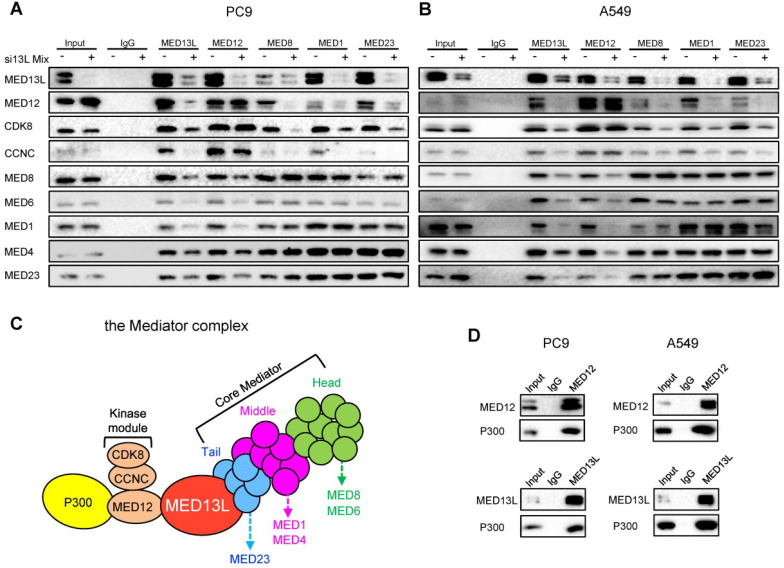
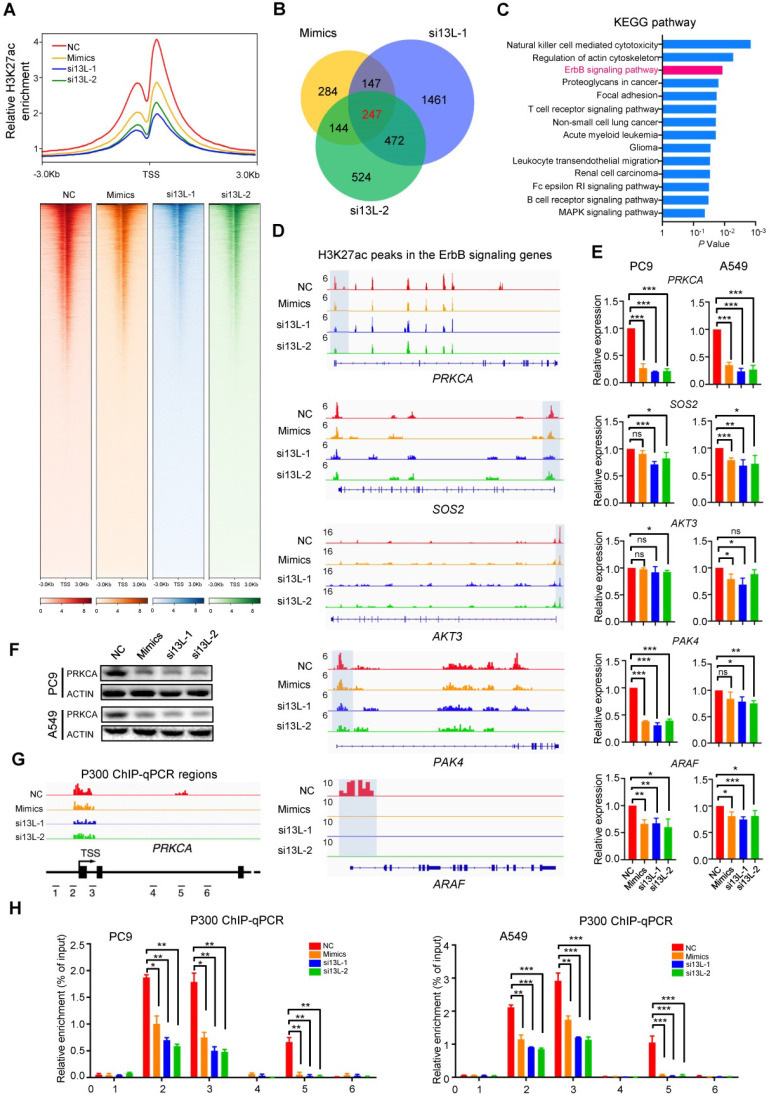
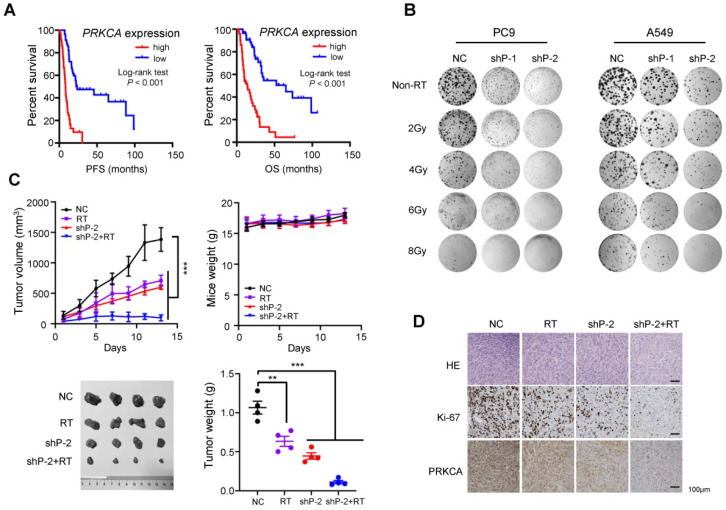
To date, efforts to improve non-small-cell lung cancer (NSCLC) outcomes with increased radiation dose have not been successful. Identification of novel druggable targets that are capable to modulate NSCLC radiosensitivity may provide a way forward. Mediator complex is implicated in gene expression control, but it remains unclear how Mediator dysfunction is involved in cancer radiotherapy. The biologic functions of miR-4497, MED13L and PRKCA in NSCLC radiosensitivity were examined through biochemical assays including gene expression profilling, cell proliferation assay, colony formation assay, wound healing assay, transwell assay, dual luciferase reporter assay, xenograft models, immunoprecipitation, and chromatin immunoprecipitation sequencing. Clinical implications of miR-4497, MED13L and PRKCA in radiosensitivity were evaluated in NSCLC patients treated with concurrent chemoradiotherapy or radiotherapy alone. We found that radiation can trigger disassemble of Mediator complex via silencing of MED13L by miR-4497 in NSCLC. Although not interrupting structure integrity of the core Mediator or the CDK8 kinase module, suppression of MED13L attenuated their physical interactions and reduced recruitment of acetyltransferase P300 to chromatin via Mediator. Silencing of MED13L therefore diminishes global H3K27ac signals written by P300, activities of enhancer and/or promoters and expression of multiple oncogenes, especially . Inhibition of expression potentiates the killing effect of radiotherapy and . Remarkably, high expression in NSCLC tissues is correlated with poor prognosis of patients received radiotherapy. Our study linking PRKCA to radiosensitivity through a novel mechanism may enable the rational targeting of PRKCA to unlock therapeutic potentials of NSCLC.
迄今为止,增加辐射剂量以改善非小细胞肺癌 (NSCLC) 疗效的努力尚未成功。鉴定能够调节 NSCLC 放射敏感性的新型可药物靶标可能为前进提供了一种途径。中介复合物参与基因表达调控,但尚不清楚中介复合物功能障碍如何参与癌症放射治疗。通过包括基因表达谱分析、细胞增殖测定、集落形成测定、划痕愈合测定、Transwell 测定、双荧光素酶报告基因测定、异种移植模型、免疫沉淀和染色质免疫沉淀测序在内的生化测定来研究 miR-4497、MED13L 和 PRKCA 在 NSCLC 放射敏感性中的生物学功能。通过同步放化疗或单纯放疗评估 miR-4497、MED13L 和 PRKCA 在 NSCLC 患者放射敏感性中的临床意义。
我们发现,辐射可以通过 miR-4497 沉默 MED13L 触发 Mediator 复合物的解体在 NSCLC 中。尽管不中断核心 Mediator 或 CDK8 激酶模块的结构完整性,但 MED13L 的抑制减弱了它们的物理相互作用,并通过 Mediator 减少了乙酰转移酶 P300 向染色质的募集。沉默 MED13L 因此减少了 P300 书写的全局 H3K27ac 信号、增强子和/或启动子的活性以及多个癌基因的表达,特别是 。抑制 的表达增强了放疗的杀伤作用 。值得注意的是,NSCLC 组织中高表达与接受放疗的患者预后不良相关。我们通过新的机制将 PRKCA 与放射敏感性联系起来的研究可能使 PRKCA 的合理靶向能够释放 NSCLC 的治疗潜力。