Sanofi Pasteur, Milan, Italy.
Section of Hygiene, Institute of Public Health, Università Cattolica del Sacro Cuore, Rome, Italy.
J Prev Med Hyg. 2020 Jul 4;61(2):E152-E161. doi: 10.15167/2421-4248/jpmh2020.61.2.1589. eCollection 2020 Jun.
Invasive meningococcal disease (IMD) is one of the most severe vaccine-preventable disease not yet under control. In Italy, although different anti-meningococcal vaccines are available, their offer among regions is heterogeneous. The aim of this study is to describe the epidemiology of IMD in Italy based on analysis of national surveillance data for 2011-2017 to optimize the vaccination strategy.
IMD surveillance data from the Italian National Health Institute were analysed. Microsoft Excel was used to present trend analysis, stratifying by age and serogroups.
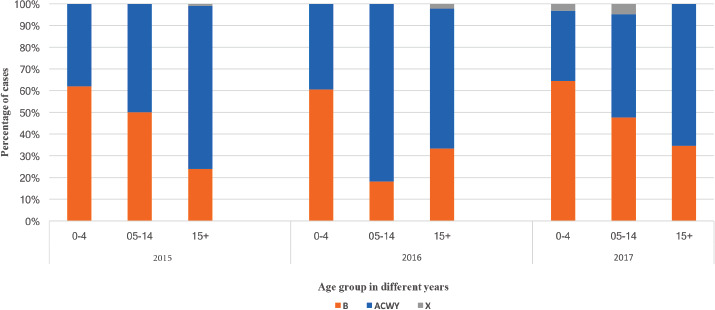
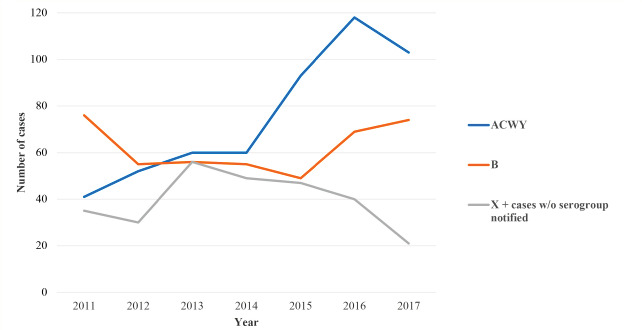
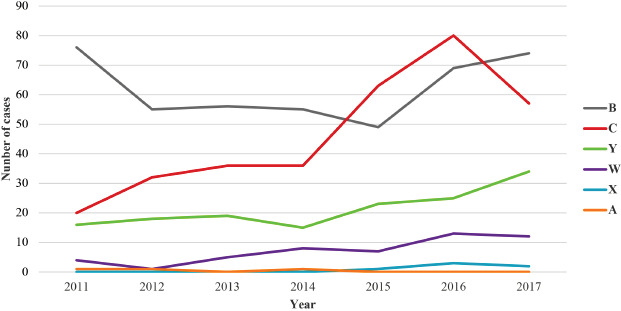
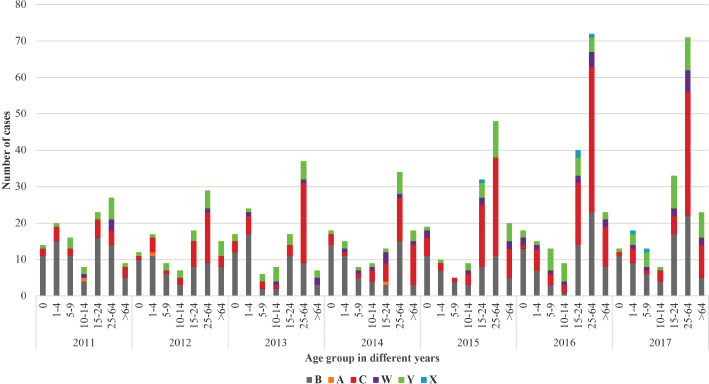
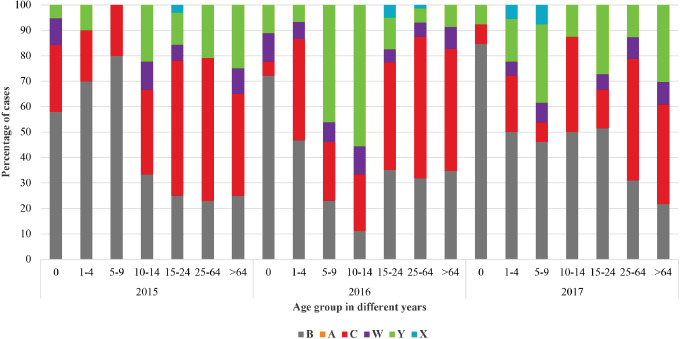
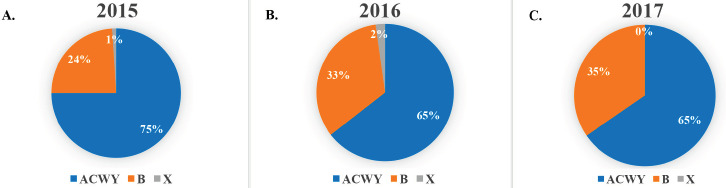
In Italy, during the period 2011-2017, the incidence of IMD increased from 0.25 cases/100,000 inhabitants in 2011 to 0.33 cases/100,000 in 2017. Most cases after 2012 were caused by non-B serogroups. The number of cases in subjects aged 25-64 years increased steadily after 2012 (36 cases in 2011, 79 in 2017), mostly due to non-B serogroups, representing more than 65% of cases in those aged 25+ years.
In the period from 2011 to 2017, the incidence of IMDs increased in Italy. The increase, probably due also to a better surveillance, highlights the importance of the disease in the adult population and the high level of circulation of non-B serogroups in particular after 2012. Our analysis supports an anti-meningococcal vaccination plan in Italy that should include the highest number of preventable serogroups and be aimed at vaccinating a wider population through a multicohort strategy.
侵袭性脑膜炎奈瑟菌病(IMD)是一种尚未得到控制的最严重的可通过疫苗预防的疾病之一。在意大利,尽管有不同的抗脑膜炎球菌疫苗可用,但各地区的供应情况存在差异。本研究旨在根据 2011-2017 年国家监测数据,分析意大利 IMD 的流行病学情况,以优化疫苗接种策略。
分析意大利国家卫生研究所的 IMD 监测数据。使用 Microsoft Excel 呈现趋势分析,按年龄和血清群分层。
在意大利,2011-2017 年期间,IMD 的发病率从 2011 年的每 10 万人 0.25 例上升至 2017 年的每 10 万人 0.33 例。2012 年后,大多数病例由非 B 血清群引起。2012 年后,25-64 岁人群中的病例数量稳步增加(2011 年为 36 例,2017 年为 79 例),主要由非 B 血清群引起,占 25 岁及以上人群病例的 65%以上。
2011-2017 年期间,意大利 IMD 的发病率有所上升。发病率的增加,可能还与监测工作的改善有关,这突出了该疾病在成年人群中的重要性,特别是 2012 年后非 B 血清群的高循环率。我们的分析支持意大利的脑膜炎球菌疫苗接种计划,该计划应包括尽可能多的可预防血清群,并通过多队列策略针对更广泛的人群进行接种。