Department of Investigational Cancer Therapeutics, The University of Texas MD Anderson Cancer Center, Houston, TX.
Toronto Sarcoma Program, Princess Margaret Cancer Centre, Toronto, Ontario, Canada.
J Clin Oncol. 2020 Oct 1;38(28):3294-3303. doi: 10.1200/JCO.20.00522. Epub 2020 Aug 17.
In advanced gastrointestinal stromal tumor (GIST), there is an unmet need for therapies that target both primary and secondary mutations of pathogenic KIT/PDGFRA oncoproteins. Ripretinib is a novel switch-control kinase inhibitor designed to inhibit a wide range of and mutations.
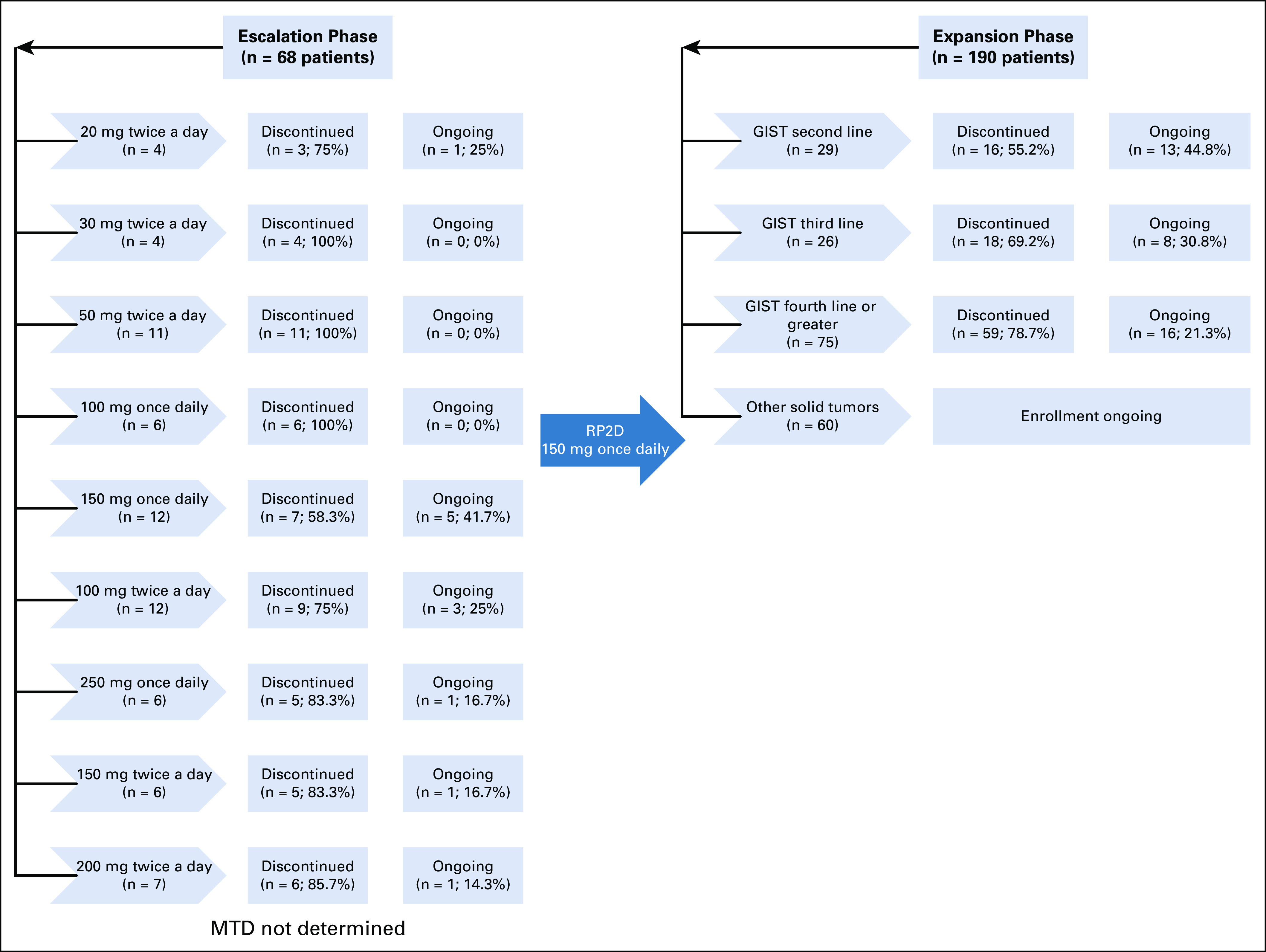
This first-in-human, to our knowledge, phase I study of ripretinib (ClinicalTrials.gov identifier: NCT02571036) included a dose-escalation phase and subsequent expansion phase at the recommended phase II dose (RP2D). Eligible patients included those with advanced GIST, intolerant to or experienced progression on ≥ 1 line of systemic therapy, and other advanced malignancies. Safety, dose-limiting toxicities (DLTs), maximum-tolerated dose (MTD), and preliminary antitumor activity were evaluated.
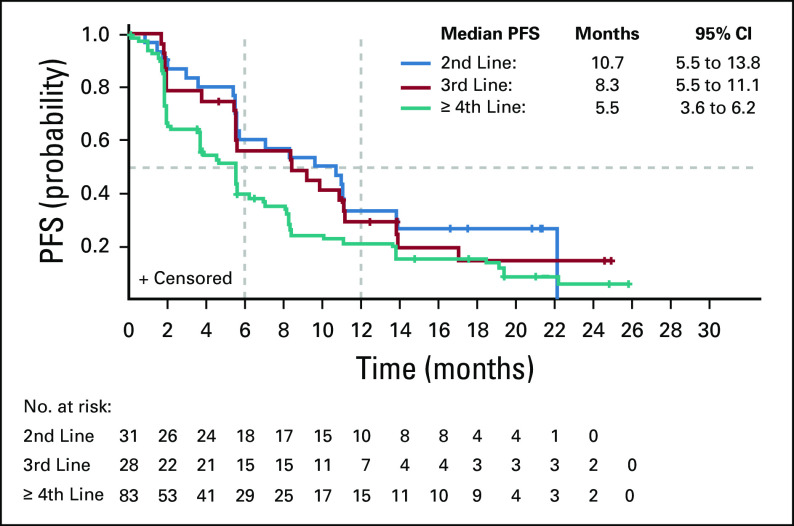
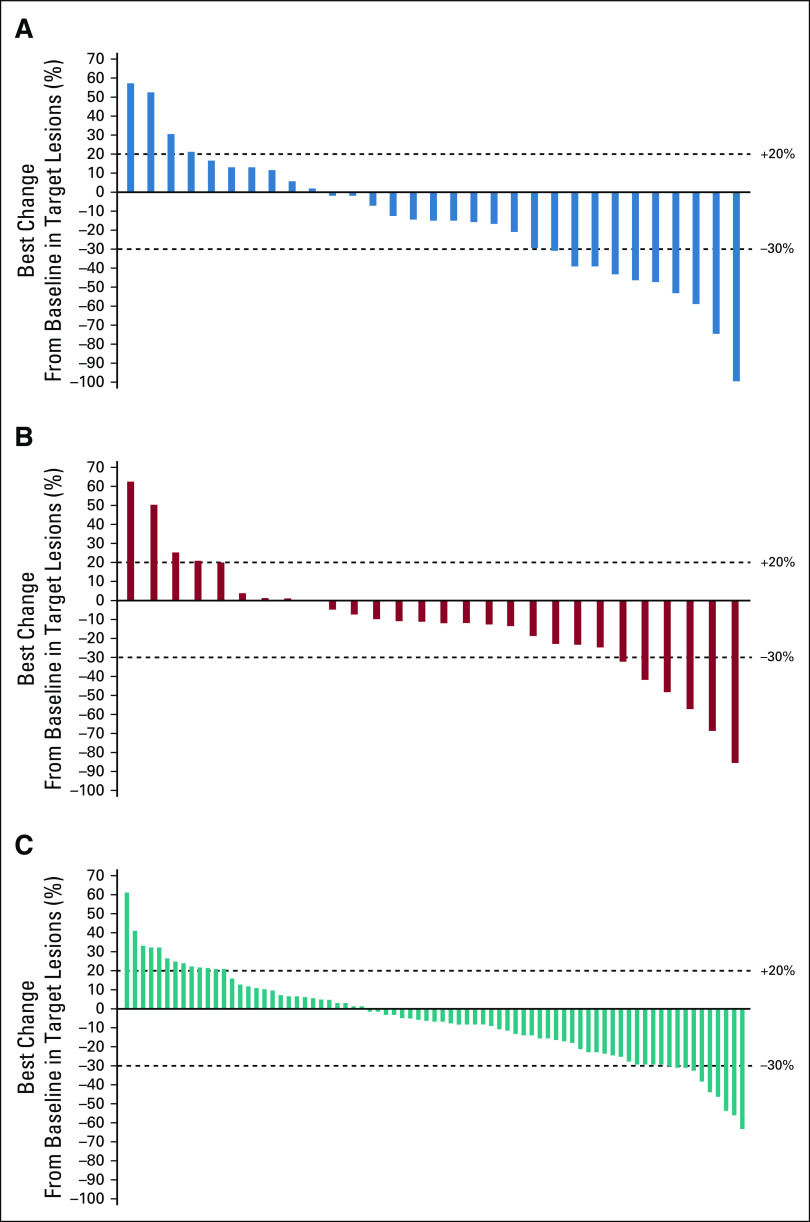
At data cutoff (August 31, 2019), 258 patients (n = 184 GIST) were enrolled, with 68 patients in the dose-escalation phase. Three DLTs were reported: grade 3 lipase increase (n = 2; 100 mg and 200 mg twice a day) and grade 4 increased creatine phosphokinase (n = 1; 150 mg once daily). MTD was not reached (maximum dose evaluated, 200 mg twice a day); 150 mg once daily was established as the RP2D. The most frequent (> 30%) treatment-emergent adverse events in patients with GIST receiving ripretinib 150 mg once daily (n = 142) were alopecia (n = 88 [62.0%]), fatigue (n = 78 [54.9%]), myalgia (n = 69 [48.6%]), nausea (n = 65 [45.8%]), palmar-plantar erythrodysesthesia (n = 62 [43.7%]), constipation (n = 56 [39.4%]), decreased appetite (n = 48 [33.8%]), and diarrhea (n = 47 [33.1%]). Objective response rate (confirmed) of 11.3% (n = 16/142) ranging from 7.2% (n = 6/83; fourth line or greater) to 19.4% (n = 6/31; second line) and median progression-free survival ranging from 5.5 months (fourth line or greater) to 10.7 months (second line), on the basis of investigator assessment, were observed.
Ripretinib is a well-tolerated, novel inhibitor of KIT and PDGFRA mutant kinases with promising activity in patients with refractory advanced GIST.
在晚期胃肠道间质瘤(GIST)中,需要靶向致病性 KIT/PDGFRA 癌蛋白的原发性和继发性突变的治疗方法。 Ripretinib 是一种新型的开关控制激酶抑制剂,旨在抑制广泛的 和 突变。
这是一项首个人体、据我们所知的 Ripretinib(ClinicalTrials.gov 标识符:NCT02571036)的 I 期研究,包括剂量递增阶段和随后在推荐的 II 期剂量(RP2D)下的扩展阶段。符合条件的患者包括晚期 GIST 患者,对至少 1 线系统治疗不耐受或进展,以及其他晚期恶性肿瘤。评估安全性、剂量限制性毒性(DLT)、最大耐受剂量(MTD)和初步抗肿瘤活性。
截至数据截止日期(2019 年 8 月 31 日),共纳入 258 名患者(n=184 名 GIST 患者),其中 68 名患者在剂量递增阶段。报告了 3 例 DLT:3 级脂肪酶升高(n=2;每日 2 次 100mg 和 200mg)和 4 级肌酸磷酸激酶升高(n=1;每日 150mg)。未达到 MTD(评估的最大剂量,每日 2 次 200mg);150mg 每日一次被确定为 RP2D。接受 Ripretinib 150mg 每日一次治疗的 GIST 患者(n=142)中最常见(>30%)的治疗相关不良事件是脱发(n=88[62.0%])、疲劳(n=78[54.9%])、肌痛(n=69[48.6%])、恶心(n=65[45.8%])、手足红斑感觉异常(n=62[43.7%])、便秘(n=56[39.4%])、食欲下降(n=48[33.8%])和腹泻(n=47[33.1%])。根据研究者评估,观察到客观缓解率(确认)为 11.3%(n=16/142),范围为 7.2%(n=6/83;第四线或更高)至 19.4%(n=6/31;二线),中位无进展生存期从第四线或更高(5.5 个月)到二线(10.7 个月)不等。
Ripretinib 是一种耐受性良好的新型 KIT 和 PDGFRA 突变激酶抑制剂,在难治性晚期 GIST 患者中具有有前景的活性。