Hernández Alberto, Viñals Montserrat, Isidoro Tomas, Vilás Francisco
Department of Anesthesiology, Policlinica Ibiza Hospital, Ibiza, Spain.
Department of Internal Medicine, Policlinica Ibiza Hospital, Ibiza, Spain.
Am J Case Rep. 2020 Aug 17;21:e925849. doi: 10.12659/AJCR.925849.
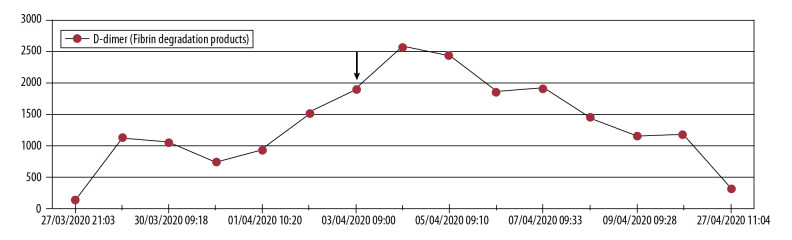
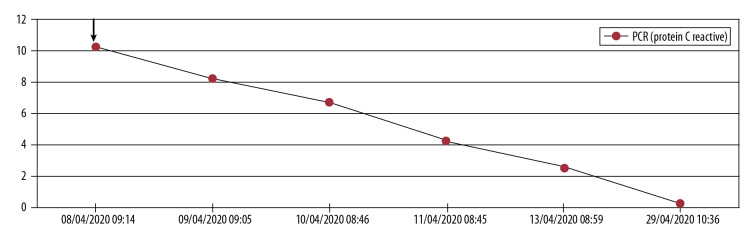
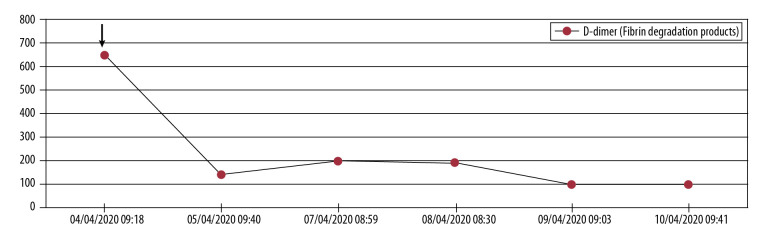
BACKGROUND Pneumonia caused by coronavirus originated in Wuhan, China in late 2019 and has spread around the world, becoming a pandemic. Many patients deteriorate rapidly and require intubation and mechanical ventilation, which is causing the collapse of healthcare systems in many countries. Coronavirus infection is associated with extensive lung inflammation and microvascular thrombosis, which can result in hypoxia. It can also cause severe and lasting harm in other organs, including the heart and kidneys. At present, there is no proven and efficacious treatment for this new disease. Consequently, there is a growing tendency to use novel methods. Ozone therapy consists of administration of a mixture of oxygen and ozone (a molecule consisting of 3 oxygen atoms). The potential benefits of this therapy include reduced tissue hypoxia, decreased hypercoagulability, renal and heart protection, modulated immune function, improved phagocytic function, and impaired viral replication. CASE REPORT We report rapidly improved hypoxia with associated decreases in inflammatory markers and D-dimer immediately after 1-4 sessions of oxygen-ozone (O₂-O₃) therapy in 3 patients with COVID-19 pneumonia who presented with respiratory failure. Invasive mechanical ventilation was not required in these 3 patients. All patients were discharged home on days 3-4 after O₂-O₃ therapy. CONCLUSIONS O₂-O₃ therapy appears to be an effective therapy for COVID-19 patients with severe respiratory failure. Large controlled clinical trials are required to study the efficacy and safety of using O₂-O₃ therapy compared with the standard supportive case in patients with COVID-19 in terms of the need for invasive ventilation and length of hospital and intensive care unit stays.
背景 由冠状病毒引起的肺炎于2019年末在中国武汉出现并已蔓延至全球,成为一场大流行病。许多患者病情迅速恶化,需要插管和机械通气,这导致许多国家的医疗系统不堪重负。冠状病毒感染与广泛的肺部炎症和微血管血栓形成有关,可导致缺氧。它还会对包括心脏和肾脏在内的其他器官造成严重且持久的损害。目前,对于这种新疾病尚无经证实有效的治疗方法。因此,使用新方法的趋势日益增加。臭氧疗法包括给予氧气和臭氧的混合物(一种由3个氧原子组成的分子)。这种疗法的潜在益处包括减轻组织缺氧、降低高凝性、保护肾脏和心脏、调节免疫功能、改善吞噬功能以及抑制病毒复制。病例报告 我们报告了3例新冠肺炎肺炎合并呼吸衰竭的患者,在接受1 - 4次氧 - 臭氧(O₂ - O₃)治疗后,缺氧状况迅速改善,炎症标志物和D - 二聚体水平随之下降。这3例患者均未需要有创机械通气。所有患者在O₂ - O₃治疗后第3 - 4天出院。结论 O₂ - O₃疗法似乎是治疗重症呼吸衰竭新冠肺炎患者的一种有效疗法。需要开展大型对照临床试验,以研究与标准支持治疗相比,O₂ - O₃疗法在新冠肺炎患者中对于有创通气需求、住院时间和重症监护病房停留时间方面的疗效和安全性。