Clinical Research, Instituto de Infertilidad y Genética México SC, Ingenes, México City, Mexico.
Departamento de Toxicología, Centro de Investigación y de Estudios Avanzados del Instituto Politécnico Nacional (CINVESTAV-IPN), Avenida Instituto Politécnico Nacional 2508, San Pedro Zacatenco, 07360, México City, Mexico.
J Ovarian Res. 2020 Aug 17;13(1):94. doi: 10.1186/s13048-020-00688-7.
To determine if a modified ovarian sensitivity index (MOSI), based on initial follicular measurements and the initial follicle-stimulating hormone (FSH) dose, can predict the production of high-quality embryos for successful implantation during in vitro fertilization (IVF).
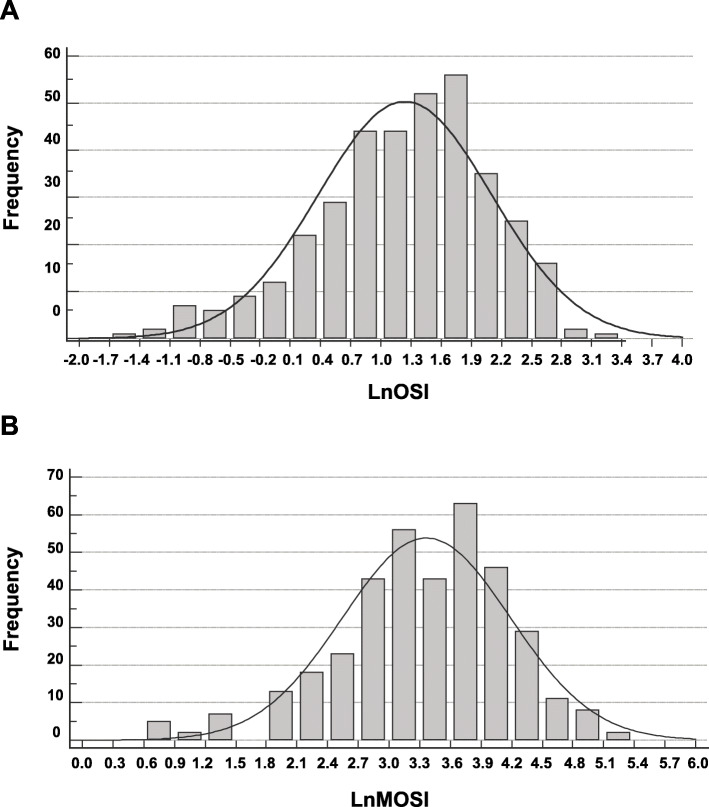
This study consisted of two phases: 1) a retrospective study and 2) a prospective observational study. For the first phase, 363 patients charts were reviewed, of which 283 had embryos transferred. All women underwent a standardized antagonist-based IVF protocol. At the first follow-up (Day 3/4), the number and size of the follicles were determined. MOSI was calculated as ln (number follicles (≥6 mm) × 1000 / FSH initial dose). Afterward, the number and quality of the ova, embryo development, and the number and quality of the blastocysts were determined. Embryo implantation was confirmed by β-hCG. For the second phase, 337 IVF cycles were followed to determine MOSI's accuracy.
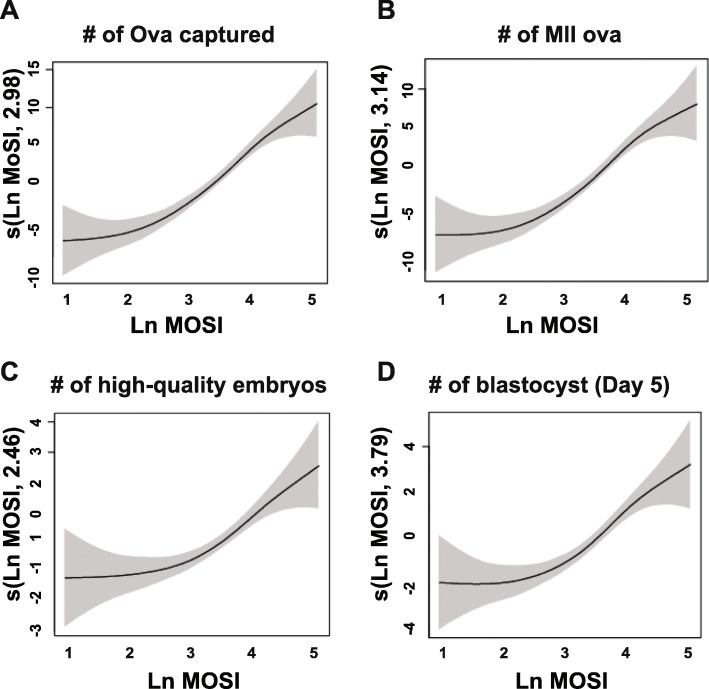
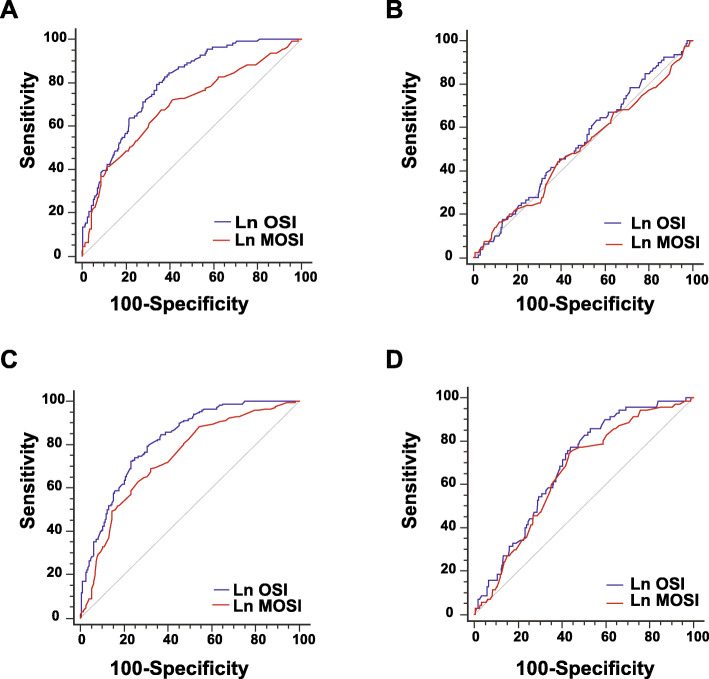
MOSI could predict the production of ≥4 high-quality embryos by Day 2 (AUC = 0.69, 95%CI:0.63-0.75), ≥2 blastocysts (AUC = 0.74, 95%CI:0.68-0.79), and ≥ 35% rate of blastocyst formation (AUC = 0.65, 95%CI:0.58-0.72). Using linear regression, MOSI was highly associated with the number of ova captured (β = 5.15), MII oocytes (β = 4.31), embryos produced (β = 2.90), high-quality embryos (β = 0.98), and the blastocyst formation rate (β = 0.06, p < 0.01). Using logistic regression, MOSI was highly associated with achieving ≥4 high-quality embryos (odds ratio = 2.80, 95%CI:1.90-4.13), ≥2 blastocysts (odds ratio = 3.40, 95%CI:2.33-4.95), and ≥ 35% blastocysts formation rate (odds ratio = 1.96, 95%CI:1.31-2.92). This effect was independent of age, BMI, and antral follicle count. For implantation, MOSI was significantly associated with successful implantation (odds ratio = 1.79, 95%CI:1.25-2.57). For the prospective study, MOSI was highly accurate at predicting ≥6 high-quality embryos on Day 2 (accuracy = 68.5%), ≥6 blastocysts (accuracy = 68.0%), and a blastocyst formation rate of ≥35% (accuracy = 61.4%).
MOSI was highly correlated with key IVF parameters that are associated with achieved pregnancy. Using this index with antagonist cycles, clinicians may opt to stop an IVF cycle, under the assumption that the cycle will fail to produce good blastocysts, preventing wasting the patient's resources and time.
为了确定基于初始卵泡测量值和初始卵泡刺激素(FSH)剂量的改良卵巢敏感性指数(MOSI)是否可以预测体外受精(IVF)过程中成功植入所需的高质量胚胎的产生。
本研究包括两个阶段:1)回顾性研究和 2)前瞻性观察性研究。在第一阶段,回顾了 363 名患者的病历,其中 283 名患者进行了胚胎移植。所有女性均接受了标准化的拮抗剂 IVF 方案。在第一次随访(第 3/4 天)时,确定卵泡的数量和大小。MOSI 计算为 ln(≥6mm 的卵泡数量×1000/FSH 初始剂量)。之后,确定卵子、胚胎的数量和质量,以及囊胚的数量和质量。胚胎植入通过β-hCG 确认。在第二阶段,对 337 个 IVF 周期进行了随访,以确定 MOSI 的准确性。
MOSI 可以预测第 2 天产生≥4 个高质量胚胎(AUC=0.69,95%CI:0.63-0.75)、≥2 个囊胚(AUC=0.74,95%CI:0.68-0.79)和≥35%囊胚形成率(AUC=0.65,95%CI:0.58-0.72)。通过线性回归,MOSI 与获得的卵子数量(β=5.15)、MII 卵子(β=4.31)、产生的胚胎(β=2.90)、高质量胚胎(β=0.98)和囊胚形成率(β=0.06,p<0.01)高度相关。通过逻辑回归,MOSI 与实现≥4 个高质量胚胎(比值比=2.80,95%CI:1.90-4.13)、≥2 个囊胚(比值比=3.40,95%CI:2.33-4.95)和≥35%囊胚形成率(比值比=1.96,95%CI:1.31-2.92)高度相关。这种影响独立于年龄、BMI 和窦卵泡计数。对于植入,MOSI 与成功植入显著相关(比值比=1.79,95%CI:1.25-2.57)。对于前瞻性研究,MOSI 可以高度准确地预测第 2 天产生≥6 个高质量胚胎(准确率=68.5%)、≥6 个囊胚(准确率=68.0%)和≥35%的囊胚形成率(准确率=61.4%)。
MOSI 与与实现妊娠相关的关键 IVF 参数高度相关。在使用拮抗剂周期时使用该指标,临床医生可以选择停止 IVF 周期,因为假设该周期无法产生良好的囊胚,从而避免浪费患者的资源和时间。