Geriatric Department of Zhongshan Hospital, Shanghai Institute of Respiratory Disease, Fudan University, Shanghai, China.
Research Center of Zhongshan Hospital, Fudan University, Shanghai, China.
Sci Rep. 2020 Aug 17;10(1):13915. doi: 10.1038/s41598-020-70467-3.
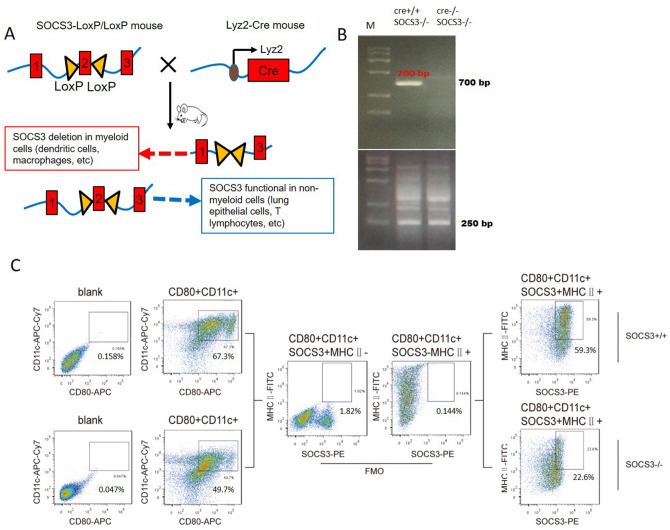
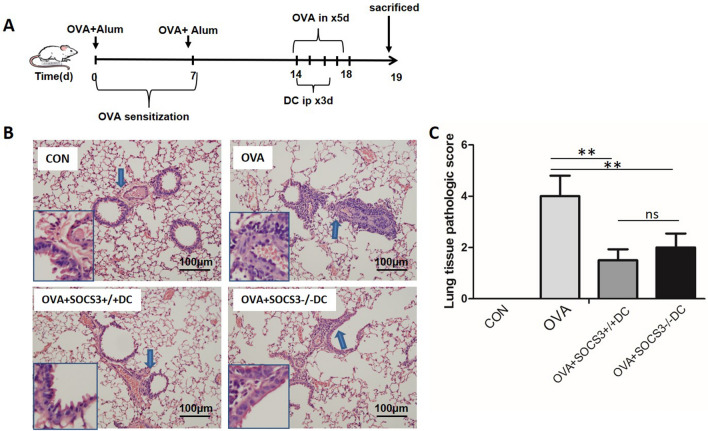
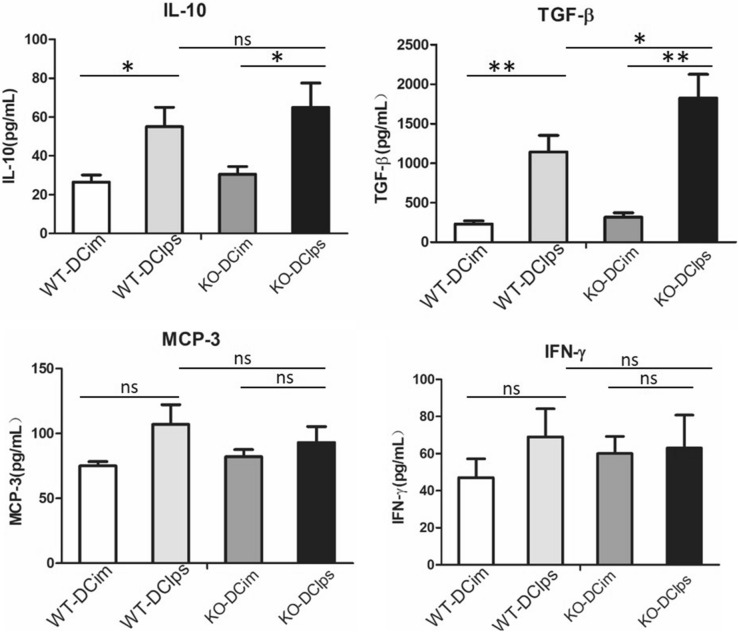
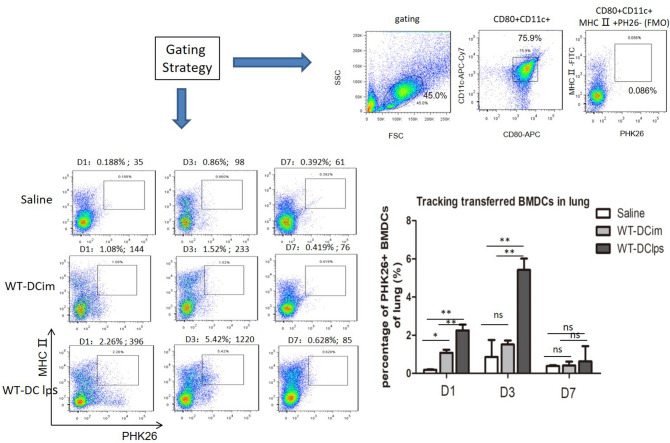
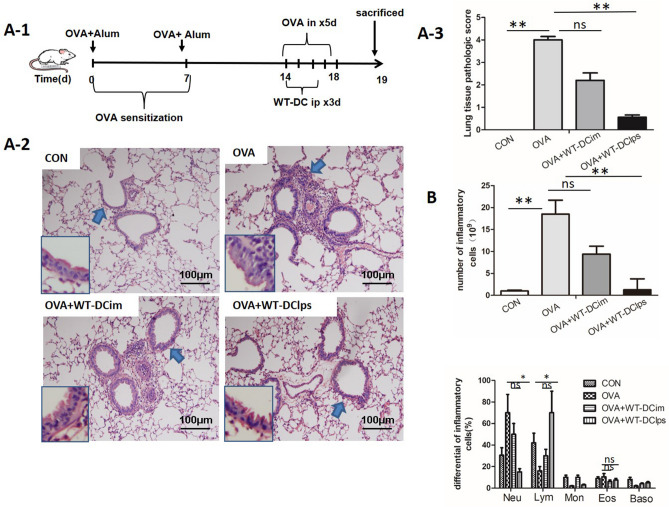
Airway dendritic cells (DCs) are recognized as important factors in the mechanisms of allergic inflammatory diseases. Suppressor of cytokine signaling 3 (SOCS3) is involved in regulating the functions of T cells and macrophages, but the roles of SOCS3-expressing DCs in the pathogeneses of allergic inflammatory diseases are still controversial. We compared the effects of adoptively transferred SOCS3 and SOCS3 bone marrow-derived DCs (BMDCs) on airway inflammation in ovalbumin (OVA)-sensitized asthmatic mice. Adoptive transfer of mature DCs (lipopolysaccharide [LPS]-induced DCs, DClps) with or without SOCS3 gene expression significantly ameliorated allergic airway inflammation. SOCS3 DCs slightly attenuated BMDC-induced immunogenic tolerance. DClps migrated to OVA-sensitized lungs with higher efficiency than immature DCs (DCim). DClps with or without SOCS3 greatly improved lung pathology scores and alleviated airway inflammatory cell infiltration after adoptive transfer into mice; they also increased interleukin-10 (IL-10) and transforming growth factor-β (TGF-β) production and inhibited signal transducer and activator of transcription (STAT) 4 and STAT6 signaling in the lungs after OVA sensitization. In conclusion, the BMDC adoptive transfer-induced immunogenic tolerance in OVA-sensitized mice might not be due to SOCS3 gene depletion. BMDC adoptive transfer may be developed into a new approach that alleviates asthma by modulating the balance between immune tolerance and inflammation.
气道树突状细胞 (DCs) 被认为是过敏性炎症性疾病机制中的重要因素。细胞因子信号转导抑制因子 3 (SOCS3) 参与调节 T 细胞和巨噬细胞的功能,但 SOCS3 表达的 DCs 在过敏性炎症性疾病发病机制中的作用仍存在争议。我们比较了过继转移 SOCS3 和 SOCS3 骨髓来源的树突状细胞 (BMDCs) 对卵清蛋白 (OVA) 致敏哮喘小鼠气道炎症的影响。表达 SOCS3 的成熟 DCs(脂多糖 [LPS] 诱导的 DCs,DClps)的过继转移,无论是否表达 SOCS3 基因,均显著改善了过敏性气道炎症。SOCS3 DCs 轻微减弱了 BMDC 诱导的免疫原性耐受。与未成熟 DCs (DCim) 相比,DClps 向 OVA 致敏肺部的迁移效率更高。过继转移到小鼠体内后,DClps 或 SOCS3 DClps 大大改善了肺病理评分并减轻了气道炎症细胞浸润;它们还增加了白细胞介素-10 (IL-10) 和转化生长因子-β (TGF-β) 的产生,并抑制了 OVA 致敏后肺部信号转导子和转录激活子 (STAT) 4 和 STAT6 信号。综上所述,BMDC 过继转移诱导 OVA 致敏小鼠的免疫原性耐受可能不是由于 SOCS3 基因缺失所致。BMDC 过继转移可能成为一种新的方法,通过调节免疫耐受和炎症之间的平衡来缓解哮喘。