Kajetanowicz Anna, Grela Karol
Laboratory of Organometallic Synthesis, Faculty of Chemistry, Biological and Chemical Research Centre, University of Warsaw, Żwirki i Wigury 101, 02-089, Warsaw, Poland.
Institute of Organic Chemistry, Polish Academy of Sciences, Kasprzaka 44/52, 01-224, Warsaw, Poland.
Angew Chem Int Ed Engl. 2021 Jun 14;60(25):13738-13756. doi: 10.1002/anie.202008150. Epub 2020 Dec 3.
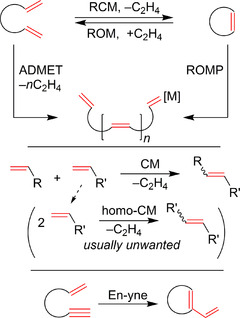
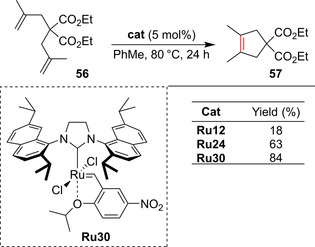
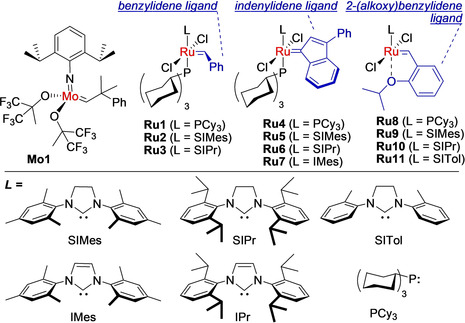
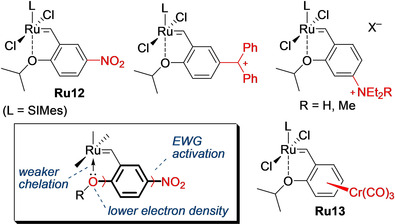
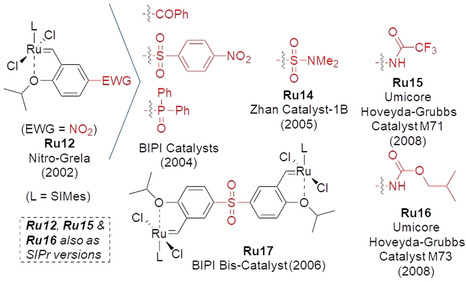
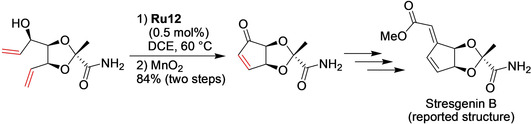
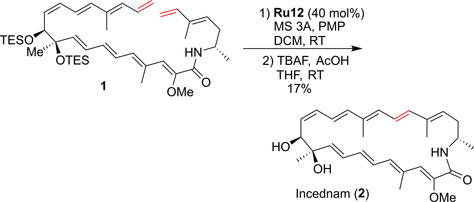
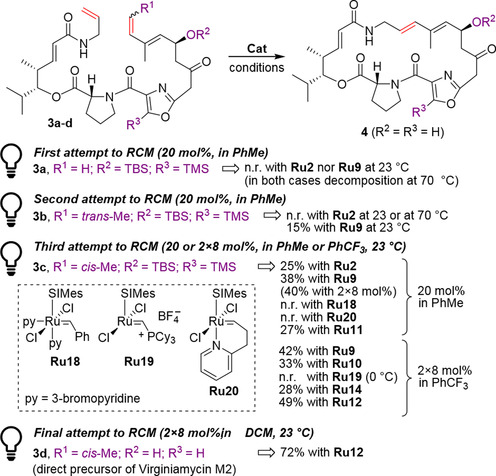
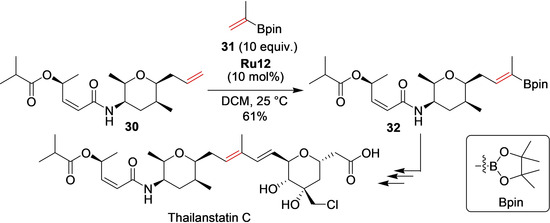
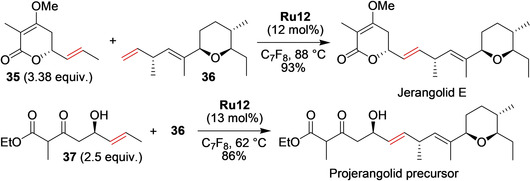
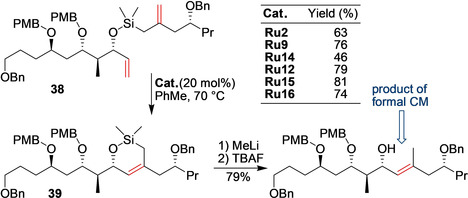
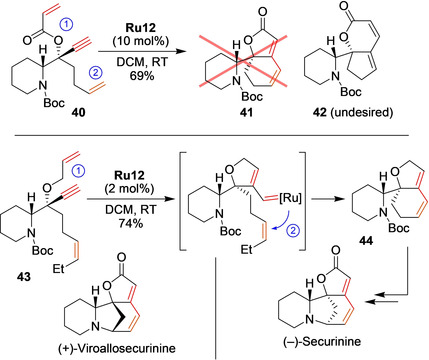
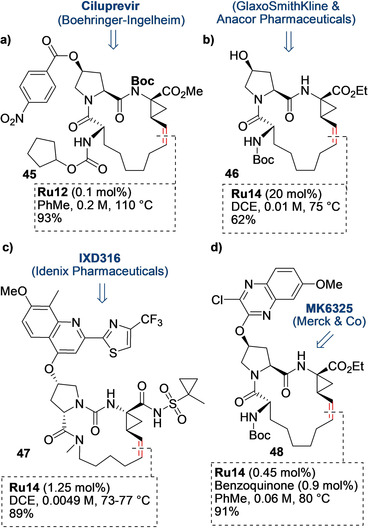
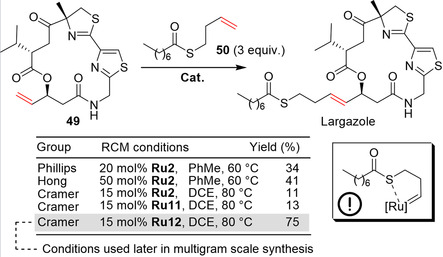
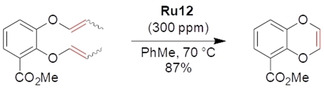
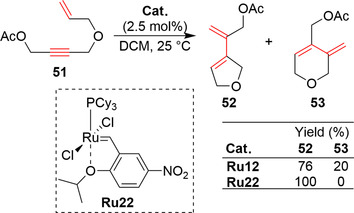
Advanced applications of the Nobel Prize winning olefin metathesis reaction require user-friendly and highly universal catalysts. From many successful metathesis catalysts, which belong to the two distinct classes of Schrock and Grubbs-type catalysts, the subclass of chelating-benzylidene ruthenium complexes (so-called Hoveyda-Grubbs catalysts) additionally activated by electron-withdrawing groups (EWGs) provides a highly tunable platform. In the Review, the origin of the EWG-activation concept and selected applications of the resulting catalysts in target-oriented synthesis, medicinal chemistry, as well as in the preparation of fine-chemicals and in materials chemistry is discussed. Based on the examples, some suggestions for end-users regarding minimization of catalyst loading, selectivity control, and general optimization of the olefin metathesis reaction are provided.
诺贝尔奖得主烯烃复分解反应的高级应用需要用户友好且高度通用的催化剂。在众多成功的复分解催化剂中,Schrock型和Grubbs型催化剂属于两个不同类别,其中通过吸电子基团(EWG)额外活化的螯合亚苄基钌配合物子类(所谓的霍维达-格鲁布斯催化剂)提供了一个高度可调谐的平台。在这篇综述中,讨论了EWG活化概念的起源以及所得催化剂在目标导向合成、药物化学以及精细化学品制备和材料化学中的选定应用。基于这些例子,为终端用户提供了一些关于最小化催化剂负载量、选择性控制以及烯烃复分解反应总体优化的建议。