Department of Digestive and General Surgery, Faculty of Medicine, Shimane University, Shimane, Japan.
Department of Immunology, Faculty of Medicine, Shimane University, Shimane, Japan.
Cancer Sci. 2020 Oct;111(10):3527-3539. doi: 10.1111/cas.14624. Epub 2020 Sep 1.
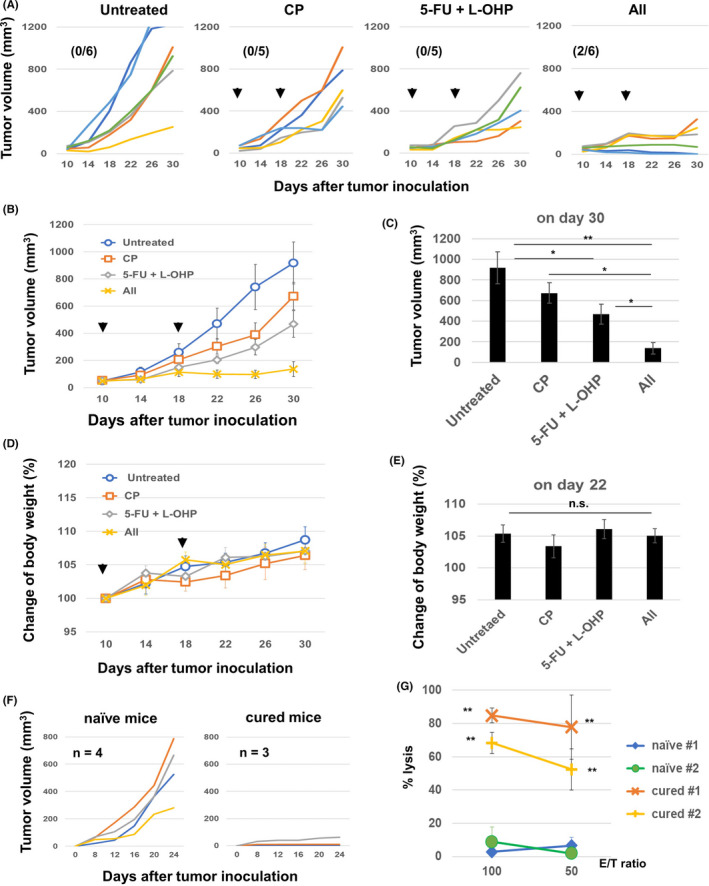
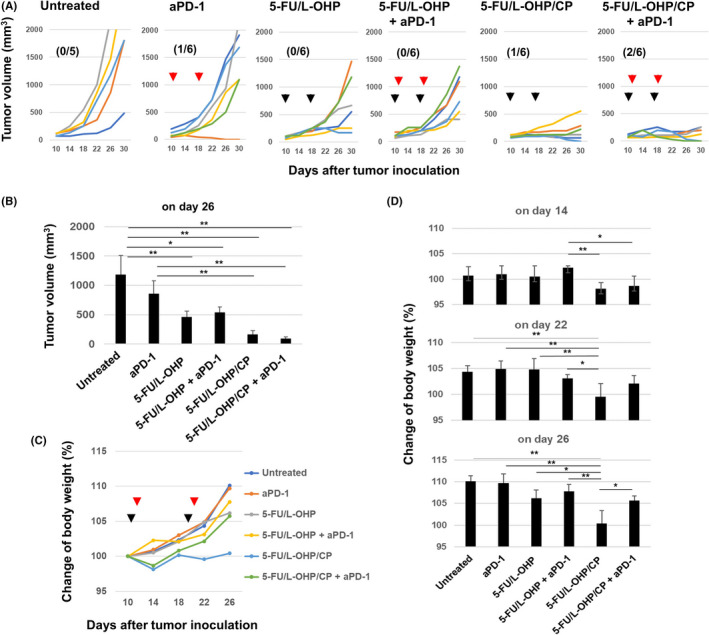
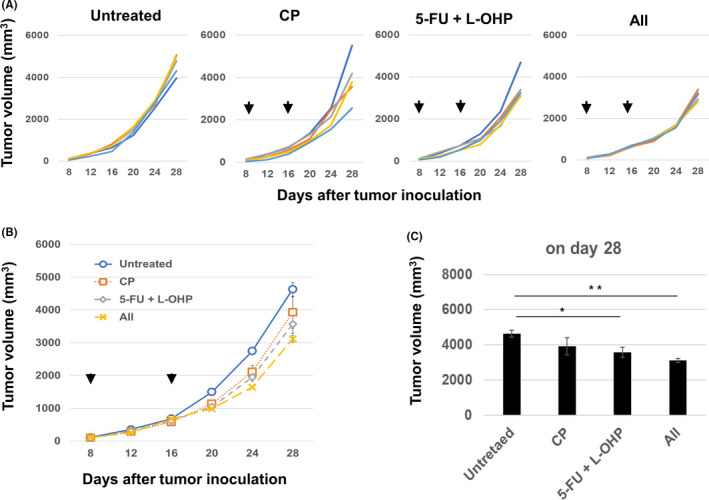
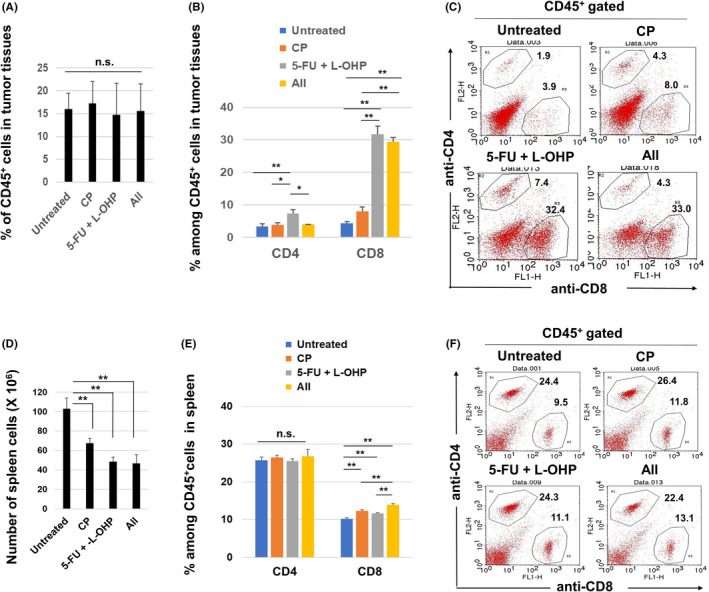
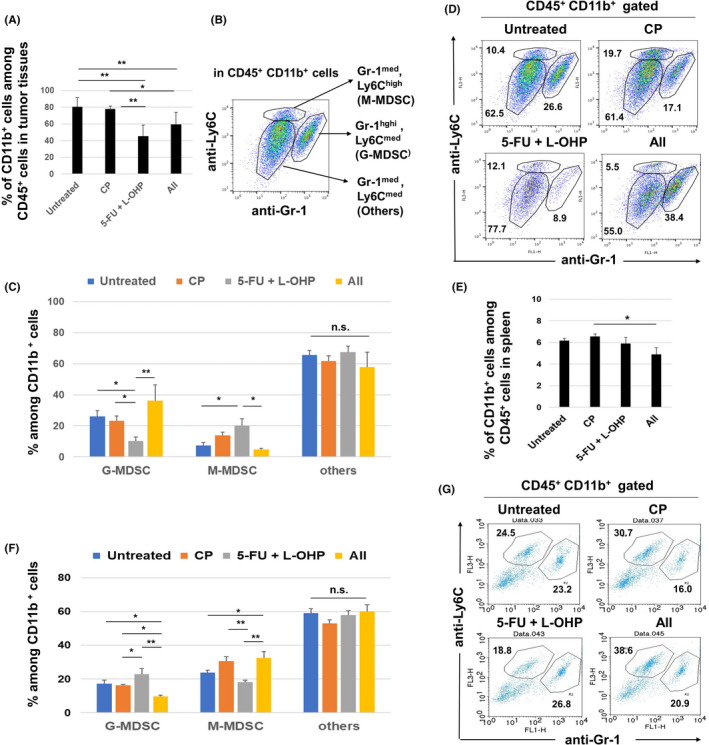
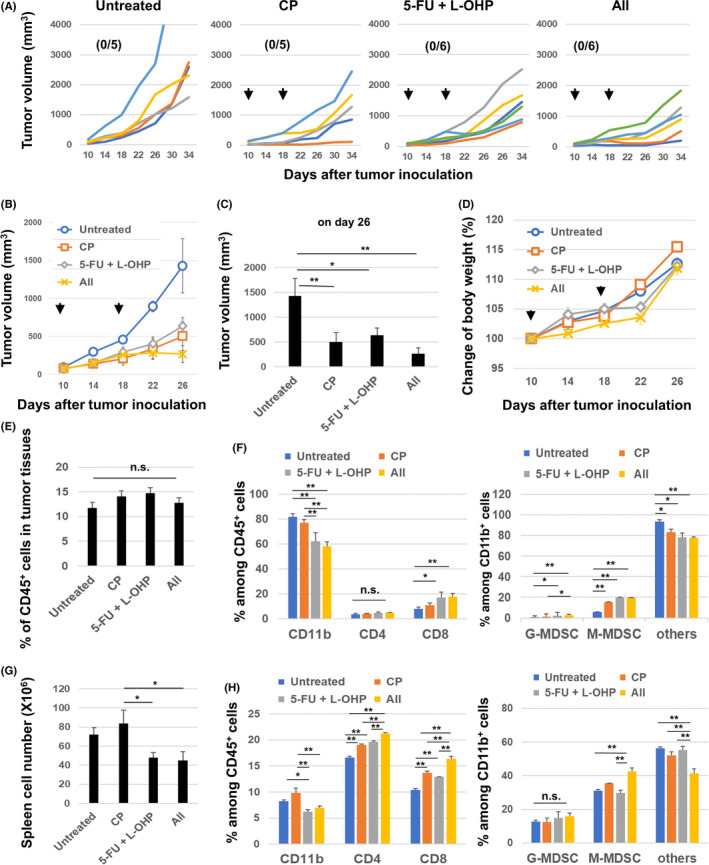
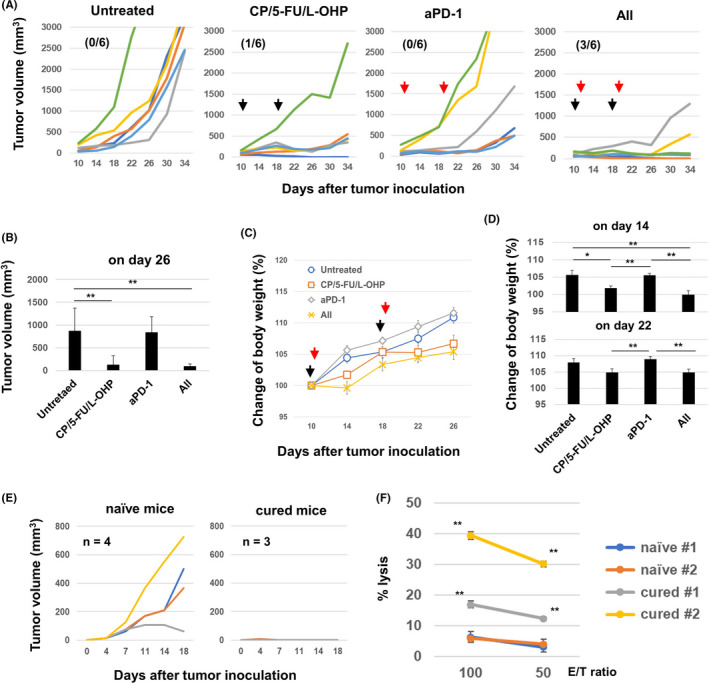
Aside from the induction of cell death, some anticancer chemotherapeutic drugs can modulate antitumor immune responses. In this study, we examined the anticancer effects of 5-fluorouracil (5-FU) and oxaliplatin (L-OHP), which are standard chemotherapeutic drugs for colon cancer, combined with cyclophosphamide (CP) in two mouse colon cancer models (CT26 and MC38 colon adenocarcinoma models). In the CT26 model, two injections of 5-FU/L-OHP and CP significantly suppressed the growth of subcutaneously established CT26 tumors compared with either 5-FU/L-OHP or CP, without a significant loss of body weight. The anticancer effect was weakened in nude mice. Cured mice acquired protective immunity against CT26, and CT26-specific cytotoxic T cells (CTLs) were induced from their spleen cells. Analysis of tumor-infiltrating immune cells revealed that 5-FU/L-OHP treatment with or without CP increased the proportion of CD8 T cells at tumor sites. The 5-FU/L-OHP treatment decreased the proportion of granulocytic myeloid-derived suppressor cells (MDSCs) and increased monocytic MDSCs in tumor sites, whereas the addition of CP treatment reversed these changes. In the MC38 model, although significant anticancer effects of the triple combination therapy were seen, additional treatment with anti-PD-1 antibody increased the number of cured mice. These mice exhibited protective immunity against MC38, and MC38-specific CTLs were generated from their spleen cells. Together, these results indicate that the antitumor effects of the combination of 5-FU/L-OHP and CP mainly depend on host T cells; moreover, the therapeutic efficacy can be effectively boosted by immune checkpoint blockade.
除了诱导细胞死亡外,一些抗癌化疗药物还可以调节抗肿瘤免疫反应。在这项研究中,我们检查了氟尿嘧啶(5-FU)和奥沙利铂(L-OHP)(结肠癌的标准化疗药物)与环磷酰胺(CP)联合在两种小鼠结肠癌模型(CT26 和 MC38 结肠腺癌模型)中的抗癌作用。在 CT26 模型中,两次注射 5-FU/L-OHP 和 CP 与单独使用 5-FU/L-OHP 或 CP 相比,显著抑制了皮下建立的 CT26 肿瘤的生长,而体重没有明显减轻。抗癌作用在裸鼠中减弱。治愈的小鼠获得了对 CT26 的保护性免疫,并且从其脾细胞中诱导出 CT26 特异性细胞毒性 T 细胞(CTL)。分析肿瘤浸润免疫细胞发现,用或不用 CP 进行 5-FU/L-OHP 治疗增加了肿瘤部位 CD8 T 细胞的比例。5-FU/L-OHP 治疗降低了肿瘤部位粒细胞性髓源抑制细胞(MDSC)的比例,并增加了单核细胞 MDSC,而 CP 治疗的添加则逆转了这些变化。在 MC38 模型中,尽管三重联合疗法有明显的抗癌作用,但额外的抗 PD-1 抗体治疗增加了治愈小鼠的数量。这些小鼠对 MC38 具有保护性免疫,并且从其脾细胞中产生了 MC38 特异性 CTL。总之,这些结果表明,5-FU/L-OHP 和 CP 的联合治疗的抗肿瘤作用主要依赖于宿主 T 细胞;此外,免疫检查点阻断可有效增强治疗效果。