Department of Internal Medicine, Faculty of Medicine, School of Health Sciences, University of Ioannina, 451 10 Ioannina, Greece.
Department of Nutrition & Dietetics, School of Health Science & Education, Harokopio University, 176 71 Athens, Greece.
Nutrients. 2020 Aug 13;12(8):2436. doi: 10.3390/nu12082436.
Although a cholesterol-lowering diet and the addition of plant sterols and stanols are suggested for the lipid management of children and adults with familial hypercholesterolemia, there is limited evidence evaluating such interventions in this population.
To investigate the impact of cholesterol-lowering diet and other dietary interventions on the incidence or mortality of cardiovascular disease and lipid profile of patients with familial hypercholesterolemia.
Relevant trials were identified by searching US National Library of Medicine National Institutes of Health Metabolism Trials Register and clinicaltrials.gov.gr using the following terms: diet, dietary, plant sterols, stanols, omega-3 fatty acids, fiber and familial hypercholesterolemia.
Randomized controlled trials evaluating the effect of cholesterol-lowering diet or other dietary interventions in children and adults with familial hypercholesterolemia were included.
Two authors independently assessed the eligibility of the included trials and their bias risk and extracted the data which was independently verified by other colleagues.
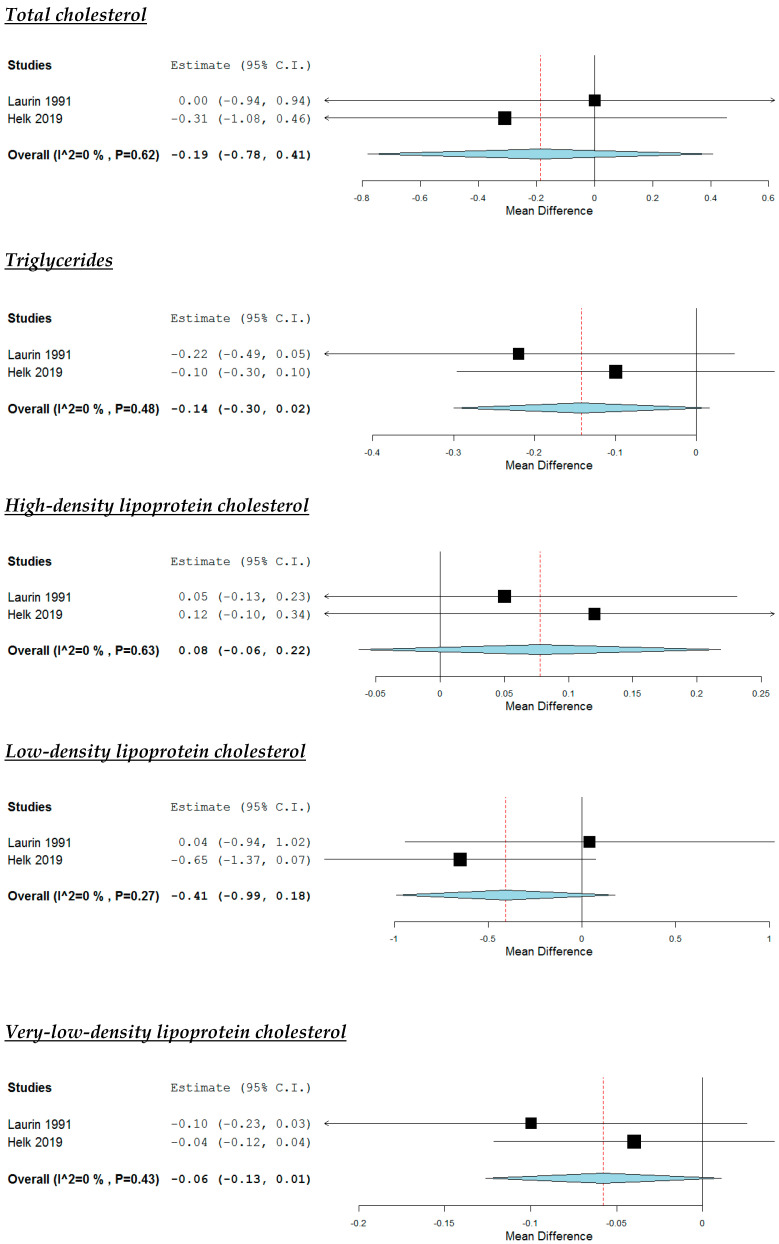
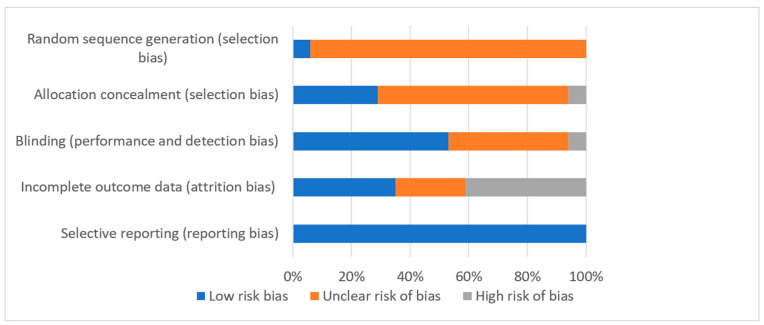
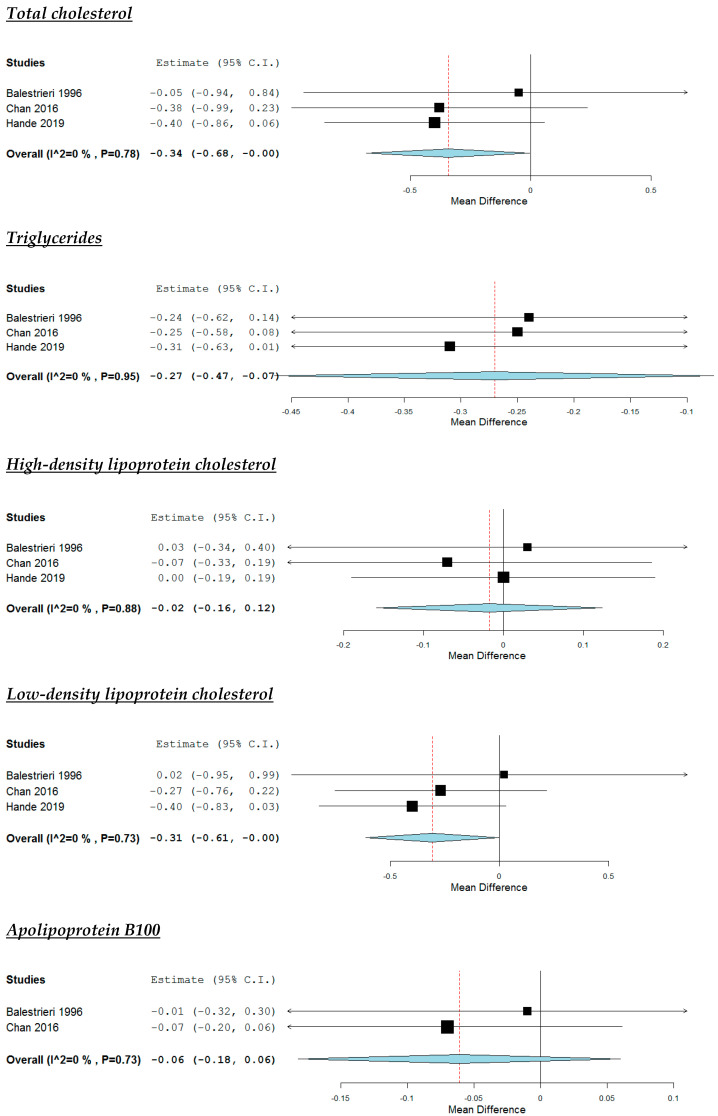
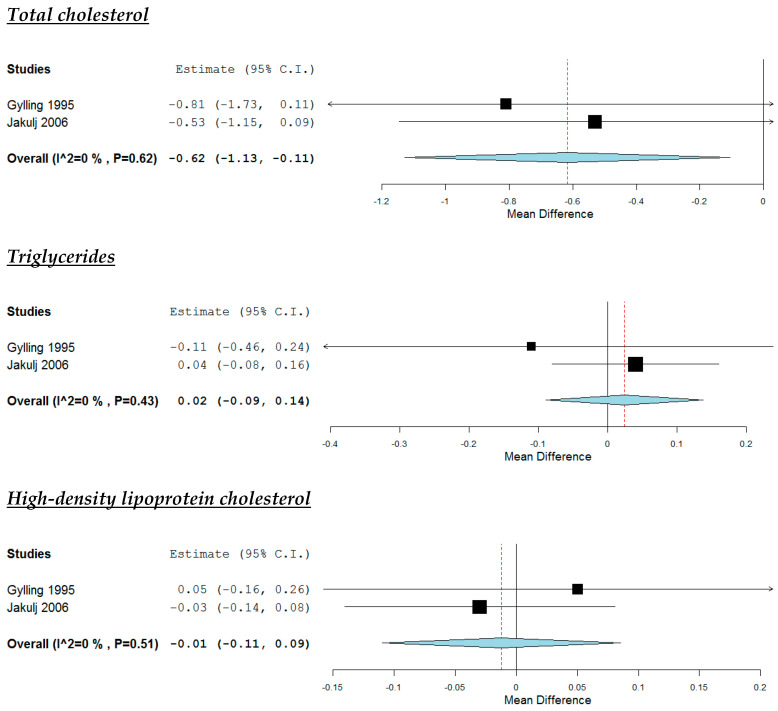
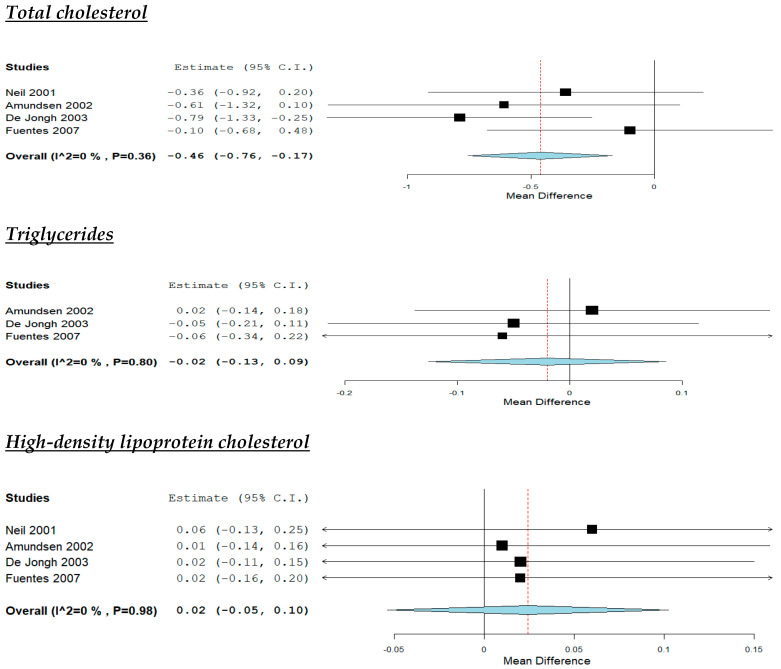
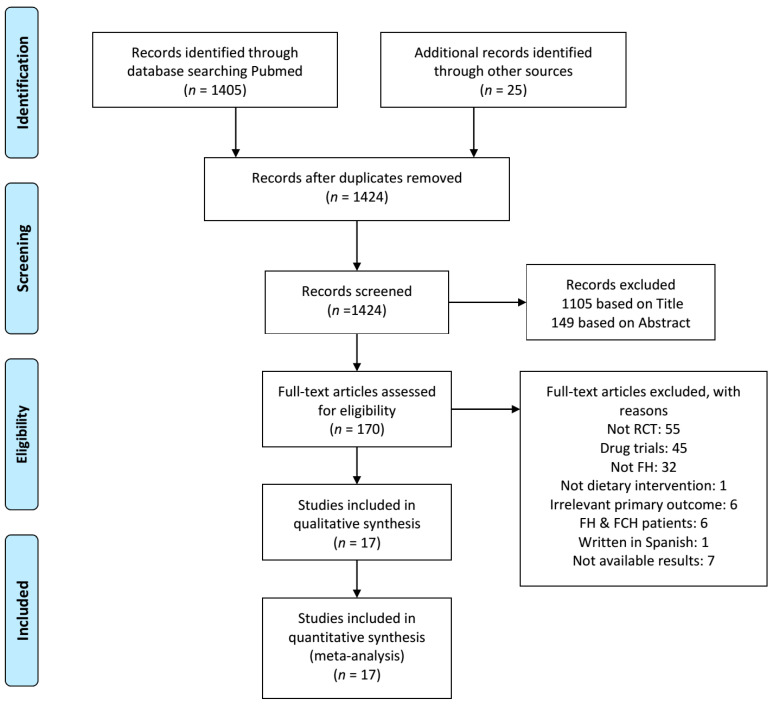
A total of 17 trials were finally included, with a total of 376 participants across 8 comparison groups. The included trials had either a low or unclear bias risk for most of the assessed risk parameters. Cardiovascular incidence or mortality were not evaluated in any of the included trials. Among the planned comparisons regarding patients' lipidemic profile, a significant difference was noticed for the following comparisons and outcomes: omega-3 fatty acids reduced triglycerides (mean difference (MD): -0.27 mmol/L, 95% confidence interval (CI): -0.47 to -0.07, < 0.01) when compared with placebo. A non-significant trend towards a reduction in subjects' total cholesterol (MD: -0.34, 95% CI: -0.68 to 0, mmol/L, = 0.05) and low-density lipoprotein cholesterol (MD: -0.31, 95% CI: -0.61 to 0, mmol/L, = 0.05) was noticed. In comparison with cholesterol-lowering diet, the additional consumption of plant stanols decreased total cholesterol (MD: -0.62 mmol/L, 95% CI: -1.13 to -0.11, = 0.02) and low-density lipoprotein cholesterol (MD: -0.58 mmol/L, 95% CI: -1.08 to -0.09, = 0.02). The same was by plant sterols (MD: -0.46 mmol/L, 95% CI: -0.76 to -0.17, < 0.01 for cholesterol and MD: -0.45 mmol/L, 95% CI: -0.74 to -0.16, < 0.01 for low-density lipoprotein cholesterol). No heterogeneity was noticed among the studies included in these analyses.
Available trials confirm that the addition of plant sterols or stanols has a cholesterol-lowering effect on such individuals. On the other hand, supplementation with omega-3 fatty acids effectively reduces triglycerides and might have a role in lowering the cholesterol of patients with familial hypercholesterolemia. Additional studies are needed to investigate the efficacy of cholesterol-lowering diet or the addition of soya protein and dietary fibers to a cholesterol-lowering diet in patients with familial hypercholesterolemia.
尽管建议患有家族性高胆固醇血症的儿童和成人采用降胆固醇饮食和添加植物固醇和甾烷醇来进行血脂管理,但目前针对此类人群的此类干预措施的证据有限。
研究降胆固醇饮食和其他饮食干预措施对家族性高胆固醇血症患者心血管疾病发病率或死亡率以及血脂谱的影响。
通过检索美国国立卫生研究院国家医学图书馆代谢试验注册处和 clinicaltrials.gov.gr,使用以下术语来确定相关试验:饮食、膳食、植物固醇、甾烷醇、欧米伽-3 脂肪酸、纤维和家族性高胆固醇血症。
纳入评估降胆固醇饮食或其他饮食干预措施对患有家族性高胆固醇血症的儿童和成人影响的随机对照试验。
两名作者独立评估纳入试验的资格及其偏倚风险,并独立验证其他同事提取的数据。
最终纳入了 17 项试验,共有 376 名参与者分布在 8 个比较组中。纳入的试验在大多数评估的风险参数方面要么具有低风险要么风险不明确。在纳入的试验中,没有评估心血管疾病发病率或死亡率。在针对患者血脂谱的计划比较中,以下比较和结果显示出显著差异:与安慰剂相比,ω-3 脂肪酸可降低甘油三酯(平均差值(MD):-0.27mmol/L,95%置信区间(CI):-0.47 至 -0.07,<0.01)。与安慰剂相比,总胆固醇(MD:-0.34mmol/L,95%CI:-0.68 至 0mmol/L, = 0.05)和低密度脂蛋白胆固醇(MD:-0.31mmol/L,95%CI:-0.61 至 0mmol/L, = 0.05)有降低的非显著趋势。与降胆固醇饮食相比,额外摄入植物甾烷醇可降低总胆固醇(MD:-0.62mmol/L,95%CI:-1.13 至 -0.11, = 0.02)和低密度脂蛋白胆固醇(MD:-0.58mmol/L,95%CI:-1.08 至 -0.09, = 0.02)。植物固醇也是如此(MD:-0.46mmol/L,95%CI:-0.76 至 -0.17,<0.01 用于胆固醇和 MD:-0.45mmol/L,95%CI:-0.74 至 -0.16,<0.01 用于低密度脂蛋白胆固醇)。这些分析中纳入的研究没有观察到异质性。
现有试验证实,添加植物固醇或甾烷醇对这类人群具有降胆固醇作用。另一方面,ω-3 脂肪酸的补充可有效降低甘油三酯,可能在降低家族性高胆固醇血症患者的胆固醇方面发挥作用。需要进一步研究来评估在家族性高胆固醇血症患者中采用降胆固醇饮食或添加大豆蛋白和膳食纤维来补充降胆固醇饮食的疗效。