Thomas Alexandra, Samykutty Abhilash, Gomez-Gutierrez Jorge G, Yin Wenyuan, Egger Michael E, McNally Molly, Chuong Phillip, MacCuaig William M, Albeituni Sabrin, Zeiderman Matthew, Li Min, Edil Barish H, Grizzle William E, McMasters Kelly M, McNally Lacey R
Department of Hematology Oncology, Wake Forest Baptist Health, Winston-Salem, NC 27157, USA.
Stephenson Cancer Center, University of Oklahoma, Oklahoma City, OK 73104, USA.
Cancers (Basel). 2020 Aug 14;12(8):2279. doi: 10.3390/cancers12082279.
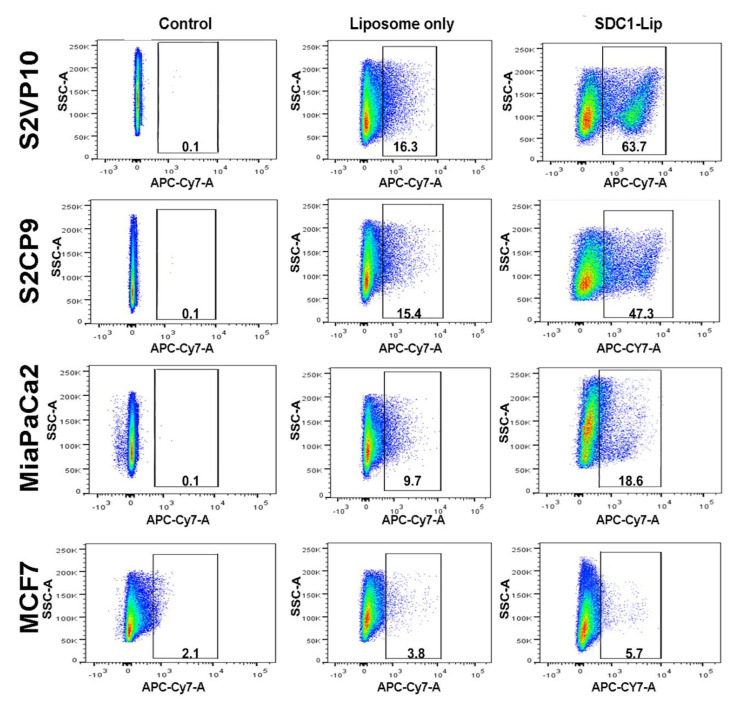
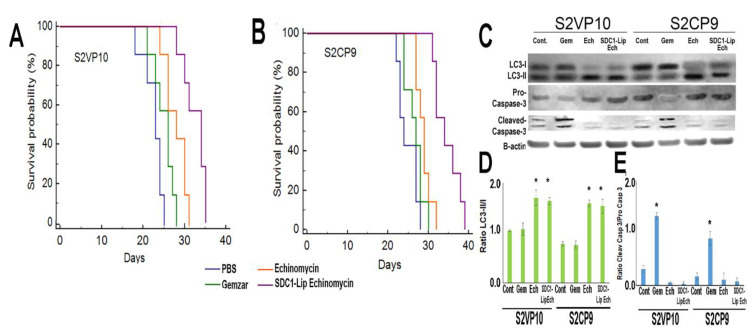
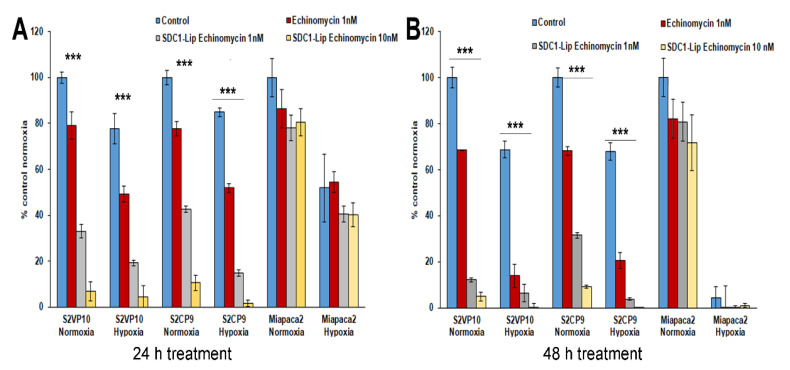
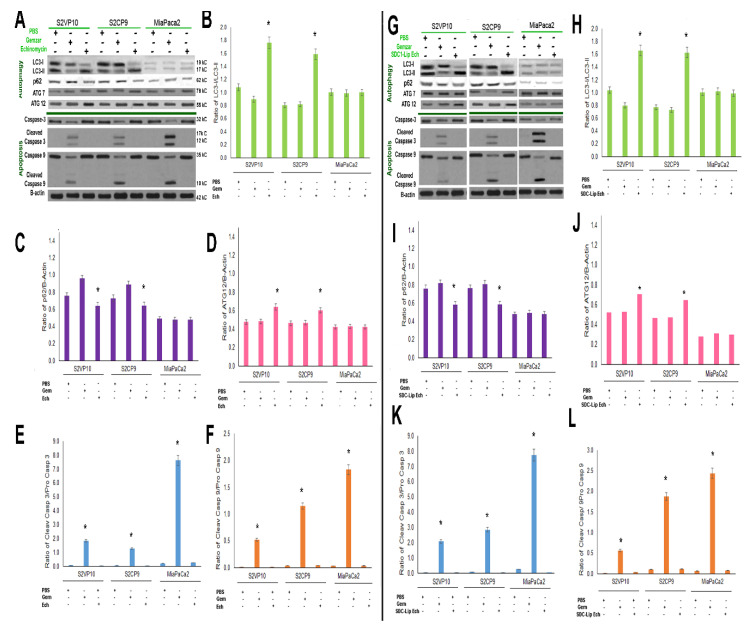
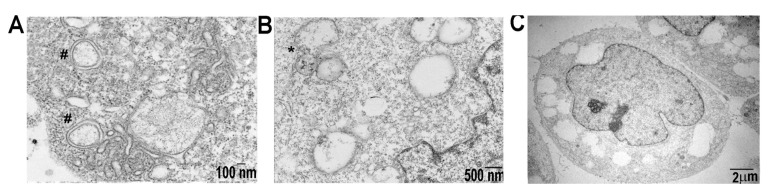
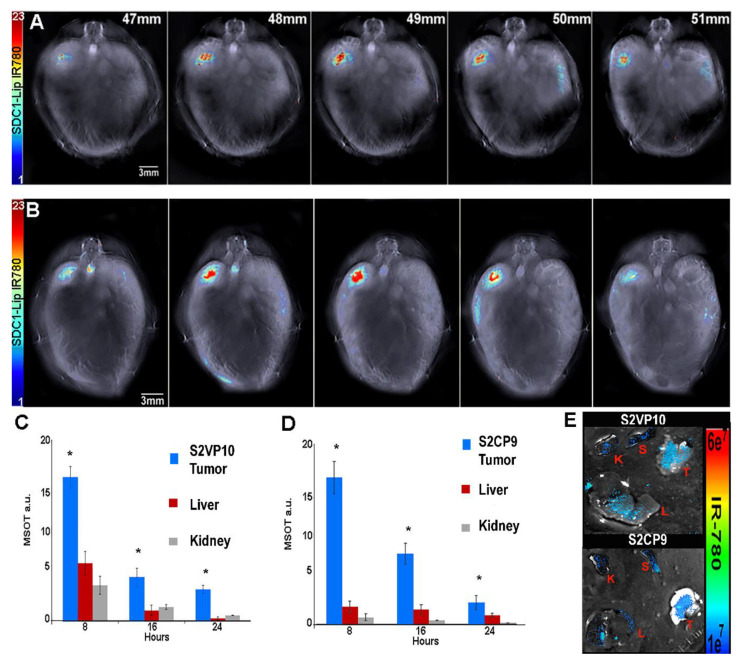
Pancreatic cancer remains a recalcitrant neoplasm associated with chemoresistance and high fatality. Because it is frequently resistant to apoptosis, exploiting autophagic cell death could offer a new treatment approach. We repurpose echinomycin, an antibiotic encapsulated within a syndecan-1 actively targeted nanoparticle, for treatment of pancreatic cancer. Tumor-specific uptake, biodistribution, efficacy of nanodelivered echinomycin, and mechanism of cell death were assessed in aggressive, metastatic models of pancreatic cancer. In these autophagic-dependent pancreatic cancer models, echinomycin treatment resulted in autophagic cell death noted by high levels of LC3 among other autophagy markers, but without hallmarks of apoptosis, e.g., caspase activation and chromatin fragmentation, or necrosis, e.g., plasma membrane degradation and chromatin condensation/degrading. In vivo, biodistribution of syndecan-1-targeted nanoparticles indicated preferential S2VP10 or S2CP9 tumor uptake compared to the liver and kidney (S2VP10 = 0.0016, = 0.00004 and S2CP9 = 0.0009, = 0.0001). Actively targeted nanodelivered echinomycin resulted in significant survival increases compared to Gemzar (S2VP10 = 0.0003, S2CP9 = 0.0017) or echinomycin only (S2VP10 = 0.0096, S2CP9 = 0.0073). We demonstrate that actively targeted nanodelivery of echinomycin results in autophagic cell death in pancreatic and potentially other high-autophagy, apoptosis-resistant tumors. Collectively, these findings support syndecan-1-targeted delivery of echinomycin and dysregulation of autophagy to induce cell death in pancreatic cancer.
胰腺癌仍然是一种难治性肿瘤,与化疗耐药性和高死亡率相关。由于它通常对细胞凋亡具有抗性,利用自噬性细胞死亡可能提供一种新的治疗方法。我们将棘霉素重新用于治疗胰腺癌,棘霉素是一种封装在硫酸乙酰肝素蛋白聚糖-1主动靶向纳米颗粒中的抗生素。在侵袭性转移性胰腺癌模型中评估了纳米递送的棘霉素的肿瘤特异性摄取、生物分布、疗效以及细胞死亡机制。在这些自噬依赖性胰腺癌模型中,棘霉素治疗导致自噬性细胞死亡,表现为高水平的微管相关蛋白轻链3(LC3)以及其他自噬标志物,但没有细胞凋亡的特征,如半胱天冬酶激活和染色质片段化,也没有坏死的特征,如质膜降解和染色质凝聚/降解。在体内,硫酸乙酰肝素蛋白聚糖-1靶向纳米颗粒的生物分布表明,与肝脏和肾脏相比,纳米颗粒优先摄取到S2VP10或S2CP9肿瘤中(S2VP10 = 0.0016, = 0.00004;S2CP9 = 0.0009, = 0.0001)。与吉西他滨(S2VP10 = 0.0003,S2CP9 = 0.0017)或仅使用棘霉素(S2VP10 = 0.0096,S2CP9 = 0.0073)相比,主动靶向纳米递送的棘霉素显著提高了生存率。我们证明,主动靶向纳米递送棘霉素可导致胰腺癌以及潜在的其他高自噬、抗凋亡肿瘤发生自噬性细胞死亡。总的来说,这些发现支持硫酸乙酰肝素蛋白聚糖-1靶向递送棘霉素以及自噬失调以诱导胰腺癌细胞死亡。