Department of Pharmacology, Federal University of Parana, Curitiba, PR, Brazil.
Department of Pharmacology, Federal University of Santa Catarina, Florianopolis, SC, Brazil.
BMC Psychiatry. 2020 Aug 26;20(1):420. doi: 10.1186/s12888-020-02813-8.
Posttraumatic stress disorder (PTSD) may stem from the formation of aberrant and enduring aversive memories. Some PTSD patients have recreationally used Cannabis, probably aiming at relieving their symptomatology. However, it is still largely unknown whether and how Cannabis or its psychotomimetic compound Δ-tetrahydrocannabinol (THC) attenuates the aversive/traumatic memory outcomes. Here, we seek to review and discuss the effects of THC on aversive memory extinction and anxiety in healthy humans and PTSD patients.
Medline, PubMed, Cochrane Library, and Central Register for Controlled Trials databases were searched to identify peer-reviewed published studies and randomized controlled trials in humans published in English between 1974 and July 2020, including those using only THC and THC combined with cannabidiol (CBD). The effect size of the experimental intervention under investigation was calculated.
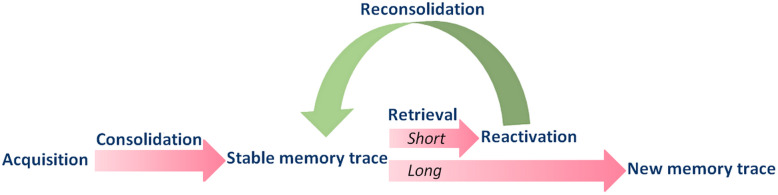
At low doses, THC can enhance the extinction rate and reduce anxiety responses. Both effects involve the activation of cannabinoid type-1 receptors in discrete components of the corticolimbic circuitry, which could couterbalance the low "endocannabinoid tonus" reported in PTSD patients. The advantage of associating CBD with THC to attenuate anxiety while minimizing the potential psychotic or anxiogenic effect produced by high doses of THC has been reported. The effects of THC either alone or combined with CBD on aversive memory reconsolidation, however, are still unknown.
Current evidence from healthy humans and PTSD patients supports the THC value to suppress anxiety and aversive memory expression without producing significant adverse effects if used in low doses or when associated with CBD. Future studies are guaranteed to address open questions related to their dose ratios, administration routes, pharmacokinetic interactions, sex-dependent differences, and prolonged efficacy.
创伤后应激障碍(PTSD)可能源于异常和持久的厌恶记忆的形成。一些 PTSD 患者曾消遣性使用大麻,可能是为了缓解他们的症状。然而,大麻或其致幻化合物Δ-四氢大麻酚(THC)是否以及如何减轻厌恶/创伤性记忆结果,仍然在很大程度上未知。在这里,我们旨在综述和讨论 THC 对健康人群和 PTSD 患者的厌恶记忆消退和焦虑的影响。
检索了 Medline、PubMed、Cochrane 图书馆和对照试验注册中心数据库,以确定 1974 年至 2020 年 7 月期间以英文发表的、针对人类的同行评审已发表研究和随机对照试验,包括仅使用 THC 和 THC 与大麻二酚(CBD)联合使用的研究。计算了研究中实验干预的效应量。
低剂量的 THC 可以提高消退率并降低焦虑反应。这两种作用都涉及到离散的皮质边缘电路中的大麻素 1 型受体的激活,这可能会抵消 PTSD 患者报告的低“内源性大麻素张力”。有报道称,将 CBD 与 THC 联合使用以减轻焦虑,同时最大限度地减少高剂量 THC 产生的潜在精神病或焦虑作用具有优势。然而,THC 单独或与 CBD 联合使用对厌恶记忆再巩固的影响仍不清楚。
来自健康人群和 PTSD 患者的现有证据支持 THC 的价值,即在低剂量使用或与 CBD 联合使用时,可抑制焦虑和厌恶记忆表达,而不会产生显著的不良反应。未来的研究必将解决与剂量比、给药途径、药代动力学相互作用、性别依赖性差异和长期疗效相关的开放性问题。