Cardiovascular Research Center, Shiraz University of Medical Sciences, Shiraz, Iran.
Department of Cardiology, Zhongnan Hospital of Wuhan University, Wuhan, China.
Heart Fail Rev. 2021 Mar;26(2):371-380. doi: 10.1007/s10741-020-10016-2.
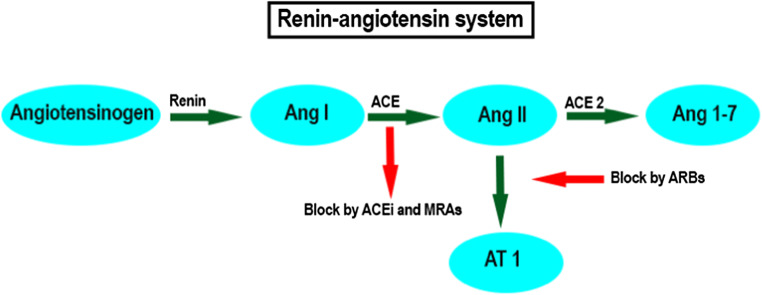
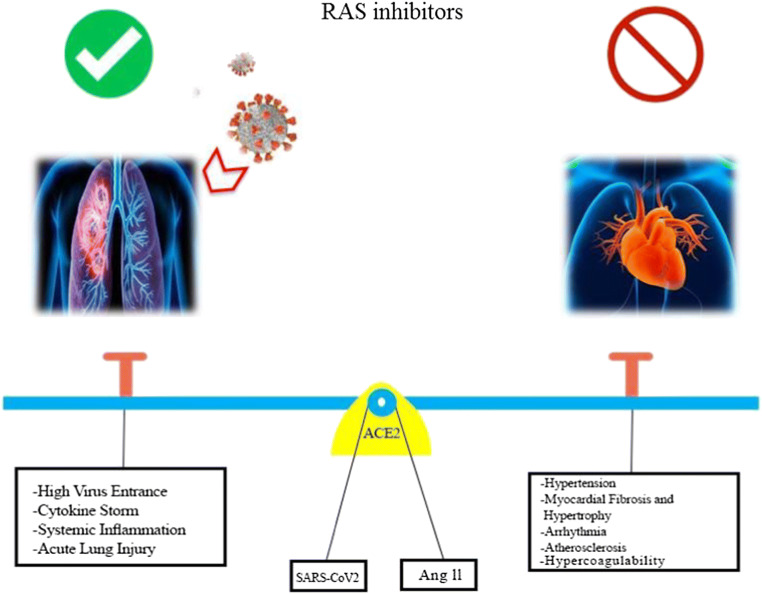
The coronavirus disease (COVID-19) pandemic is a global health priority. Given that cardiovascular diseases (CVD) are the leading cause of morbidity around the world and that several trials have reported severe cardiovascular damage in patients infected with SARS-CoV-2, a substantial number of COVID-19 patients with underlying cardiovascular diseases need to continue their medications in order to improve myocardial contractility and to prevent the onset of major adverse cardiovascular events (MACEs), including heart failure. Some of the current life-saving medications may actually simultaneously expose patients to a higher risk of severe COVID-19. Angiotensin-converting enzyme 2 (ACE2), a key counter regulator of the renin-angiotensin system (RAS), is the main entry gate of SARS-CoV-2 into human host cells and an established drug target to prevent heart failure. In fact, ACE inhibitors, angiotensin II receptor blockers, and mineralocorticoid antagonists may augment ACE2 levels to protect organs from angiotensin II overload. Elevated ACE2 expression on the host cell surface might facilitate viral entrance, at the same time sudden nonadherence to these medications triggers MACEs. Hence, safety issues in the use of RAS inhibitors in COVID-19 patients with cardiac dysfunction remain an unsolved dilemma and need paramount attention. Although ACE2 generally plays an adaptive role in both healthy subjects and patients with systolic and/or diastolic dysfunction, we conducted a literature appraisal on its maladaptive role. Understanding the exact role of ACE2 in COVID-19 patients at risk of heart failure is needed to safely manage RAS inhibitors in frail and non-frail critically ill patients.
冠状病毒病(COVID-19)大流行是全球卫生重点。鉴于心血管疾病(CVD)是全世界发病率的主要原因,并且有几项试验报告称 SARS-CoV-2 感染患者存在严重的心血管损害,因此,大量患有潜在心血管疾病的 COVID-19 患者需要继续服用药物,以改善心肌收缩力并预防主要不良心血管事件(MACE)的发生,包括心力衰竭。一些目前的救命药物实际上可能同时使患者面临更高的 COVID-19 严重风险。血管紧张素转换酶 2(ACE2)是肾素-血管紧张素系统(RAS)的关键反向调节剂,是 SARS-CoV-2 进入人体宿主细胞的主要入口,也是预防心力衰竭的既定药物靶标。事实上,血管紧张素转换酶抑制剂、血管紧张素 II 受体阻滞剂和盐皮质激素拮抗剂可能会增加 ACE2 水平,以保护器官免受血管紧张素 II 过载的影响。宿主细胞表面 ACE2 表达的升高可能会促进病毒进入,同时突然停止使用这些药物会引发 MACE。因此,心脏功能障碍的 COVID-19 患者使用 RAS 抑制剂的安全性问题仍然是一个悬而未决的难题,需要高度关注。尽管 ACE2 在健康受试者以及收缩性和/或舒张性心功能障碍患者中通常发挥适应性作用,但我们对其适应性作用进行了文献评估。了解 ACE2 在有心力衰竭风险的 COVID-19 患者中的确切作用,对于安全管理脆弱和非脆弱危重症患者的 RAS 抑制剂是必要的。