Li Ranran, Huang Zhi, Luo Juan, Luo Hongyan, Wang Wei
Department of Physiology, School of Basic Medicine, Tongji Medical College, Huazhong University of Science and Technology, Wuhan, China.
Department of Anesthesia, Wuhan Fourth Hospital and Puai Hospital, Tongji Medical College, Huazhong University of Science and Technology, Wuhan, China.
Front Mol Neurosci. 2020 Jul 28;13:130. doi: 10.3389/fnmol.2020.00130. eCollection 2020.
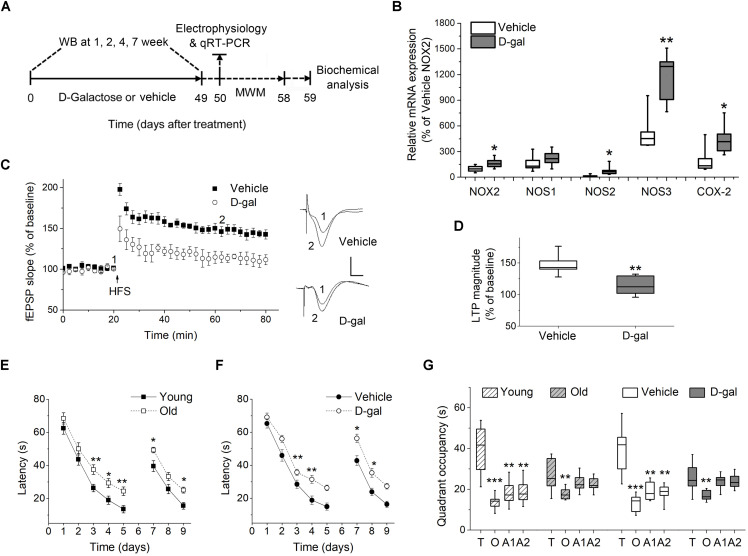
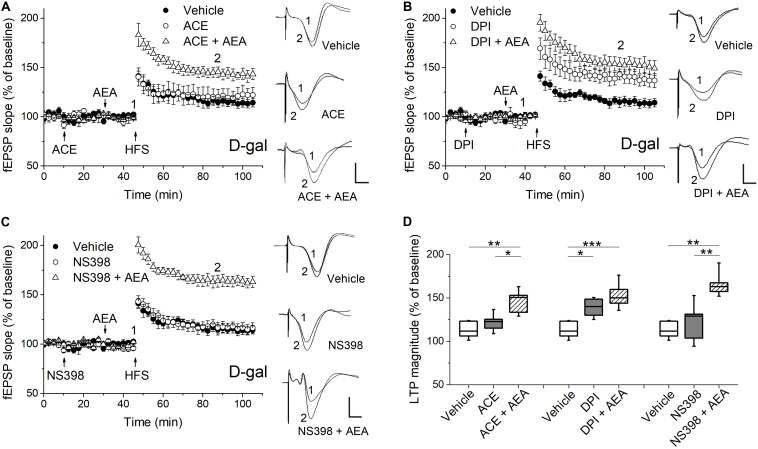
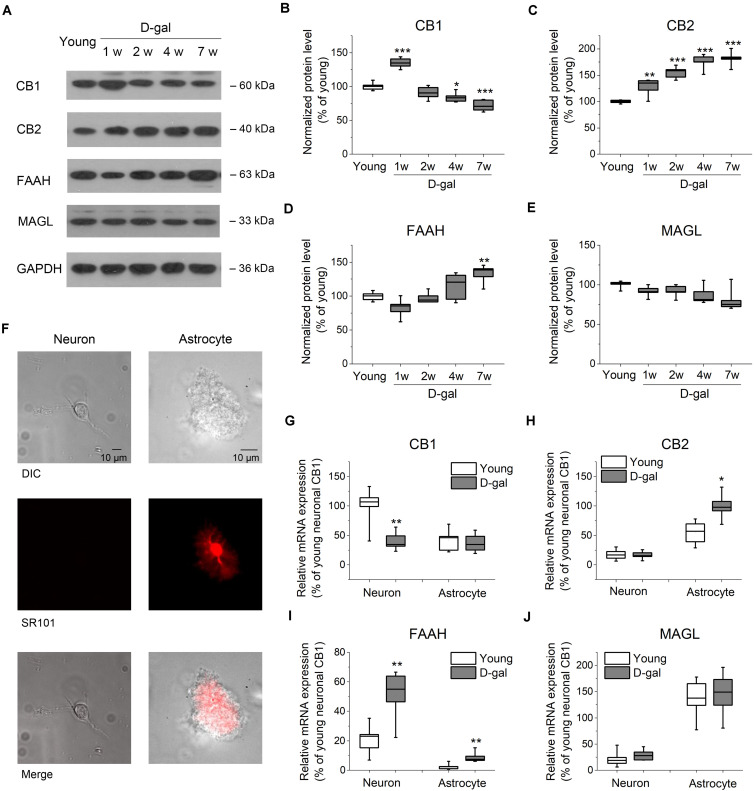
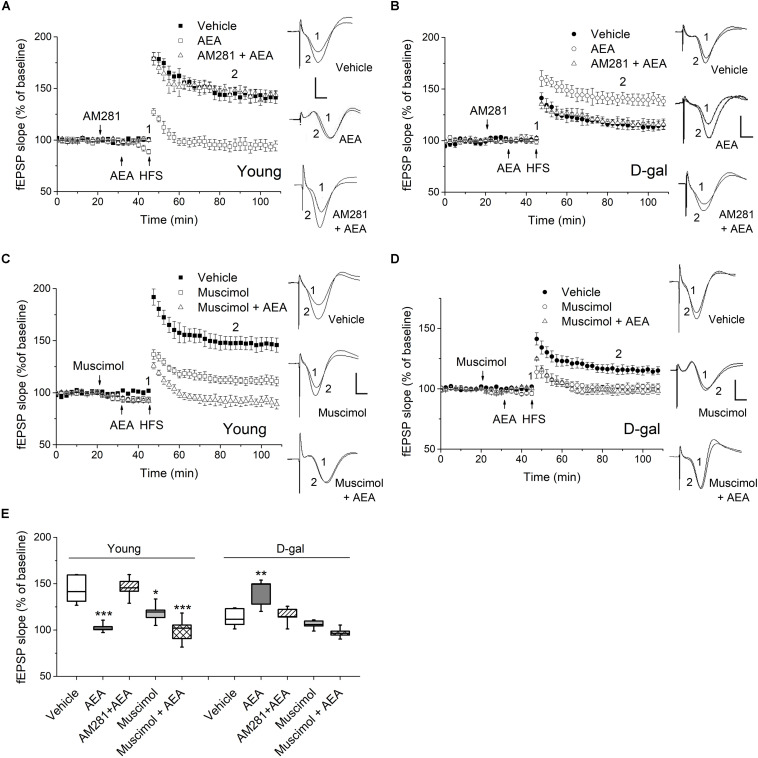
Imbalance in redox homeostasis is a major cause of age-related cognitive impairment. The endocannabinoid system (ECS) is a key player in regulating synaptic transmission, plasticity and memory. Increasing evidence indicates an important interplay between the two systems. However, how excessive oxidative stress could alter ECS and that, in turn, impairs its modulatory role in synaptic plasticity and cognitive function remains elusive. In the present study, we examined this causal link in D-galactose-induced oxidative rats. First, the reactive oxygen species generating enzymes, especially nitric oxide synthase (NOS), indeed show an elevated expression in D-galactose-treated rats, and this was correlated to an impaired hippocampal long-term potentiation (LTP) and spatial memory loss in animal behavioral tests. Second, the cannabinoid receptor type I (CB1)-mediated signaling is known to regulate synaptic plasticity. We show that a decrease in CB1 and increase in degradation enzymes for CB1 ligand endocannabinoid anandamide all occurred to D-galactose-treated rats. Surprisingly, application of low-dose anandamide, known to reduce LTP under physiological condition, now acted to enhance LTP in D-galactose-treated rats, most likely resulted from the inhibition of GABAergic synapses. Furthermore, this reversal behavior of CB1-signaling could be fully simulated by a NOS inhibitor, diphenyleneiodonium. These observations suggest that interaction between redox dysfunction and ECS should contribute significantly to the impaired synaptic plasticity and memory loss in D-galactose-treated rats. Therefore, therapies focusing on the balance of these two systems may shed lights on the treatment of age-related cognitive impairment in the future.
氧化还原稳态失衡是与年龄相关的认知障碍的主要原因。内源性大麻素系统(ECS)是调节突触传递、可塑性和记忆的关键因素。越来越多的证据表明这两个系统之间存在重要的相互作用。然而,过度氧化应激如何改变ECS,进而损害其在突触可塑性和认知功能中的调节作用仍不清楚。在本研究中,我们在D-半乳糖诱导的氧化应激大鼠中研究了这种因果关系。首先,活性氧生成酶,尤其是一氧化氮合酶(NOS),在D-半乳糖处理的大鼠中确实表现出表达升高,这与动物行为测试中受损的海马长时程增强(LTP)和空间记忆丧失相关。其次,已知I型大麻素受体(CB1)介导的信号传导调节突触可塑性。我们发现,D-半乳糖处理的大鼠中CB1减少,CB1配体内源性大麻素花生四烯乙醇胺的降解酶增加。令人惊讶的是,低剂量花生四烯乙醇胺在生理条件下已知会降低LTP,但现在却能增强D-半乳糖处理大鼠的LTP,这很可能是由于抑制了GABA能突触。此外,CB1信号的这种逆转行为可以被NOS抑制剂二苯碘鎓完全模拟。这些观察结果表明,氧化还原功能障碍与ECS之间的相互作用应在很大程度上导致D-半乳糖处理大鼠的突触可塑性受损和记忆丧失。因此,关注这两个系统平衡的疗法可能为未来与年龄相关的认知障碍治疗提供线索。