Department of Molecular, Cellular and Developmental Biology, University of Colorado, Boulder, Colorado, USA.
Department of Chinese Medicine Information Science, Beijing University of Chinese Medicine, Beijing, China.
Traffic. 2020 Oct;21(10):636-646. doi: 10.1111/tra.12760.
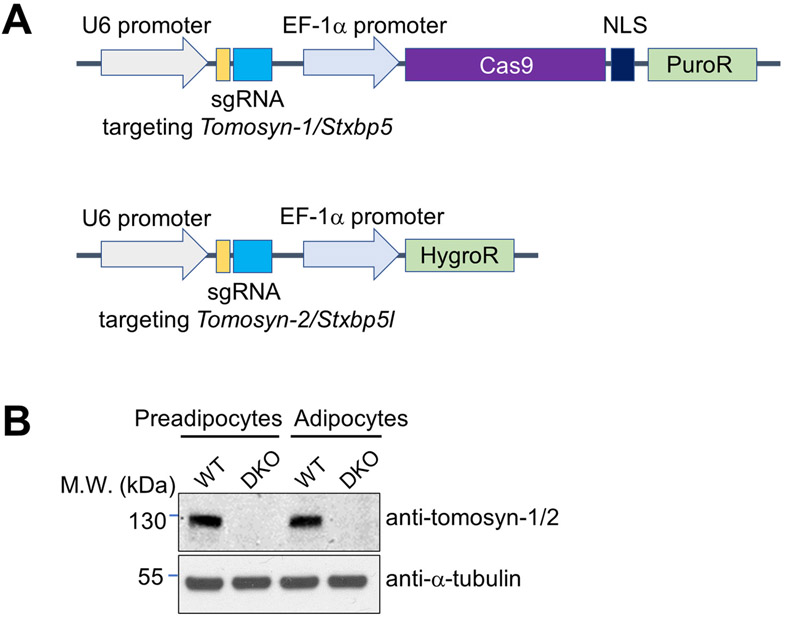
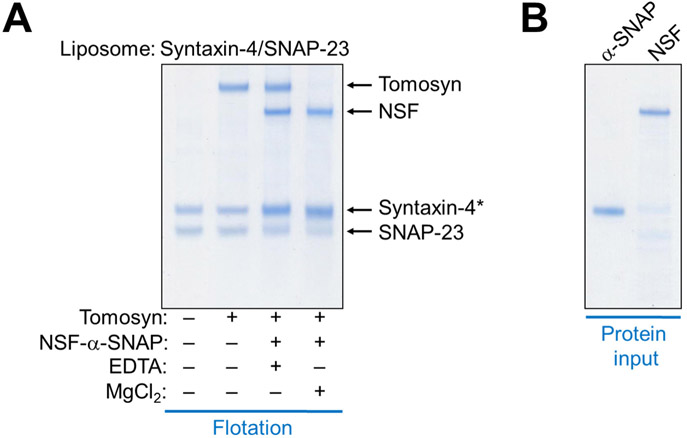
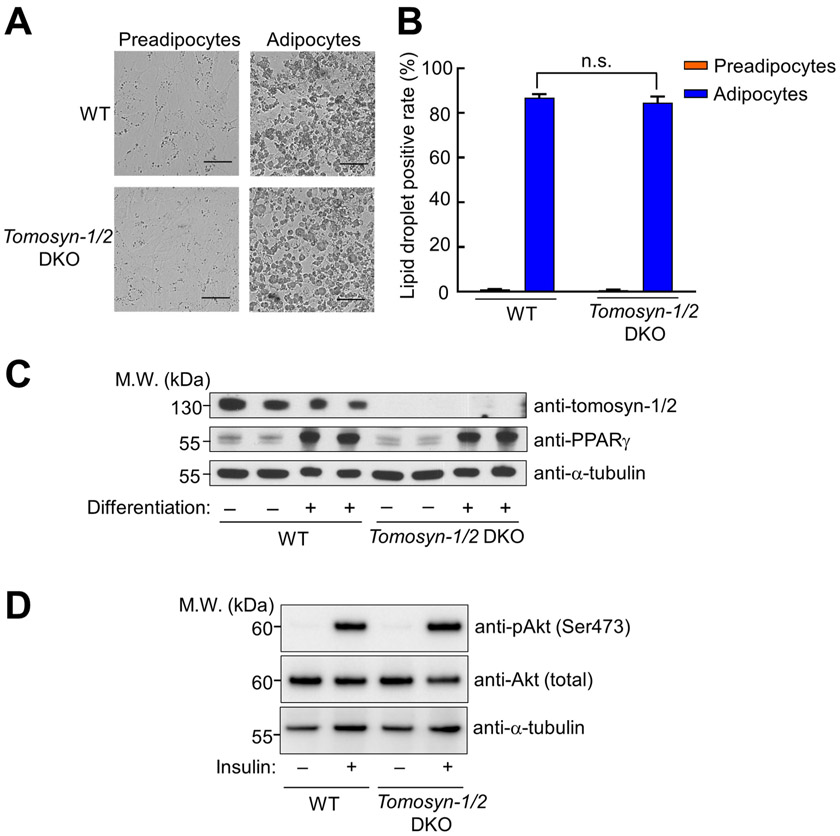
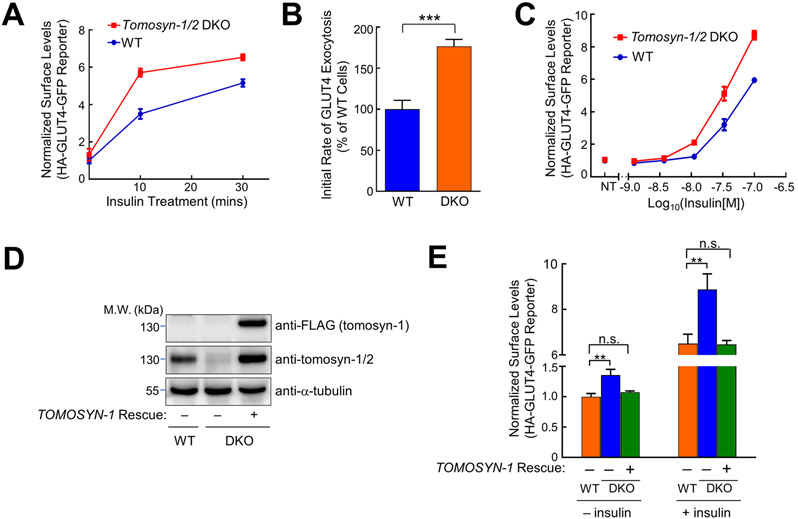
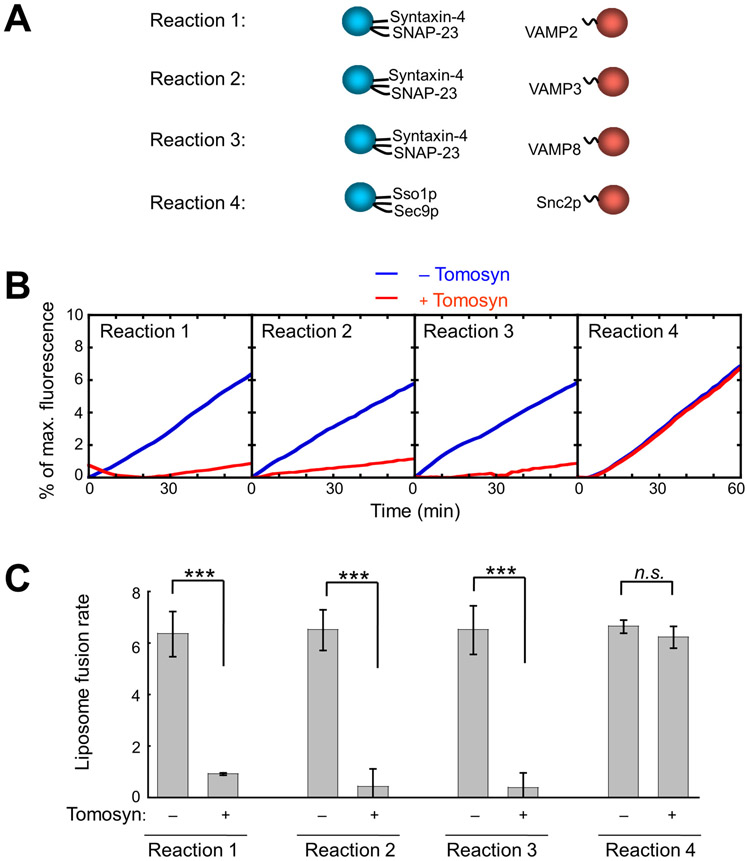
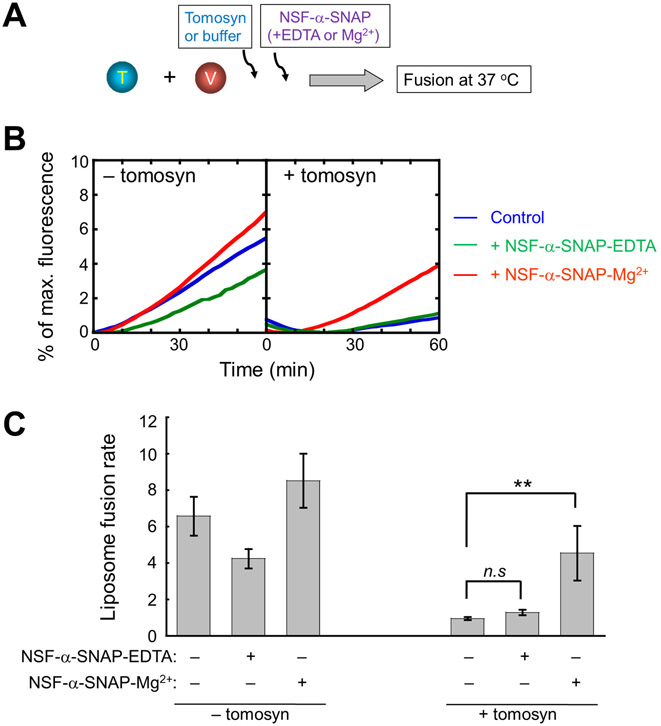
Exocytosis is a vesicle fusion process driven by soluble N-ethylmaleimide-sensitive factor attachment protein receptors (SNAREs). A classic exocytic pathway is insulin-stimulated translocation of the glucose transporter type 4 (GLUT4) from intracellular vesicles to the plasma membrane in adipocytes and skeletal muscles. The GLUT4 exocytic pathway plays a central role in maintaining blood glucose homeostasis and is compromised in insulin resistance and type 2 diabetes. A candidate regulator of GLUT4 exocytosis is tomosyn, a soluble protein expressed in adipocytes. Tomosyn directly binds to GLUT4 exocytic SNAREs in vitro but its role in GLUT4 exocytosis was unknown. In this work, we used CRISPR-Cas9 genome editing to delete the two tomosyn-encoding genes in adipocytes. We observed that both basal and insulin-stimulated GLUT4 exocytosis was markedly elevated in the double knockout (DKO) cells. By contrast, adipocyte differentiation and insulin signaling remained intact in the DKO adipocytes. In a reconstituted liposome fusion assay, tomosyn inhibited all the SNARE complexes underlying GLUT4 exocytosis. The inhibitory activity of tomosyn was relieved by NSF and α-SNAP, which act in concert to remove tomosyn from GLUT4 exocytic SNAREs. Together, these studies revealed an inhibitory role for tomosyn in insulin-stimulated GLUT4 exocytosis in adipocytes. We suggest that tomosyn-arrested SNAREs represent a reservoir of fusion capacity that could be harnessed to treat patients with insulin resistance and type 2 diabetes.
胞吐作用是一种由可溶性 N-乙基马来酰亚胺敏感因子附着蛋白受体(SNAREs)驱动的囊泡融合过程。经典的胞吐途径是胰岛素刺激葡萄糖转运蛋白 4(GLUT4)从脂肪细胞和骨骼肌中的细胞内囊泡向质膜易位。GLUT4 的胞吐途径在维持血糖稳态中起着核心作用,并且在胰岛素抵抗和 2 型糖尿病中受到损害。GLUT4 胞吐作用的一个候选调节剂是汤姆辛,一种在脂肪细胞中表达的可溶性蛋白。汤姆辛在体外直接与 GLUT4 胞吐 SNARE 结合,但它在 GLUT4 胞吐中的作用尚不清楚。在这项工作中,我们使用 CRISPR-Cas9 基因组编辑技术删除了脂肪细胞中的两个汤姆辛编码基因。我们观察到,在双敲除(DKO)细胞中,基础和胰岛素刺激的 GLUT4 胞吐作用明显升高。相比之下,DKO 脂肪细胞中的脂肪细胞分化和胰岛素信号仍然完整。在重建的脂质体融合测定中,汤姆辛抑制了 GLUT4 胞吐作用的所有 SNARE 复合物。汤姆辛的抑制活性被 NSF 和 α-SNAP 缓解,它们协同作用将汤姆辛从 GLUT4 胞吐 SNARE 上移除。总之,这些研究揭示了汤姆辛在胰岛素刺激的脂肪细胞中 GLUT4 胞吐作用中的抑制作用。我们认为,汤姆辛捕获的 SNARE 代表了融合能力的储备库,可用于治疗胰岛素抵抗和 2 型糖尿病患者。