Department of Laboratory Medicine, Asan Medical Center, University of Ulsan College of Medicine, Seoul, Korea.
Department of Laboratory Medicine, Hallym University Dongtan Sacred Heart Hospital, Hallym University College of Medicine, Hwaseong-si, Korea.
J Clin Lab Anal. 2020 Dec;34(12):e23550. doi: 10.1002/jcla.23550. Epub 2020 Aug 30.
Delta check is a patient-based QC tool for detecting errors by comparing current and previous test results of patient. Reference change value (RCV) is adopted in guidelines as method for delta check, but the performance is not verified. We applied RCV-based delta check method to patients' data and modified for application.
Reference change value were calculated using results of internal QC materials and biological variation data. Test results of 17 analytes in inpatients, outpatients, and health examination recipients were collected. The detection rates of currently used delta check method and those of RCV-based method were compared, and the methods were modified.
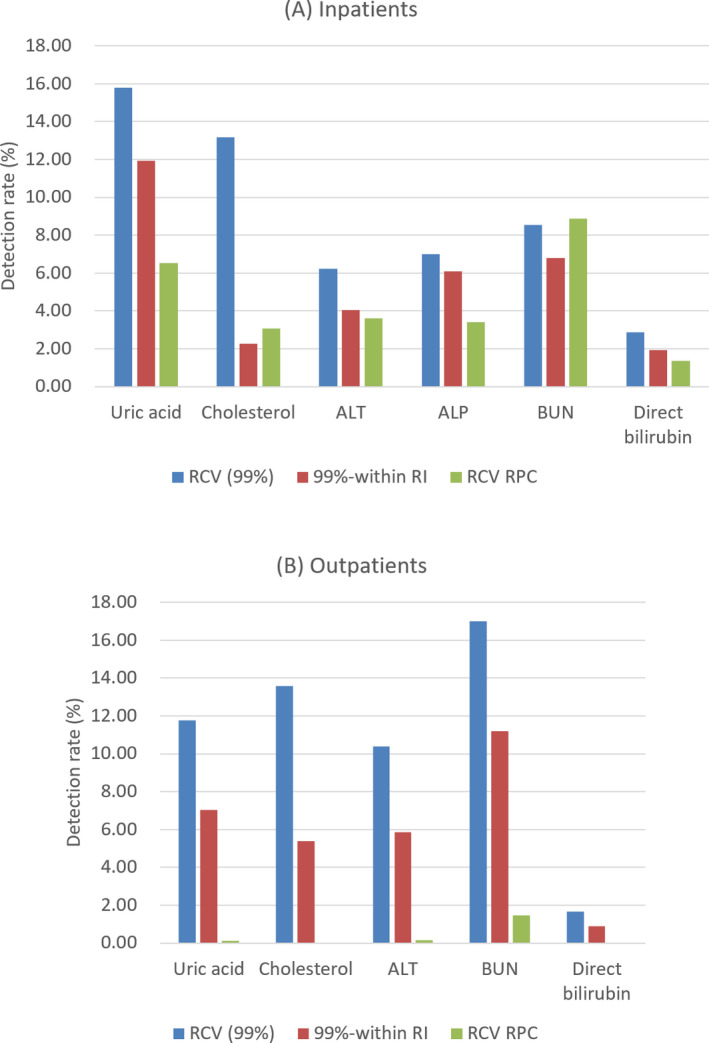
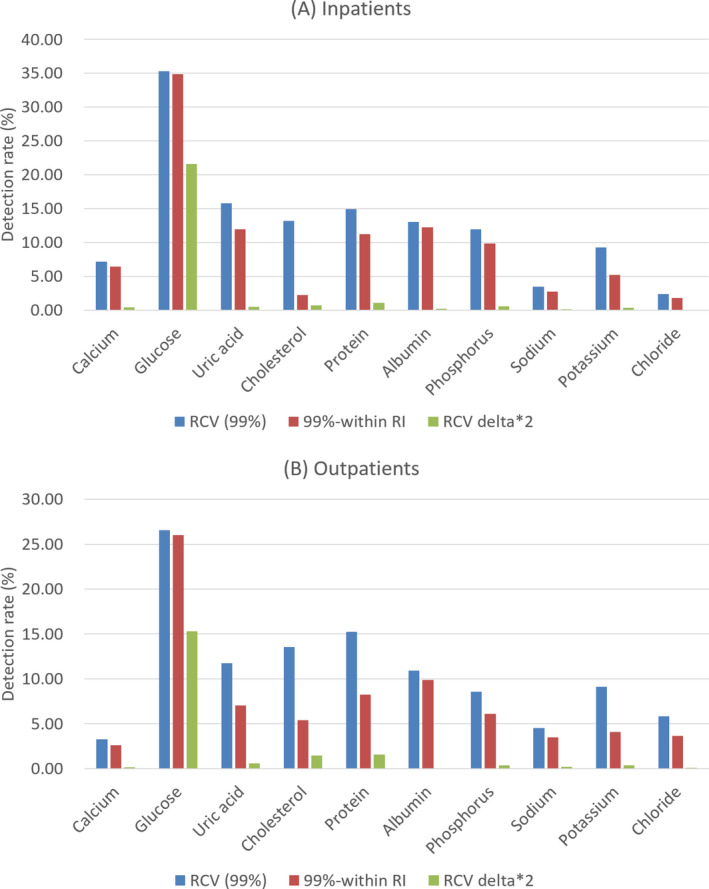
Reference change value-based method had higher detection rates compared to conventional method. Applied modifications reduced detection rates. Removing the pairs of results within reference interval reduced detection rates (0.42% ~ 10.92%). When RCV was divided by time interval, the detection rates were similar to prior rates in outpatients (0.19% ~ 1.34%). Using RCV multiplied by twice the upper limit of reference value as cutoff reduced the detection rate (0.07% ~ 1.58%).
Reference change value is a robust criterion for delta check and included in clinical laboratory practice guideline. However, RCV-based method generates high detection rates which increase workload. It needs modification for use in clinical laboratories.
Delta 检验是一种基于患者的质控工具,通过比较患者当前和以往的检测结果来检测误差。参考变化值(RCV)已被指南作为 Delta 检验的方法采用,但尚未验证其性能。我们将基于 RCV 的 Delta 检验方法应用于患者数据并进行了修改以应用。
使用内部质控材料和生物学变异数据计算 RCV。收集了住院患者、门诊患者和健康体检者的 17 项分析物的检测结果。比较了现行 Delta 检验方法和 RCV 法的检出率,并对方法进行了修改。
与传统方法相比,基于 RCV 的方法具有更高的检出率。应用修改后降低了检出率。去除参考区间内的结果对降低检出率(0.42%10.92%)有影响。当 RCV 除以时间间隔时,其在门诊患者中的检出率与以往相似(0.19%1.34%)。使用 RCV 乘以参考值上限的两倍作为截止值可降低检出率(0.07%~1.58%)。
RCV 是 Delta 检验的一个稳健标准,已包含在临床实验室实践指南中。然而,基于 RCV 的方法产生的高检出率会增加工作量。它需要在临床实验室中进行修改才能使用。