The Heart Research Institute, Newtown, NSW, Australia; Faculty of Medicine, The University of Sydney, NSW, Australia; Department of Biomedical Sciences, Panum Institute, University of Copenhagen, Denmark.
Department of Biomedical Sciences, Panum Institute, University of Copenhagen, Denmark.
Redox Biol. 2020 Sep;36:101641. doi: 10.1016/j.redox.2020.101641. Epub 2020 Jul 9.
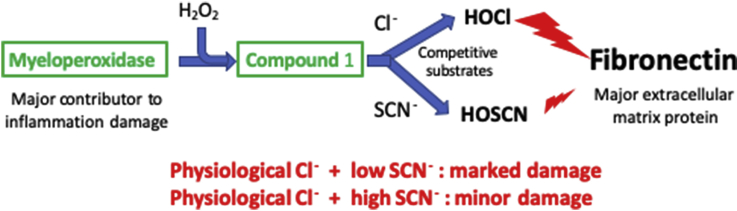
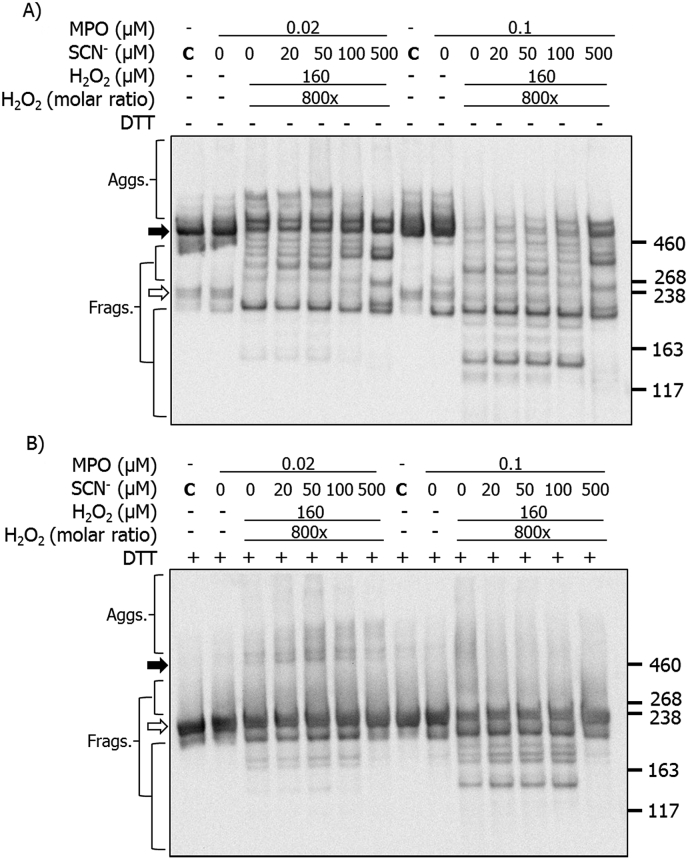
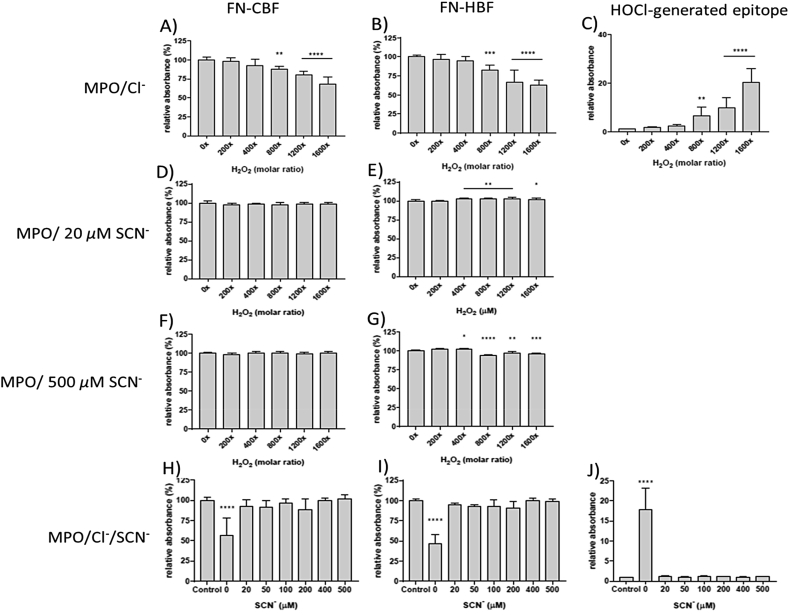
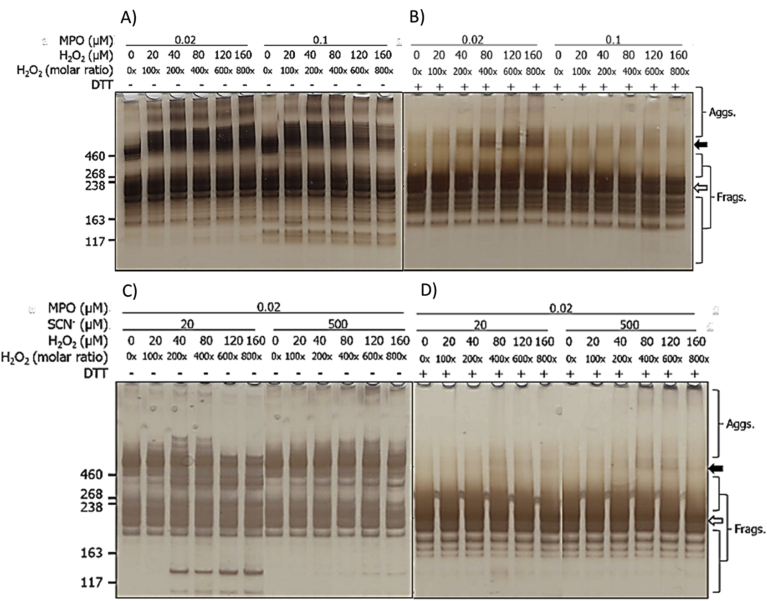
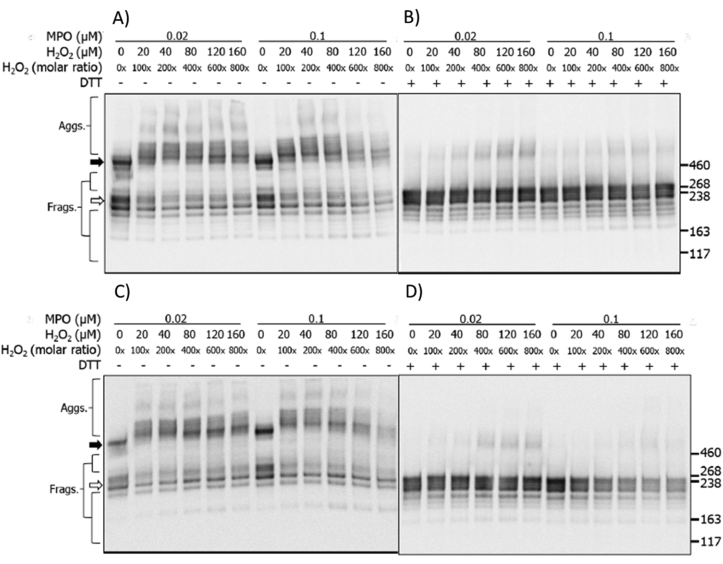
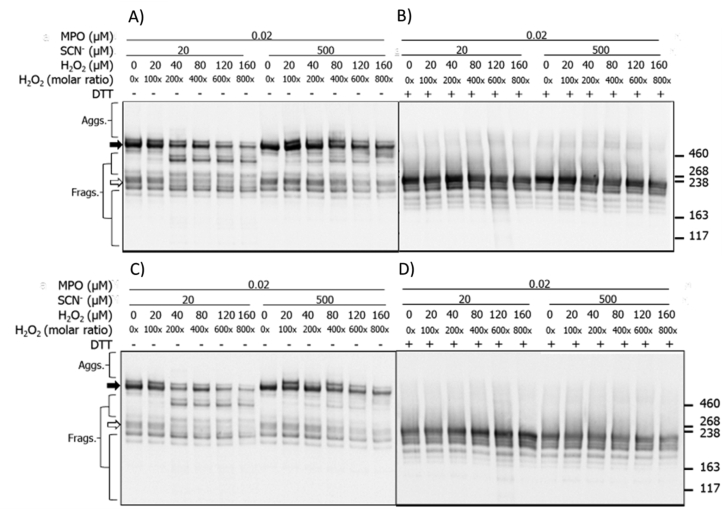
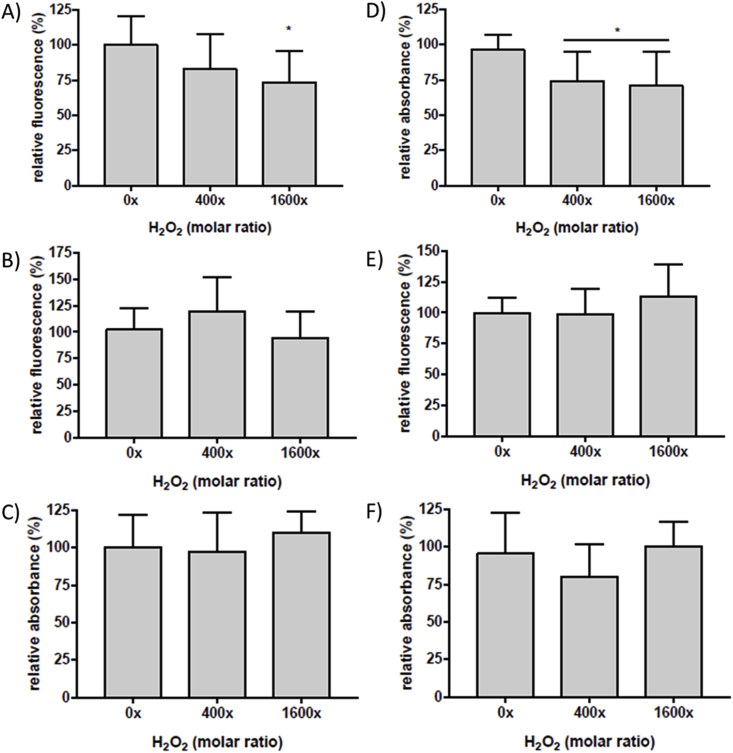
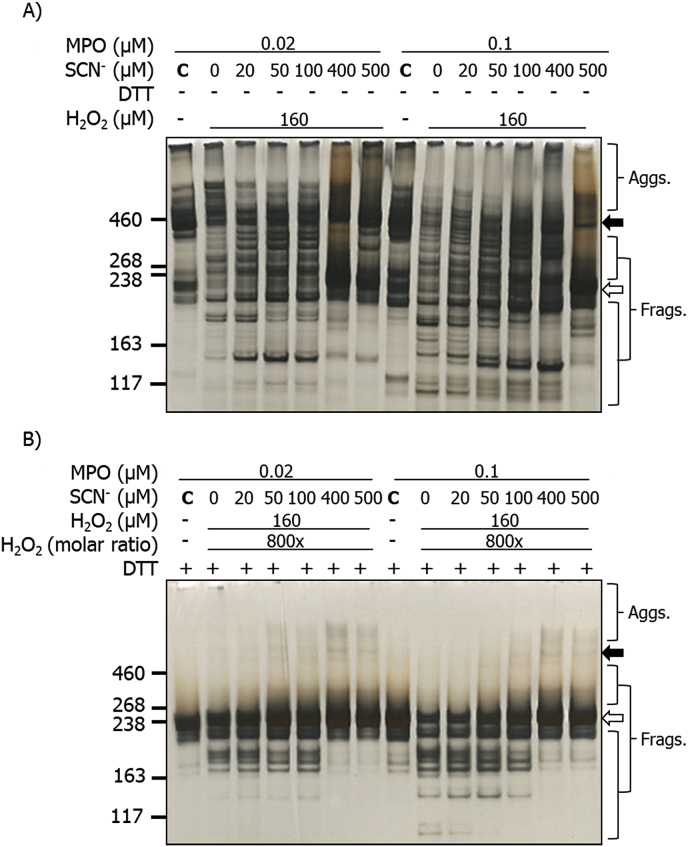
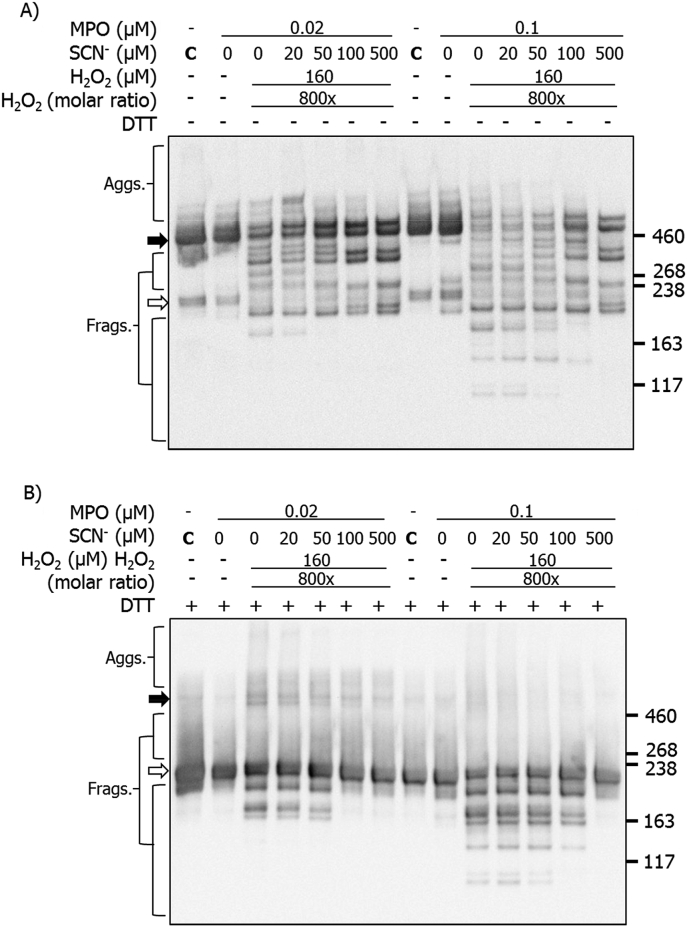
Endothelial cell dysfunction is an early event in cardiovascular disease and atherosclerosis. The origin of this dysfunction is unresolved, but accumulating evidence implicates damaging oxidants, including hypochlorous acid (HOCl), a major oxidant produced by myeloperoxidase (MPO), during chronic inflammation. MPO is released extracellularly by activated leukocytes and binds to extracellular molecules including fibronectin, a major matrix glycoprotein involved in endothelial cell binding. We hypothesized that MPO binding might influence the modifications induced on fibronectin, when compared to reagent HOCl, with this including alterations to the extent of damage to protein side-chains, modified structural integrity, changes to functional domains, and impact on naïve human coronary artery endothelial cell (HCAEC) adhesion and metabolic activity. The effect of increasing concentrations of the alternative MPO substrate thiocyanate (SCN), which might decrease HOCl formation were also examined. Exposure of fibronectin to MPO/HO/Cl is shown to result in damage to the functionally important cell-binding and heparin-binding fragments, gross structural changes to the protein, and altered HCAEC adhesion and activity. Differences were observed between stoichiometric, and above-stoichiometric MPO concentrations consistent with an effect of MPO binding to fibronectin. In contrast, MPO/HO/SCN induced much less marked changes and limited protein damage. Addition of increasing SCN concentrations to the MPO/HO/Cl system provided protection, with 20 μM of this anion rescuing damage to functionally-important domains, decreasing chemical modification, and maintaining normal HCAEC behavior. Modulating MPO binding to fibronectin, or enhancing SCN levels at sites of inflammation may therefore limit MPO-mediated damage, and be of therapeutic value.
内皮细胞功能障碍是心血管疾病和动脉粥样硬化的早期事件。这种功能障碍的起源尚未解决,但越来越多的证据表明,包括次氯酸(HOCl)在内的破坏性氧化剂在慢性炎症期间会产生髓过氧化物酶(MPO)。MPO 由活化的白细胞释放到细胞外,并与细胞外分子结合,包括纤维连接蛋白,这是一种与内皮细胞结合有关的主要基质糖蛋白。我们假设,与试剂 HOCl 相比,MPO 结合可能会影响纤维连接蛋白上诱导的修饰,包括对蛋白质侧链损伤程度的改变、修饰的结构完整性、功能域的变化,以及对原始人冠状动脉内皮细胞(HCAEC)黏附和代谢活性的影响。还检查了增加替代 MPO 底物硫氰酸盐(SCN)浓度的影响,这可能会减少 HOCl 的形成。暴露于 MPO/HO/Cl 中的纤维连接蛋白会导致对功能重要的细胞结合和肝素结合片段的损伤、蛋白质的宏观结构变化以及改变的 HCAEC 黏附和活性。在与 MPO 结合的纤维连接蛋白之间观察到了化学计量和超过化学计量的 MPO 浓度的差异,这与 MPO 结合到纤维连接蛋白的作用一致。相比之下,MPO/HO/SCN 诱导的变化不那么明显,并且蛋白质损伤有限。向 MPO/HO/Cl 系统中添加越来越多的 SCN 浓度可提供保护,其中 20μM 的这种阴离子可挽救功能重要的结构域的损伤,减少化学修饰,并维持正常的 HCAEC 行为。因此,调节 MPO 与纤维连接蛋白的结合,或增强炎症部位的 SCN 水平,可能会限制 MPO 介导的损伤,并具有治疗价值。