Ture Zeynep, Ustuner Tugba, Santini Ario, Aydogan Serhat, Celik İlhami
Erciyes University Faculty of Medicine Kayseri, Kayseri Turkey.
City Hospital of Kayseri, Kayseri Turkey.
J Crit Care Med (Targu Mures). 2020 Aug 11;6(3):175-180. doi: 10.2478/jccm-2020-0028. eCollection 2020 Jul.
The study aimed to investigate the changes in nosocomial infection density after patients were transferred to the intensive care unit (ICU) of a new-build hospital.
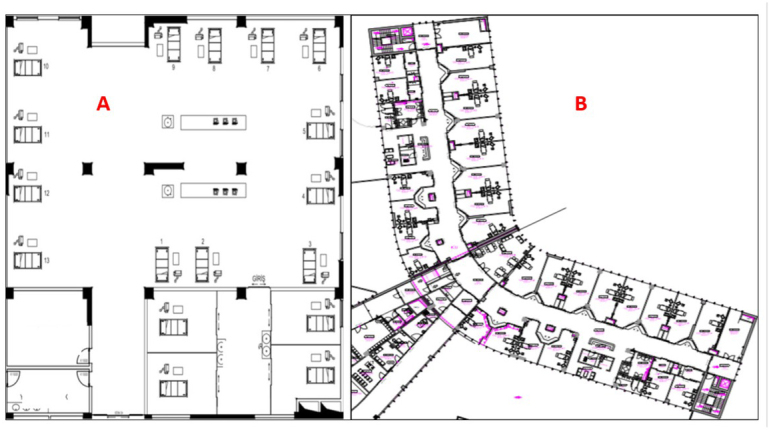
The types and rates of nosocomial infections were obtained for a one-year period retrospectively before leaving the old hospital premises and for a one-year periods after moving into the new hospital. The intensive care unit in the "old" premises was comprised of a 17-bedded hall, and thirty-three nurses shifted to work forty-eight hours a week, with each nurse assigned to provide care for two patients. The intensive care unit in the "new" premises consisted of single rooms, each with twenty-eight beds.
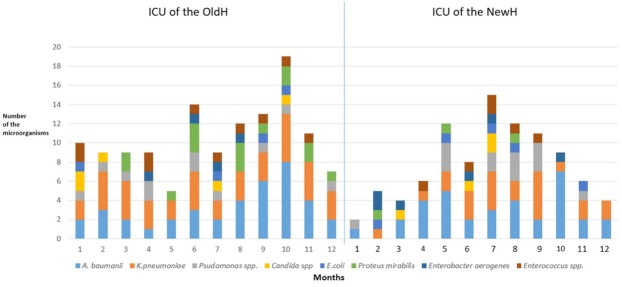
The median nosocomial infection density decreased from 23 to 15 per 1000 in-patient days. The catheter-related urinary tract infection rate decreased from 7.5 to 2.6 per100 catheter days.
Treatment of patients in the new hospital resulted in a decrease in nosocomial infection density.
本研究旨在调查患者转入新建医院重症监护病房(ICU)后医院感染密度的变化。
回顾性获取患者在离开旧医院之前一年期间以及迁入新医院之后一年期间的医院感染类型和发生率。“旧”医院的重症监护病房由一个有17张床位的大厅组成,33名护士轮班工作,每周工作48小时,每名护士负责护理两名患者。“新”医院的重症监护病房由单人房间组成,每个房间有28张床位。
医院感染密度中位数从每1000住院日23例降至15例。导尿管相关尿路感染率从每100导尿日7.5例降至2.6例。
在新医院对患者进行治疗可降低医院感染密度。