Department of Mechanical Engineering, Virginia Polytechnic Institute and State University, Blacksburg, VA 24061, USA.
Lab Chip. 2020 Sep 21;20(18):3310-3321. doi: 10.1039/d0lc00602e. Epub 2020 Sep 1.
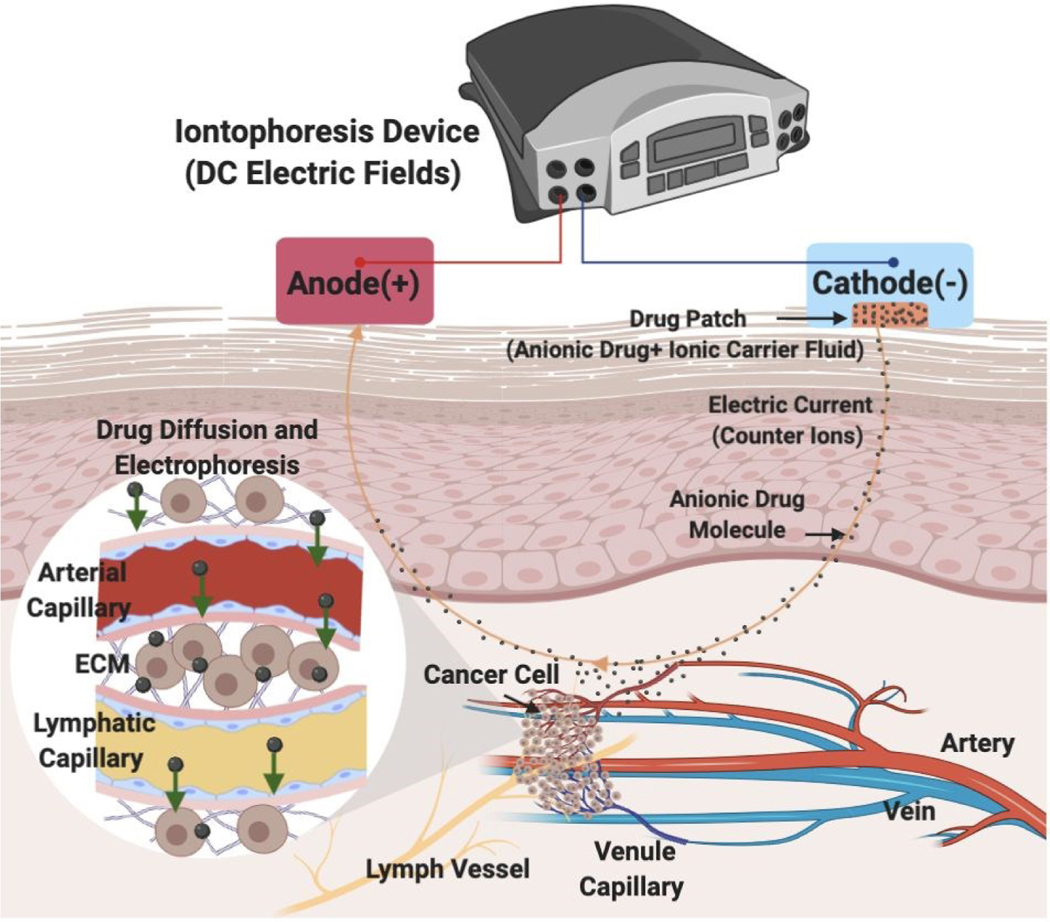
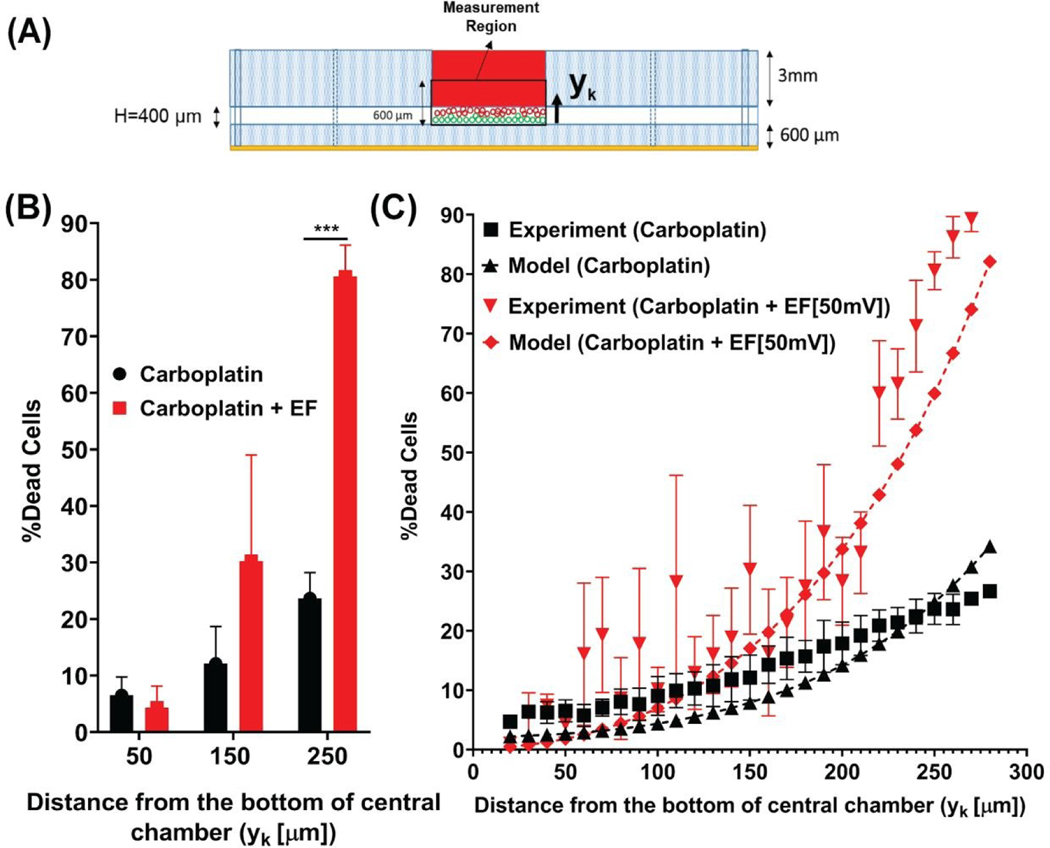
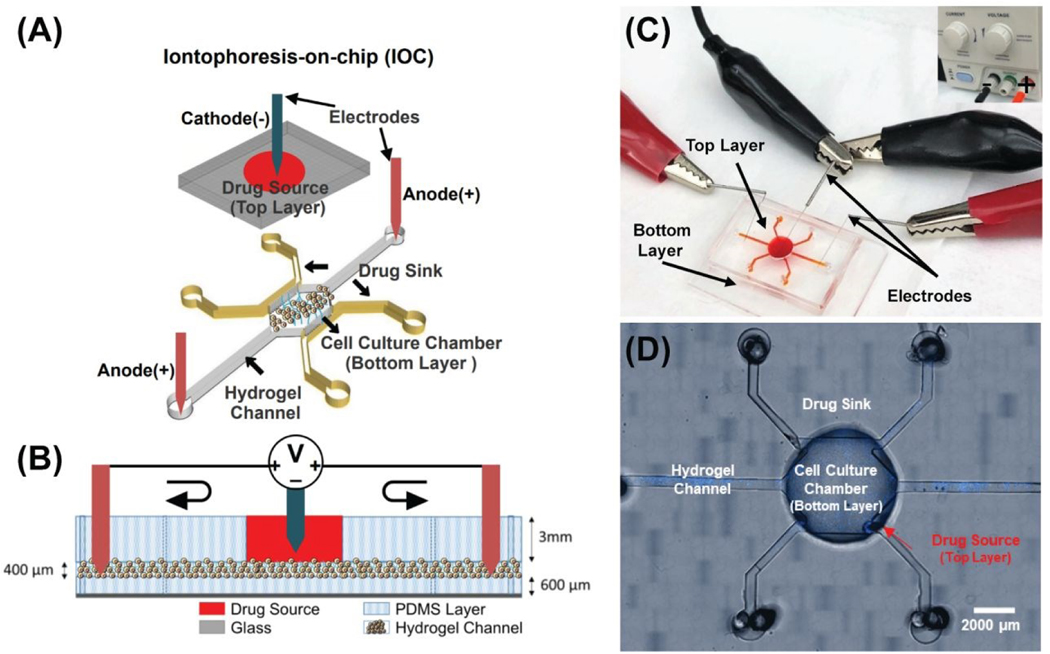
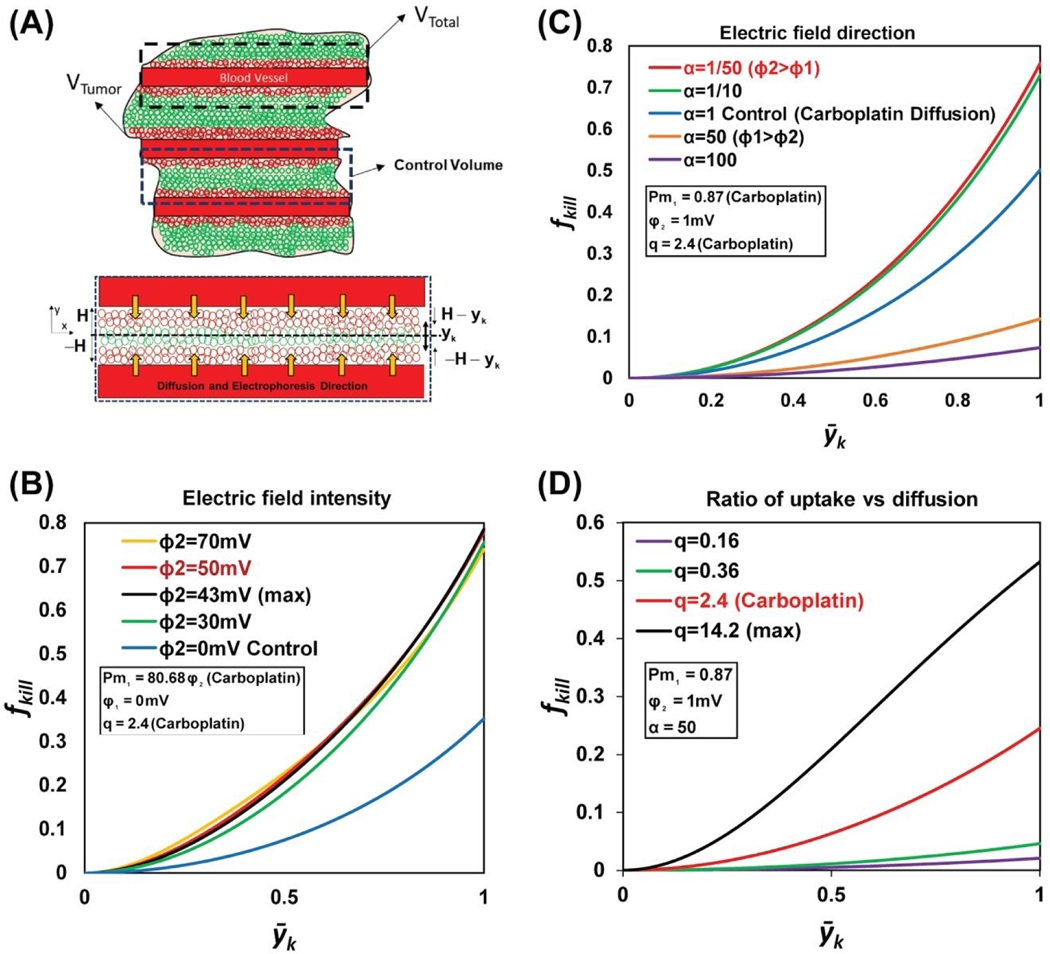
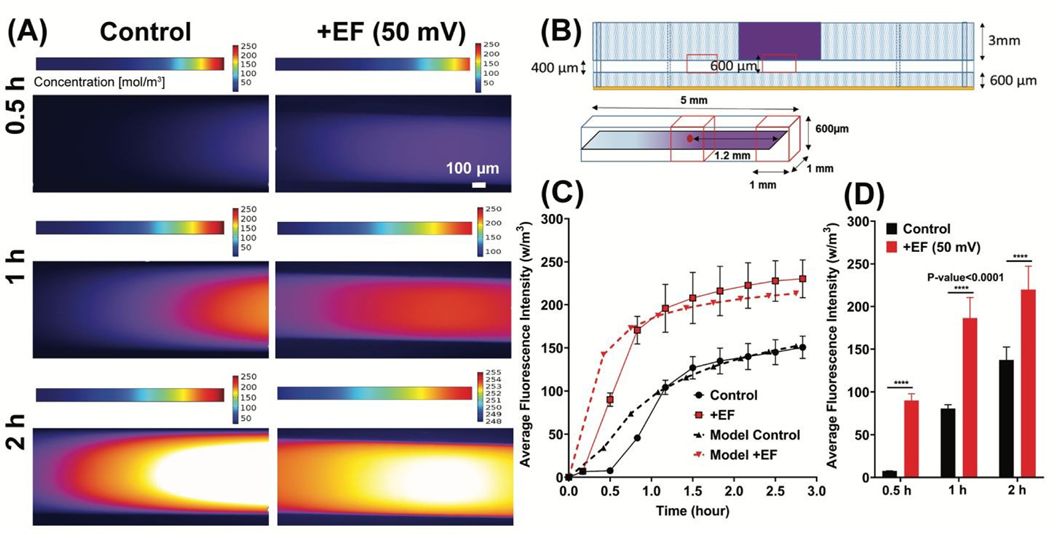
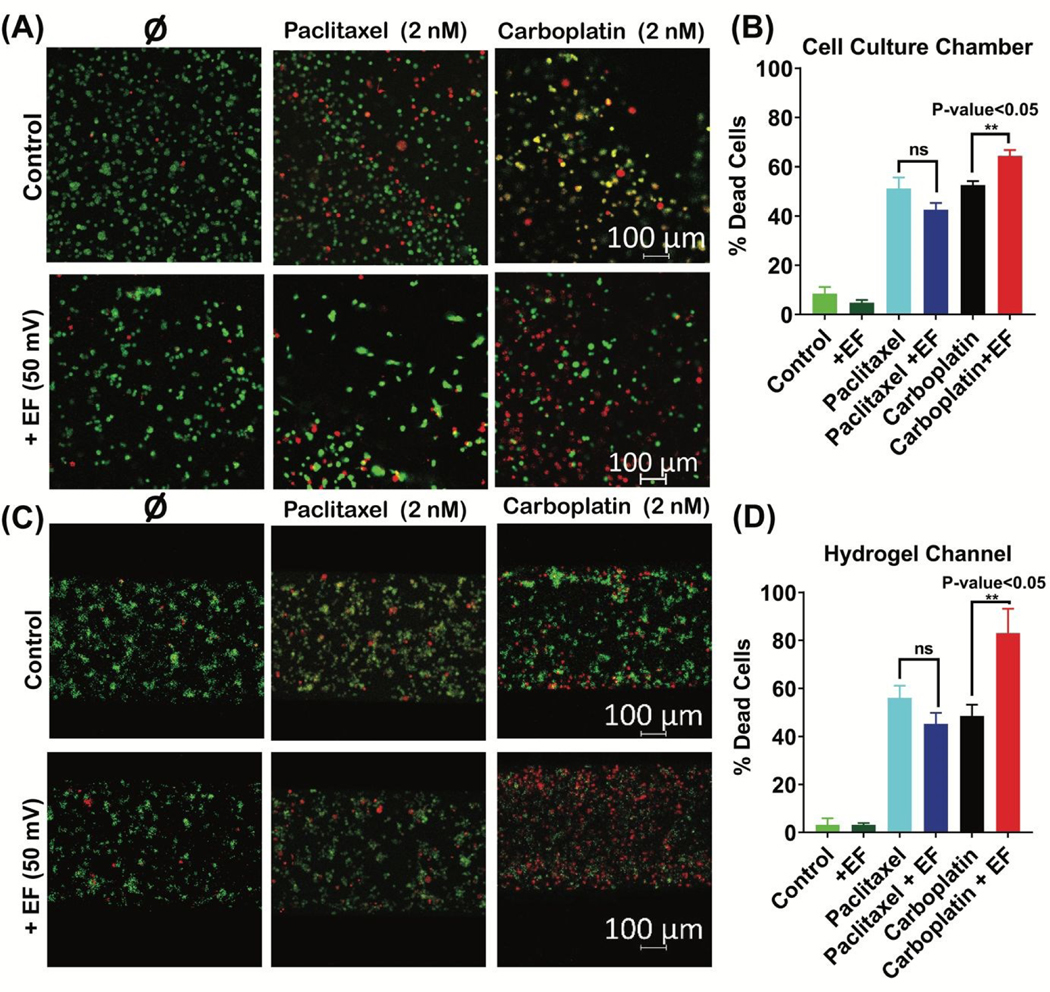
Iontophoresis employs low-intensity electrical voltage and continuous constant current to direct a charged drug into a tissue. Iontophoretic drug delivery has recently been used as a novel method for cancer treatment in vivo. There is an urgent need to precisely model the low-intensity electric fields in cell culture systems to optimize iontophoretic drug delivery to tumors. Here, we present an iontophoresis-on-chip (IOC) platform to precisely quantify carboplatin drug delivery and its corresponding anti-cancer efficacy under various voltages and currents. In this study, we use an in vitro heparin-based hydrogel microfluidic device to model the movement of a charged drug across an extracellular matrix (ECM) and in MDA-MB-231 triple-negative breast cancer (TNBC) cells. Transport of the drug through the hydrogel was modeled based on diffusion and electrophoresis of charged drug molecules in the direction of an oppositely charged electrode. The drug concentration in the tumor extracellular matrix was computed using finite element modeling of transient drug transport in the heparin-based hydrogel. The model predictions were then validated using the IOC platform by comparing the predicted concentration of a fluorescent cationic dye (Alexa Fluor 594®) to the actual concentration in the microfluidic device. Alexa Fluor 594® was used because it has a molecular weight close to paclitaxel, the gold standard drug for treating TNBC, and carboplatin. Our results demonstrated that a 50 mV DC electric field and a 3 mA electrical current significantly increased drug delivery and tumor cell death by 48.12% ± 14.33 and 39.13% ± 12.86, respectively (n = 3, p-value <0.05). The IOC platform and mathematical drug delivery model of iontophoresis are promising tools for precise delivery of chemotherapeutic drugs into solid tumors. Further improvements to the IOC platform can be made by adding a layer of epidermal cells to model the skin.
电渗疗法利用低强度的电压和持续的恒流来将带电药物导向组织。电渗药物输送最近已被用作活体癌症治疗的一种新方法。迫切需要精确模拟细胞培养系统中的低强度电场,以优化肿瘤的电渗药物输送。在这里,我们提出了一种电渗流芯片(IOC)平台,以精确量化各种电压和电流下卡铂药物输送及其相应的抗癌功效。在这项研究中,我们使用基于肝素的体外水凝胶微流控装置来模拟带电药物穿过细胞外基质(ECM)和 MDA-MB-231 三阴性乳腺癌(TNBC)细胞的运动。药物在水凝胶中的传输是根据带电药物分子在相反带电电极方向上的扩散和电泳来建模的。使用基于肝素的水凝胶中瞬态药物传输的有限元建模来计算肿瘤细胞外基质中的药物浓度。然后,通过将预测的荧光阳离子染料(Alexa Fluor 594®)浓度与微流控装置中的实际浓度进行比较,使用 IOC 平台来验证模型预测。Alexa Fluor 594® 被用作模型,因为它的分子量与紫杉醇(治疗 TNBC 的金标准药物)和卡铂相近。我们的结果表明,50 mV 的直流电场和 3 mA 的电流分别显著增加了 48.12%±14.33%和 39.13%±12.86%的药物输送和肿瘤细胞死亡(n=3,p 值<0.05)。IOC 平台和电渗药物输送模型是将化疗药物精确输送到实体瘤的有前途的工具。通过添加一层表皮细胞来模拟皮肤,可以对 IOC 平台进行进一步改进。