Department of Pharmacology, Kitasato University School of Medicine, Sagamihara, Japan.
Department of Molecular Pharmacology, Graduate School of Medical Sciences, Sagamihara, Japan.
J Cell Mol Med. 2020 Oct;24(20):11984-11997. doi: 10.1111/jcmm.15823. Epub 2020 Sep 1.
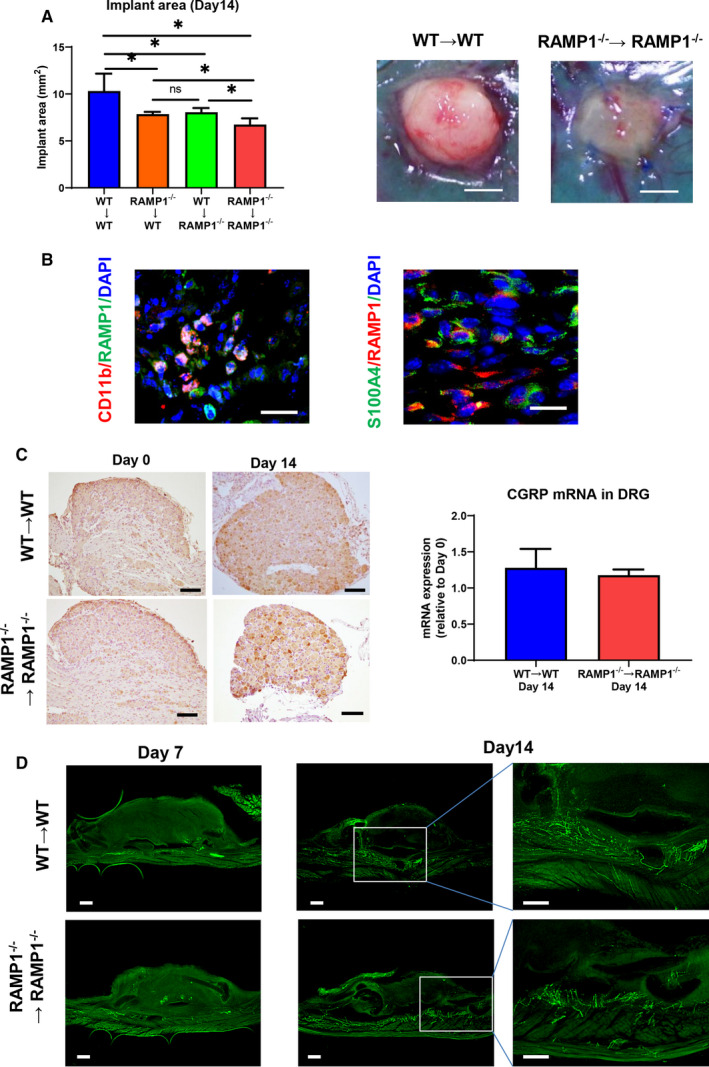
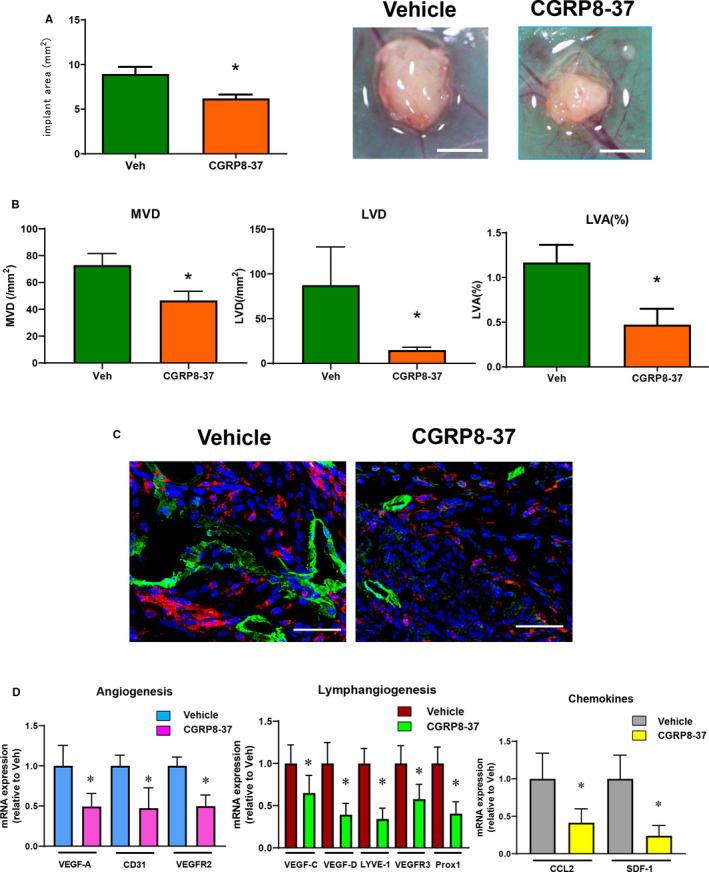
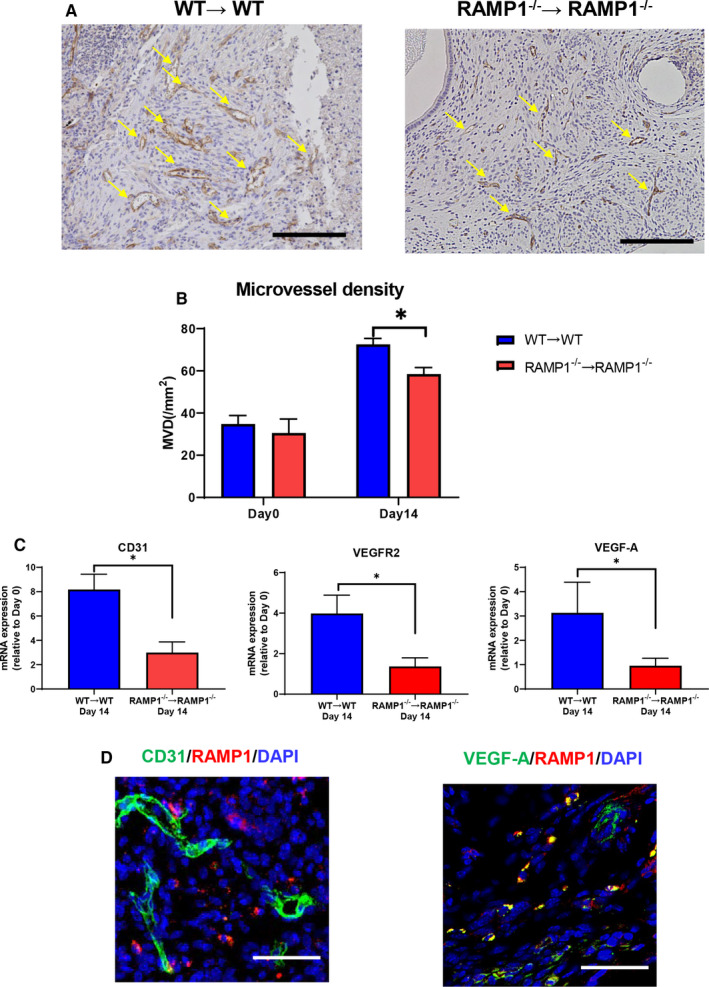
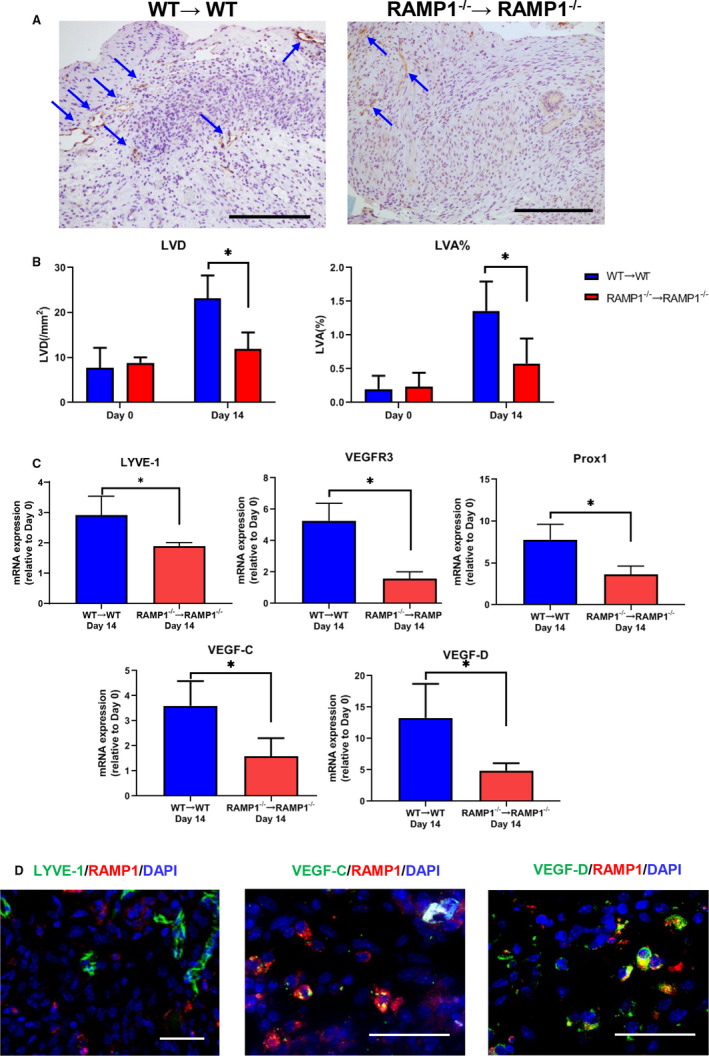
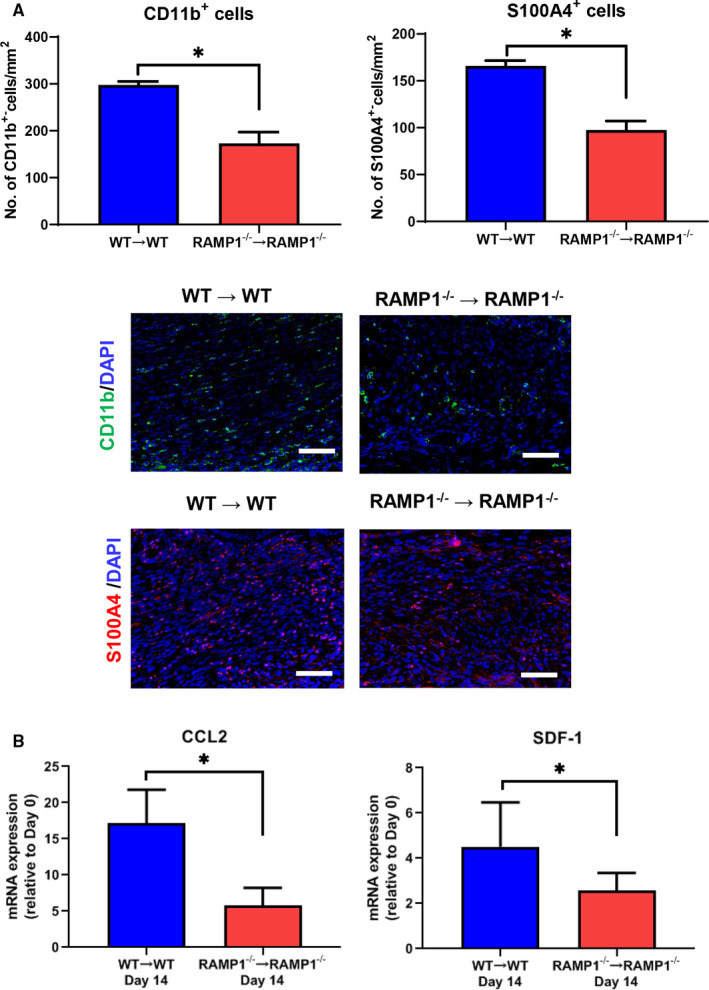
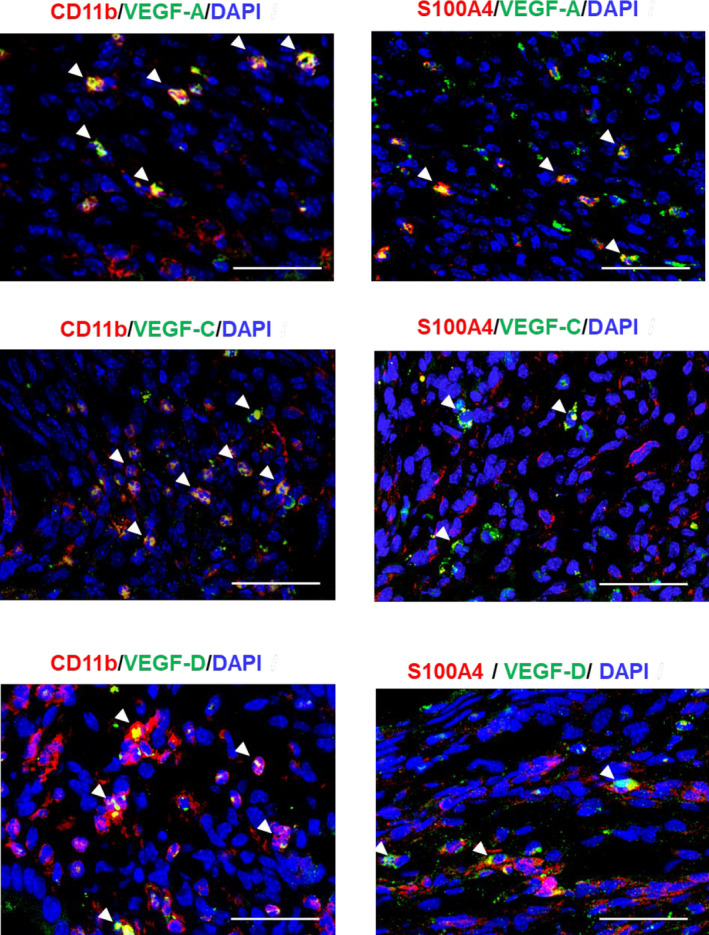
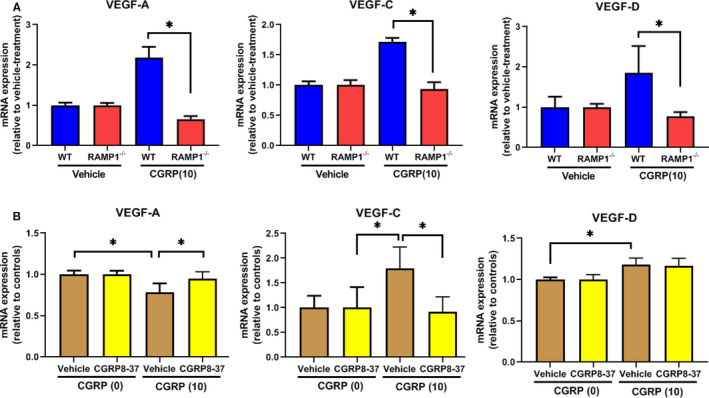
Neuroimmune interactions are involved in the development of endometriosis. Here, we examined the role of a neuropeptide, calcitonin gene-related peptide (CGRP), and its receptor, receptor activity-modifying protein (RAMP) 1, in growth of endometrial tissues and the formation of blood and lymphatic vessels in a mouse ectopic endometrial transplantation model. Endometrial fragments from donor wild-type (WT) mice transplanted into the peritoneal wall of recipient WT mice grew with increased density of blood and lymphatic vessels. When tissues from RAMP1-deficient (RAMP1 ) mice were transplanted into RAMP1 mice, implant growth and angiogenesis/lymphangiogenesis were decreased. CGRP was up-regulated in dorsal root ganglia, and CGRP nerve fibres were distributed into the implants from the peritoneum. RAMP1 was co-expressed with CD11b (macrophages) and S100A4 (fibroblasts), but did not co-localize with blood vessel endothelial cell marker CD31 or lymphatic vessel endothelial hyaluronan receptor (LYVE)-1. Cultured with CGRP, macrophages up-regulated vascular endothelial growth factor (VEGF)-A, VEGF-C and VEGF-D, whereas fibroblasts up-regulated VEGF-C, but not VEGF-A or VEGF-D, in a RAMP1-dependent manner. CGRP receptor antagonist CGRP8-37 inhibited growth of and angiogenesis/lymphangiogenesis within endometrial tissue implants. These results suggest that RAMP1 signalling is crucial for growth and angiogenesis/lymphangiogenesis in endometrial tissue. Blockade of RAMP1 is a potential tool for the treatment of endometriosis.
神经免疫相互作用参与了子宫内膜异位症的发展。在这里,我们研究了一种神经肽,降钙素基因相关肽(CGRP)及其受体,受体活性修饰蛋白(RAMP)1,在小鼠异位子宫内膜移植模型中,对子宫内膜组织的生长以及血液和淋巴管的形成的作用。供体野生型(WT)小鼠的子宫内膜碎片移植到受体 WT 小鼠的腹膜壁中,血管和淋巴管的密度增加,组织生长。当来自 RAMP1 缺陷(RAMP1)小鼠的组织移植到 RAMP1 小鼠中时,植入物的生长和血管生成/淋巴管生成减少。CGRP 在背根神经节中上调,并且 CGRP 神经纤维从腹膜分布到植入物中。RAMP1 与 CD11b(巨噬细胞)和 S100A4(成纤维细胞)共表达,但与血管内皮细胞标记物 CD31 或淋巴管内皮透明质酸受体(LYVE)-1 不共定位。与 CGRP 共培养时,巨噬细胞上调血管内皮生长因子(VEGF)-A、VEGF-C 和 VEGF-D,而成纤维细胞上调 VEGF-C,但不上调 VEGF-A 或 VEGF-D,这是一种 RAMP1 依赖性方式。CGRP 受体拮抗剂 CGRP8-37 抑制子宫内膜组织植入物的生长和血管生成/淋巴管生成。这些结果表明,RAMP1 信号对于子宫内膜组织的生长和血管生成/淋巴管生成至关重要。阻断 RAMP1 可能是治疗子宫内膜异位症的一种潜在工具。