Department of Internal Medicine, Division of Kidney and Dialysis, Hyogo College of Medicine, Nisinomiya, Japan.
Department of Nephrology, Toho University Ohashi Medical Center, Tokyo, Japan.
PLoS One. 2020 Sep 2;15(9):e0236277. doi: 10.1371/journal.pone.0236277. eCollection 2020.
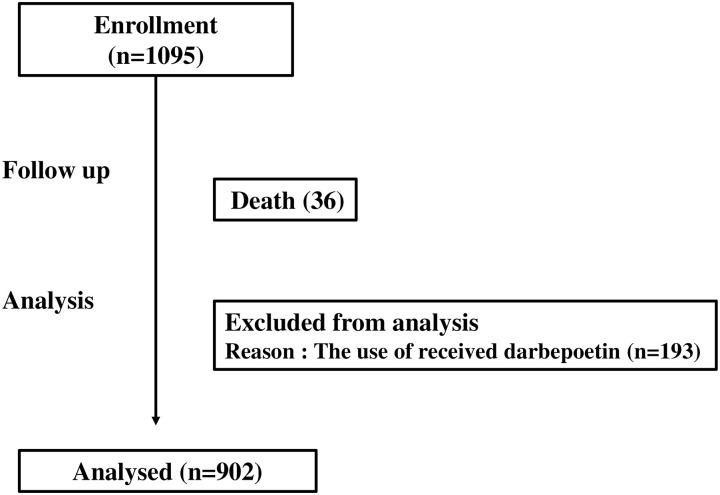
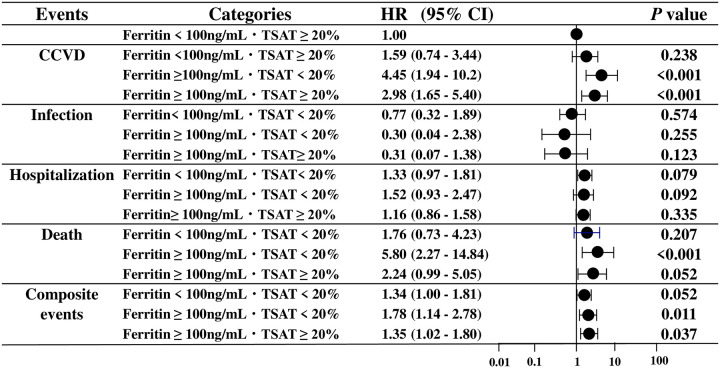
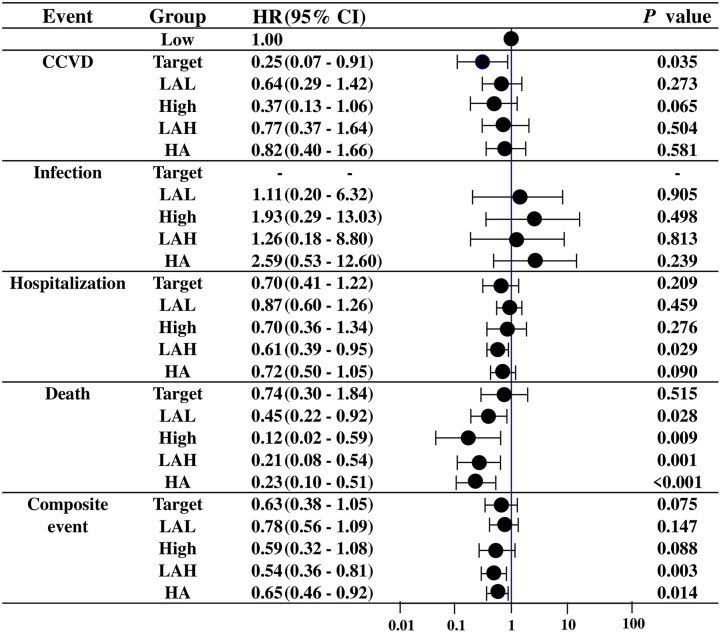
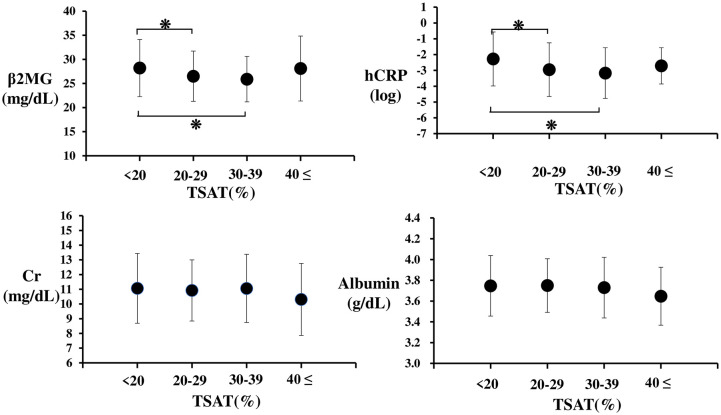
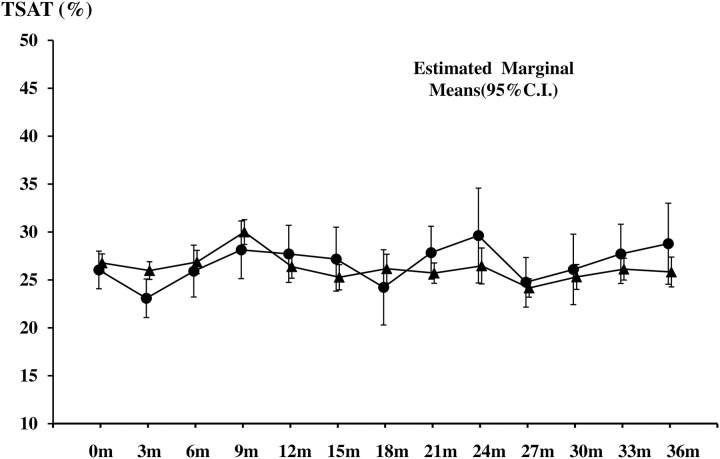
Patients with high serum ferritin and low transferrin saturation (TSAT) levels could be considered as presenting with dysutilization of iron for erythropoiesis. However, the long-term safety of iron administration in these patients has not been well established. An observational multicenter study was performed over 3 years. In 805 patients undergoing maintenance hemodialysis (MHD), we defined dysutilization of iron for erythropoiesis in patients with lower TSAT (<20%) and higher ferritin (≥100 ng/mL) levels. A time-dependent Cox hazard model was used for the evaluation of the association between dysutilization of iron for erythropoiesis and adverse events and survival. Patients with low TSAT levels showed an increased risk of cerebrovascular and cardiovascular disease (CCVD) and death compared to patients with normal or higher TSAT levels. Patients with low ferritin and high TSAT levels had a significantly lower risk of CCVD and death compared with patients with high ferritin and low TSAT levels. Higher TSAT levels were associated with male gender, age, the absence of diabetes, low levels of high-sensitivity CRP, and low β2 microglobulin levels, but not with intravenous iron administration or ferritin levels. Although patients with low TSAT levels had a significantly higher risk of CCVD or death, high TSAT levels were not linked with iron administration. Patients, who were suspected of dysutilization of iron for erythropoiesis, had a higher risk of CCVD and death. The administration of iron should be performed cautiously for improving TSAT levels, as iron administration could sustain TSAT levels for a short term.
患者血清铁蛋白水平高和转铁蛋白饱和度(TSAT)水平低可被认为存在铁利用障碍性红细胞生成。然而,这些患者长期补铁的安全性尚未得到很好的证实。进行了一项为期 3 年的多中心观察性研究。在 805 例行维持性血液透析(MHD)的患者中,我们将 TSAT(<20%)和铁蛋白(≥100ng/ml)水平较低的患者定义为铁利用障碍性红细胞生成。采用时间依赖性 Cox 风险模型评估铁利用障碍性红细胞生成与不良事件和生存之间的关系。与 TSAT 水平正常或更高的患者相比,TSAT 水平较低的患者发生脑血管和心血管疾病(CCVD)和死亡的风险增加。与铁蛋白和 TSAT 水平均较高的患者相比,铁蛋白和 TSAT 水平均较低的患者发生 CCVD 和死亡的风险显著降低。较高的 TSAT 水平与男性、年龄、无糖尿病、低敏 C 反应蛋白水平、β2 微球蛋白水平较低有关,与静脉铁剂或铁蛋白水平无关。尽管 TSAT 水平较低的患者发生 CCVD 或死亡的风险显著增加,但高 TSAT 水平与铁剂无关。疑似铁利用障碍性红细胞生成的患者发生 CCVD 和死亡的风险更高。为了提高 TSAT 水平而给予铁剂应谨慎,因为铁剂可能会在短期内维持 TSAT 水平。