Aquatic Ecology and Water Quality Management Group, Wageningen University, P.O. Box 47, 6700 DD Wageningen, The Netherlands.
Environ Sci Technol. 2020 Oct 6;54(19):12307-12315. doi: 10.1021/acs.est.0c02982. Epub 2020 Sep 17.
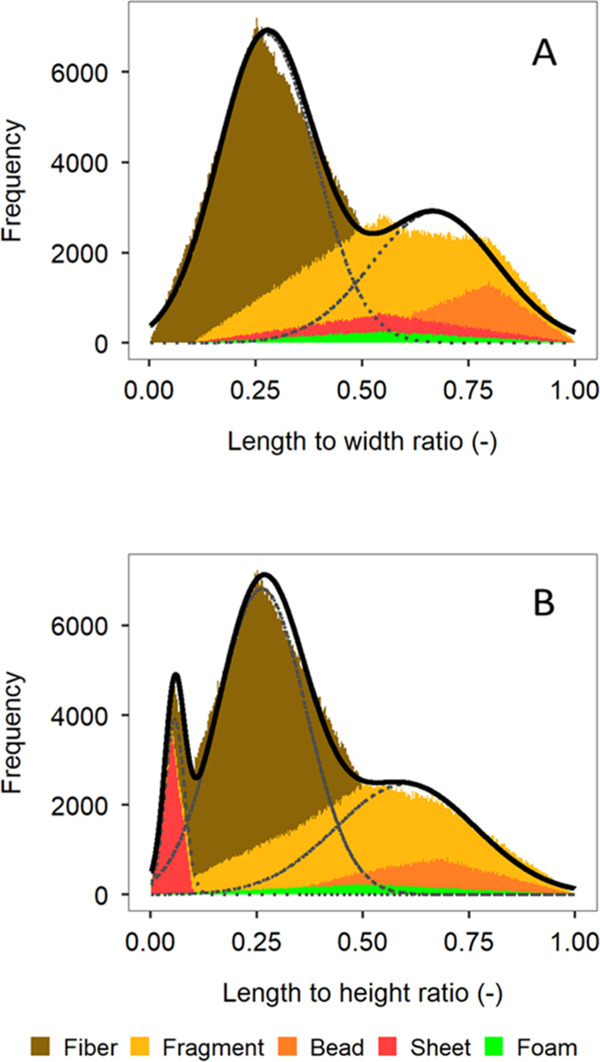
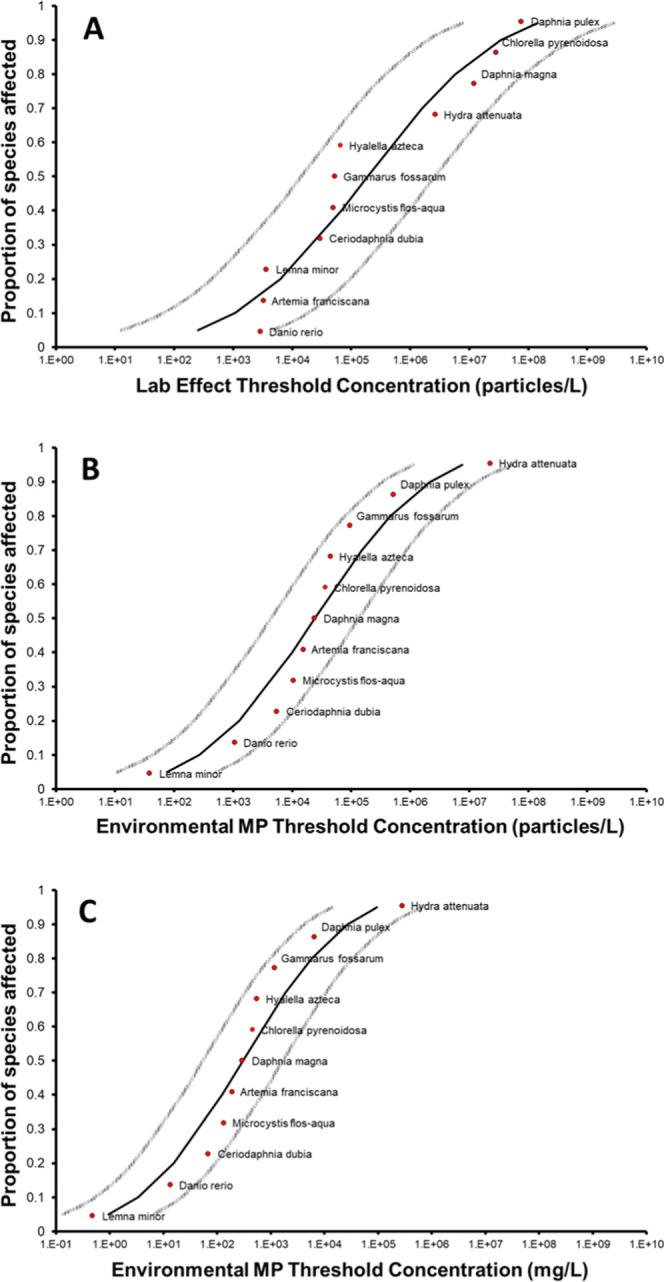
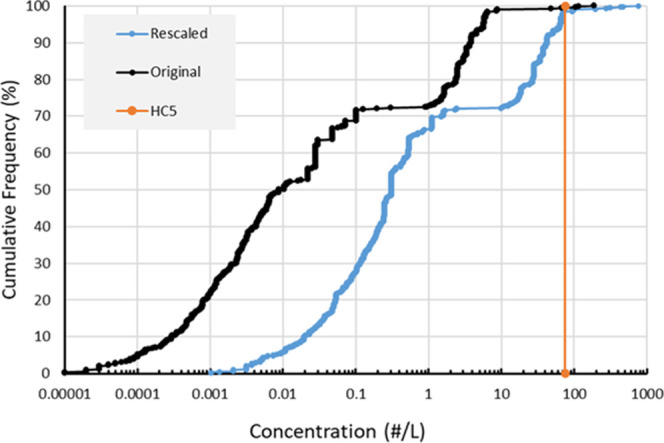
The lack of standard approaches in microplastic research limits progress in the abatement of plastic pollution. Here, we propose and test rescaling methods that are able to improve the alignment of methods used in microplastic research. We describe a method to correct for the differences in size ranges as used by studies reporting microplastic concentrations and demonstrate how this reduces the variation in aqueous-phase concentrations caused by method differences. We provide a method to interchange between number, volume, and mass concentrations using probability density functions that represent environmental microplastic. Finally, we use this method to correct for the incompatibility of data as used in current species sensitivity distributions (SSDs), caused by differences in the microplastic types used in effect studies and those in nature. We derived threshold effect concentrations from such a corrected SSD for freshwater species. Comparison of the rescaled exposure concentrations and threshold effect concentrations reveals that the latter would be exceeded for 1.5% of the known surface water exposure concentrations worldwide. Altogether, this toolset allows us to correct for the diversity of microplastic, to address it in a common language, and to assess its risks as one environmental material.
缺乏微塑料研究的标准方法限制了减少塑料污染的进展。在这里,我们提出并测试了重新定标方法,这些方法能够提高微塑料研究中使用的方法的一致性。我们描述了一种方法来纠正报告微塑料浓度的研究中使用的大小范围的差异,并展示了这如何减少因方法差异引起的水相浓度的变化。我们提供了一种使用概率密度函数在数量、体积和质量浓度之间进行转换的方法,该函数代表环境中的微塑料。最后,我们使用这种方法来纠正当前物种敏感性分布(SSD)中数据的不兼容性,这是由于效应研究中使用的微塑料类型与自然界中使用的微塑料类型不同造成的。我们从校正后的 SSD 中得出了淡水物种的阈值效应浓度。比较重新定标的暴露浓度和阈值效应浓度表明,全世界已知的地表水暴露浓度中有 1.5%会超过后者。总的来说,这个工具集允许我们纠正微塑料的多样性,用一种通用的语言来处理它,并将其风险评估为一种环境物质。