Clinical Oncology Department, Nanjing Jinling Hospital, Nanjing, China.
National Cancer Center/National Clinical Research Center, Cancer Hospital, Chinese Academy of Medical Science and Peking Union Medical College, Beijing, China.
Cancer Sci. 2020 Nov;111(11):4218-4231. doi: 10.1111/cas.14641. Epub 2020 Sep 24.
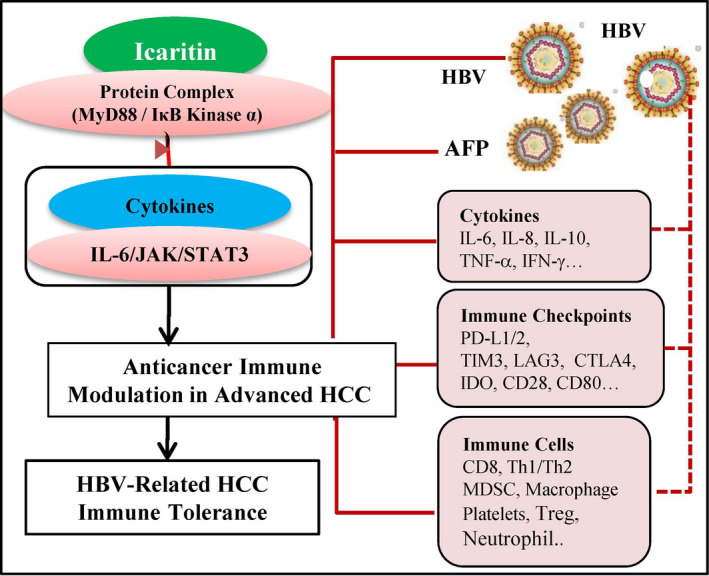
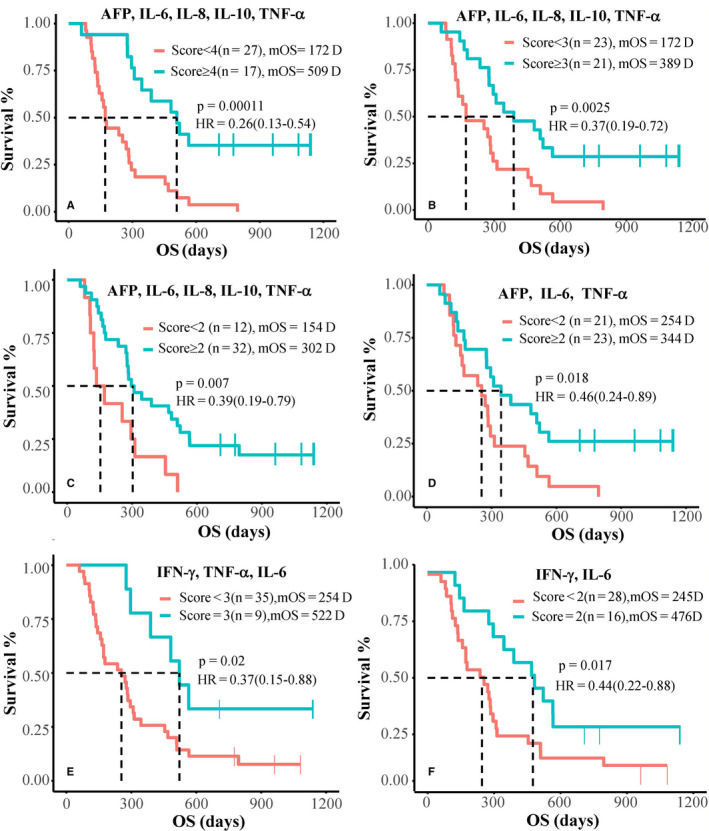
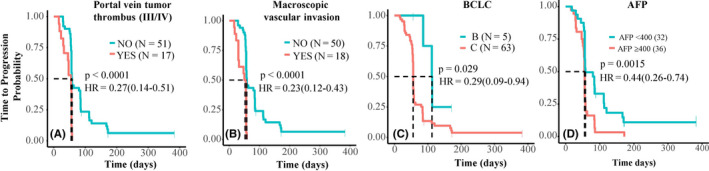
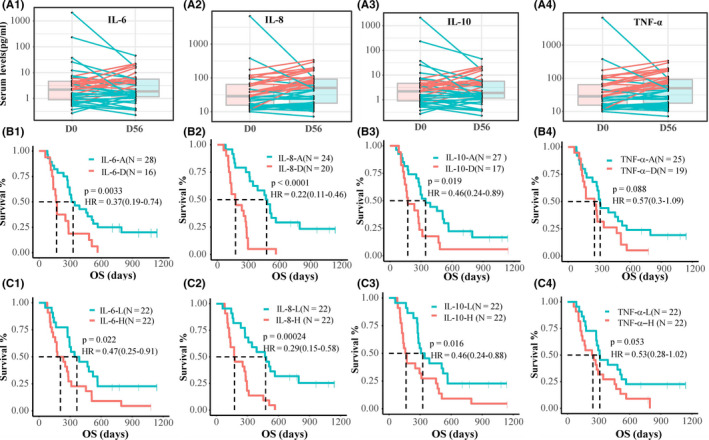
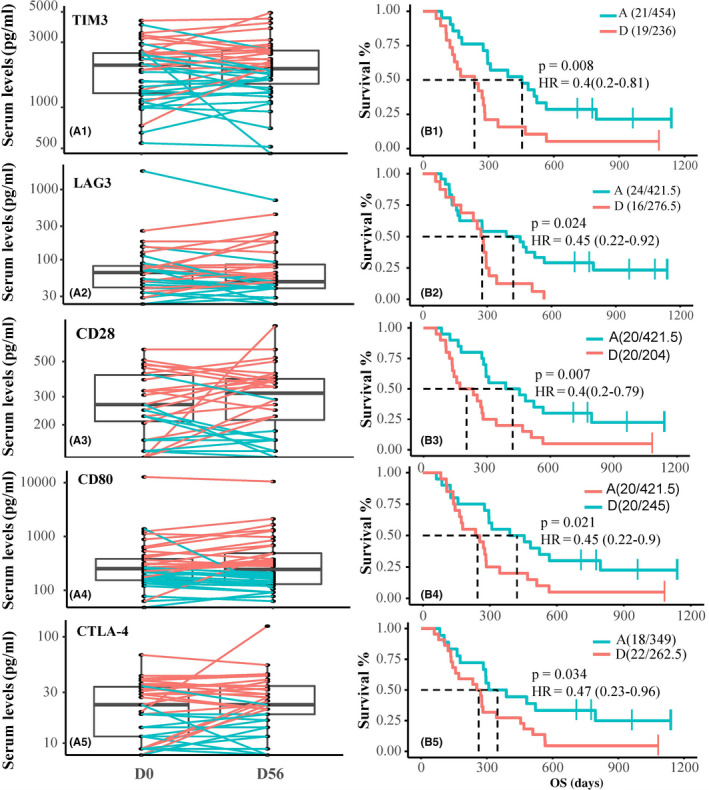
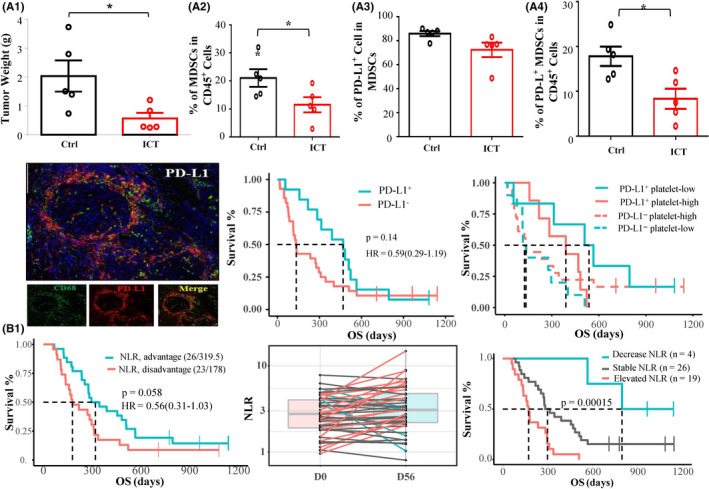
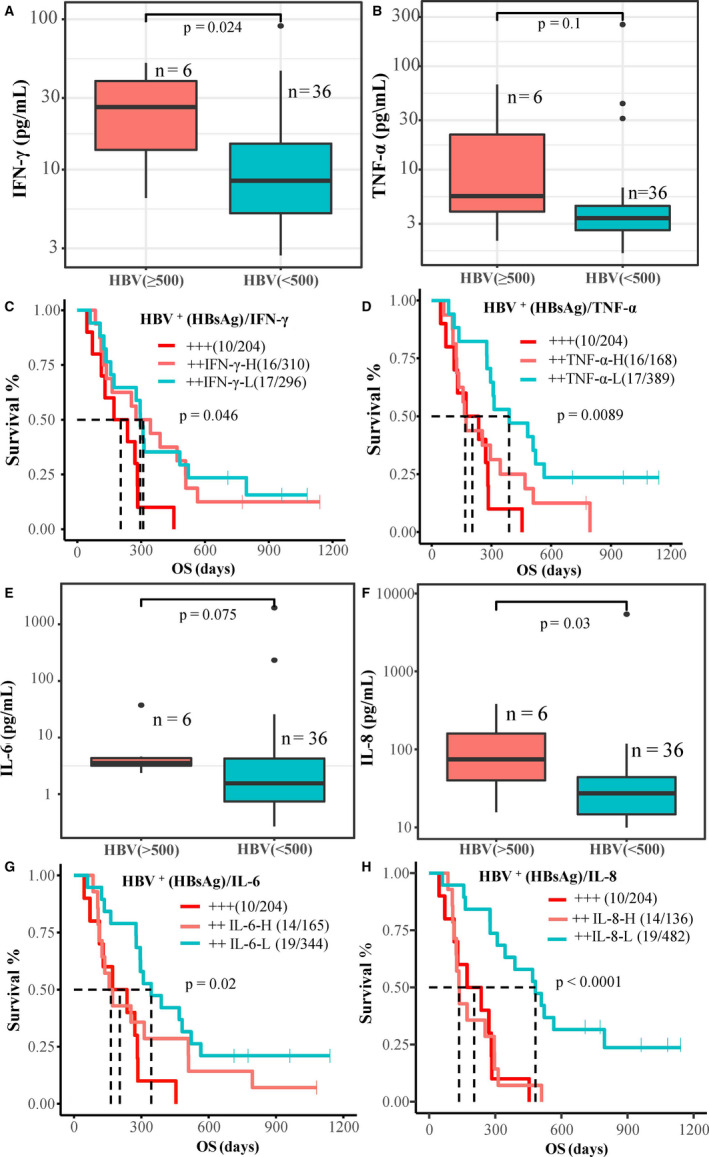
Advanced hepatitis B virus (HBV)-related hepatocellular carcinoma HCC with poor prognosis is often associated with chronic inflammation, immune tolerance, and marked heterogeneity. The interleukin-6 (IL-6)/JAK/STAT3 signal pathways play multiple regulatory roles in modulating inflammation and immunity in cancers. Polarization of myeloid-derived suppressor cells (MDSCs) is involved in HBV-related immunosuppression and CD8 T-cell activation through ERK/IL-6/STAT3. Icaritin is a small molecule that has displayed anticancer activities through IL-6/JAK/STAT3 pathways in tumor cells and immune cells including CD8 T cells, MDSCs, neutrophils, and macrophages. This study aimed to confirm icaritin immunomodulation in advanced HBV-related HCC patients with poor prognosis. Immunomodulation of MDSCs was evaluated in BALB/c mice in vivo. Immunomodulation of serum cytokines and a panel of immune checkpoint proteins were assessed in HBV-related, histologically confirmed HCC patients. Poor prognostic characteristics included HBV infection, bulky tumors, Child-Pugh B classification, and metastasis. Clinical end-points included safety, tumor response, and overall survival (OS). Icaritin treatment-induced dynamics of serum cytokines IL-6, IL-8, IL-10, and tumor necrosis factor-α, and soluble immune checkpoint proteins TIM3, LAG3, CD28, CD80, and CTLA-4 were assessed. No grade III/IV treatment-related adverse events were observed. Time-to-progression was significantly associated with the prognostic factors. Improved survival was observed in the advanced HCC patients with dynamic changes of cytokines, immune checkpoint proteins, and immune cells. Median OS (329-565 days) was significantly correlated with baseline hepatitis B surface antigen positivity, cytokines, tumor neoantigens, and Stenotrophomonas maltophilia infection. Composite biomarker scores of high-level α-fetoprotein and T helper type I (Th1)/Th2 cytokines associated with favorable survival warrant further clinical development of icaritin as an alternative immune-modulatory regimen to treat advanced HCC patients with poor prognosis.
乙型肝炎病毒(HBV)相关的晚期肝细胞癌(HCC)预后不良,常与慢性炎症、免疫耐受和显著异质性有关。白细胞介素-6(IL-6)/JAK/STAT3 信号通路在调节癌症中的炎症和免疫方面发挥着多种调节作用。髓源性抑制细胞(MDSC)的极化通过 ERK/IL-6/STAT3 参与 HBV 相关的免疫抑制和 CD8 T 细胞激活。淫羊藿素是一种小分子,它通过肿瘤细胞和免疫细胞(包括 CD8 T 细胞、MDSC、中性粒细胞和巨噬细胞)中的 IL-6/JAK/STAT3 途径显示出抗癌活性。本研究旨在证实淫羊藿素对预后不良的晚期 HBV 相关 HCC 患者的免疫调节作用。在体内评估 BALB/c 小鼠中 MDSC 的免疫调节作用。评估 HBV 相关组织学证实的 HCC 患者血清细胞因子和一组免疫检查点蛋白的免疫调节作用。预后不良的特征包括 HBV 感染、大肿瘤、Child-Pugh B 分类和转移。临床终点包括安全性、肿瘤反应和总生存期(OS)。评估淫羊藿素治疗诱导的血清细胞因子 IL-6、IL-8、IL-10 和肿瘤坏死因子-α以及可溶性免疫检查点蛋白 TIM3、LAG3、CD28、CD80 和 CTLA-4 的动态变化。未观察到 3/4 级与治疗相关的不良事件。无进展时间与预后因素显著相关。在具有细胞因子、免疫检查点蛋白和免疫细胞动态变化的晚期 HCC 患者中观察到生存改善。中位 OS(329-565 天)与基线乙型肝炎表面抗原阳性、细胞因子、肿瘤新生抗原和嗜麦芽窄食单胞菌感染显著相关。高水平 α-胎蛋白和 Th1/Th2 细胞因子的复合生物标志物评分与有利的生存相关,这使得淫羊藿素作为治疗预后不良的晚期 HCC 患者的替代免疫调节方案进一步临床开发成为可能。