National Eye Institute, National Institutes of Health, Bethesda, Maryland, USA.
Am J Med Genet C Semin Med Genet. 2020 Sep;184(3):828-837. doi: 10.1002/ajmg.c.31843. Epub 2020 Sep 7.
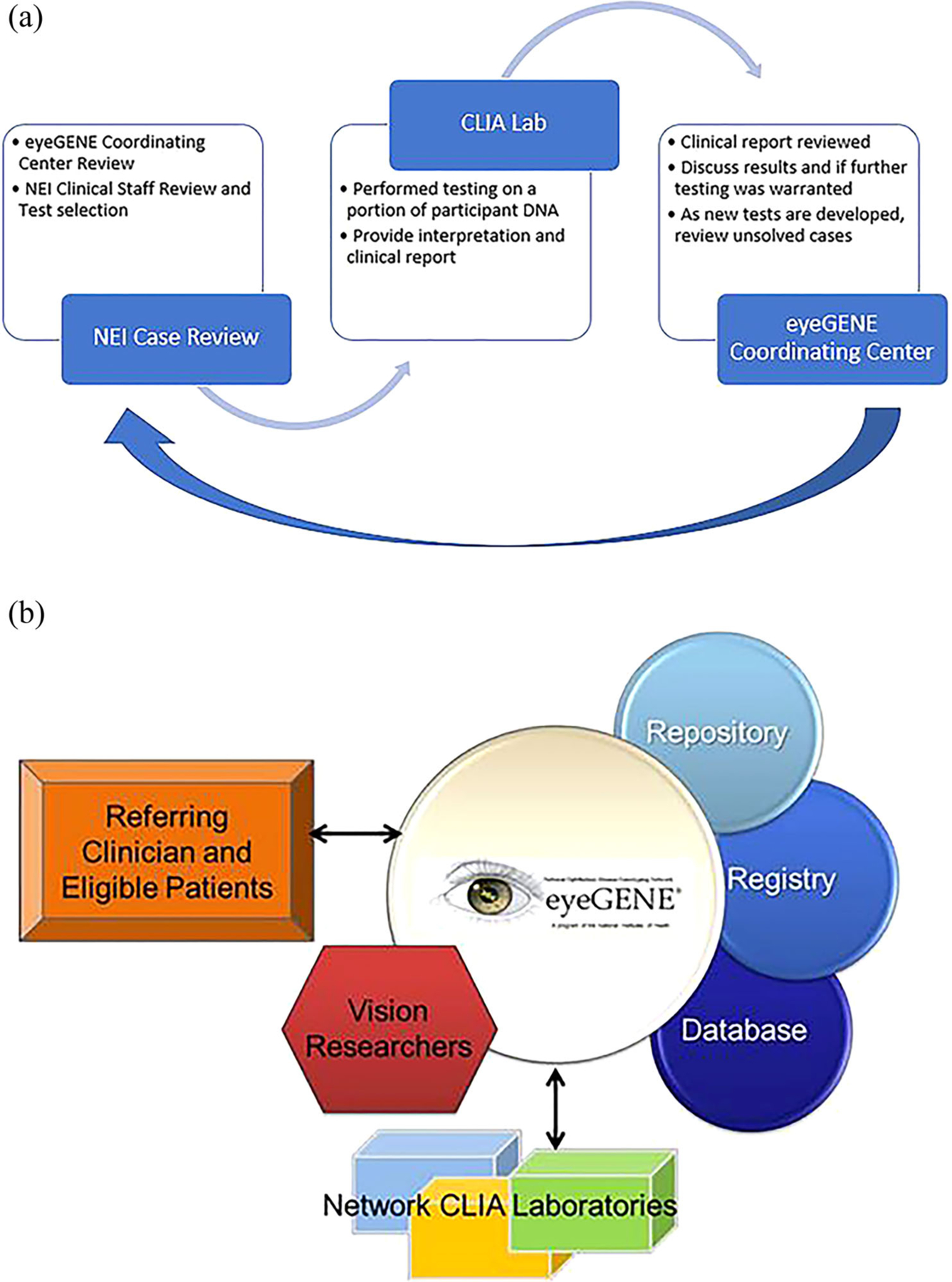
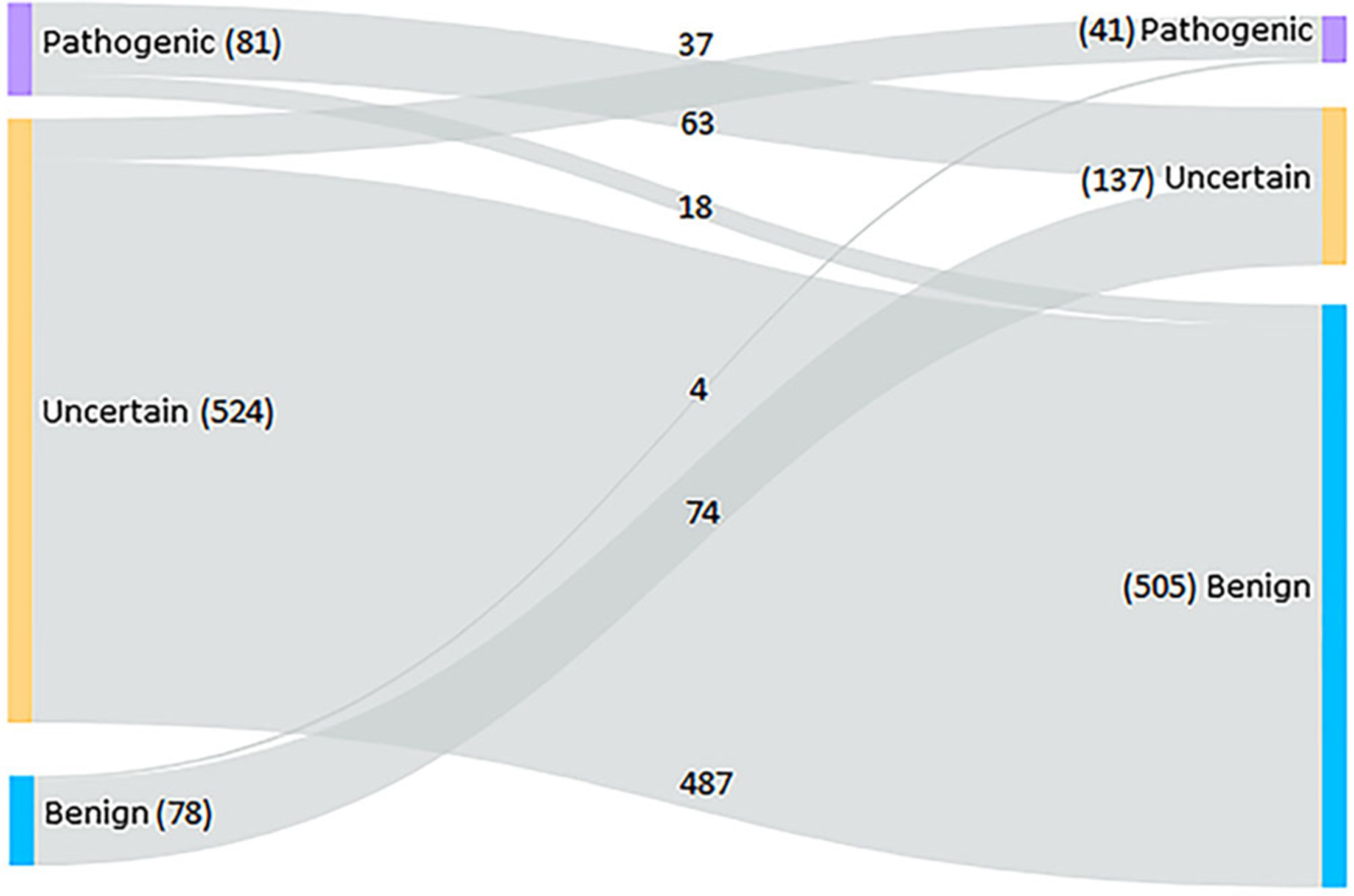
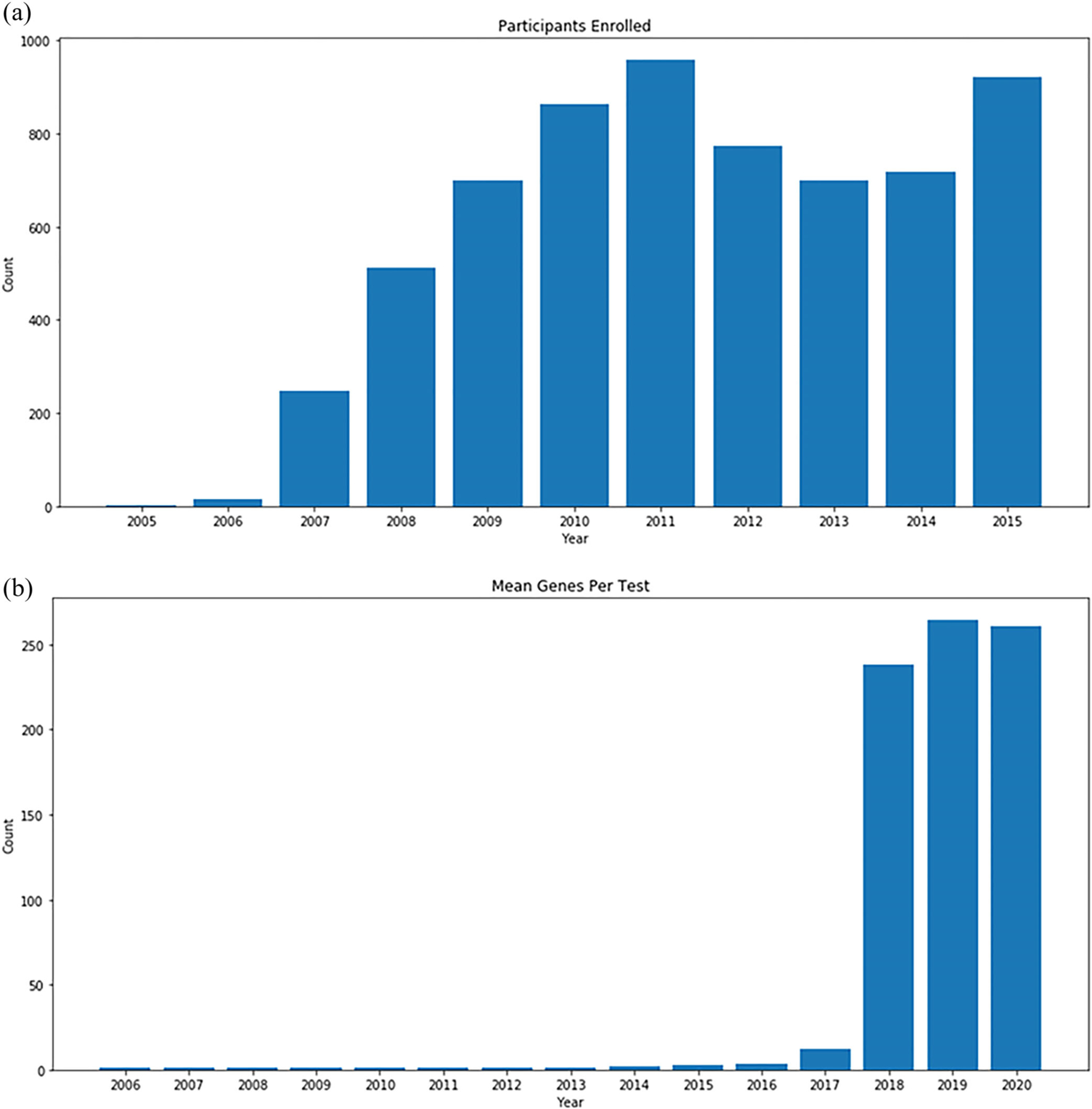
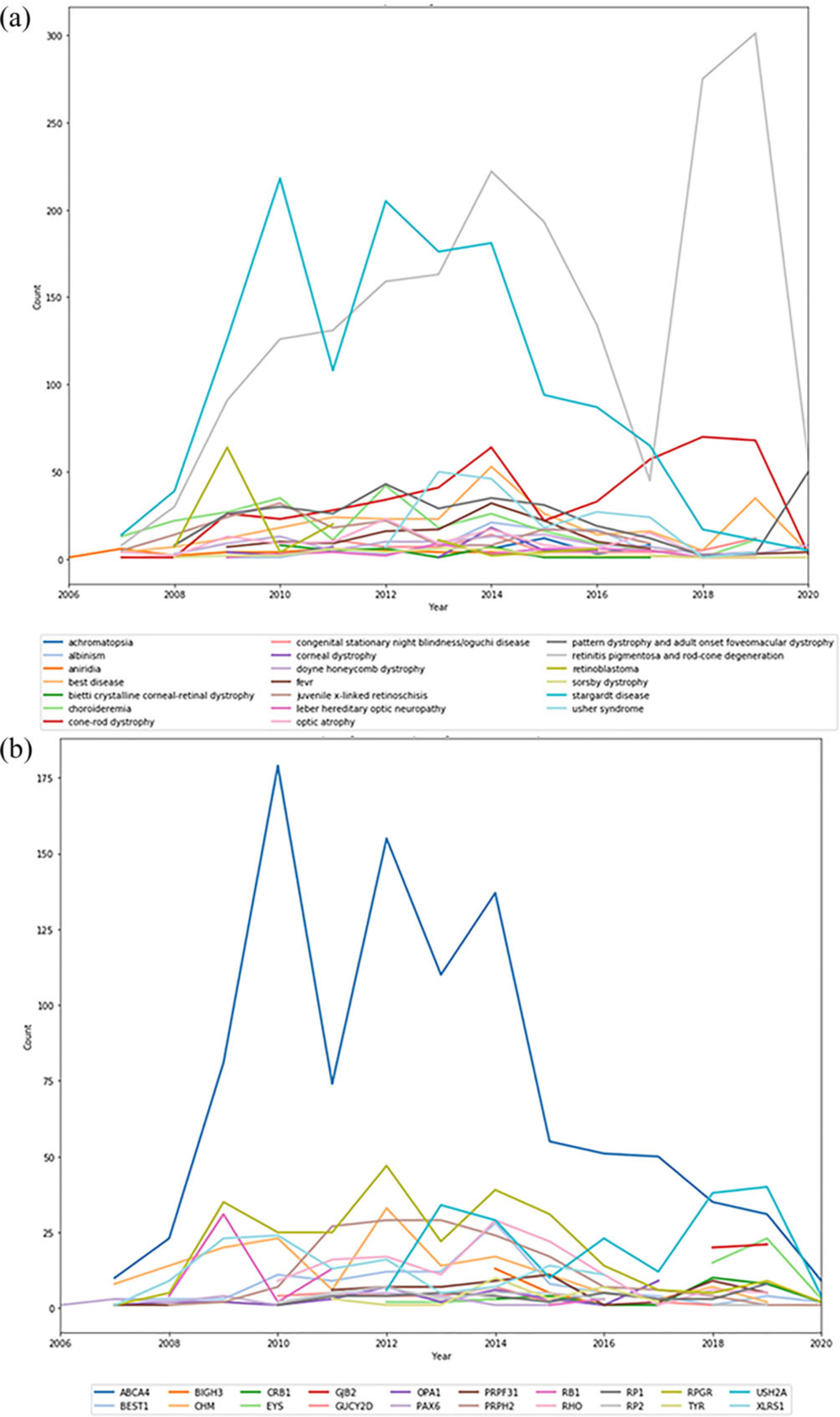
Genetic testing in a multisite clinical trial network for inherited eye conditions is described in this retrospective review of data collected through eyeGENE®, the National Ophthalmic Disease Genotyping and Phenotyping Network. Participants in eyeGENE were enrolled through a network of clinical providers throughout the United States and Canada. Blood samples and clinical data were collected to establish a phenotype:genotype database, biorepository, and patient registry. Data and samples are available for research use, and participants are provided results of clinical genetic testing. eyeGENE utilized a unique, distributed clinical trial design to enroll 6,403 participants from 5,385 families diagnosed with over 30 different inherited eye conditions. The most common diagnoses given for participants were retinitis pigmentosa (RP), Stargardt disease, and choroideremia. Pathogenic variants were most frequently reported in ABCA4 (37%), USH2A (7%), RPGR (6%), CHM (5%), and PRPH2 (3%). Among the 5,552 participants with genetic testing, at least one pathogenic or likely pathogenic variant was observed in 3,448 participants (62.1%), and variants of uncertain significance in 1,712 participants (30.8%). Ten genes represent 68% of all pathogenic and likely pathogenic variants in eyeGENE. Cross-referencing current gene therapy clinical trials, over a thousand participants may be eligible, based on pathogenic variants in genes targeted by those therapies. This article is the first summary of genetic testing from thousands of participants tested through eyeGENE, including reports from 5,552 individuals. eyeGENE provides a launching point for inherited eye research, connects researchers with potential future study participants, and provides a valuable resource to the vision community.
本文回顾性分析了通过眼基因(eyeGENE)收集的数据,介绍了在遗传性眼病多中心临床试验网络中进行的基因检测。eyeGENE 的参与者是通过遍布美国和加拿大的临床服务提供者网络招募的。收集血液样本和临床数据以建立表型-基因型数据库、生物样本库和患者登记处。数据和样本可用于研究,参与者可获得临床基因检测结果。eyeGENE 采用独特的分布式临床试验设计,从 5385 个家族中招募了 6403 名被诊断患有 30 多种不同遗传性眼病的患者。参与者最常见的诊断是色素性视网膜炎(RP)、斯塔加德特病和脉络膜视网膜变性。最常报告的致病性变异发生在 ABCA4(37%)、USH2A(7%)、RPGR(6%)、CHM(5%)和 PRPH2(3%)。在接受基因检测的 5552 名参与者中,至少有 1 个致病性或可能致病性变异在 3448 名参与者(62.1%)中观察到,1712 名参与者(30.8%)中观察到意义不确定的变异。在 eyeGENE 中,10 个基因代表了所有致病性和可能致病性变异的 68%。参考当前的基因治疗临床试验,基于这些疗法靶向基因的致病性变异,可能有超过一千名参与者符合条件。本文首次总结了通过 eyeGENE 检测的数千名参与者的基因检测结果,其中包括 5552 名个体的报告。eyeGENE 为遗传性眼病研究提供了一个起点,将研究人员与潜在的未来研究参与者联系起来,并为视觉社区提供了宝贵的资源。