Centre for Ticks and Tick-Borne Diseases, Private Bag A130, Lilongwe, Malawi.
Department of Biomedical Sciences, School of Veterinary Medicine, University of Zambia, P.O. Box 32379, Lusaka, 10101, Zambia.
Parasit Vectors. 2020 Sep 7;13(1):452. doi: 10.1186/s13071-020-04322-9.
East Coast fever (ECF) caused by Theileria parva is endemic in Rwanda. In this study, the antigenic and genetic diversity of T. parva coupled with immunization and field challenge were undertaken to provide evidence for the introduction of ECF immunization in Rwanda.
Blood collected from cattle in the field was screened for T. parva using ELISA and PCR targeting the p104 gene. Tp1 and Tp2 gene sequences were generated from field samples and from Gikongoro and Nyakizu isolates. Furthermore, multilocus genotype data was generated using 5 satellite markers and an immunization challenge trial under field conditions using Muguga cocktail vaccine undertaken.
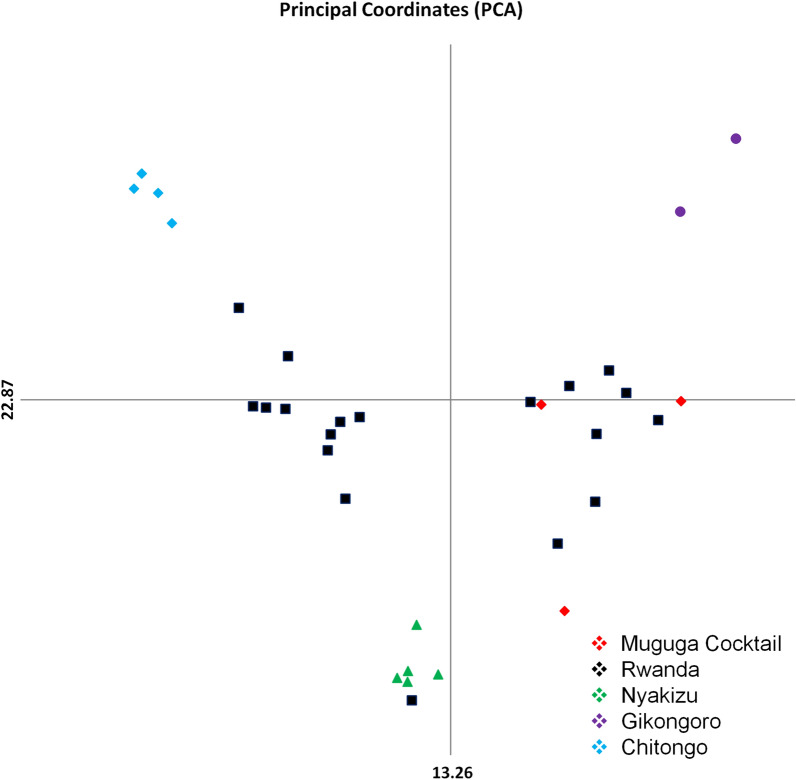
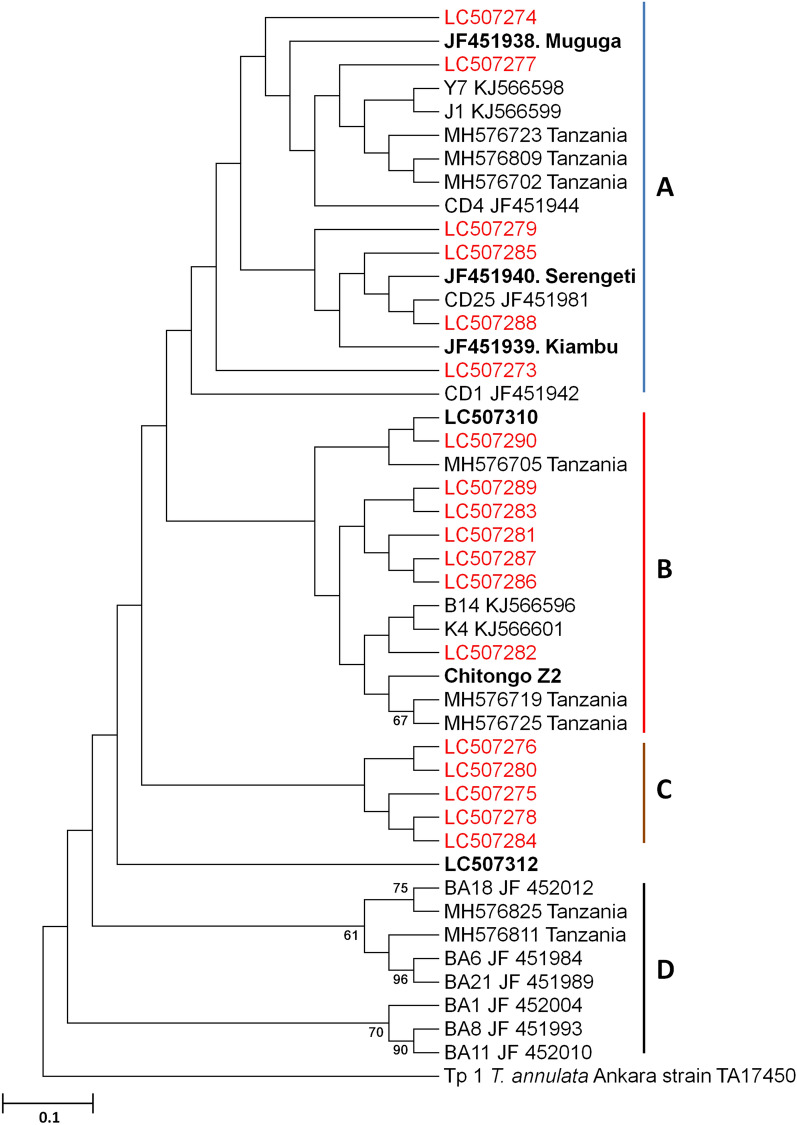
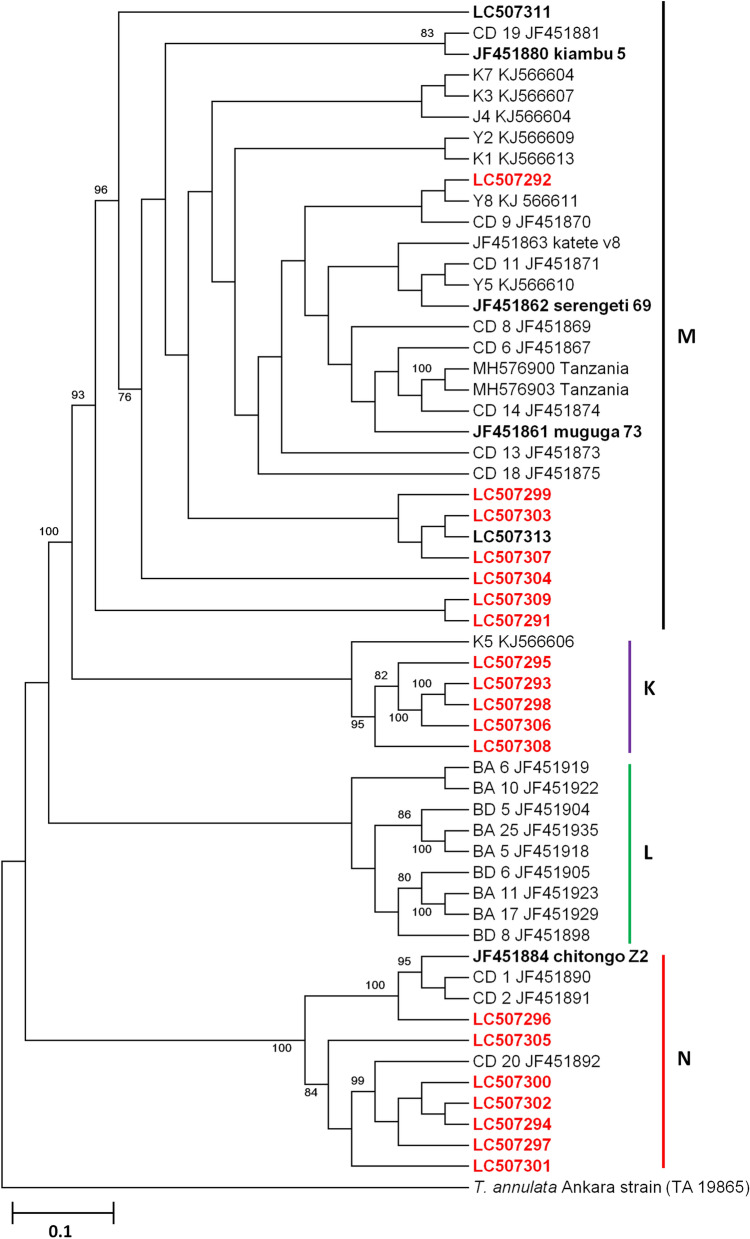
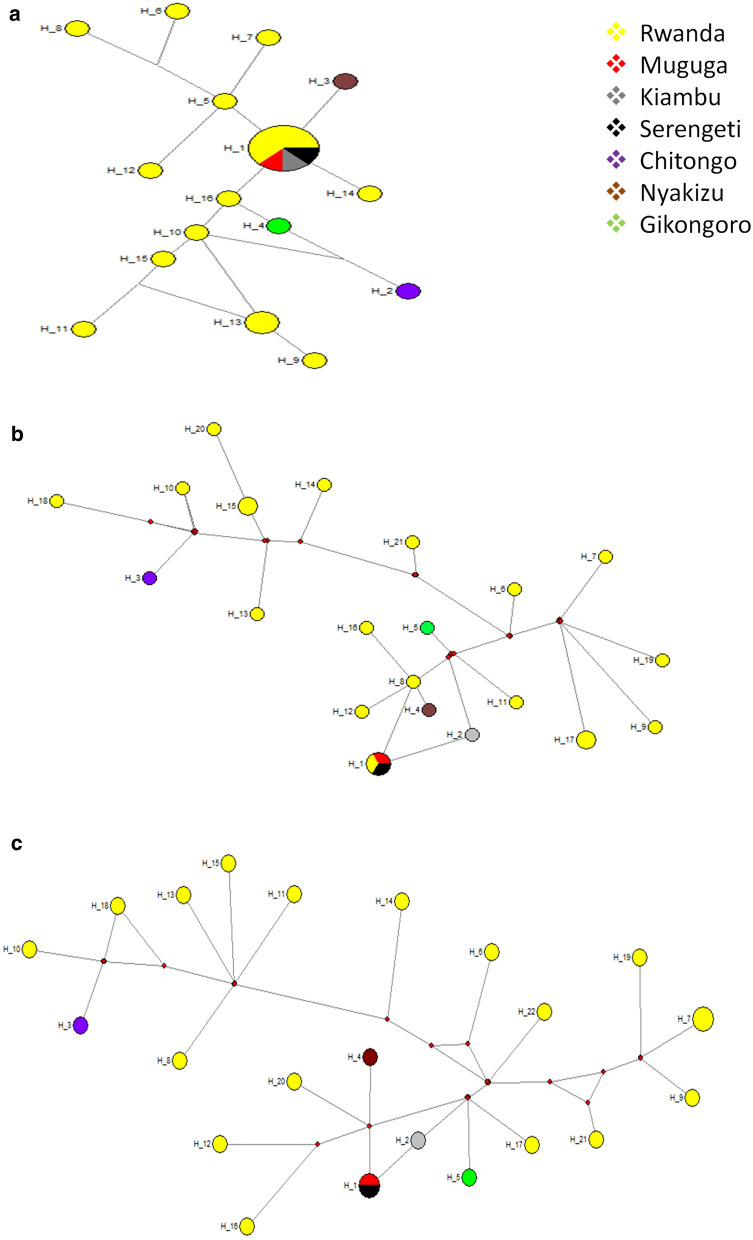
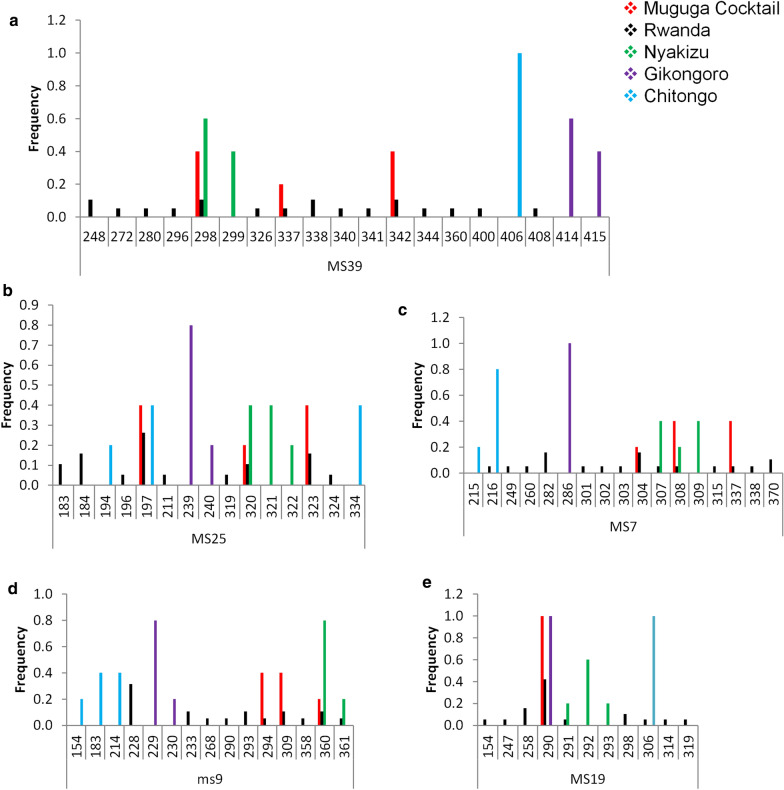
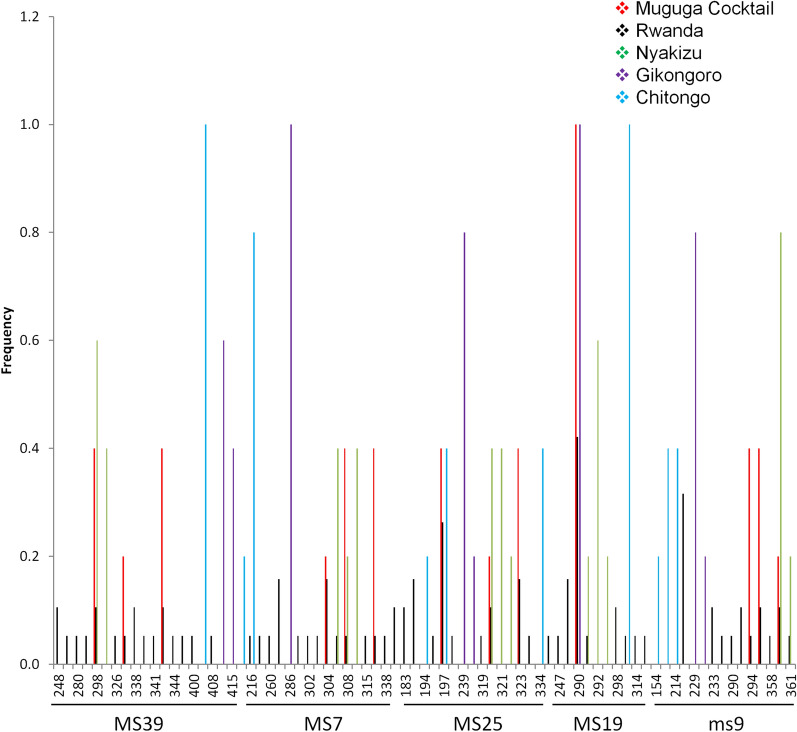
Out of 120 samples, 44 and 20 were positive on ELISA and PCR, respectively. Antigenic diversity of the Tp1 and Tp2 gene sequences revealed an abundance of Muguga, Kiambu and Serengeti epitopes in the samples. A further three clusters were observed on both Tp1 and Tp2 phylogenetic trees; two clusters comprising of field samples and vaccine isolates and the third cluster comprising exclusively of Rwanda samples. Both antigens exhibited purifying selection with no positive selection sites. In addition, satellite marker analysis revealed that field samples possessed both shared alleles with Muguga cocktail on all loci and also a higher proportion of unique alleles. The Muguga cocktail (Muguga, Kiambu and Serengeti) genotype compared to other vaccine isolates, was the most represented in the field samples. Further low genetic sub-structuring (F = 0.037) coupled with linkage disequilibrium between Muguga cocktail and the field samples was observed. Using the above data to guide a field immunization challenge trial comprising 41 immunized and 40 control animals resulted in 85% seroconversion in the immunized animals and an efficacy of vaccination of 81.7%, implying high protection against ECF.
Antigenic and genetic diversity analysis of T. parva facilitated the use of Muguga cocktail vaccine in field conditions. A protection level of 81.7% was achieved, demonstrating the importance of combining molecular tools with field trials to establish the suitability of implementation of immunization campaigns. Based on the information in this study, Muguga cocktail immunization in Rwanda has a potential to produce desirable results.
东非裂谷热(ECF)由小泰勒虫引起,在卢旺达流行。本研究通过小泰勒虫的抗原和遗传多样性分析,以及免疫接种和现场挑战,为卢旺达引入 ECF 免疫接种提供了证据。
采集现场牛的血液,使用 ELISA 和针对 p104 基因的 PCR 检测小泰勒虫。从野外样本和吉孔戈罗和尼亚基祖分离株中生成 Tp1 和 Tp2 基因序列。此外,还使用 5 个卫星标记生成了多位点基因型数据,并在野外条件下进行了 Muguga 鸡尾酒疫苗的免疫接种挑战试验。
在 120 个样本中,ELISA 和 PCR 的阳性率分别为 44%和 20%。Tp1 和 Tp2 基因序列的抗原多样性显示,样品中存在大量的 Muguga、Kiambu 和 Serengeti 表位。在 Tp1 和 Tp2 系统发育树上还观察到另外三个聚类;两个聚类由野外样本和疫苗分离株组成,第三个聚类仅由卢旺达样本组成。两个抗原都表现出纯化选择,没有阳性选择位点。此外,卫星标记分析显示,野外样本在所有基因座上都与 Muguga 鸡尾酒共享等位基因,并且具有更高比例的独特等位基因。与其他疫苗分离株相比,Muguga 鸡尾酒(Muguga、Kiambu 和 Serengeti)基因型在现场样本中最为常见。进一步观察到低遗传亚结构(F = 0.037)和 Muguga 鸡尾酒与现场样本之间的连锁不平衡。利用上述数据指导了一项包含 41 只免疫接种动物和 40 只对照动物的现场免疫接种挑战试验,结果显示免疫接种动物的血清转化率为 85%,疫苗接种的效力为 81.7%,这意味着对 ECF 有高度保护作用。
小泰勒虫的抗原和遗传多样性分析促进了 Muguga 鸡尾酒疫苗在野外条件下的应用。实现了 81.7%的保护水平,表明结合分子工具和现场试验对于确定免疫接种运动的实施适用性非常重要。基于本研究中的信息,在卢旺达实施 Muguga 鸡尾酒免疫接种具有产生理想效果的潜力。