GROW Research Laboratory, Narayana Nethralaya Foundation, Bangalore, India.
Gene Therapy Laboratory, Department of Integrative Biology, School of Bio Sciences and Technology, Vellore Institute of Technology, Vellore, Tamil Nadu, India.
Clin Transl Sci. 2021 Jan;14(1):288-298. doi: 10.1111/cts.12858. Epub 2020 Sep 3.
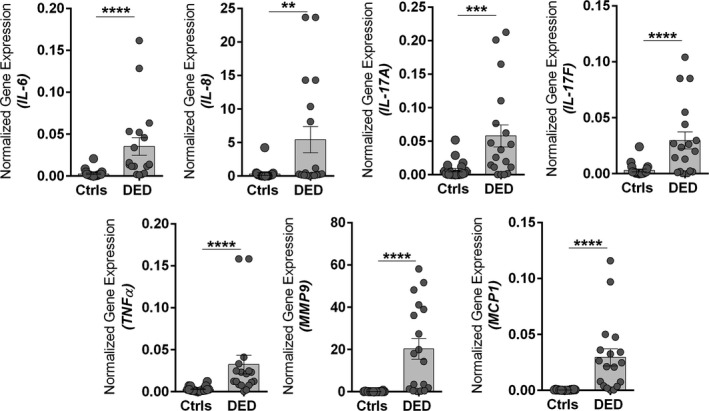
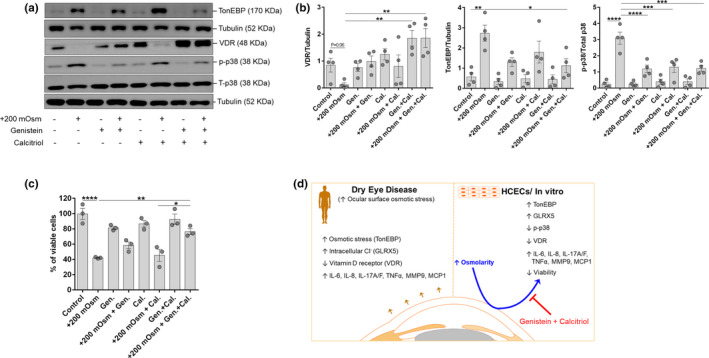
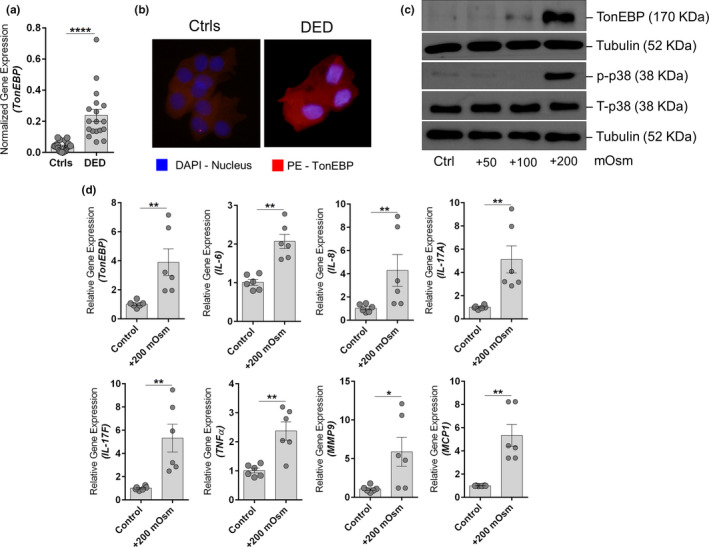
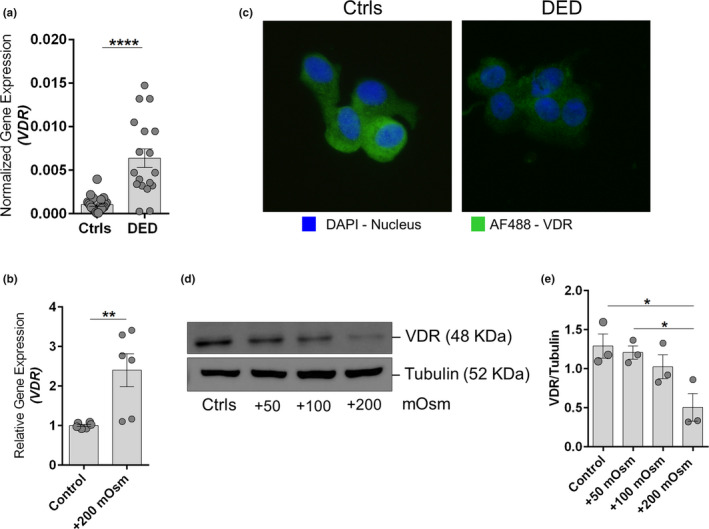
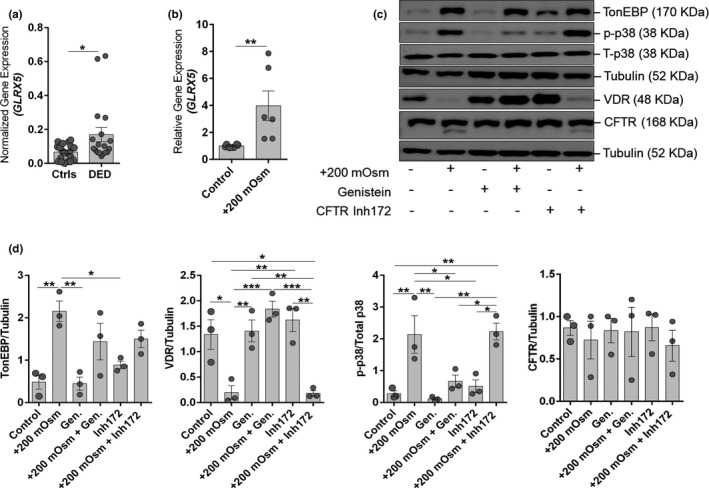
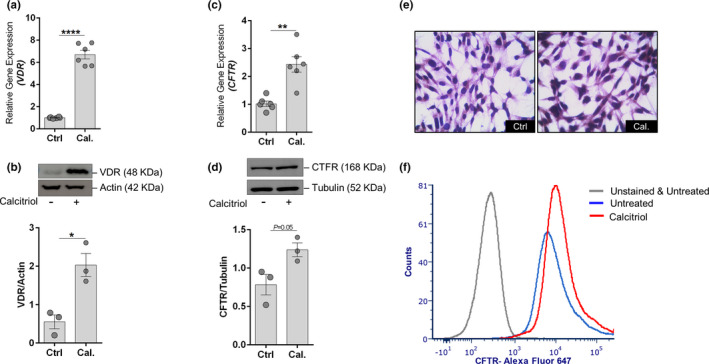
Dry eye disease (DED) signs and symptoms are causally associated with increased ocular surface (OS) inflammation. Modulation of key regulators of aberrant OS inflammation is of interest for clinical management. We investigated the status and the potential to harness key endogenous protective factors, such as cystic fibrosis transmembrane conductance regulator (CFTR) and vitamin D receptor (VDR) in hyperosmotic stress-associated inflammation in patients with DED and in vitro. Conjunctival impression cytology samples from control subjects (n = 11) and patients with DED (n = 15) were used to determine the status of hyperosmotic stress (TonEBP/NFAT5), inflammation (IL-6, IL-8, IL-17A/F, TNFα, MMP9, and MCP1), VDR, and intracellular chloride ion (GLRX5) by quantitative polymerase chain reaction and/or immunofluorescence. Human corneal epithelial cells (HCECs) were used to study the effect of CFTR activator (genistein) and vitamin D (calcitriol) in hyperosmotic stress (HOs)-induced response in vitro. Western blotting was used to determine the expression of these proteins, along with p-p38. Significantly, higher expression of inflammatory factors, TonEBP, GLRX5, and reduced VDR were observed in patients with DED and in HOs-induced HCECs in vitro. Expression of TonEBP positively correlated with expression of inflammatory genes in DED. Increased TonEBP and GLRX5 provides confirmation of osmotic stress and chloride ion imbalance in OS epithelium in DED. These along with reduced VDR suggests dysregulated OS homeostasis in DED. Combination of genistein and calcitriol reduced HOs-induced TonEBP, inflammatory gene expression, and p-p38, and abated VDR degradation in HCECs. Henceforth, this combination should be further explored for its relevance in the management of DED.
干眼症 (DED) 的体征和症状与眼表 (OS) 炎症的增加有关。调节异常 OS 炎症的关键调节剂对于临床管理具有重要意义。我们研究了在 DED 患者和体外高渗应激相关炎症中,关键内源性保护因子(如囊性纤维化跨膜电导调节剂 (CFTR) 和维生素 D 受体 (VDR))的状态和利用潜力。使用对照受试者 (n = 11) 和 DED 患者 (n = 15) 的结膜印迹细胞学样本,通过定量聚合酶链反应和/或免疫荧光法确定高渗应激 (TonEBP/NFAT5)、炎症 (IL-6、IL-8、IL-17A/F、TNFα、MMP9 和 MCP1)、VDR 和细胞内氯离子 (GLRX5) 的状态。使用人角膜上皮细胞 (HCEC) 研究 CFTR 激活剂 (染料木黄酮) 和维生素 D (钙三醇) 在体外高渗应激 (HOs) 诱导反应中的作用。Western blot 用于确定这些蛋白质以及 p-p38 的表达。重要的是,在 DED 患者和体外 HOs 诱导的 HCEC 中观察到炎症因子、TonEBP、GLRX5 的表达增加,而 VDR 表达减少。DED 中炎症基因的表达与 TonEBP 的表达呈正相关。TonEBP 和 GLRX5 的增加证实了 OS 上皮中的渗透应激和氯离子失衡。这些以及 VDR 的减少表明 DED 中 OS 内稳态失调。染料木黄酮和钙三醇的组合降低了 HOs 诱导的 TonEBP、炎症基因表达和 p-p38,并减轻了 HCEC 中的 VDR 降解。因此,应该进一步探索这种组合在 DED 管理中的相关性。