Suda Tsuyoshi, Takatori Hajime, Hayashi Takehiro, Horii Rika, Nio Kouki, Terashima Takeshi, Iida Noriho, Kitahara Masaaki, Shimakami Tetsuro, Arai Kuniaki, Yamashita Taro, Yamashita Tatsuya, Mizukoshi Eishiro, Honda Masao, Okumura Kenichiro, Kozaka Kazuto, Kaneko Shuichi
Department of Gastroenterology, Kanazawa University Graduate School of Medical Science, Kanazawa, Ishikawa 920-8641, Japan.
Department of Radiology, Kanazawa University Graduate School of Medical Science, Kanazawa, Ishikawa 920-8641, Japan.
Life (Basel). 2020 Sep 4;10(9):177. doi: 10.3390/life10090177.
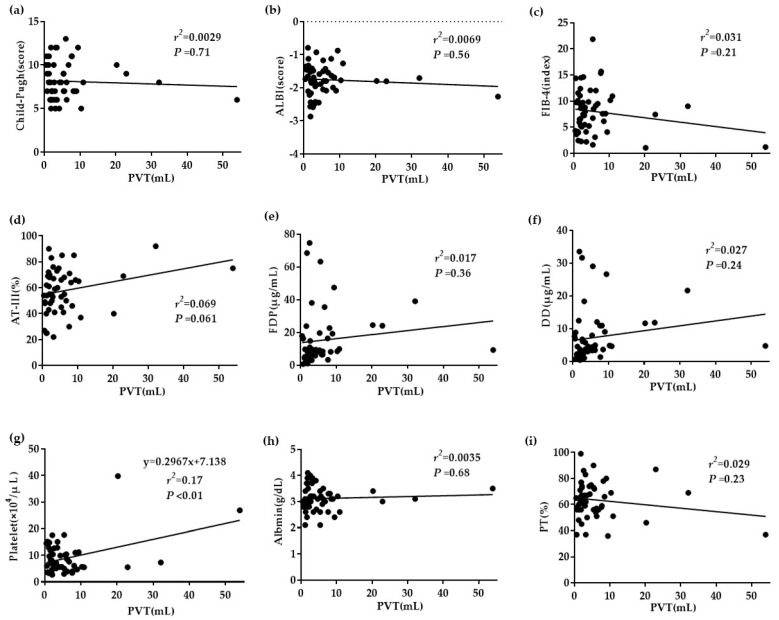
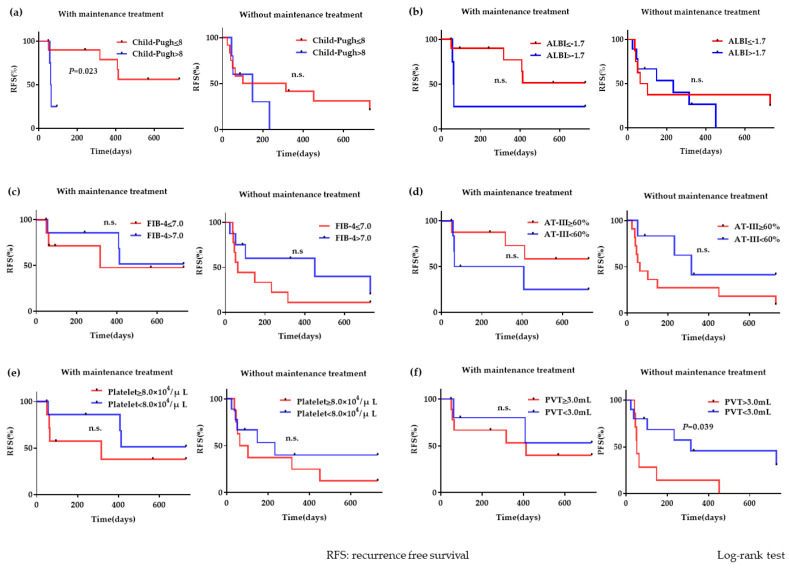
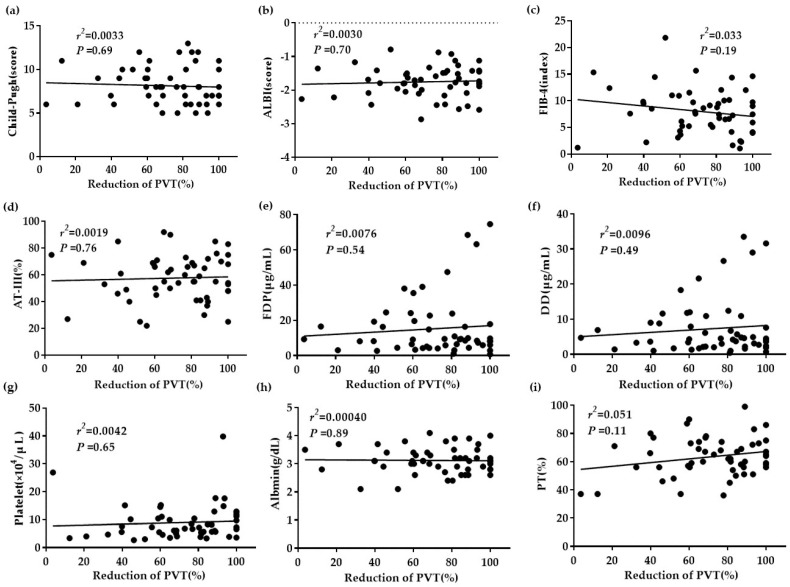
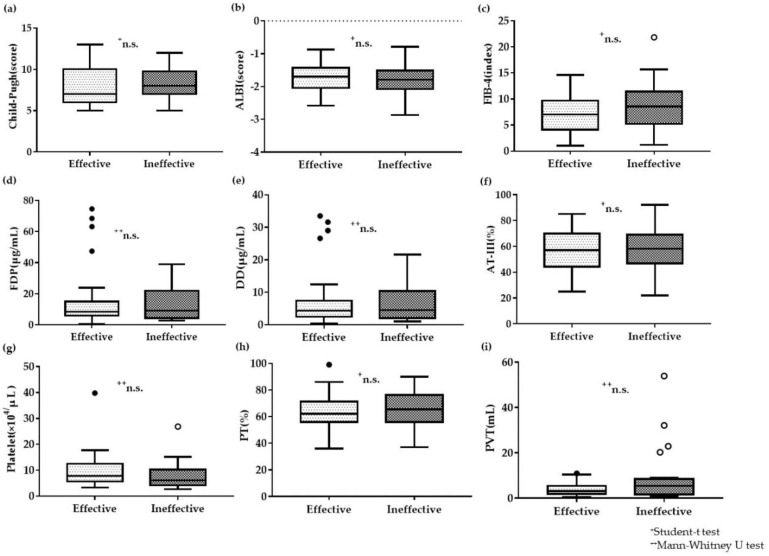
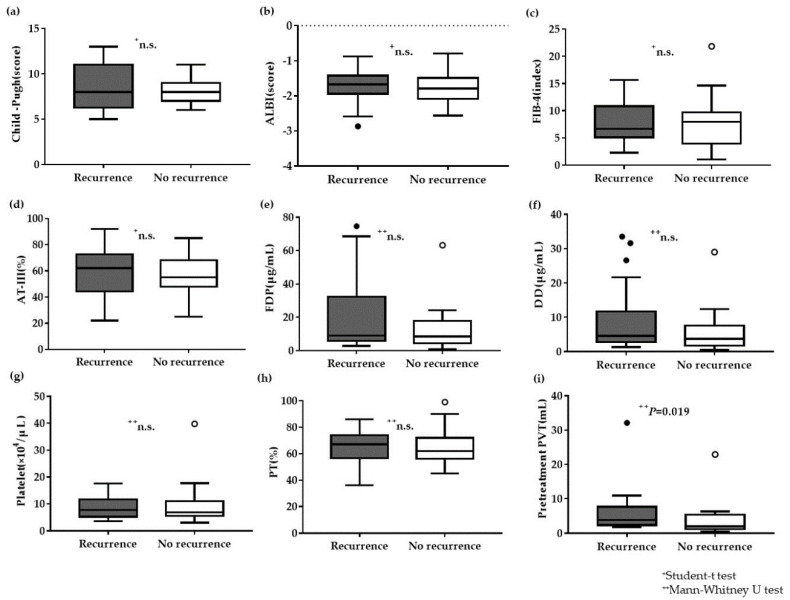
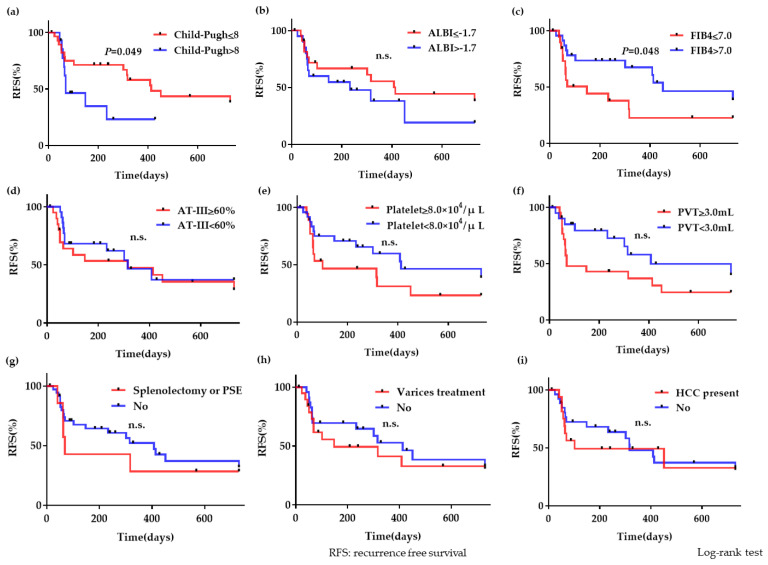
This retrospective study investigated factors influencing the portal vein thrombosis (PVT) volume and recurrence in 52 cirrhosis patients with PVT from November 2008 to September 2018. All patients were treated with danaparoid sodium with or without additional antithrombin III. Blood platelet counts significantly correlated with the PVT volume (r = 0.17; < 0.01). Computed tomography confirmed recurrence as PVT aggravation was reported in 43 patients, with ≥50% PVT volume reduction following anticoagulation therapy. In 43 patients, recurrence significantly correlated with the pretreatment PVT volume ( = 0.019). Factors influencing recurrence included a Child-Pugh score >8 ( = 0.049) and fibrosis index ≤7.0 based on four factors (FIB-4) ( = 0.048). Moreover, the relationship between recurrence and correlating factors showed that 15 patients who received warfarin experienced recurrence more often when Child-Pugh scores were >8 ( = 0.023), regardless of maintenance treatment. For patients who did not receive warfarin, a PVT volume ≥3.0 mL significantly influenced recurrence ( = 0.039). Therefore, the platelet count influences the PVT volume. The pretreatment PVT volume correlated with recurrence after anticoagulation therapy. According to the Kaplan-Meier curve, risk factors for PVT recurrence after anticoagulation therapy included Child-Pugh scores >8 and FIB-4 ≤7.0. Therefore, the FIB-4 is a unique factor that shows trends opposing other liver function markers.
这项回顾性研究调查了2008年11月至2018年9月期间52例肝硬化合并门静脉血栓形成(PVT)患者中影响门静脉血栓体积和复发的因素。所有患者均接受了达那肝素钠治疗,部分患者联合使用抗凝血酶III。血小板计数与门静脉血栓体积显著相关(r = 0.17;P < 0.01)。计算机断层扫描确认复发为PVT加重,43例患者报告了这一情况,抗凝治疗后PVT体积减少≥50%。在43例患者中,复发与治疗前门静脉血栓体积显著相关(P = 0.019)。影响复发的因素包括Child-Pugh评分>8(P = 0.049)和基于四项因素的纤维化指数(FIB-4)≤7.0(P = 0.048)。此外,复发与相关因素之间的关系表明,15例接受华法林治疗的患者,无论是否进行维持治疗,当Child-Pugh评分>8时复发更为常见(P = 0.023)。对于未接受华法林治疗的患者,门静脉血栓体积≥3.0 mL对复发有显著影响(P = 0.039)。因此,血小板计数影响门静脉血栓体积。治疗前门静脉血栓体积与抗凝治疗后的复发相关。根据Kaplan-Meier曲线,抗凝治疗后门静脉血栓复发的危险因素包括Child-Pugh评分>8和FIB-4≤7.0。因此,FIB-4是一个独特的因素,其趋势与其他肝功能指标相反。