Department of Microbiology, Tumor and Cell Biology, Karolinska Institutet, Stockholm, Sweden; SciLifeLab, Department of Microbiology, Tumor and Cell Biology, Karolinska Institutet, Stockholm, Sweden.
Department of Microbiology, Tumor and Cell Biology, Karolinska Institutet, Stockholm, Sweden.
J Biol Chem. 2020 Dec 25;295(52):17935-17949. doi: 10.1074/jbc.RA119.012056. Epub 2020 Sep 8.
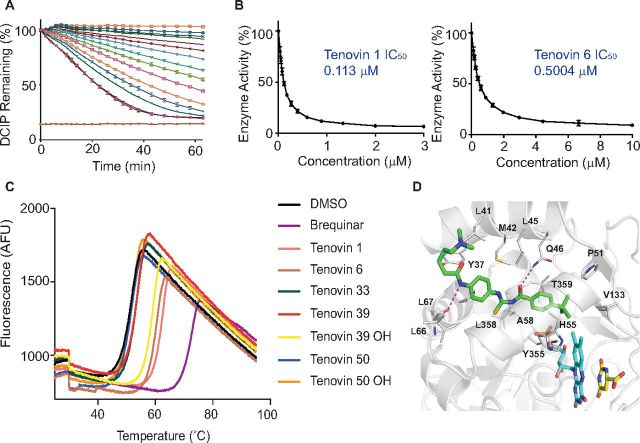
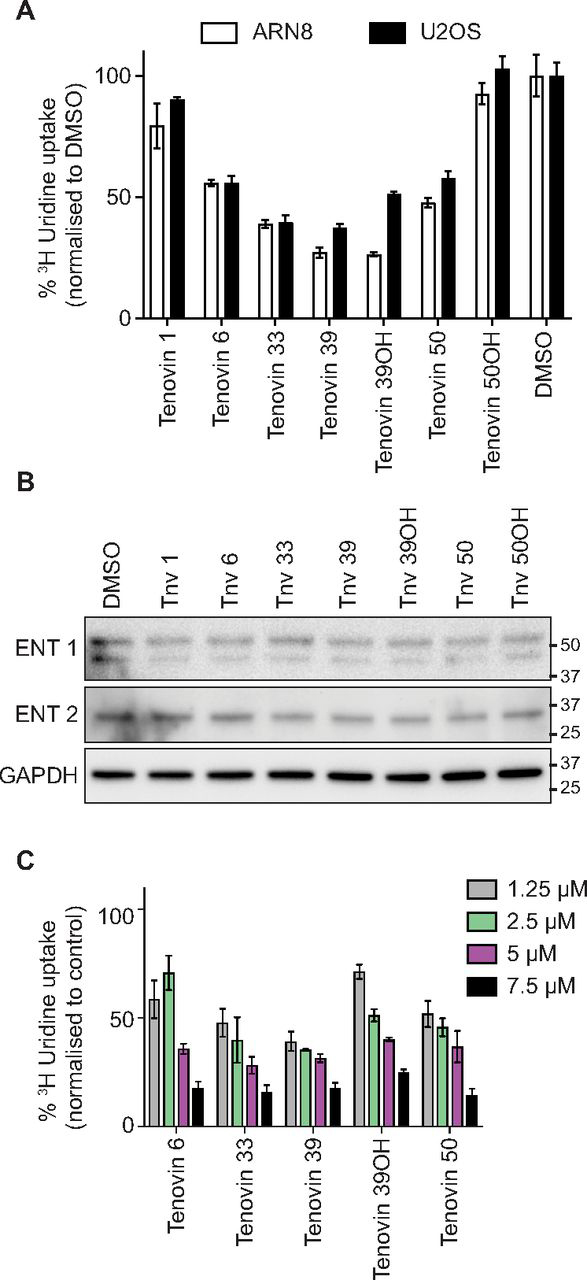
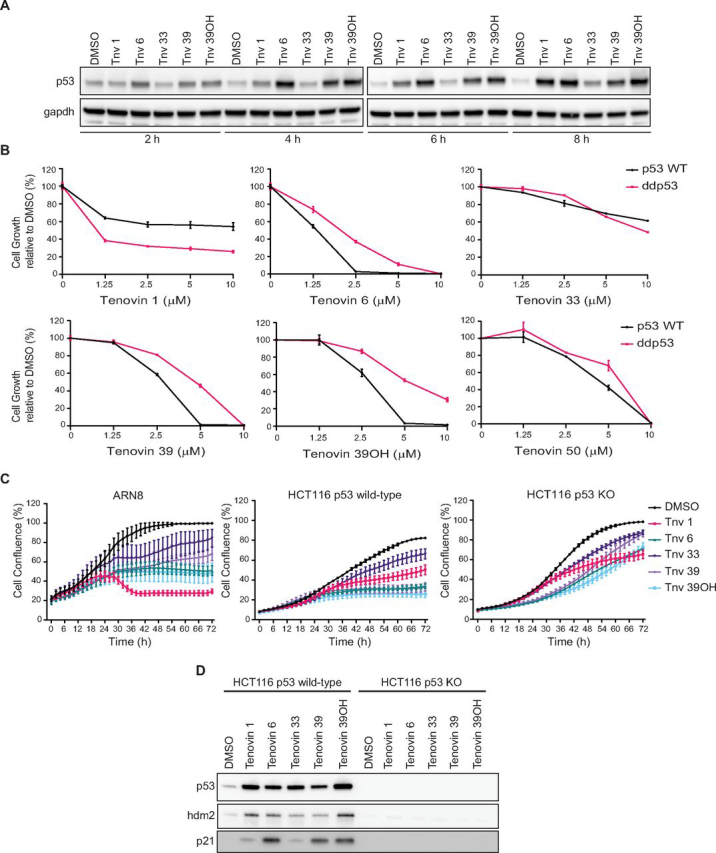
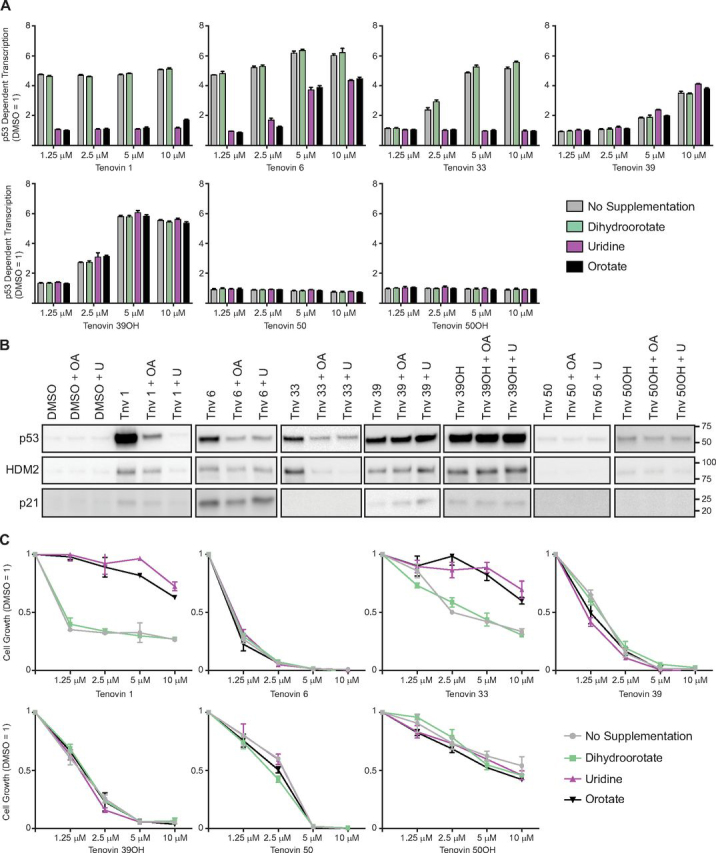
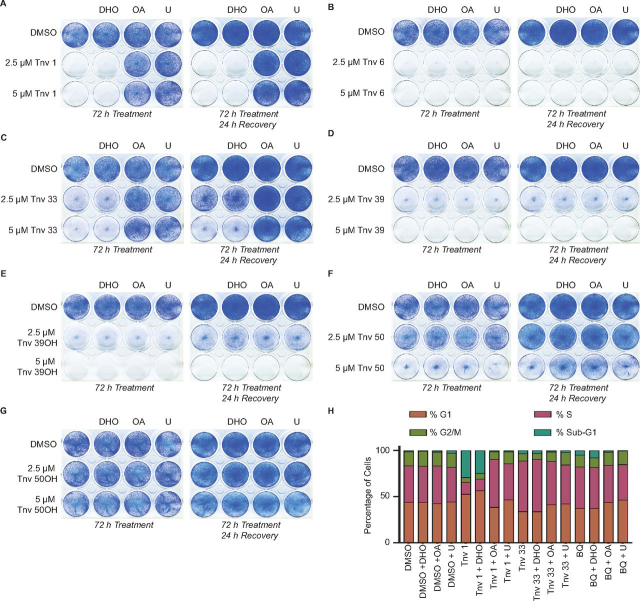
The tenovins are a frequently studied class of compounds capable of inhibiting sirtuin activity, which is thought to result in increased acetylation and protection of the tumor suppressor p53 from degradation. However, as we and other laboratories have shown previously, certain tenovins are also capable of inhibiting autophagic flux, demonstrating the ability of these compounds to engage with more than one target. In this study, we present two additional mechanisms by which tenovins are able to activate p53 and kill tumor cells in culture. These mechanisms are the inhibition of a key enzyme of the pyrimidine synthesis pathway, dihydroorotate dehydrogenase (DHODH), and the blockage of uridine transport into cells. These findings hold a 3-fold significance: first, we demonstrate that tenovins, and perhaps other compounds that activate p53, may activate p53 by more than one mechanism; second, that work previously conducted with certain tenovins as SirT1 inhibitors should additionally be viewed through the lens of DHODH inhibition as this is a major contributor to the mechanism of action of the most widely used tenovins; and finally, that small changes in the structure of a small molecule can lead to a dramatic change in the target profile of the molecule even when the phenotypic readout remains static.
纤连蛋白是一类经常被研究的化合物,能够抑制组蛋白去乙酰化酶的活性,这被认为会导致乙酰化增加,并保护肿瘤抑制因子 p53 不被降解。然而,正如我们和其他实验室之前所表明的那样,某些纤连蛋白也能够抑制自噬通量,这表明这些化合物能够与不止一个靶点结合。在这项研究中,我们提出了纤连蛋白能够激活 p53 并在培养的肿瘤细胞中杀死肿瘤细胞的另外两种机制。这些机制是抑制嘧啶合成途径的关键酶二氢乳清酸脱氢酶(DHODH)和阻断尿苷进入细胞的运输。这些发现具有三重意义:首先,我们证明纤连蛋白,也许还有其他能够激活 p53 的化合物,可能通过不止一种机制来激活 p53;其次,以前用某些纤连蛋白作为 SirT1 抑制剂进行的研究,应该通过 DHODH 抑制的视角来看待,因为这是最广泛使用的纤连蛋白作用机制的主要贡献者;最后,即使表型读数保持不变,小分子结构的微小变化也会导致分子的靶标谱发生显著变化。